Almaty Hub

Object: IT Campus, Function: Workspaces
Client: Almaty city Akimat
Location: Al Farabi highway, Almaty
Total area: 50000 m2
Status: concept, Project: 02-04.2024
Team: Evgeniy Shchetinkin, Evgeniy Tsoy, Alisher Somename, Iliya Sergeev, Zinur Tasetdinov

The ALMATY IT HUB project emerged immediately after the successful presentation of the SATS THEATRE competition to the city administration. Almaty, like the capital, aims to establish a technology park to foster the growth and support of IT companies, startups, and relocated businesses, boosting the economic potential of the city and the region. The IT hub is envisioned as an innovative center, providing a dynamic ecosystem for startups and tech companies, attracting talent and investors. It offers not only the infrastructure and resources to develop the IT sector but also special tax incentives, making it an attractive proposition for entrepreneurs.
The concept follows in the footsteps of Astana Hub, Central Asia’s largest technology park, which was designed by Adrian Smith + Gordon Gill Architecture as part of the Expo 2017 complex. This precedent set a high standard for such projects, influencing both the architectural vision and the functional approach to IT hubs in Kazakhstan.

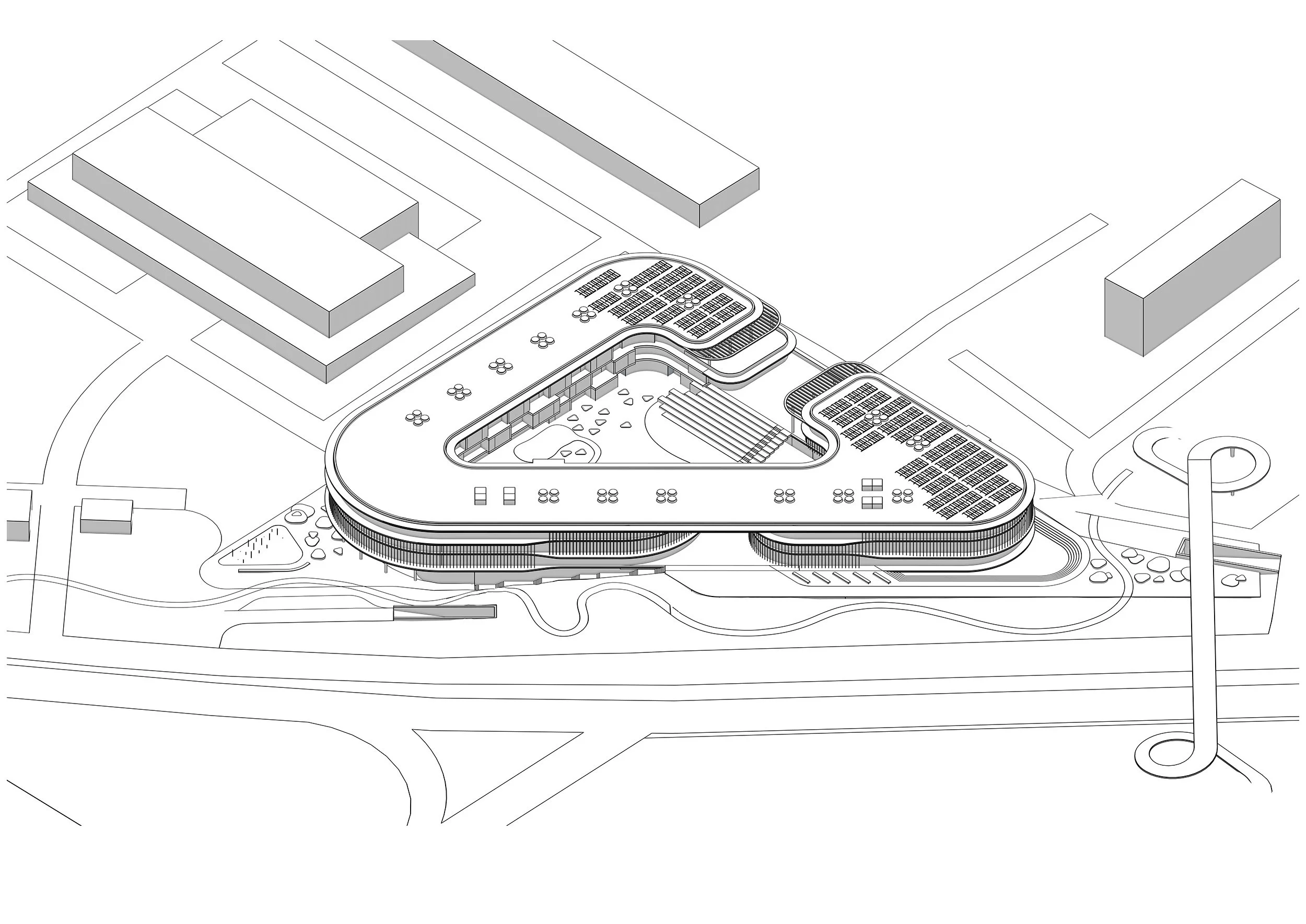
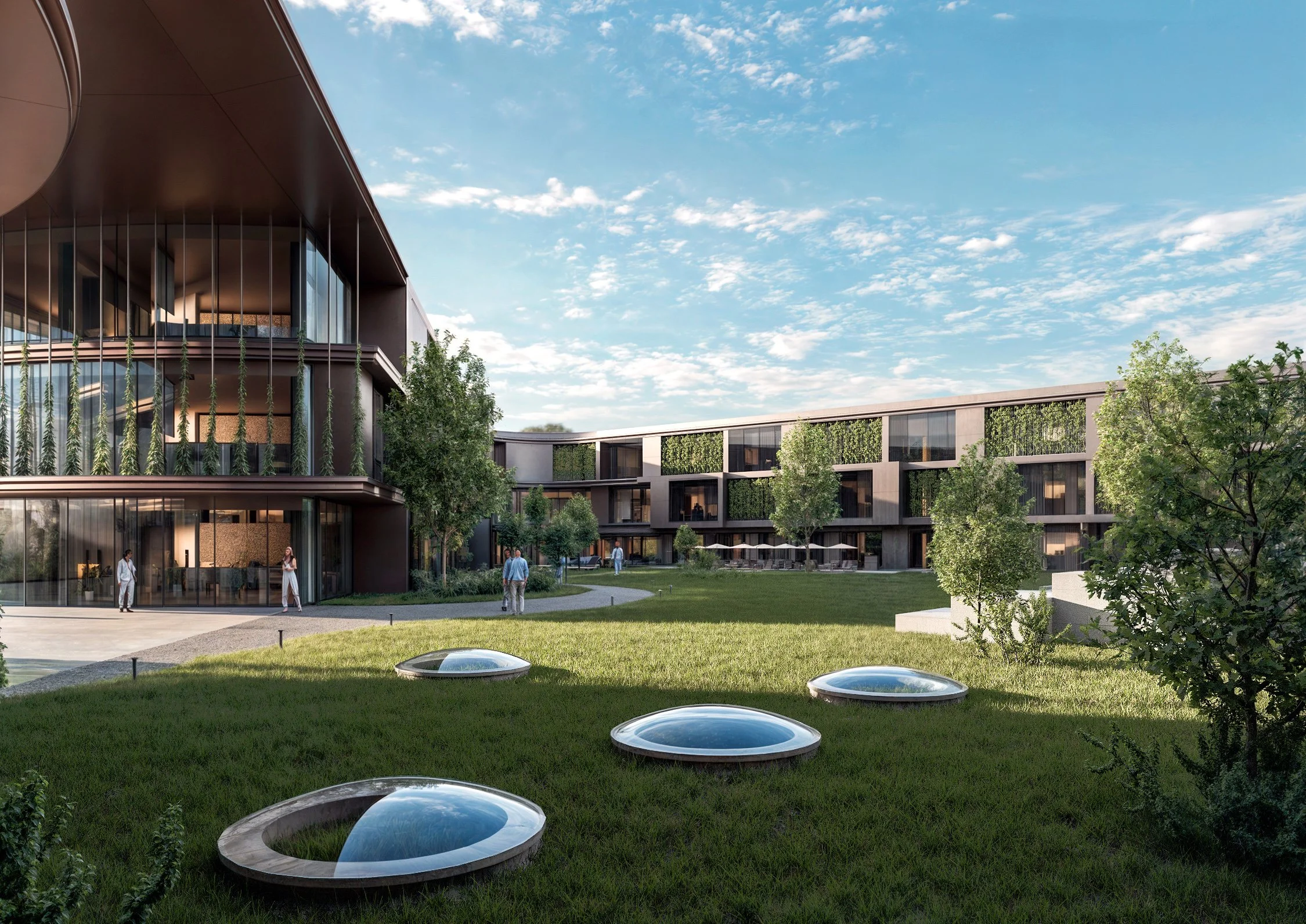
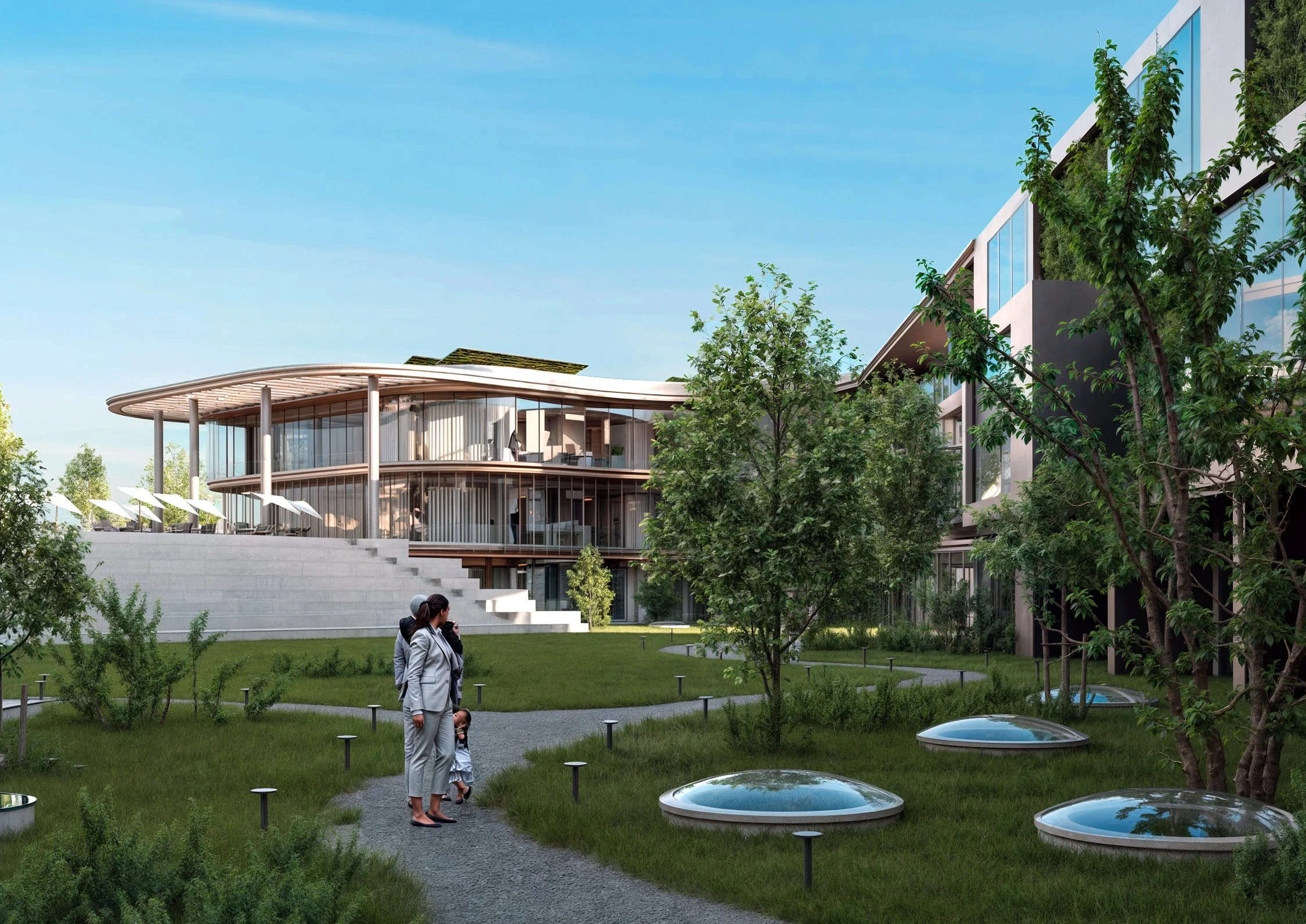
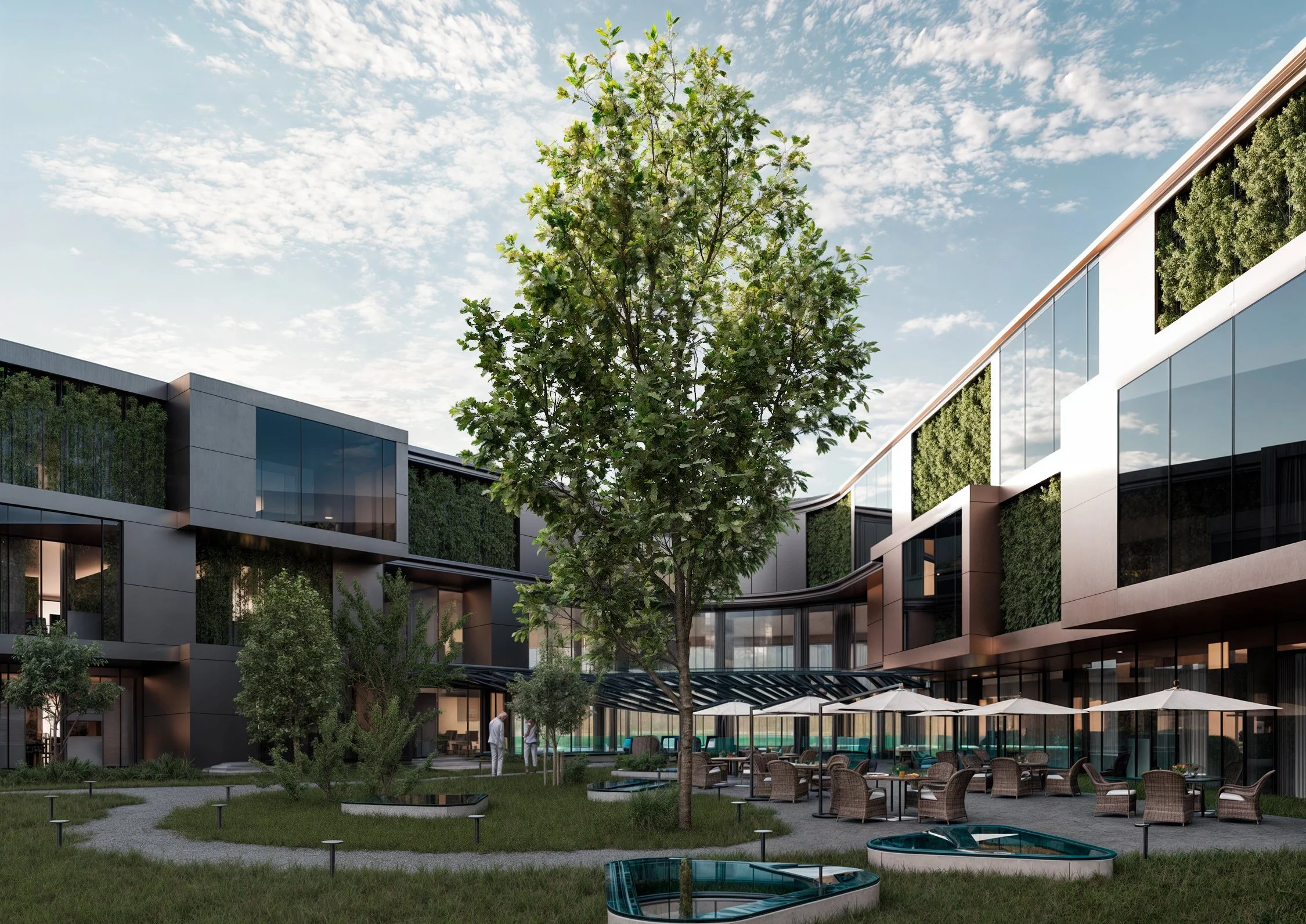
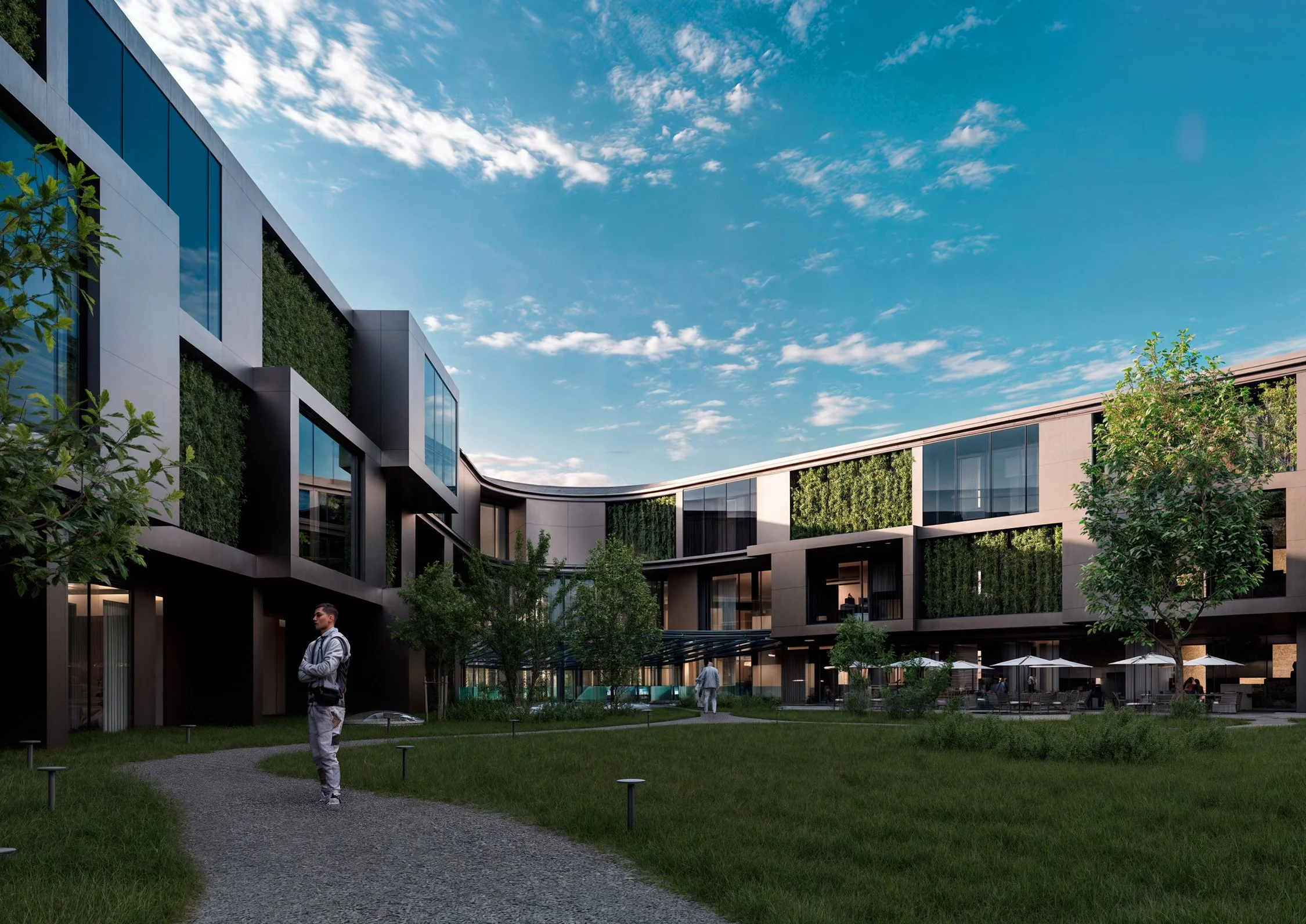
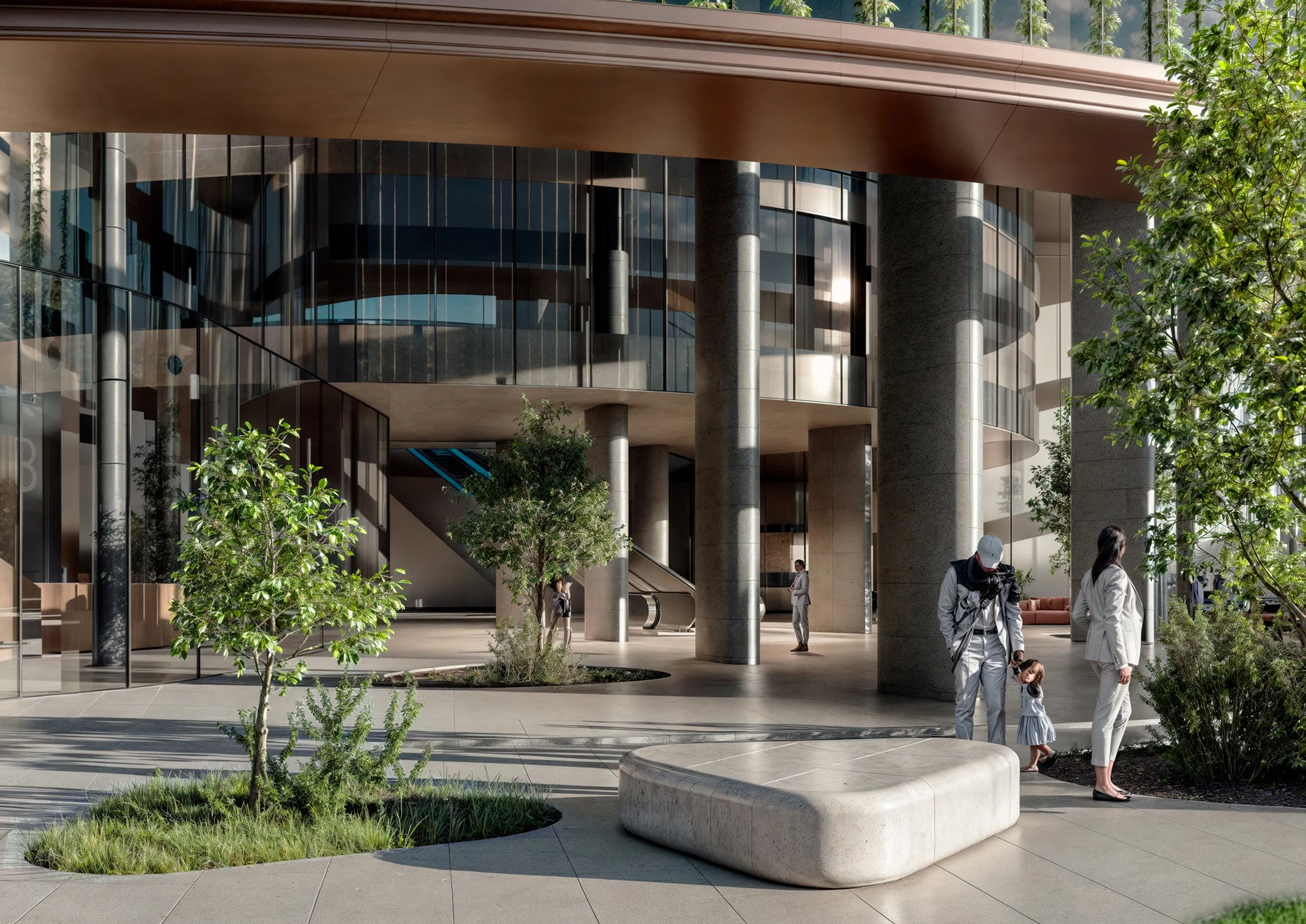
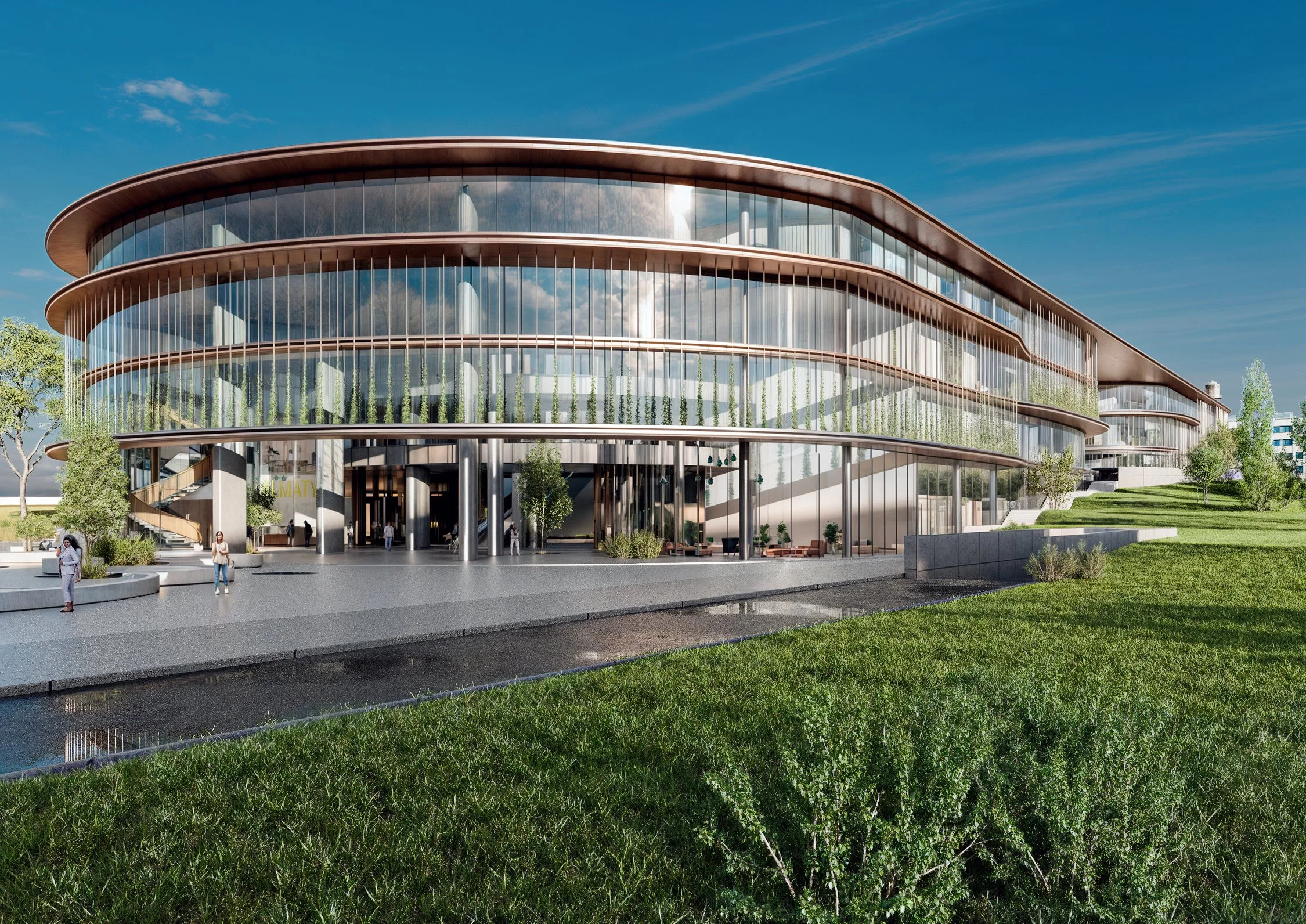
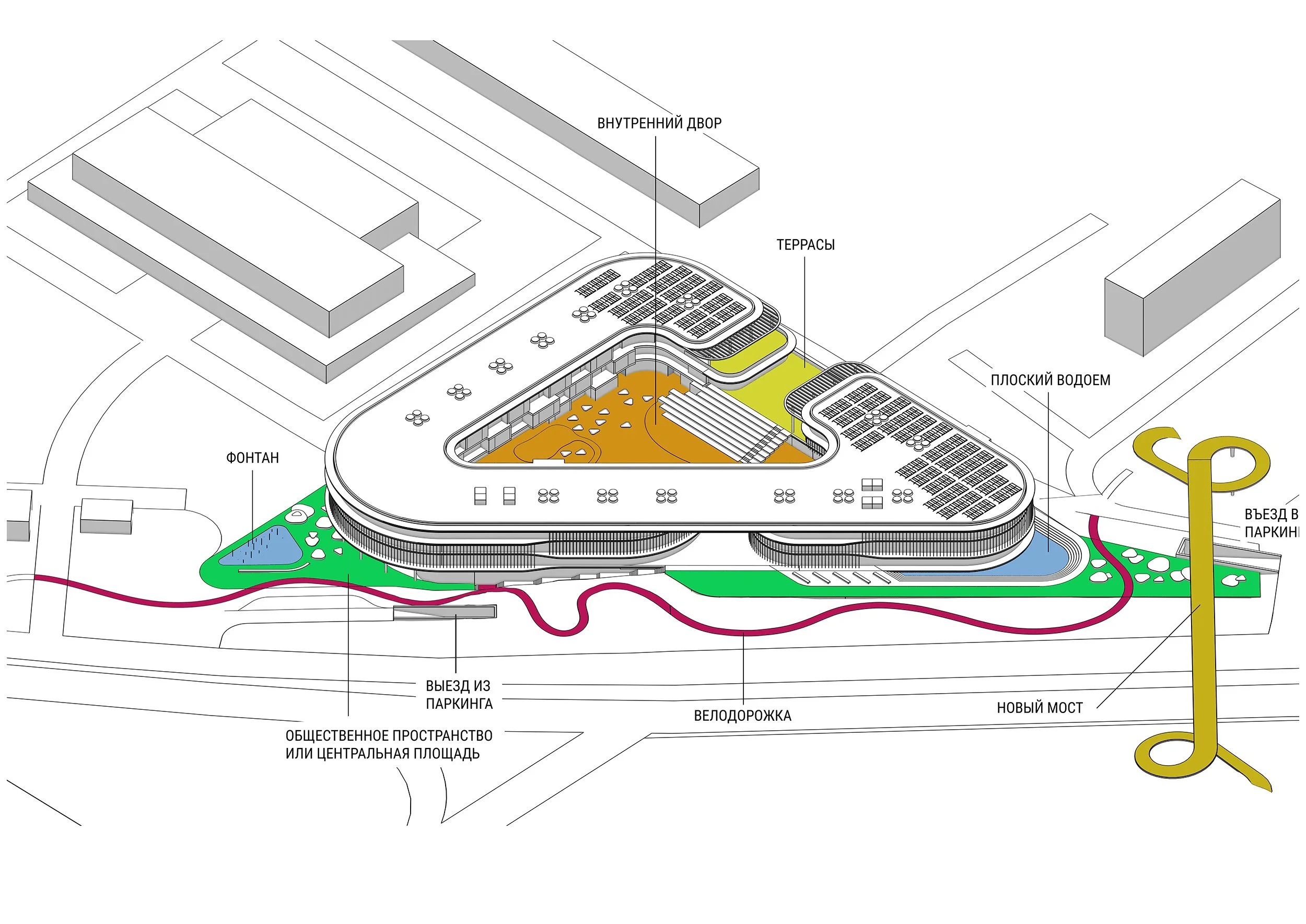
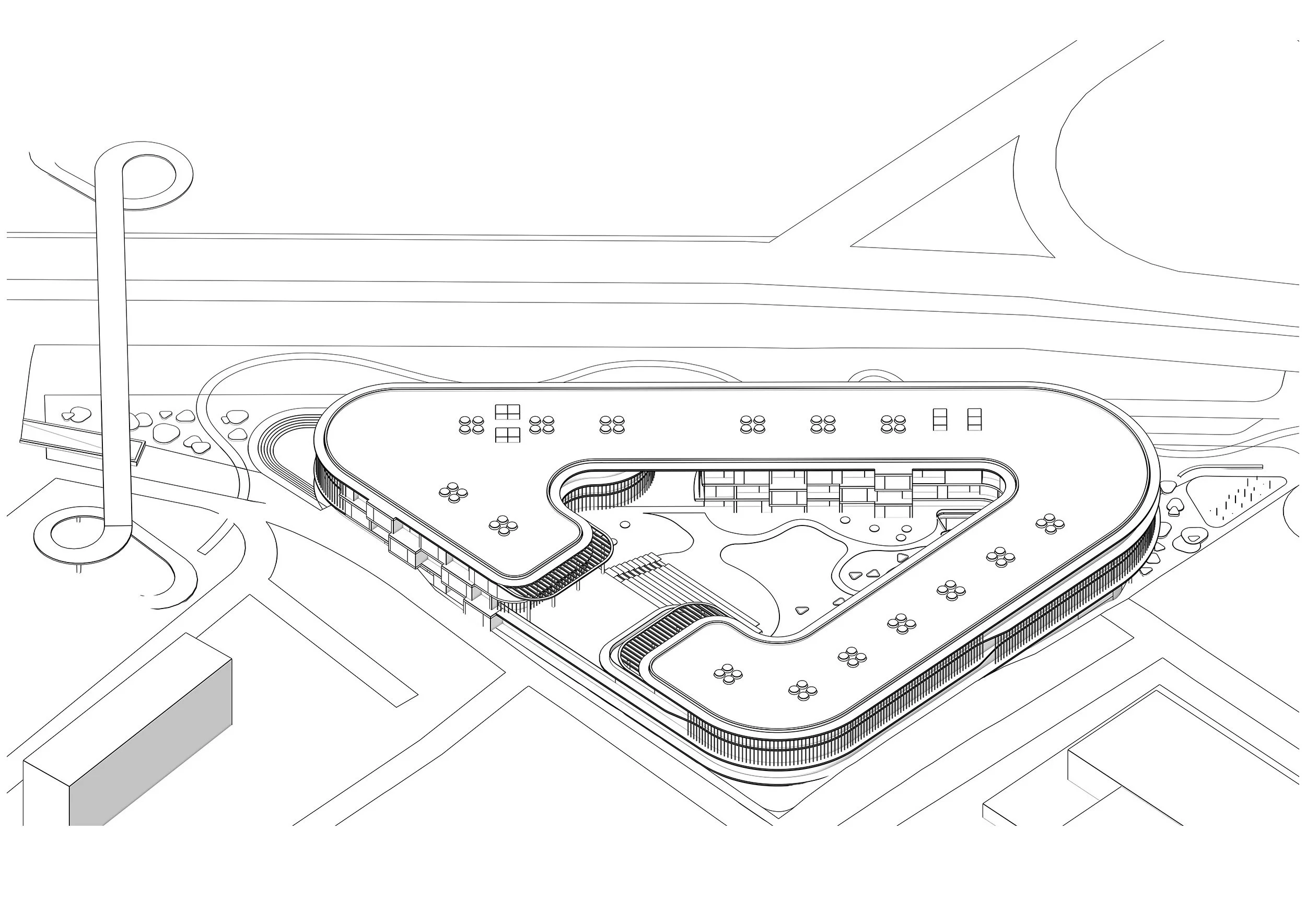
The key conceptual move was to expand the project boundaries by incorporating part of Kazakhfilm’s land and a disused park. This allowed for a more spacious campus with a triangular layout centered around a vibrant inner courtyard. The courtyard, inspired by iconic global campuses like Apple Park and Skolkovo University, will act as the heart of the complex, offering a green, tranquil space for meetings, relaxation, and events.
Additionally, part of the hub will support creative industries such as film production, 3D graphics, and post-production, fostering collaboration between tech and creative sectors.
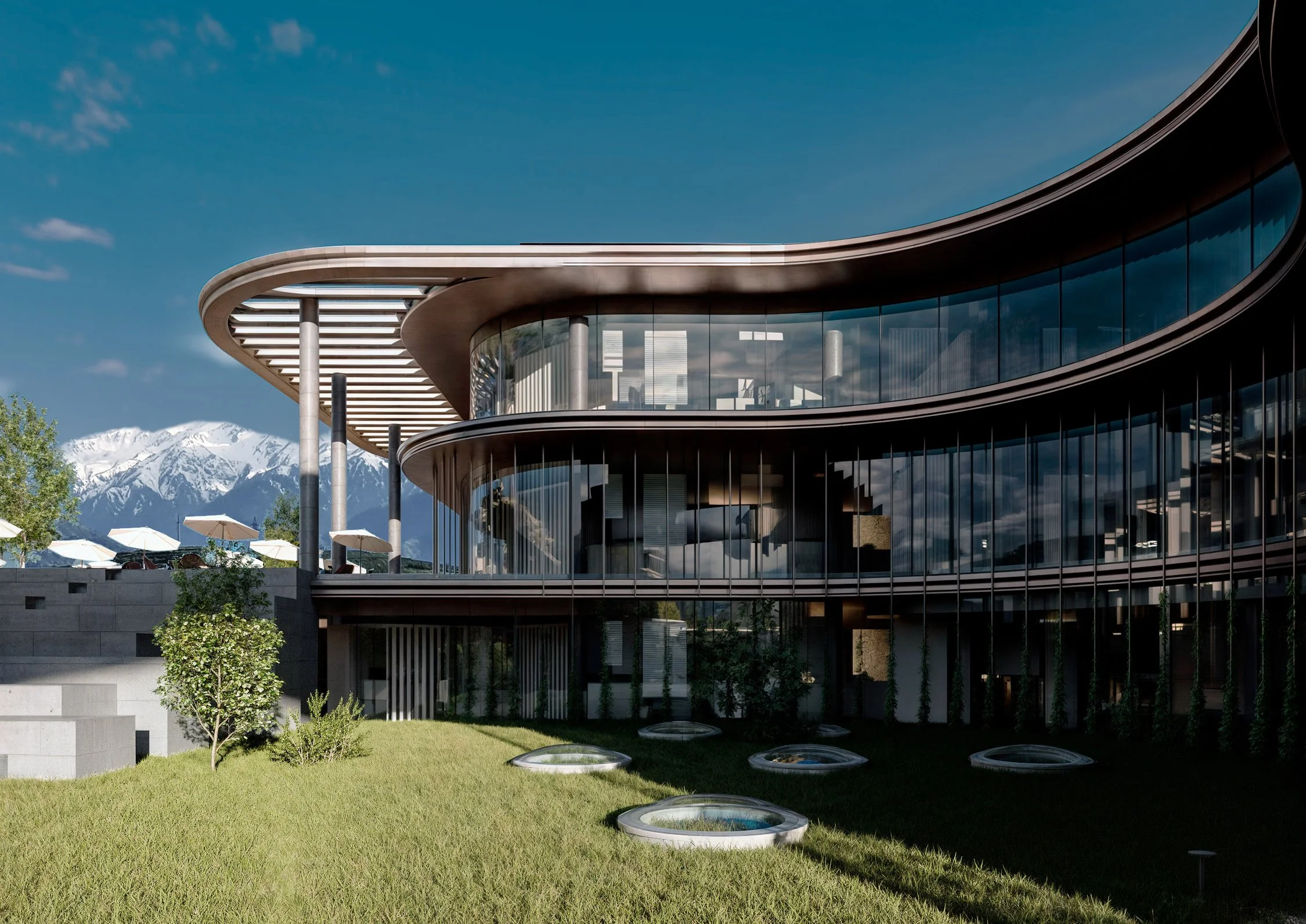
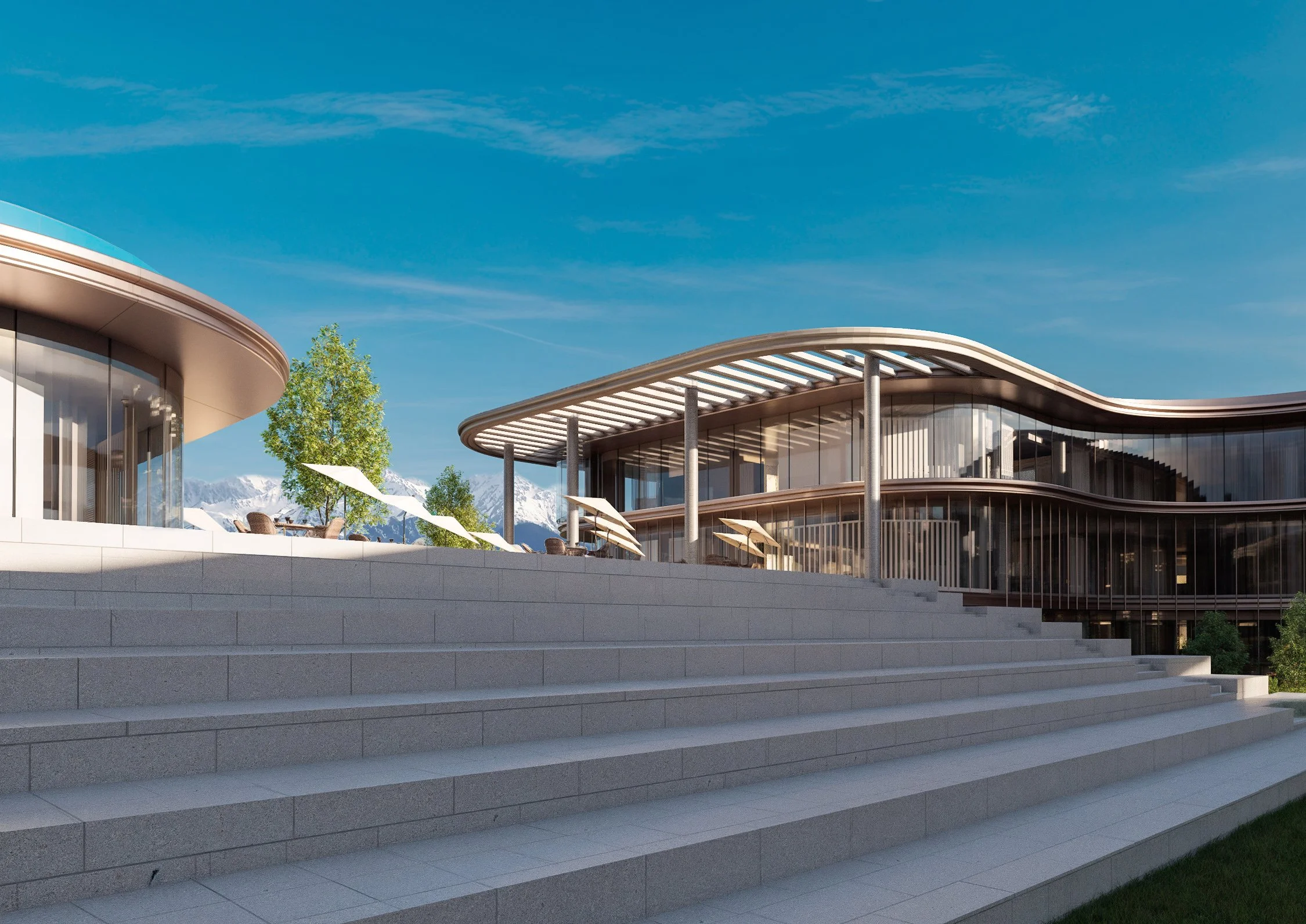
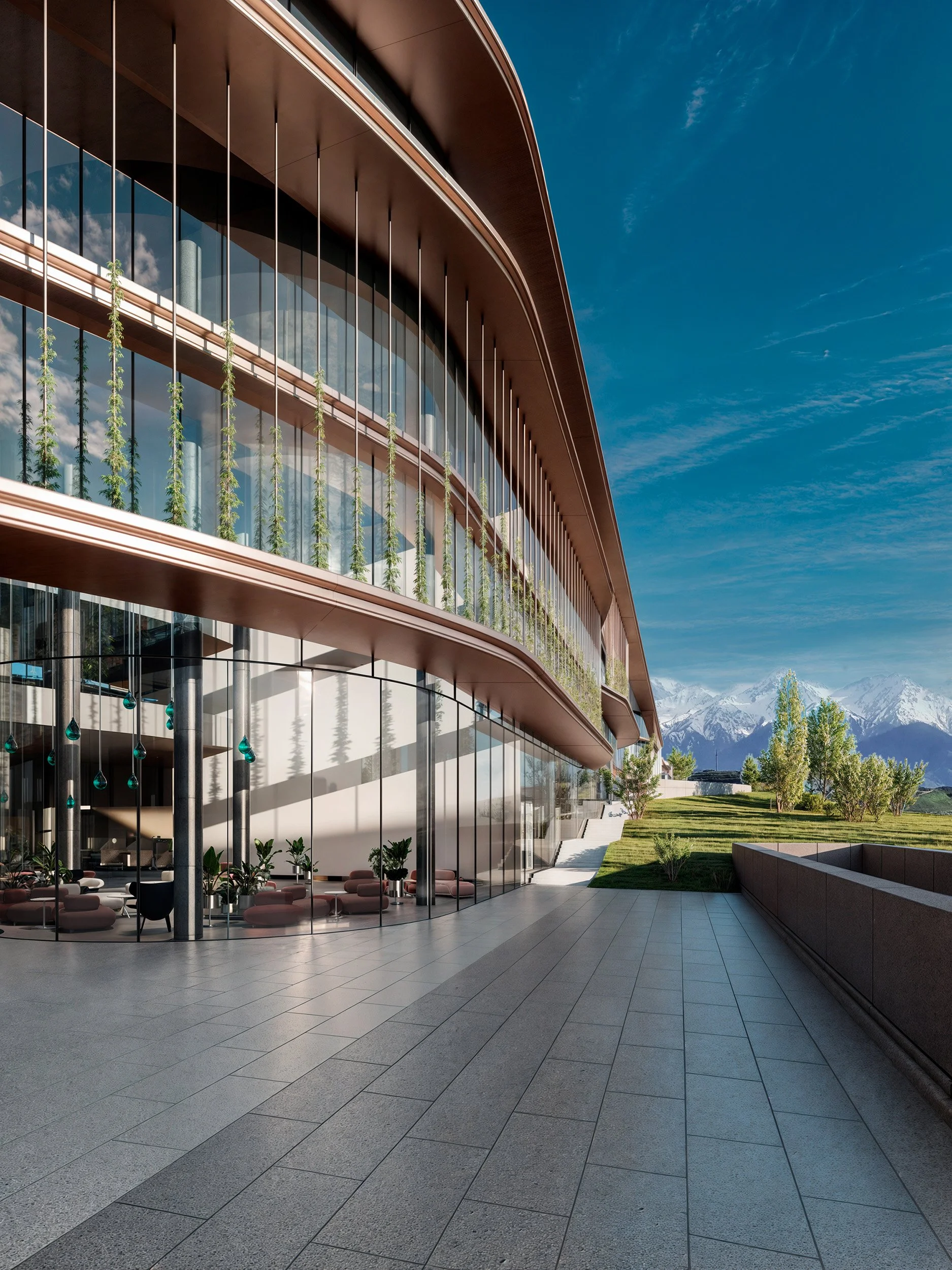
The landscaped inner courtyard will feature a garden, an amphitheater for conferences and events, and terraces with mountain views. Designed to encourage collaboration and interaction, these spaces will create a stimulating environment for startups, tech professionals, and visitors. Special attention will be paid to noise mitigation through landscape design and green barriers, ensuring a serene atmosphere despite the proximity to a busy highway.

Below ground, multifunctional spaces illuminated by skylights will host exhibitions and presentations. Flexible and easily adaptable, these areas will serve both local and international business communities.
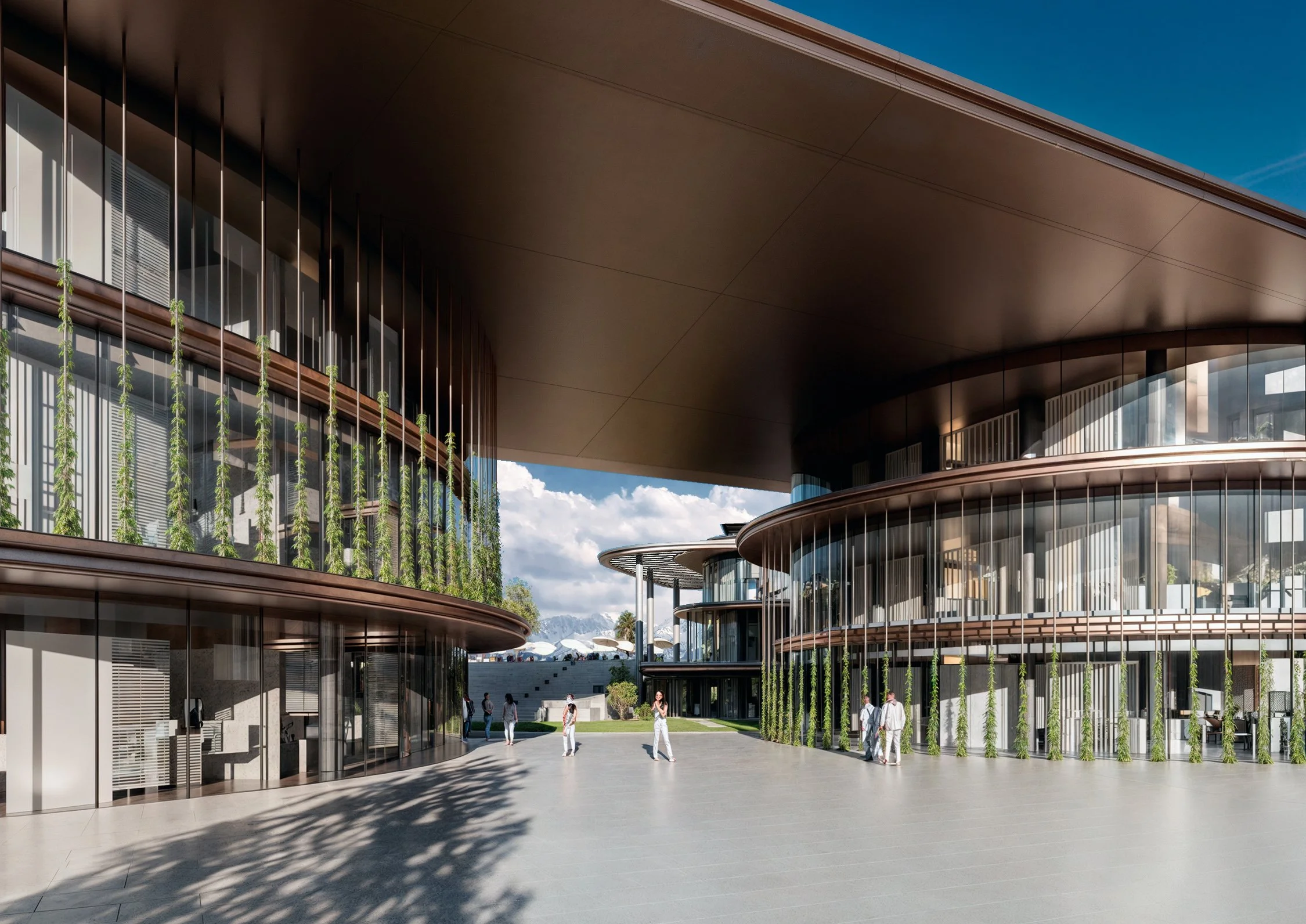
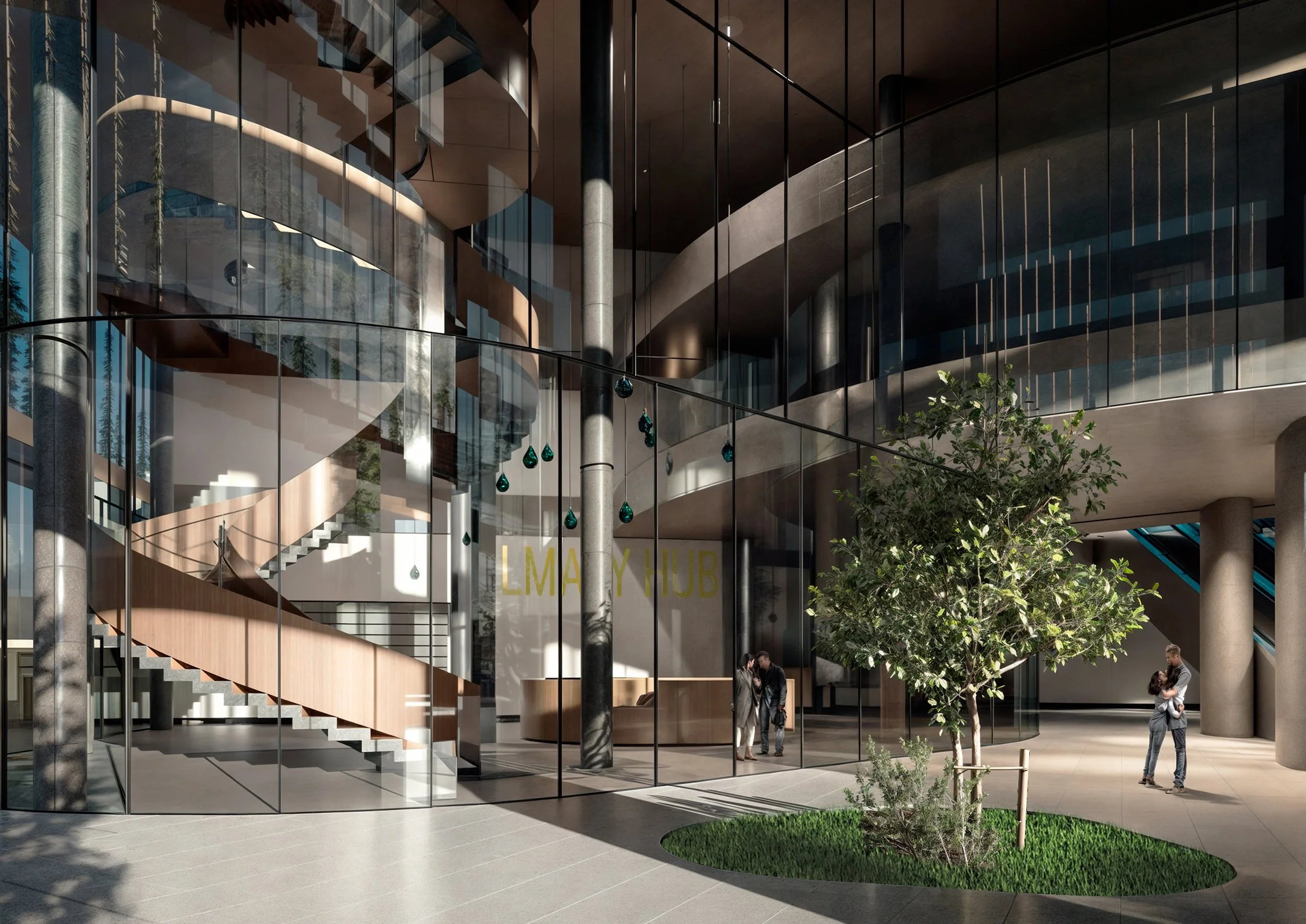
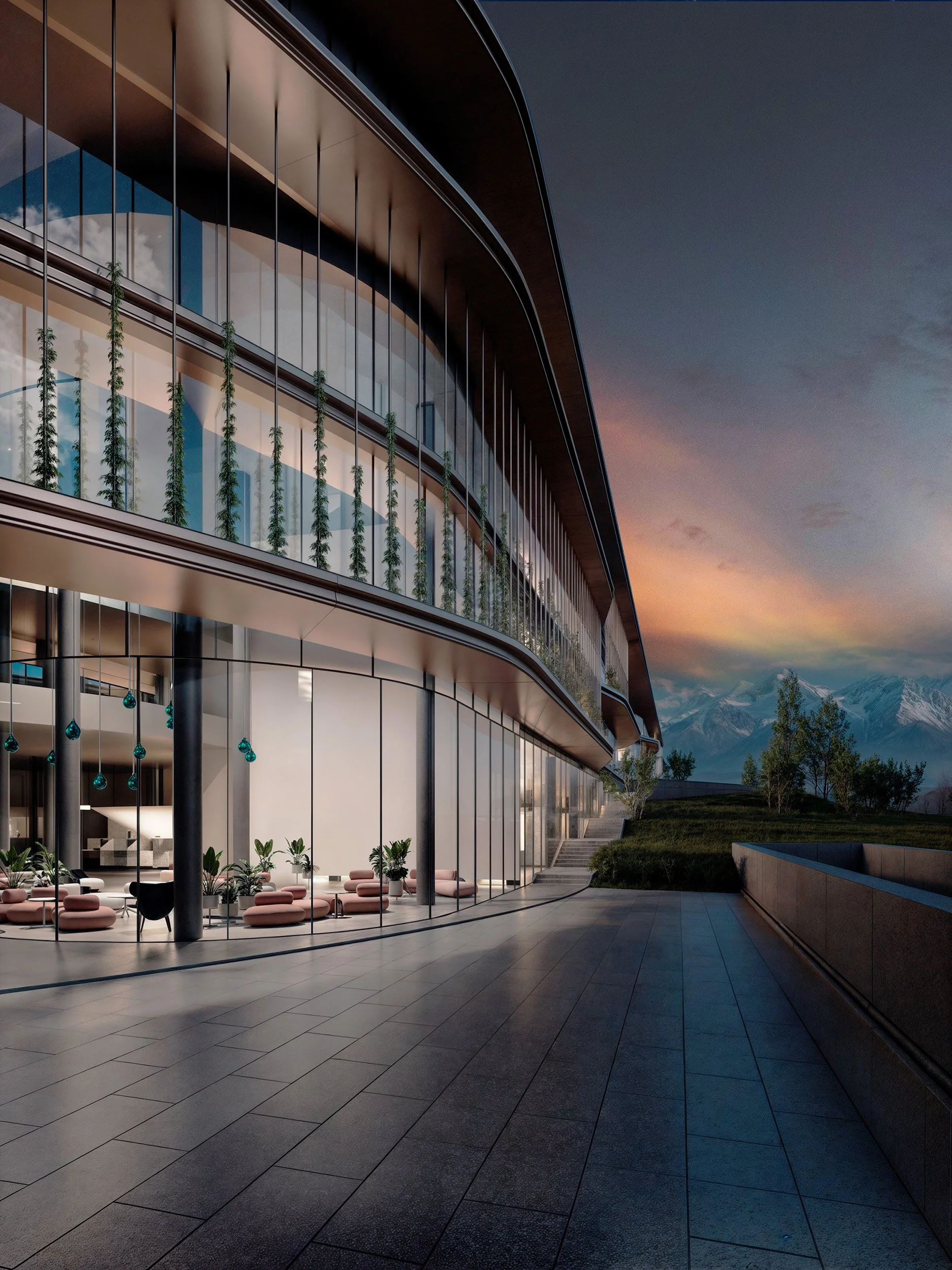
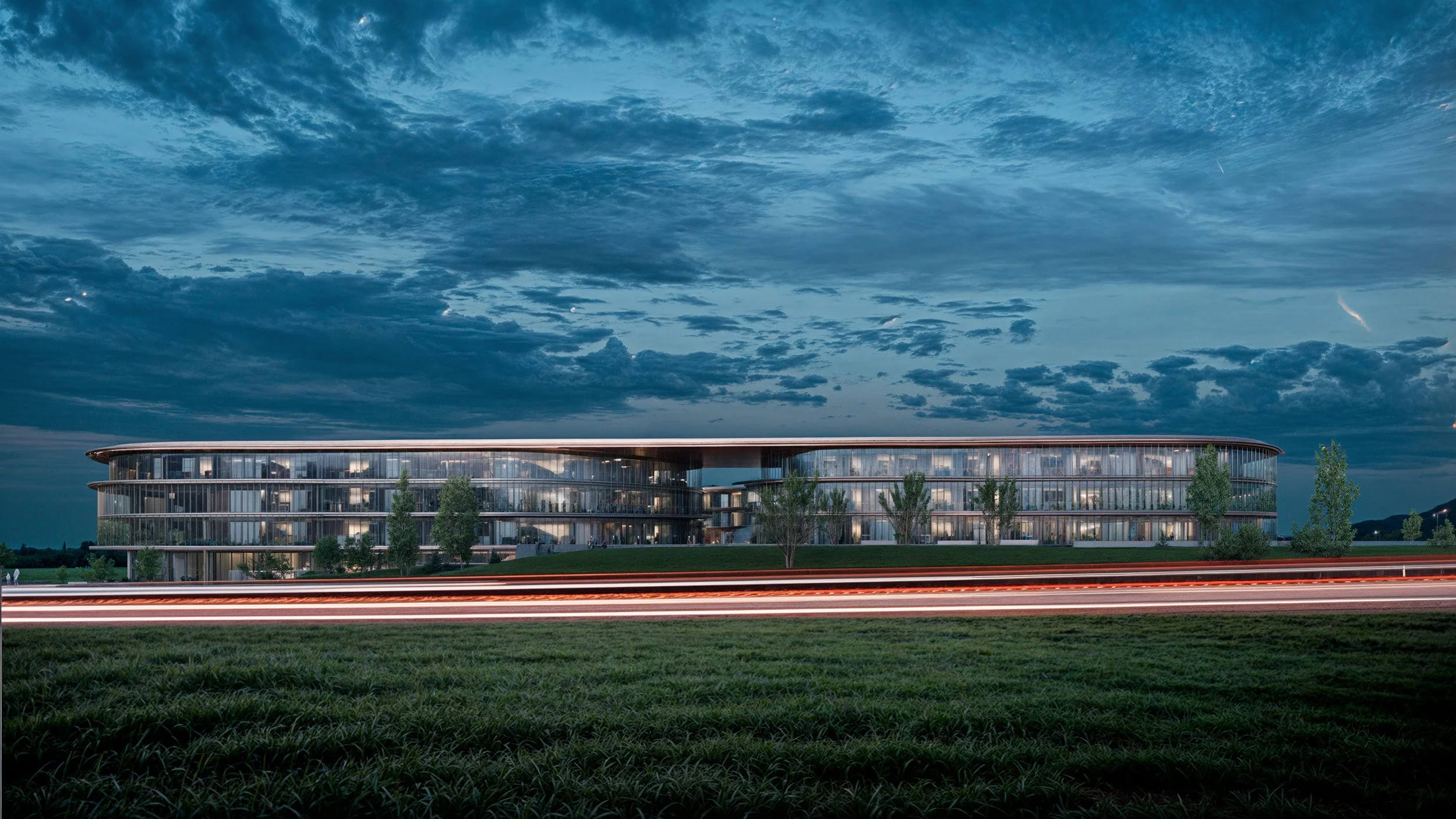
The building’s transparent façade, extensive glazing, and green systems integrate seamlessly with the surrounding environment. Cantilevered volumes with sun-shaded forms add a dynamic architectural presence, while vertical green elements enhance the eco-friendly design.
Pedestrian-oriented public spaces will include bike lanes and be free from cars, ensuring accessibility for all, including people with disabilities. Underground levels will manage all transportation, utilities, and deliveries. Emergency access to the courtyard will be provided through a large arch in the façade.
The green roof, with skylights and solar panels, will generate energy and provide natural lighting. A rainwater collection system will support the hub’s sustainable design by supplying water for technical needs.