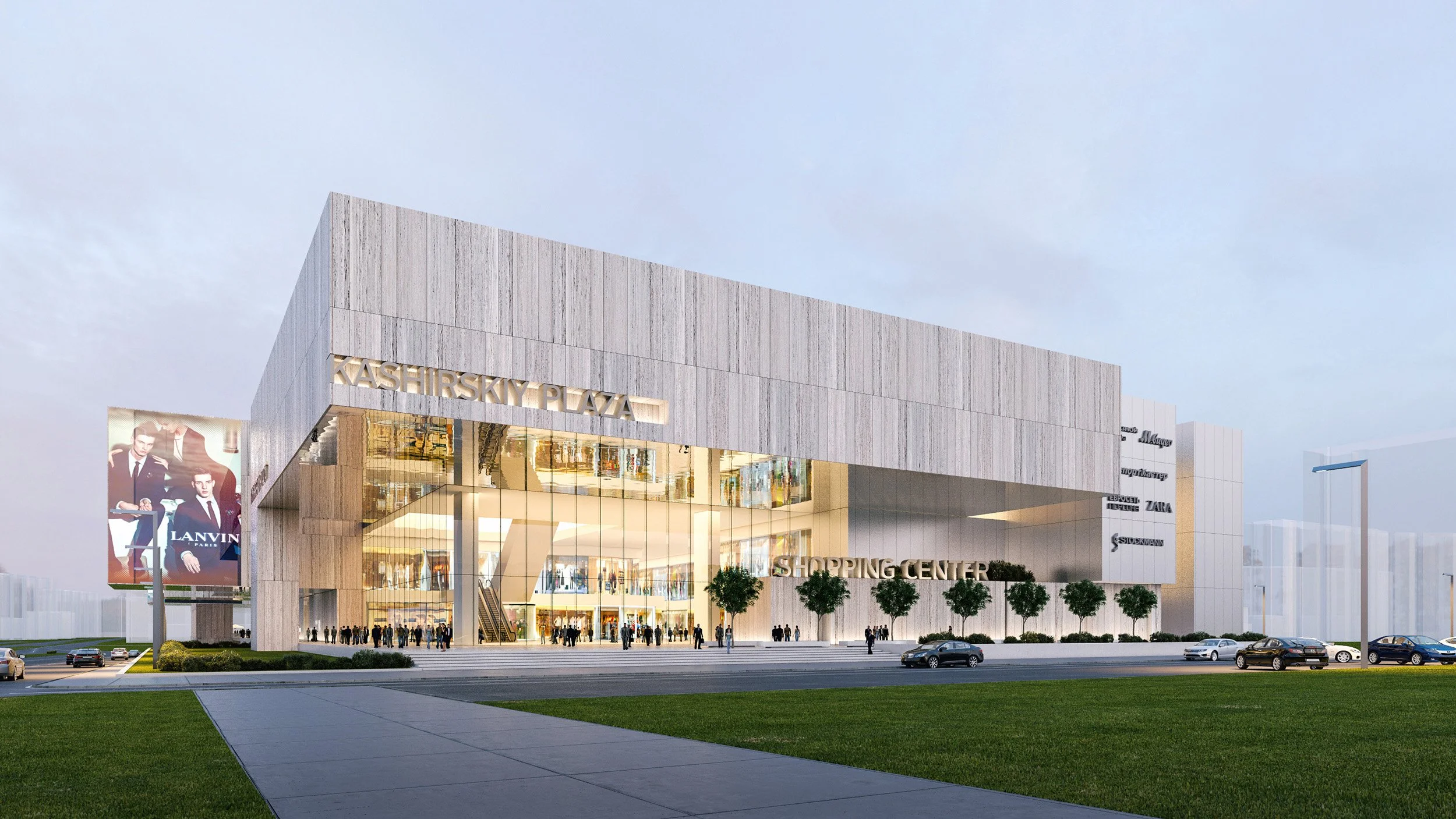
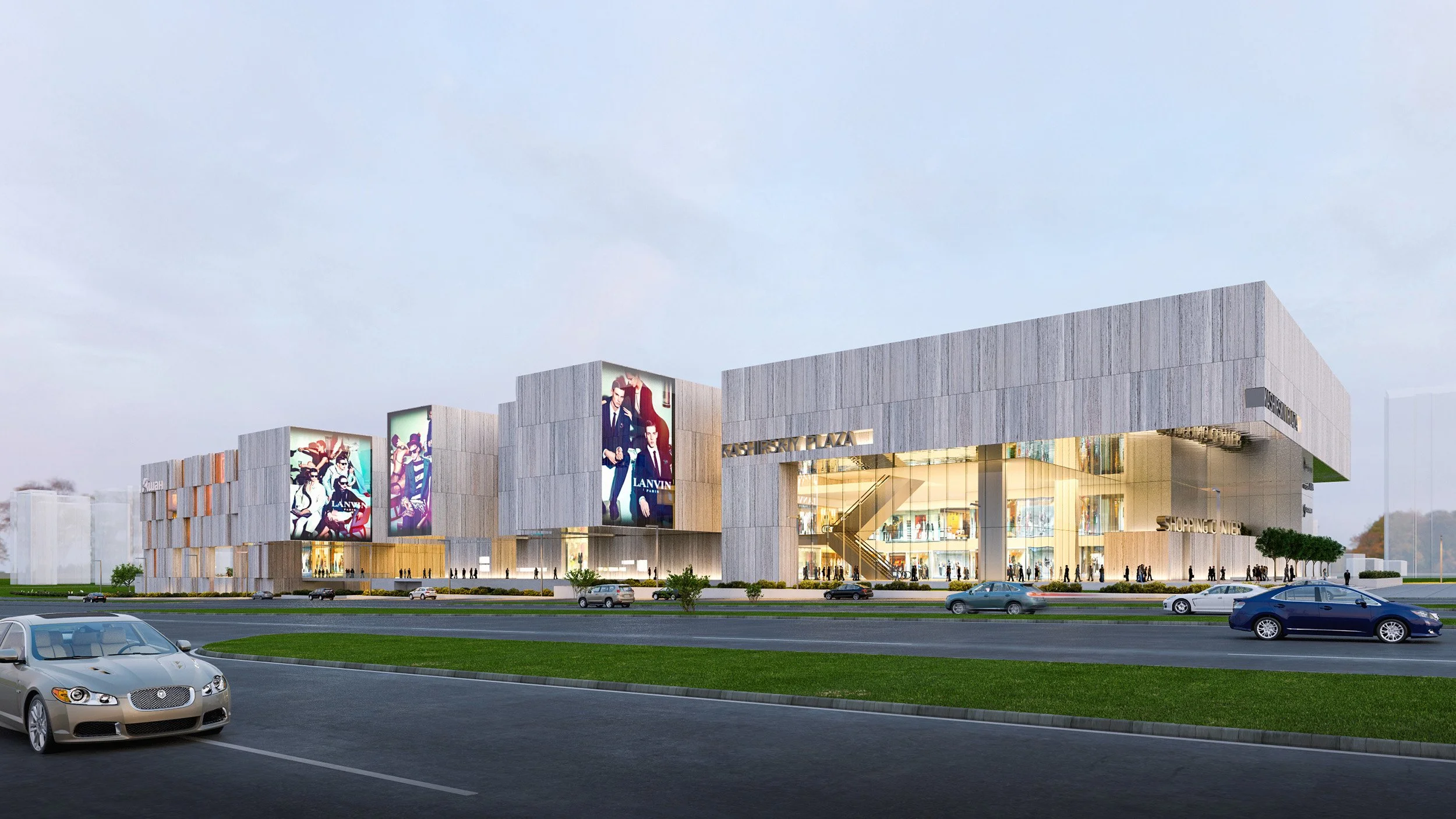
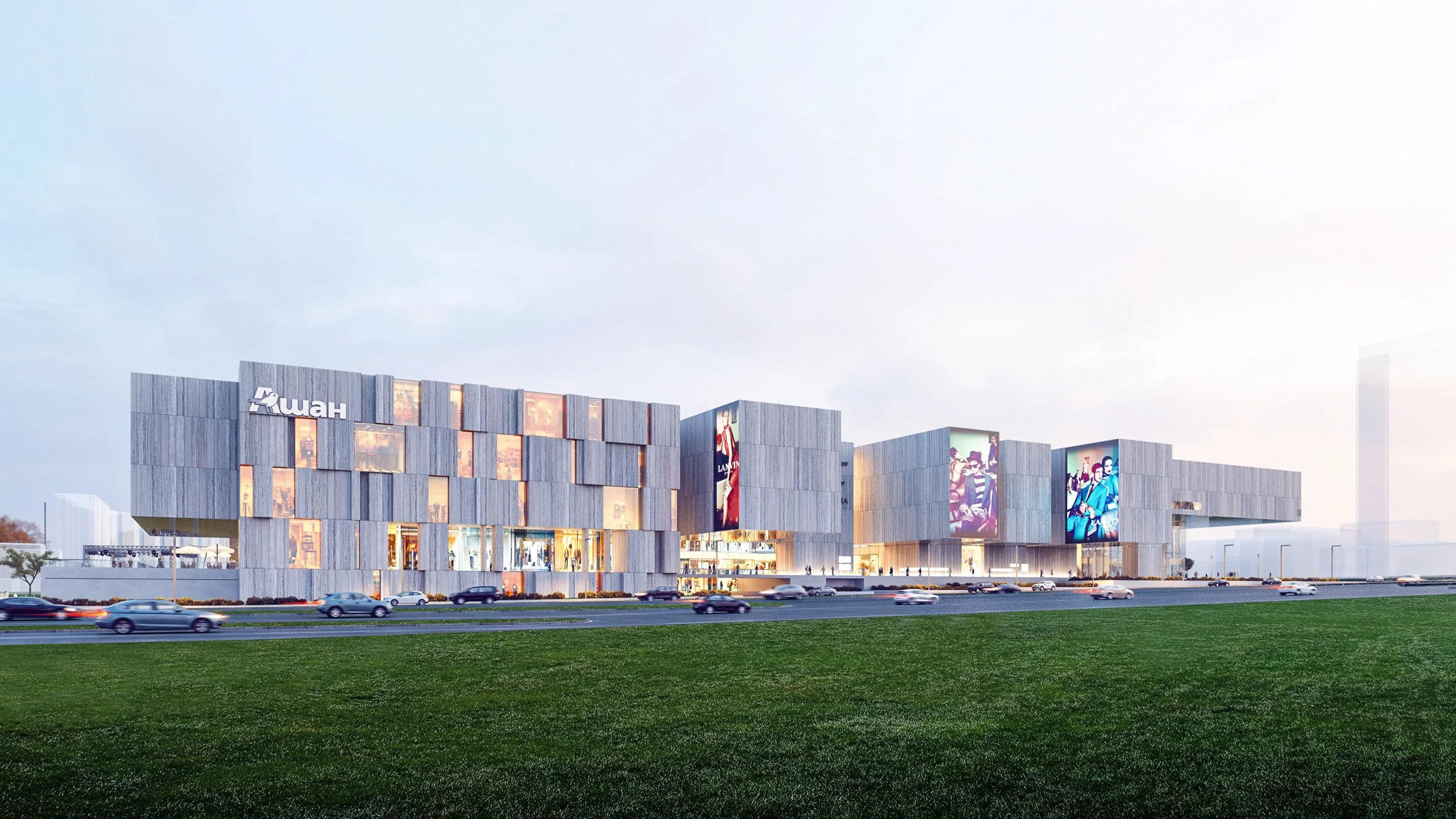
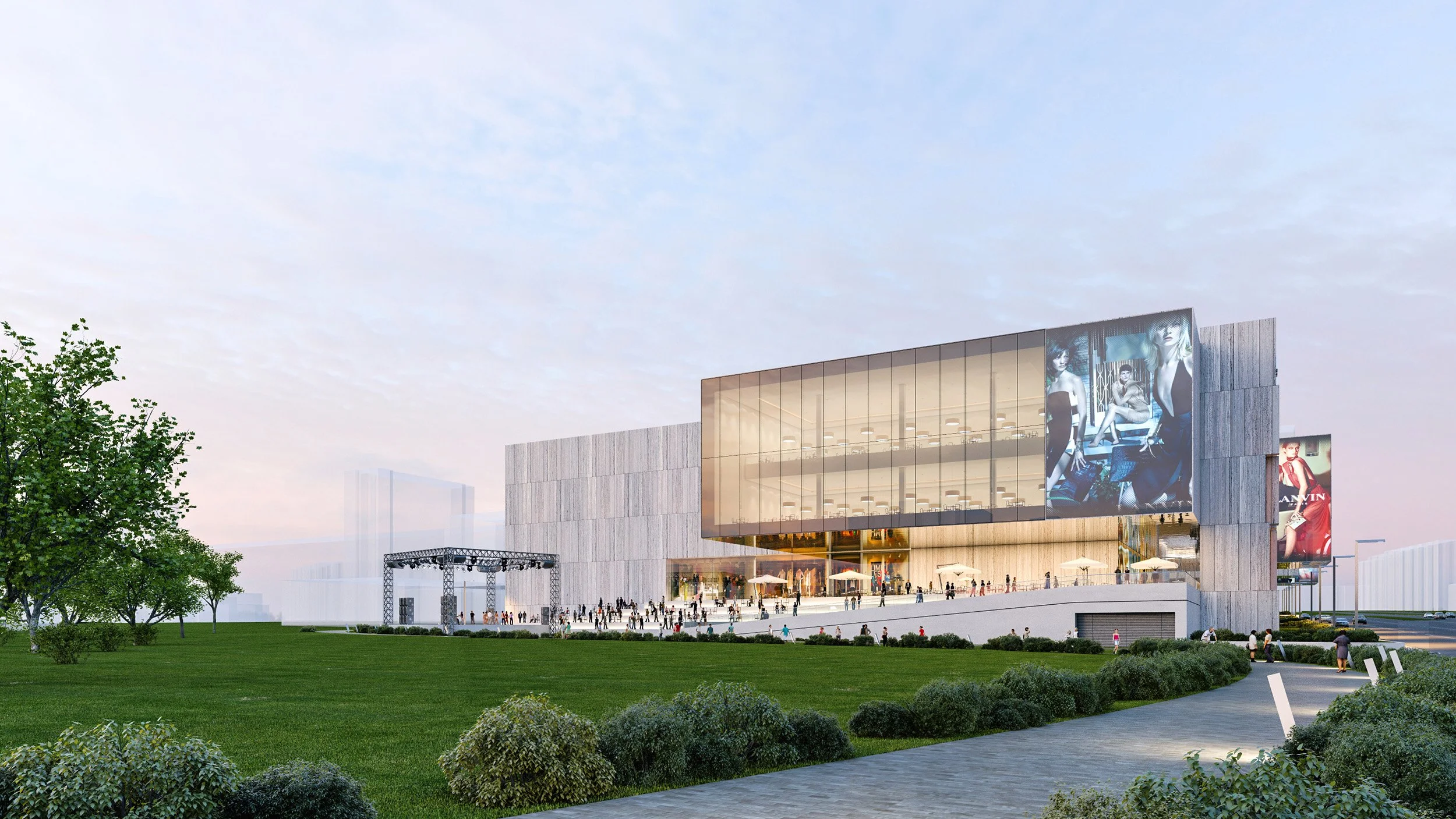
The building establishes a direct relationship with the neighboring apple garden and park. Restaurants and food-related functions line this green edge, allowing indoor spaces to expand visually and spatially toward the landscape. The complex is conceived not only as a retail destination but as a community hub, accommodating seasonal markets, concerts, exhibitions, and open-air events that engage both visitors and local residents.
Internally, the spatial organization is structured around four thematic atriums inspired by the natural elements of water, air, fire, and earth. These large vertical voids introduce daylight deep into the plan and provide distinct identities within the overall composition. Organic interior forms contrast with the more geometric exterior envelope, creating a layered spatial experience that combines clarity of circulation with moments of visual and material richness.
A publicly accessible rooftop extends the project vertically, incorporating recreation and sports facilities alongside terraces and leisure areas. Together with extensive landscaping and the use of environmentally responsible materials, the complex positions itself as a contemporary urban catalyst — balancing commercial intensity with public life, and redefining the relationship between large-scale retail architecture and the city.
The project originated from a closed architectural competition initiated after earlier proposals failed to gain approval from the city council. The concept presented here was developed as a late-stage entry and selected for further implementation. While the scheme was later realized with significant modifications by an international design team, the initial urban and volumetric strategy formed the basis of the built project.
Following its completion, the development received several international awards, including ENR’s Global Best Project Award in the Retail/Mixed-Use category.
Project team: Evgeniy Shchetinkin, Sergey Dukarev.