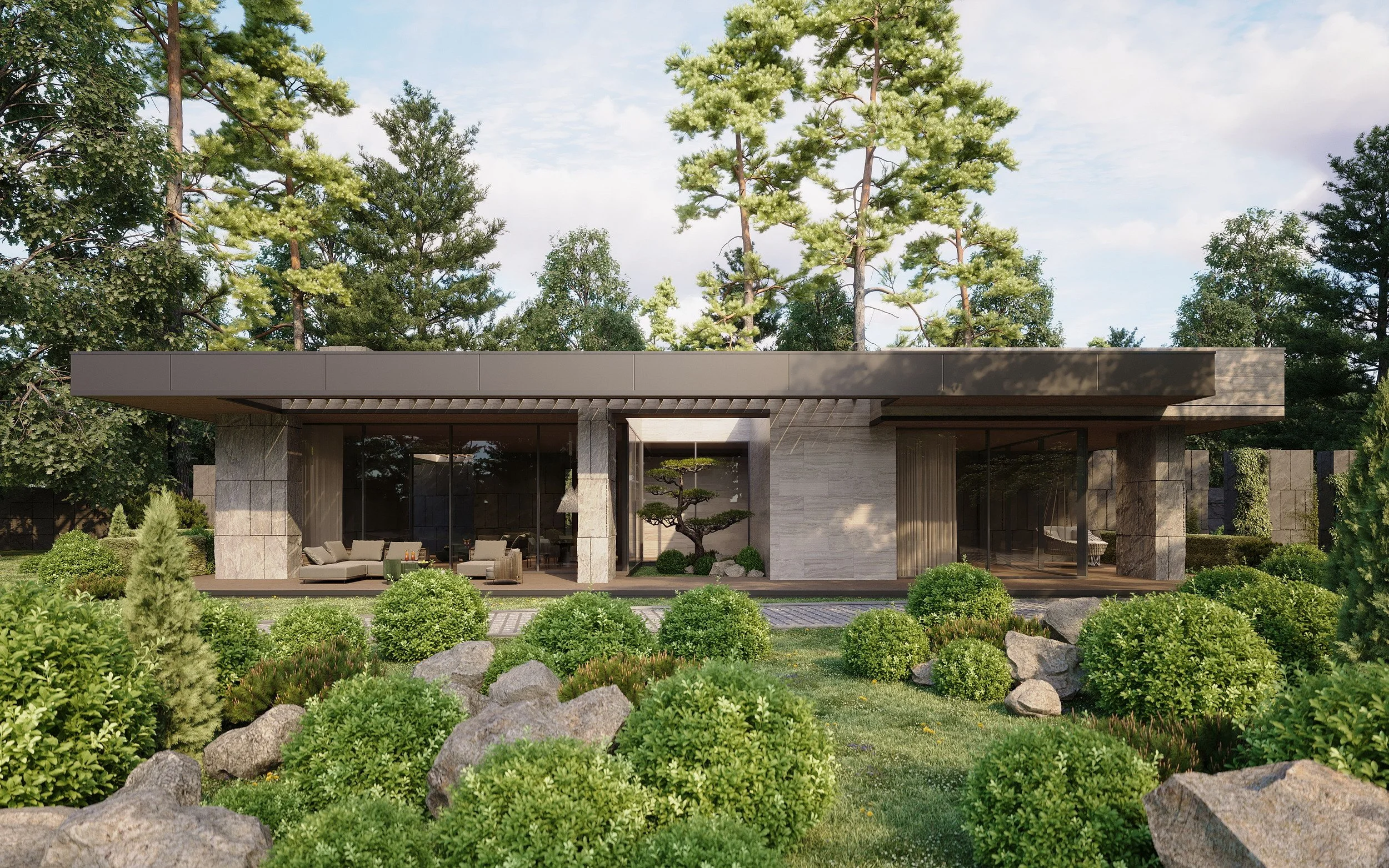
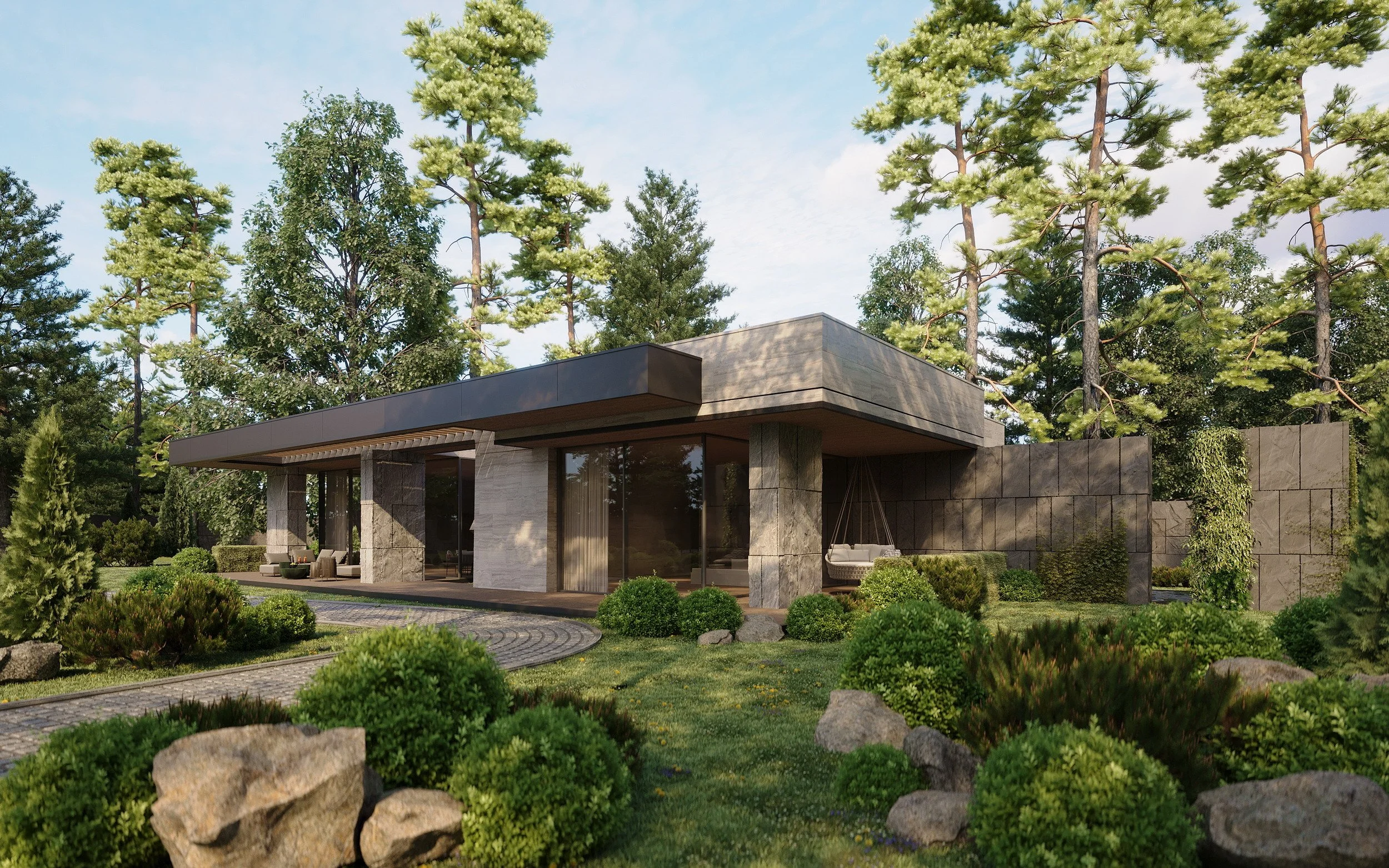
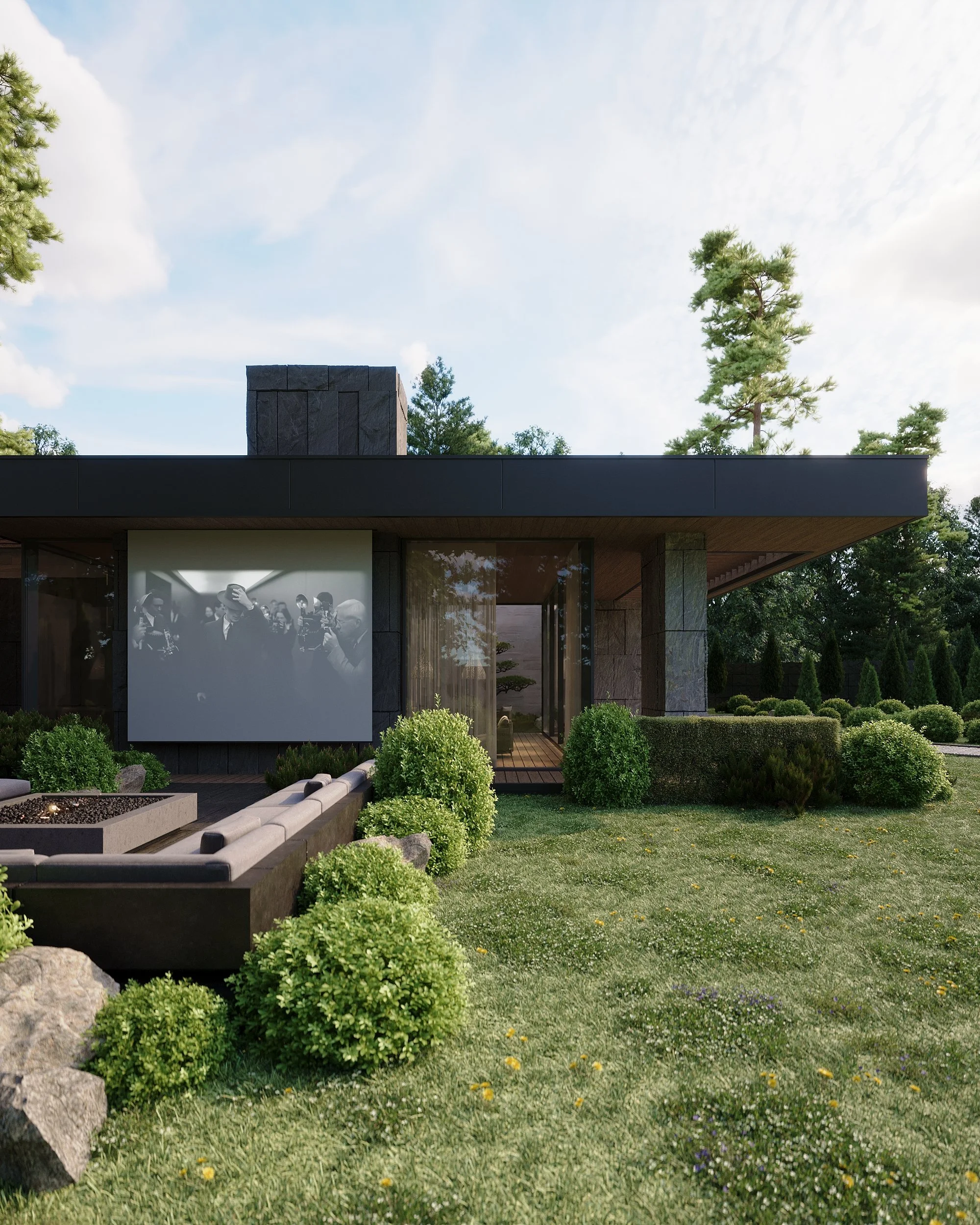
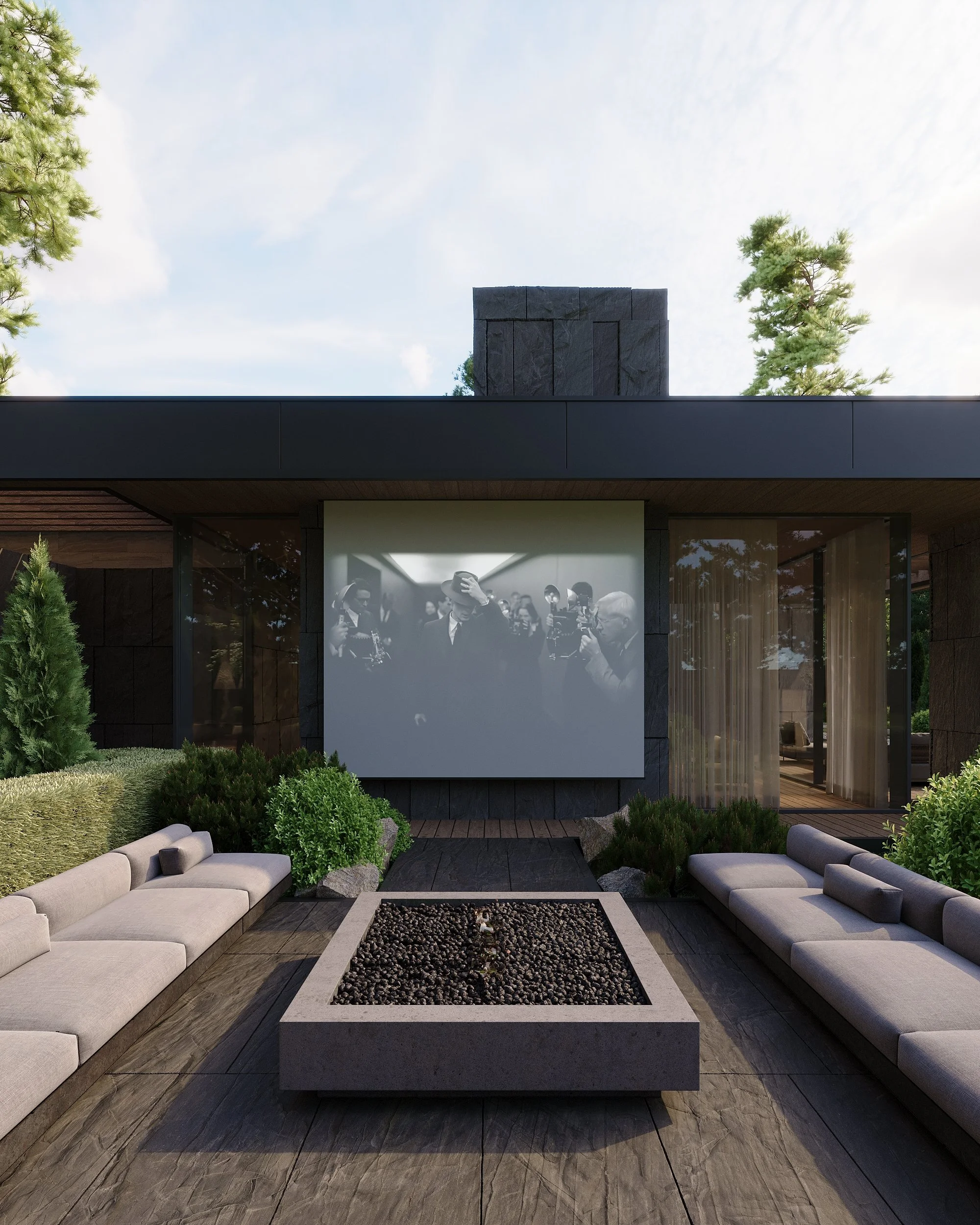
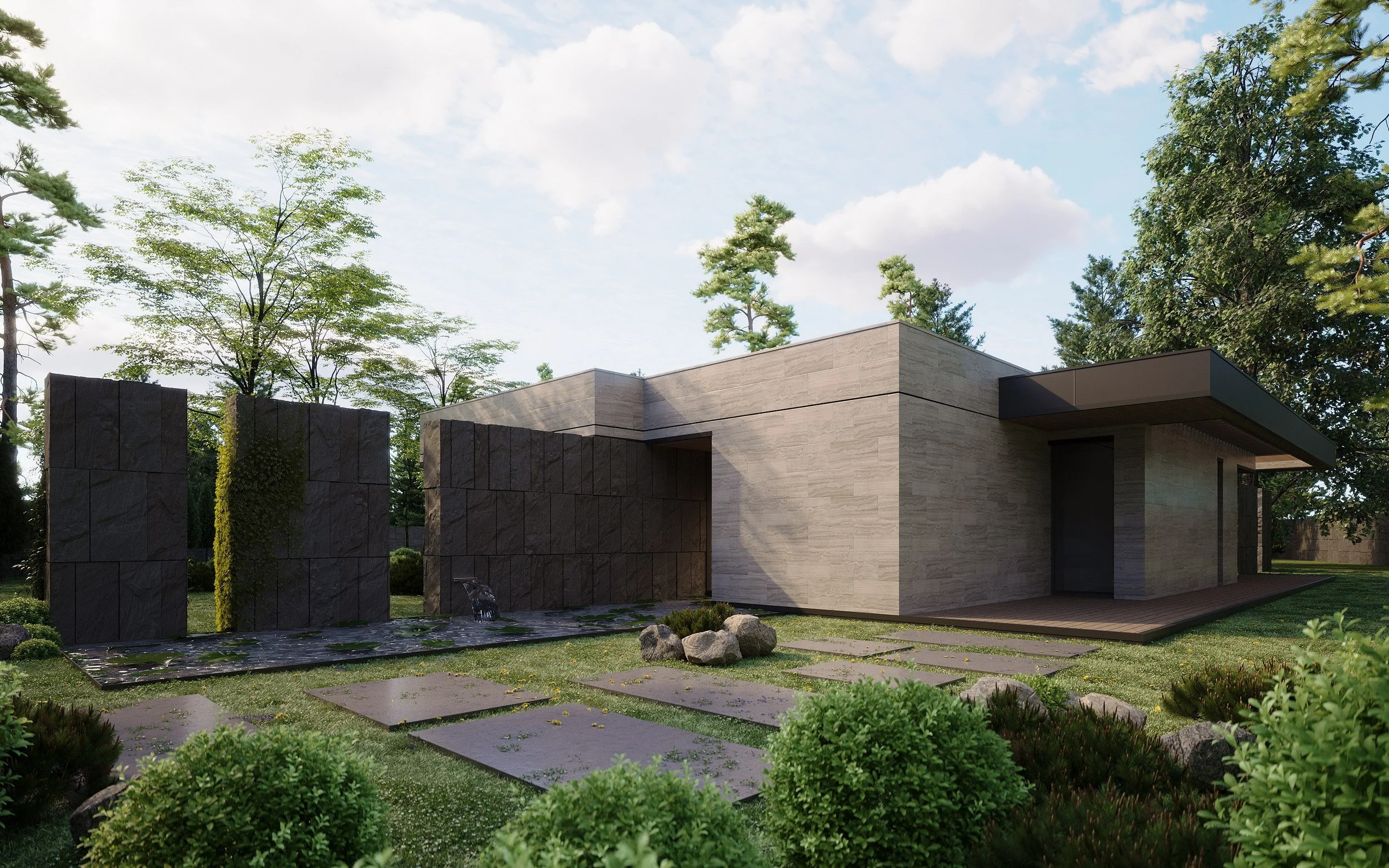
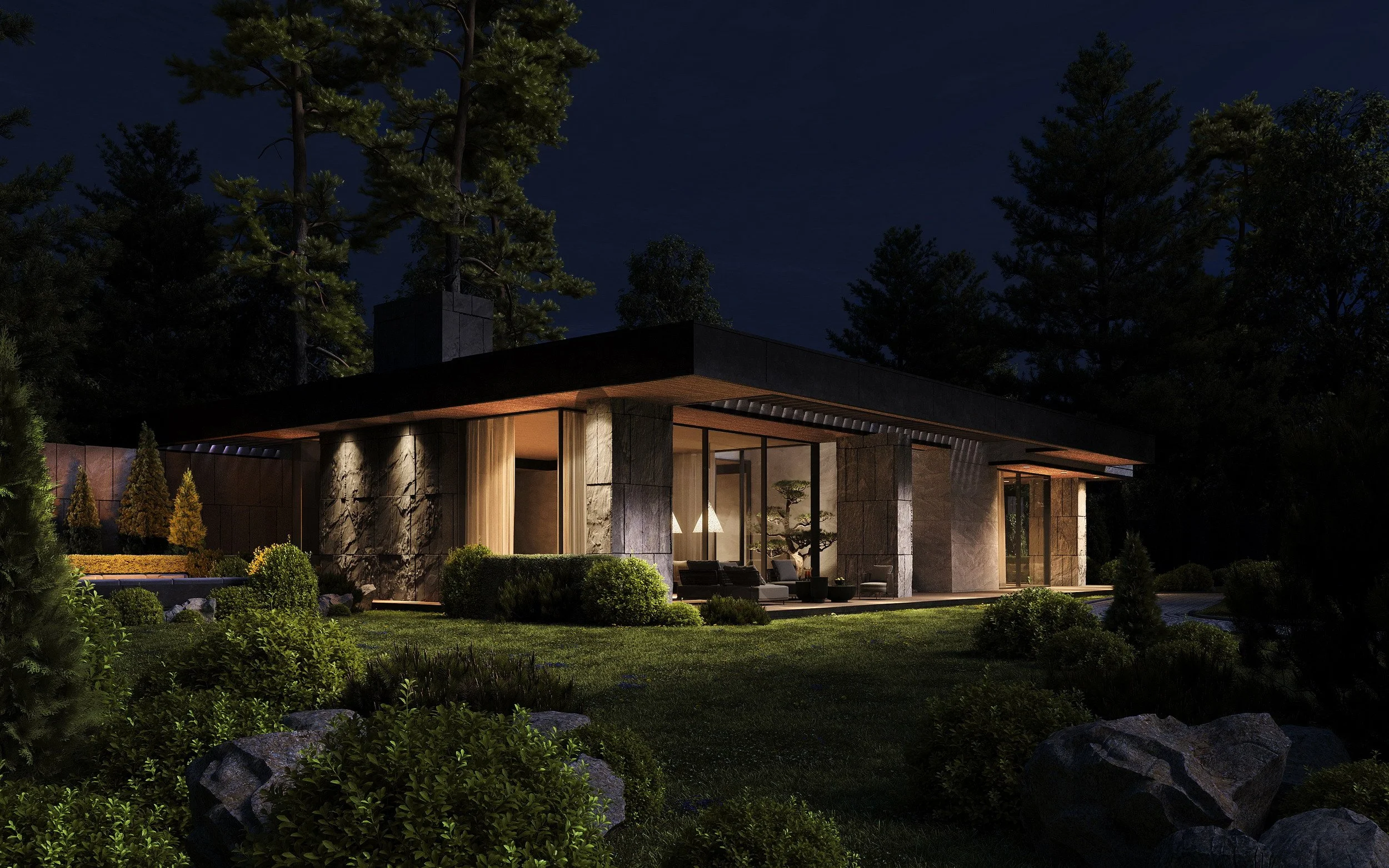
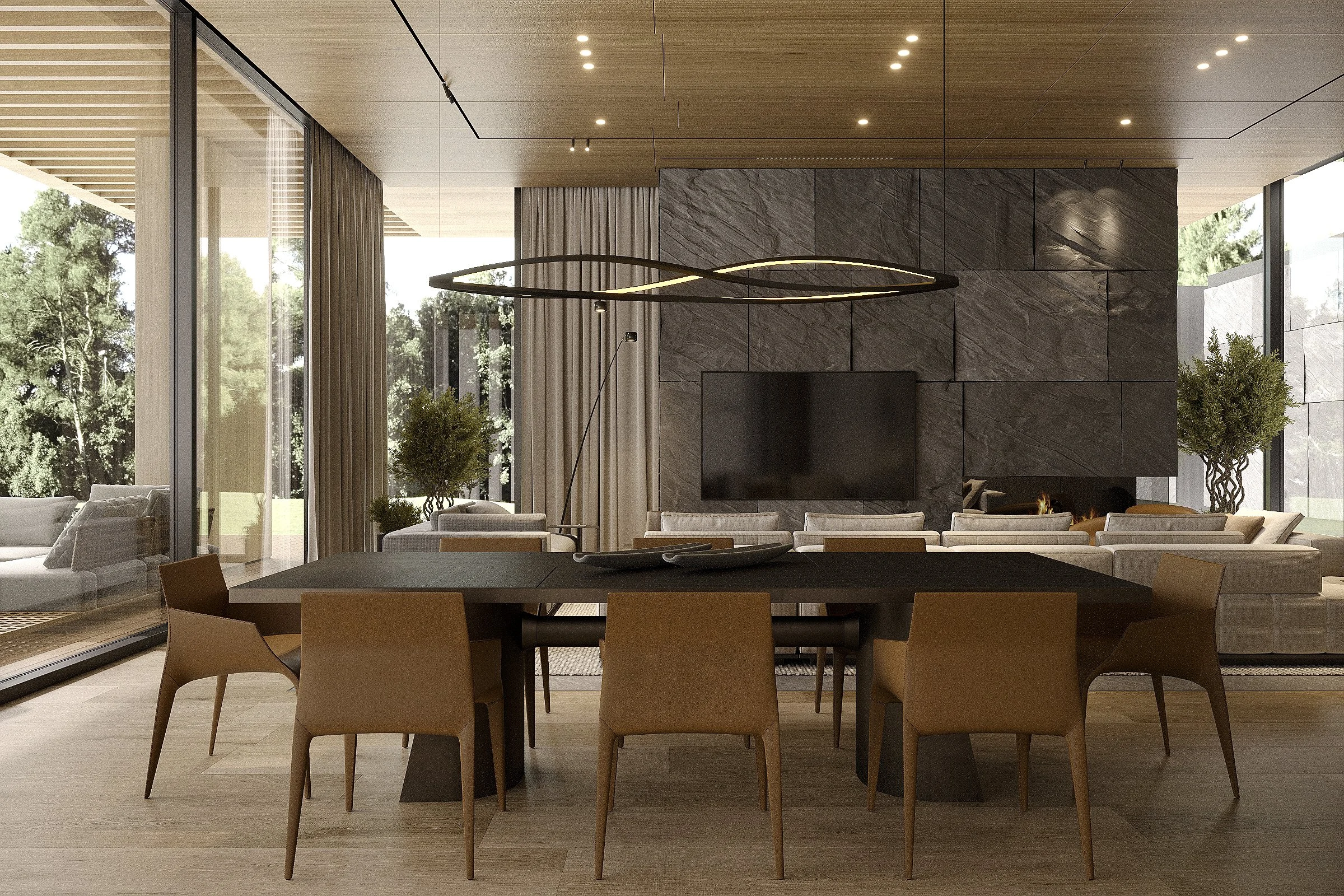
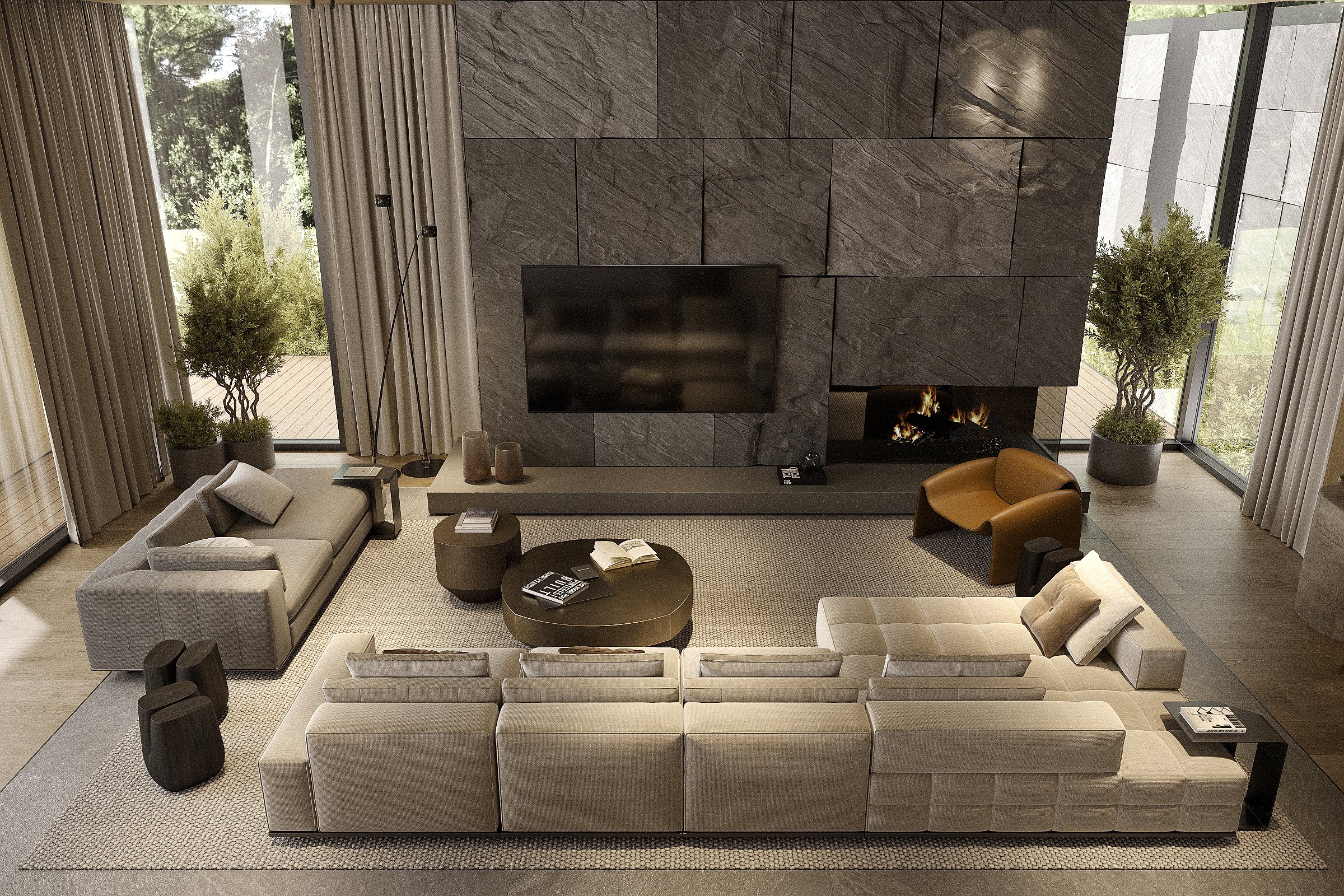
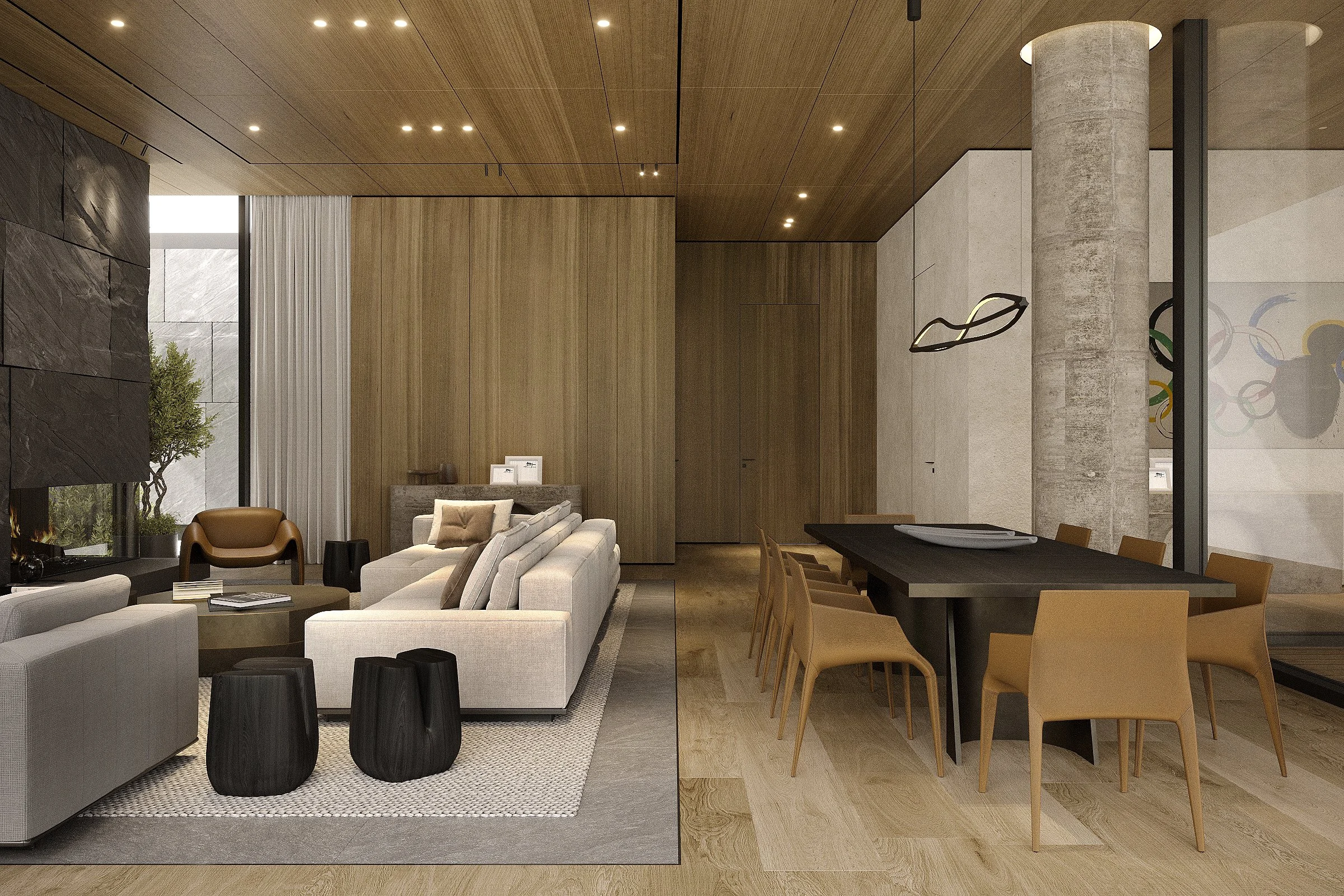
Several architectural concepts were explored during the early development phase, including a barn-like structure with a gabled roof, extensive use of wood and a double-height volume. The final proposal evolved into a more intimate mini-villa, drawing inspiration from the restrained modernist principles of mid-20th-century masters — clarity of composition, functional planning and a strong relationship between interior and landscape. The house’s rectangular form integrates harmoniously into its lush green surroundings, avoiding the appearance of a fortress or bunker. The exterior wood finishes were inverted inside, creating a warm and enveloping atmosphere.
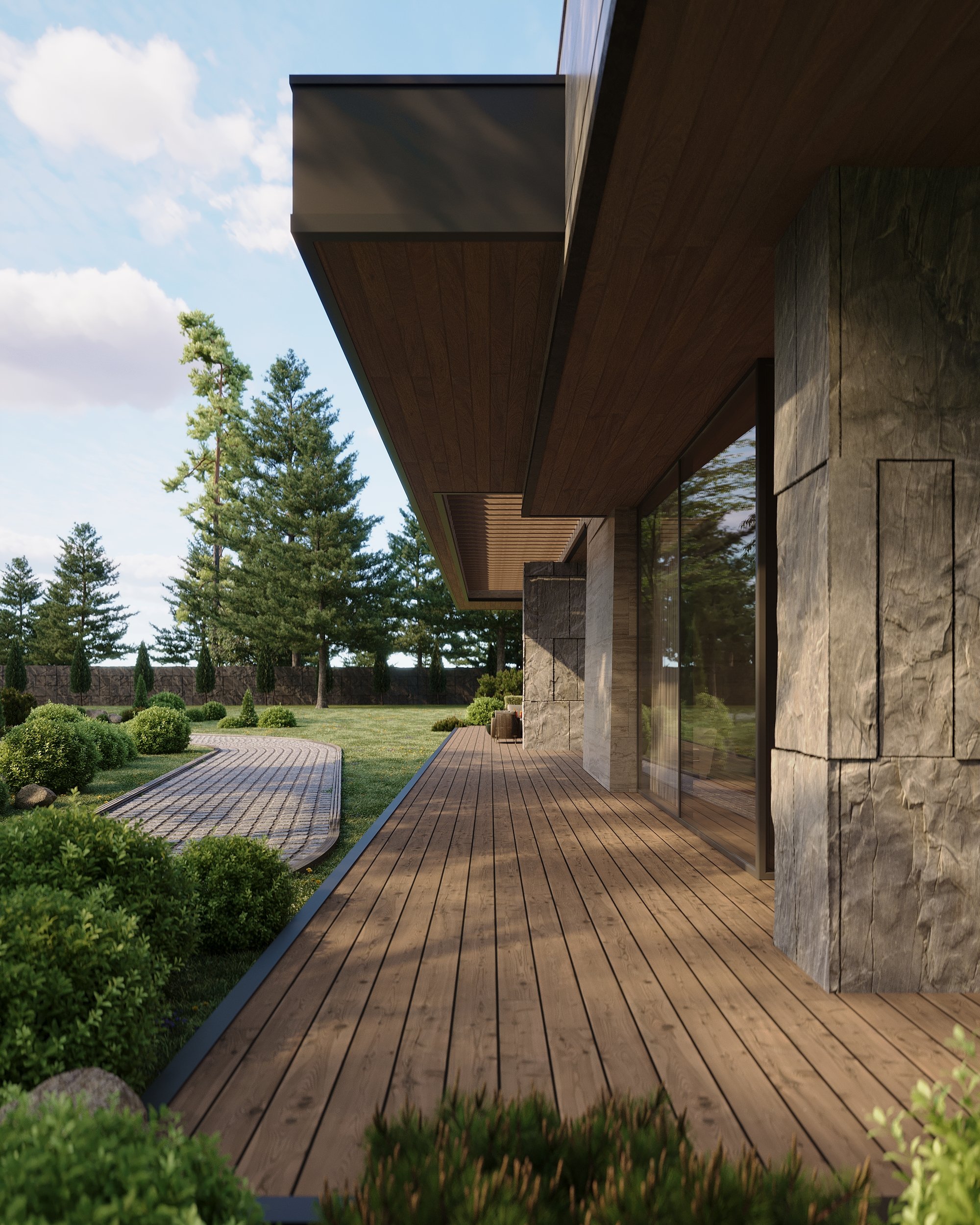
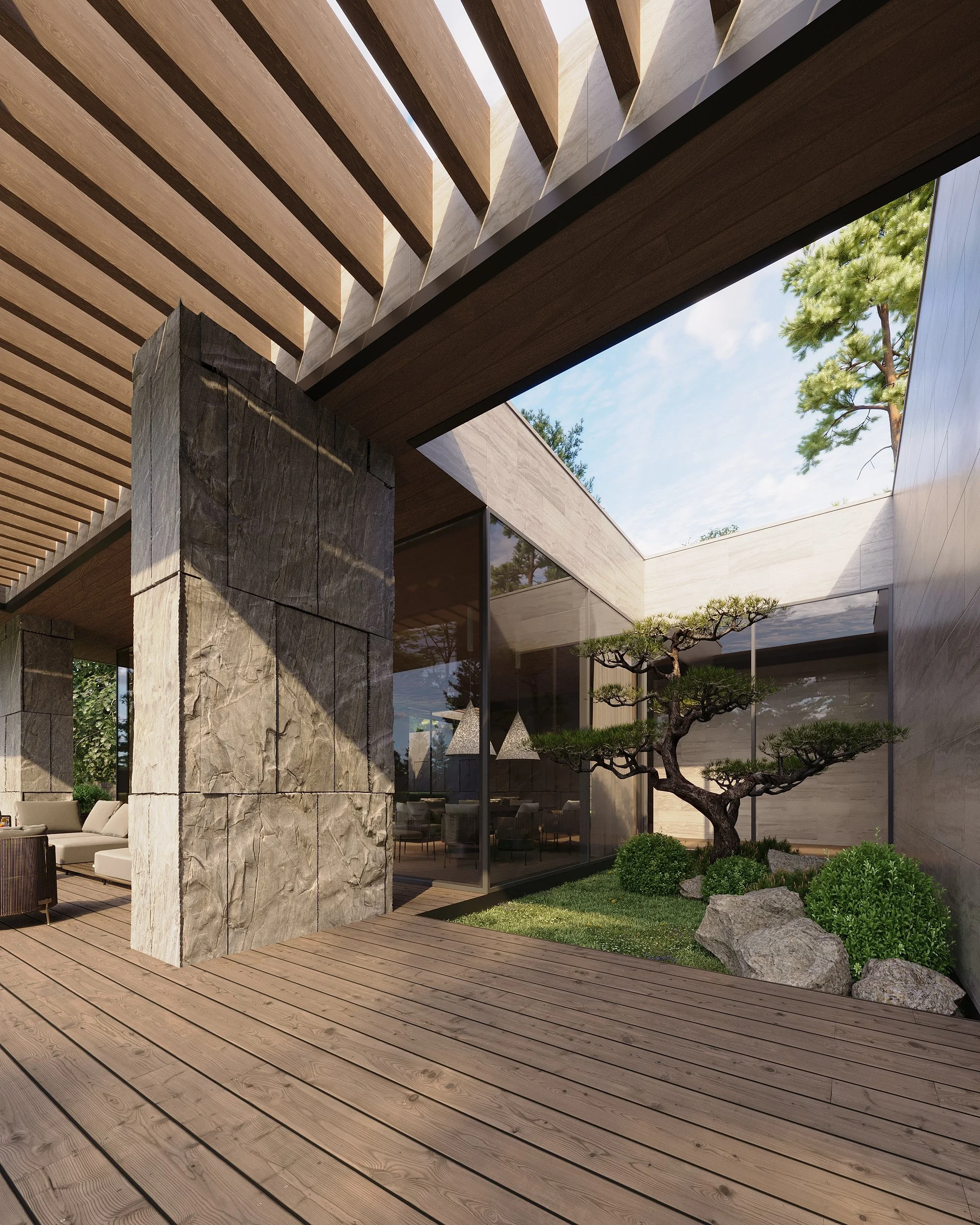
The exterior is composed of natural materials in large formats, selected for durability and their ability to age gracefully: textured stone, oxidized dark metal and thermo-treated timber. The architecture incorporates concealed high-quality engineering systems and structural solutions designed for seismic resilience — an essential consideration in a region where significant earthquakes are not uncommon, including one that occurred during the planning process.
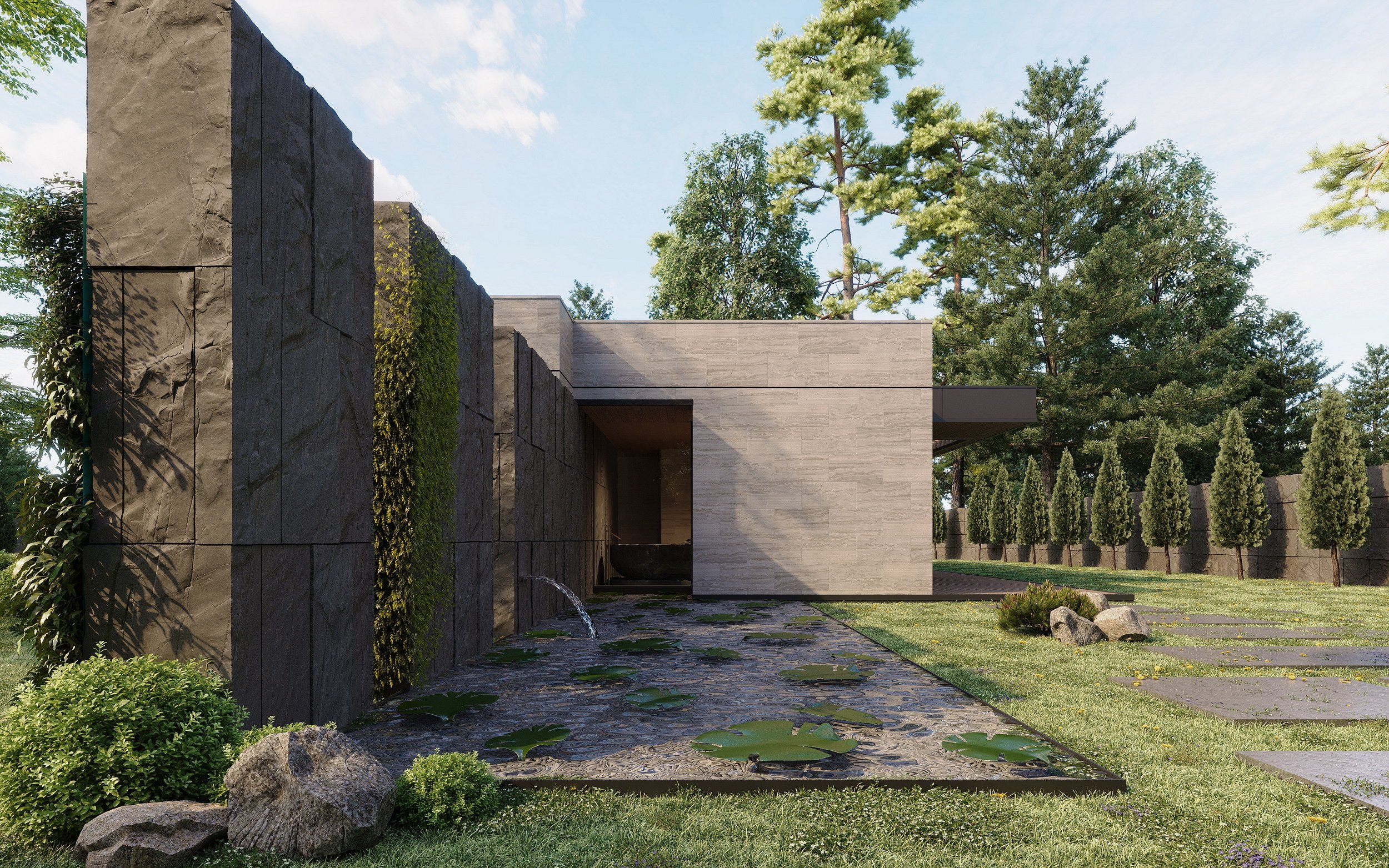
At the rear of the building, adjacent to the bathroom, a serene pond with water lilies and a calm reflective surface is complemented by an architectural waterfall cascading gently along the wall. Together with the minimalist landscaping, this element enhances the atmosphere of retreat and quiet contemplation, particularly when viewed from the bath.
Project team, Architecture: Evgeniy Shchetinkin, Evgeniy Tsoy, Amin Mirzoev. Interior design: Iliya Sergeev, Dinara Aibadulina | In collaboration with Metropolis Architects