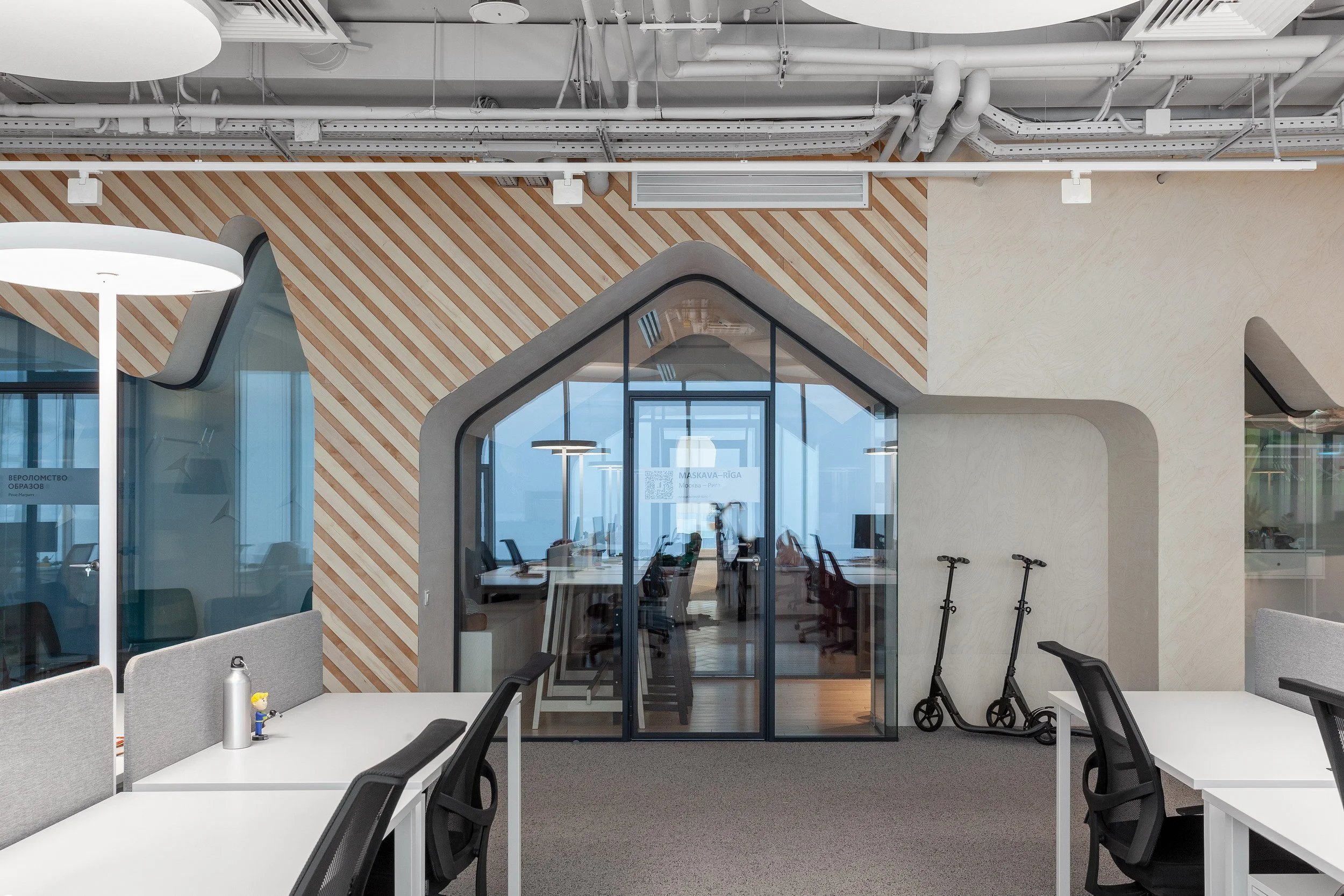
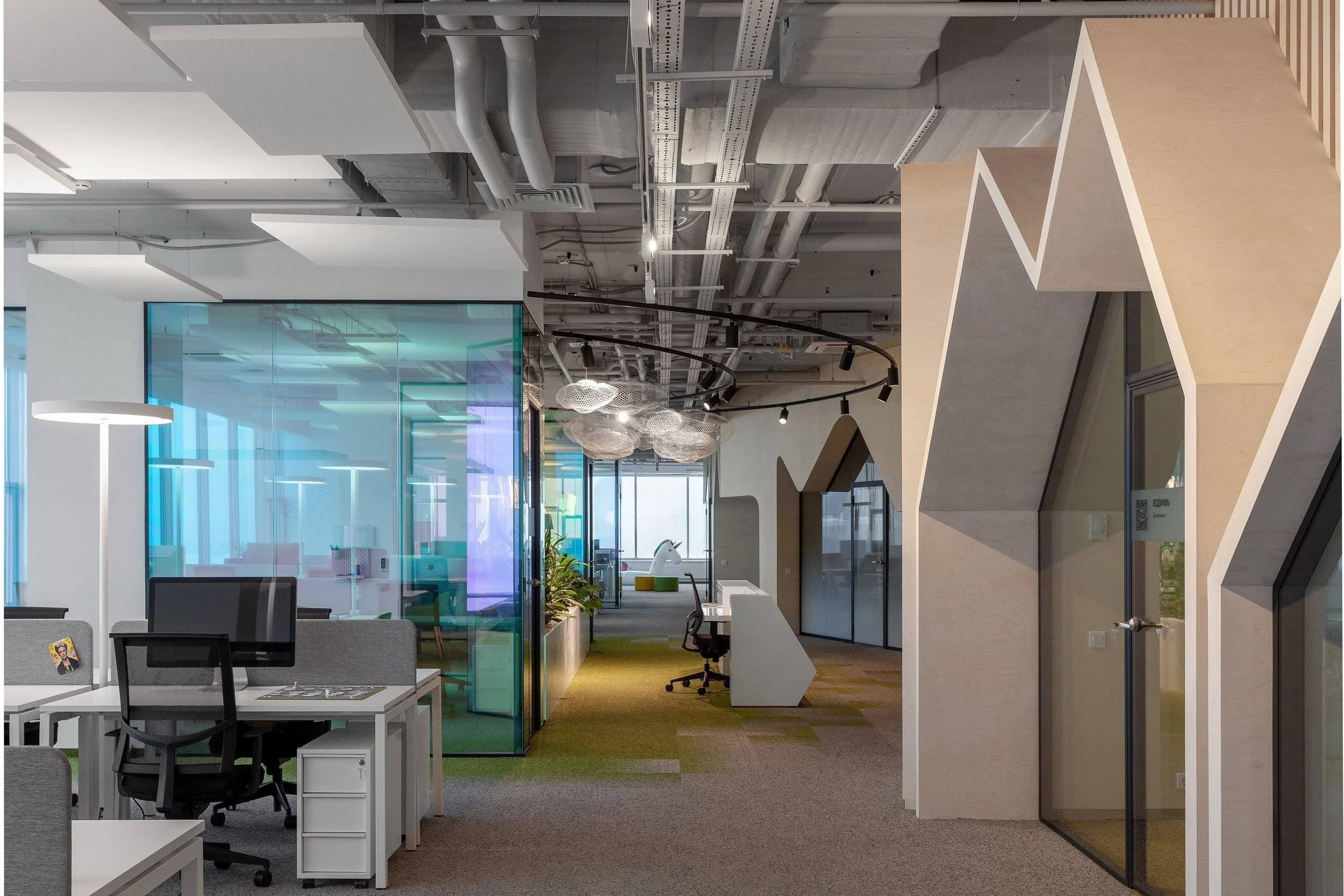
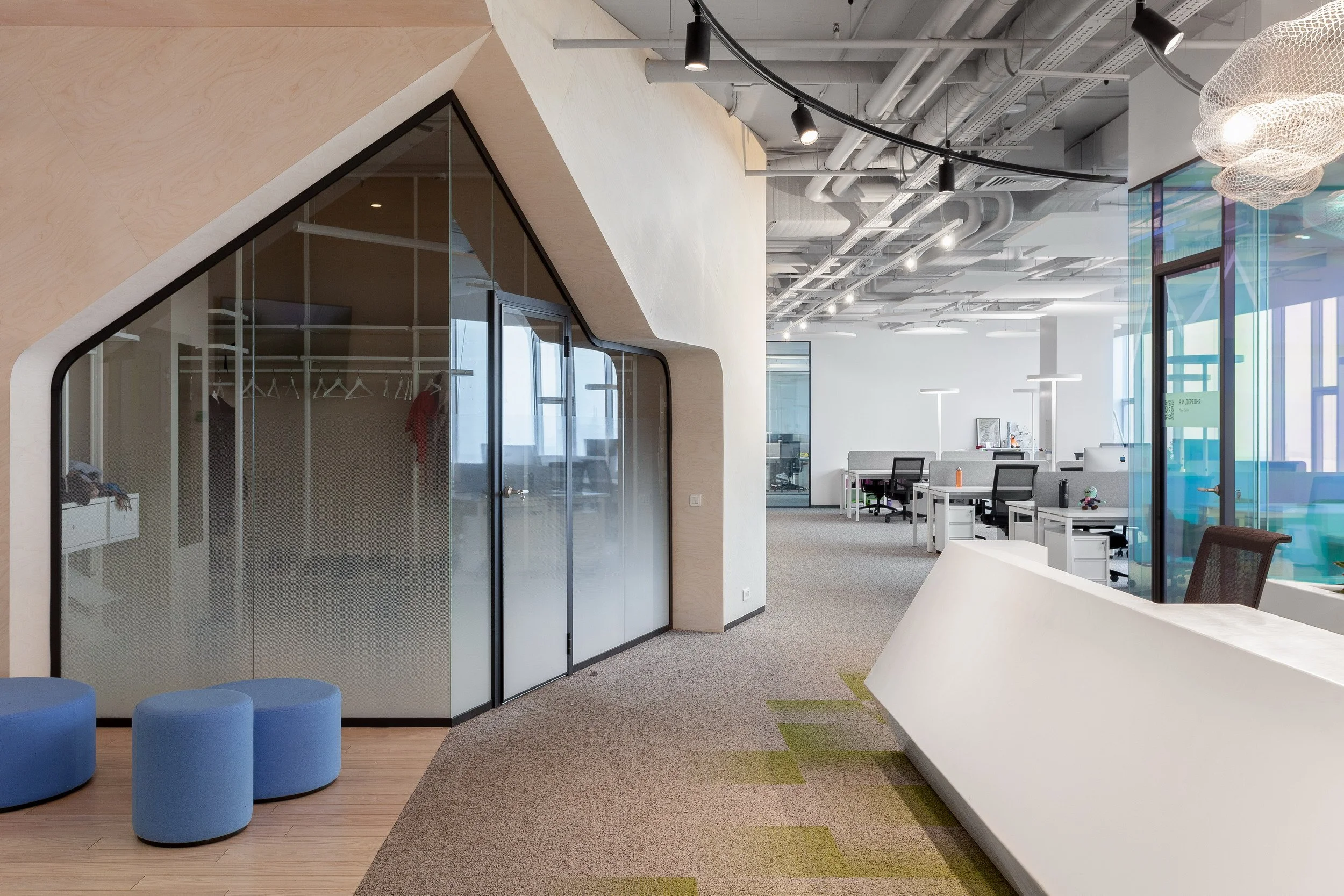
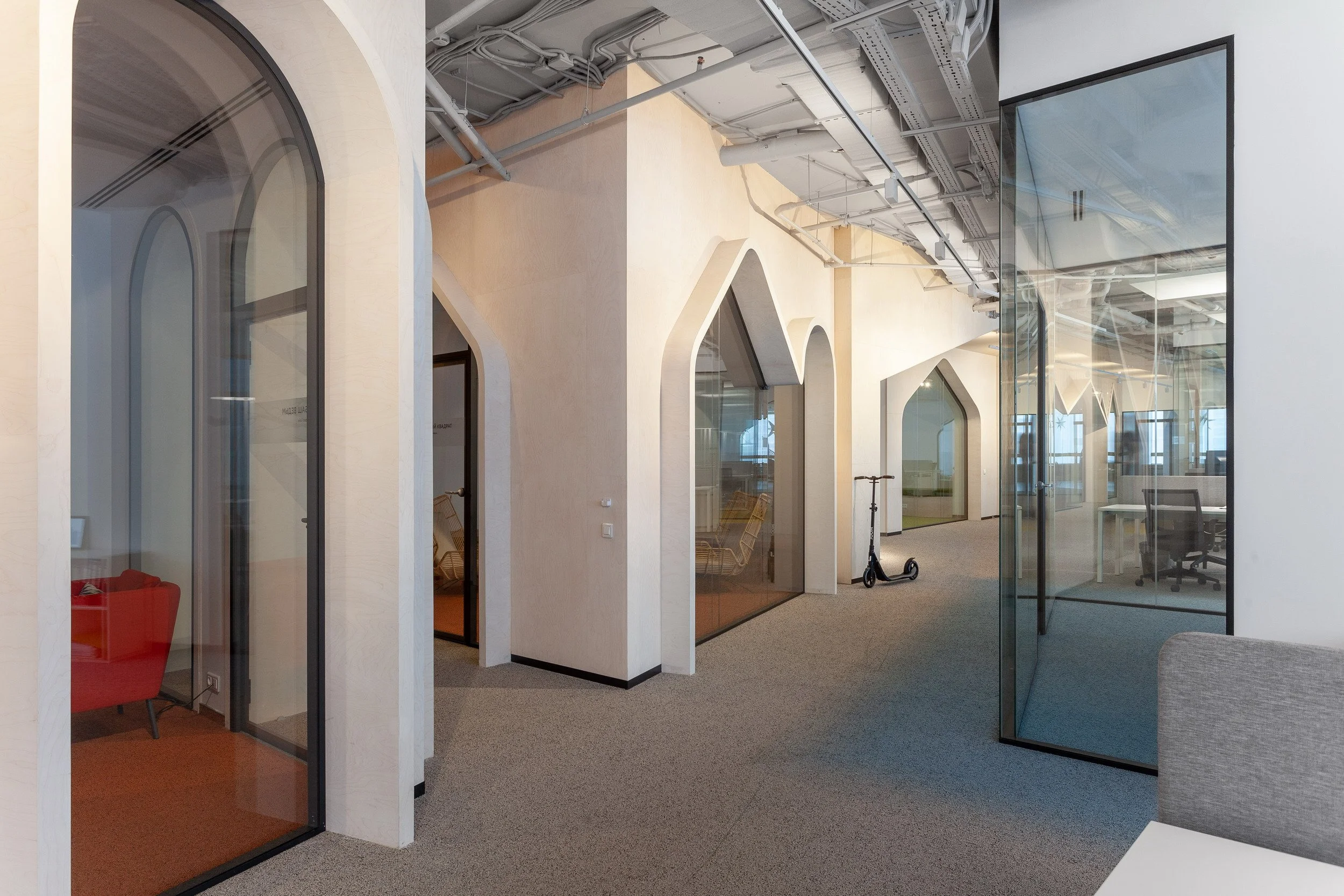
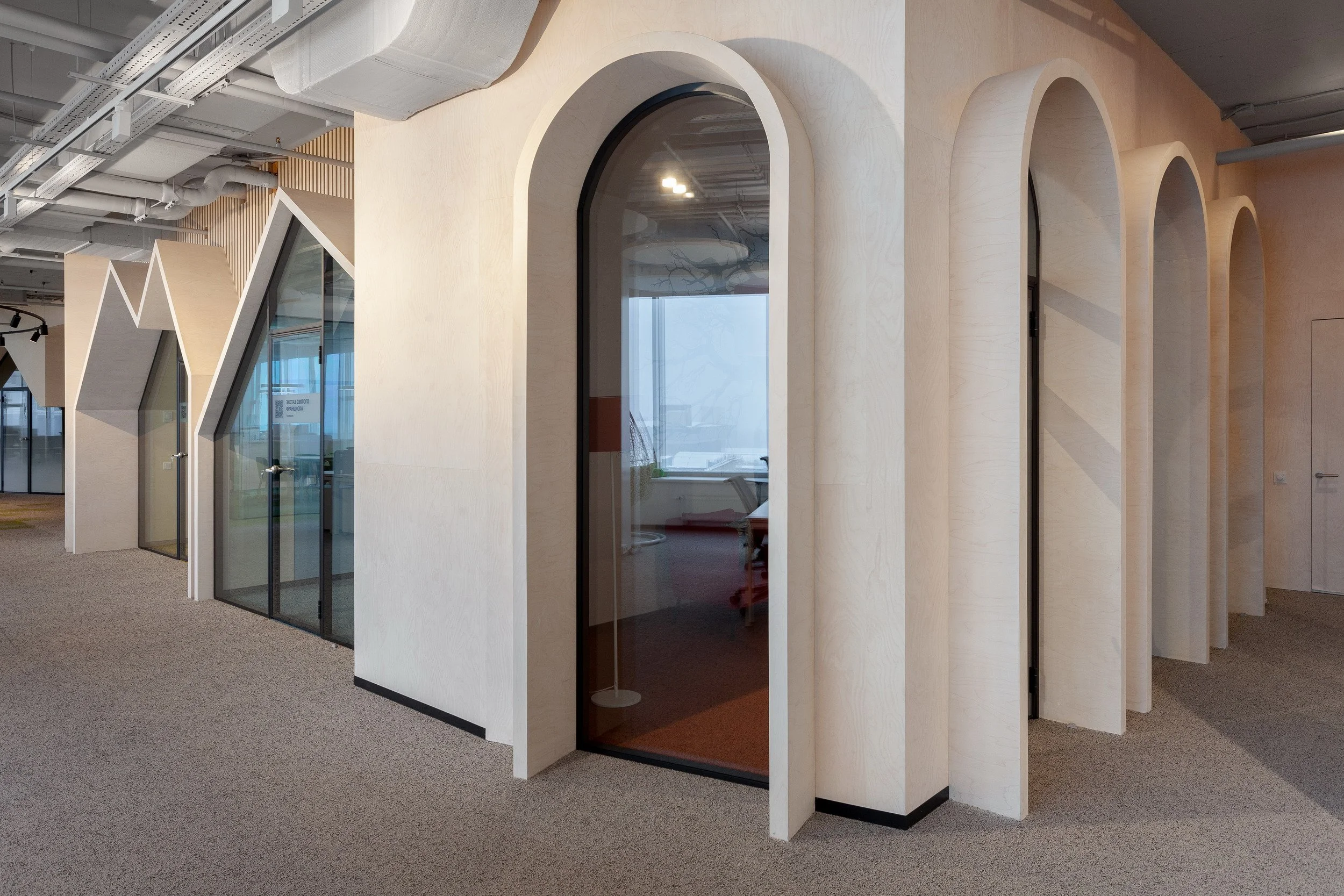
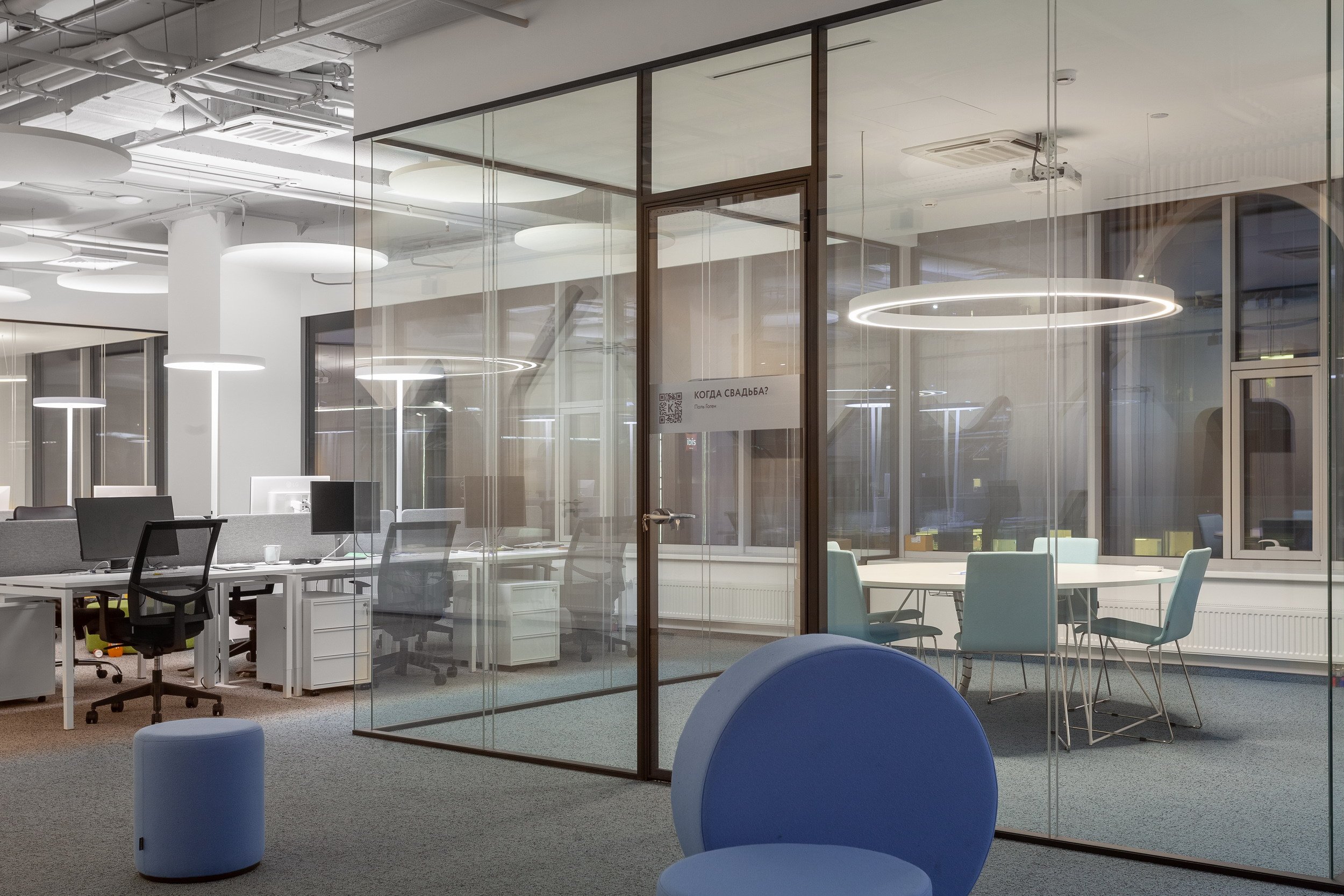
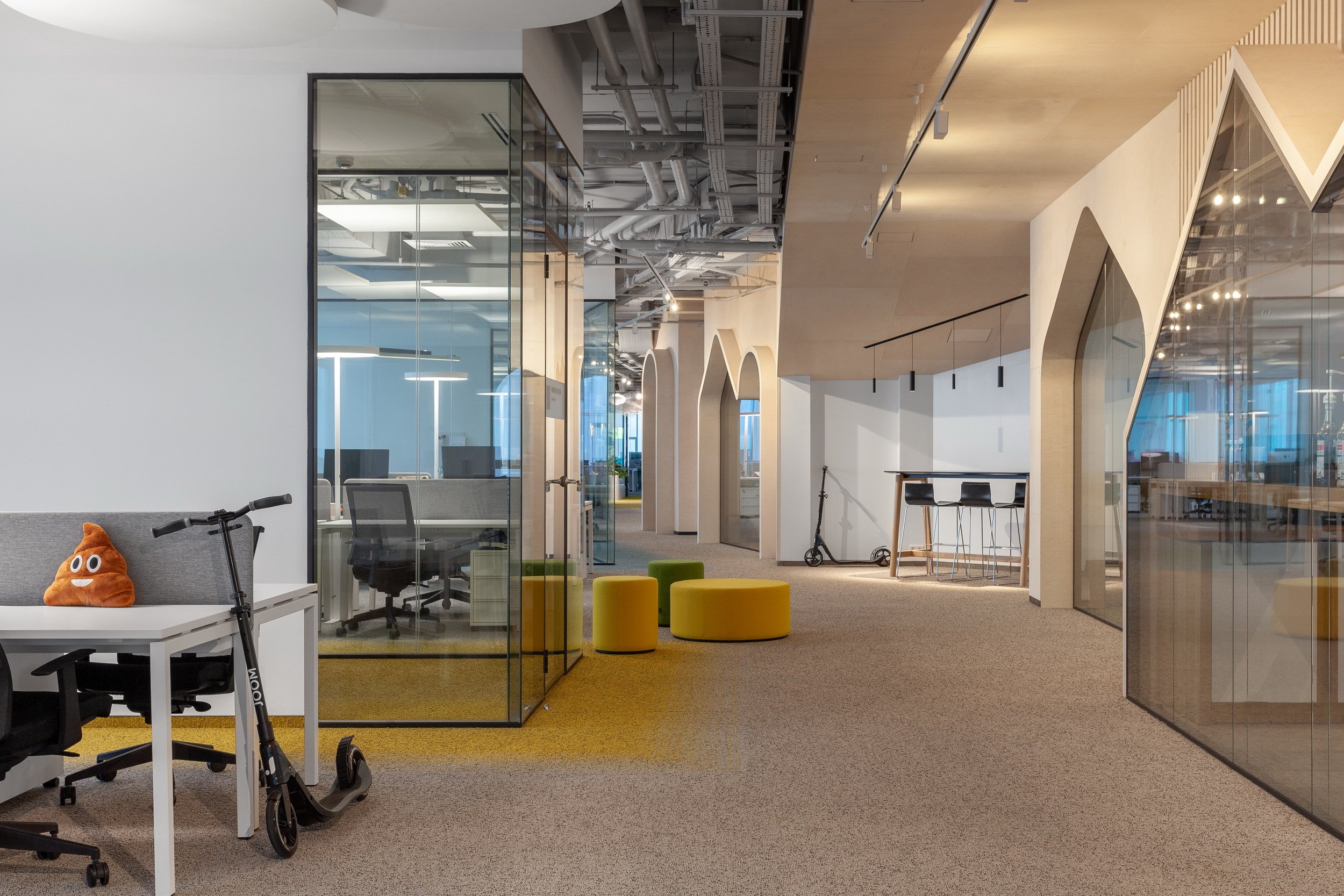
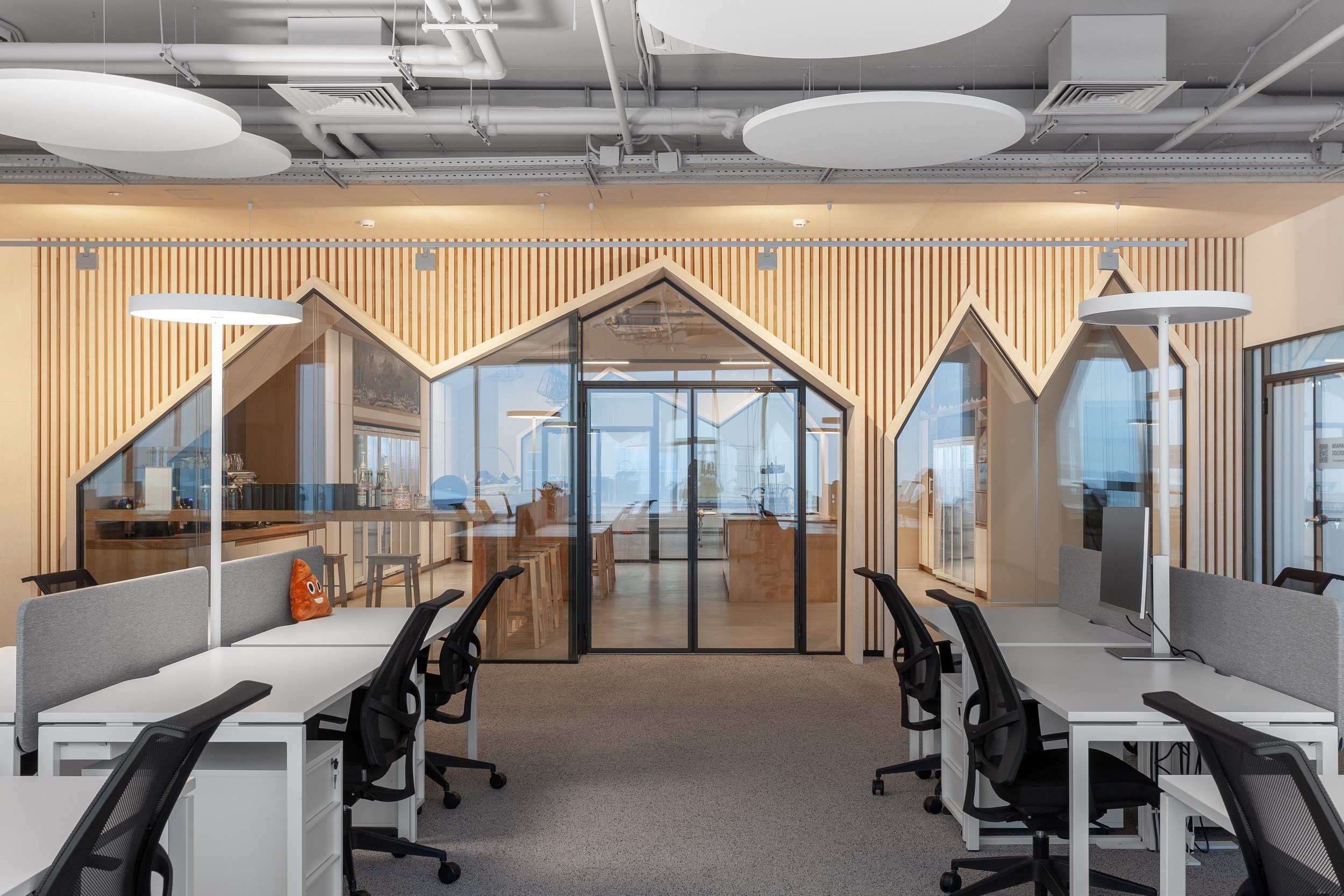
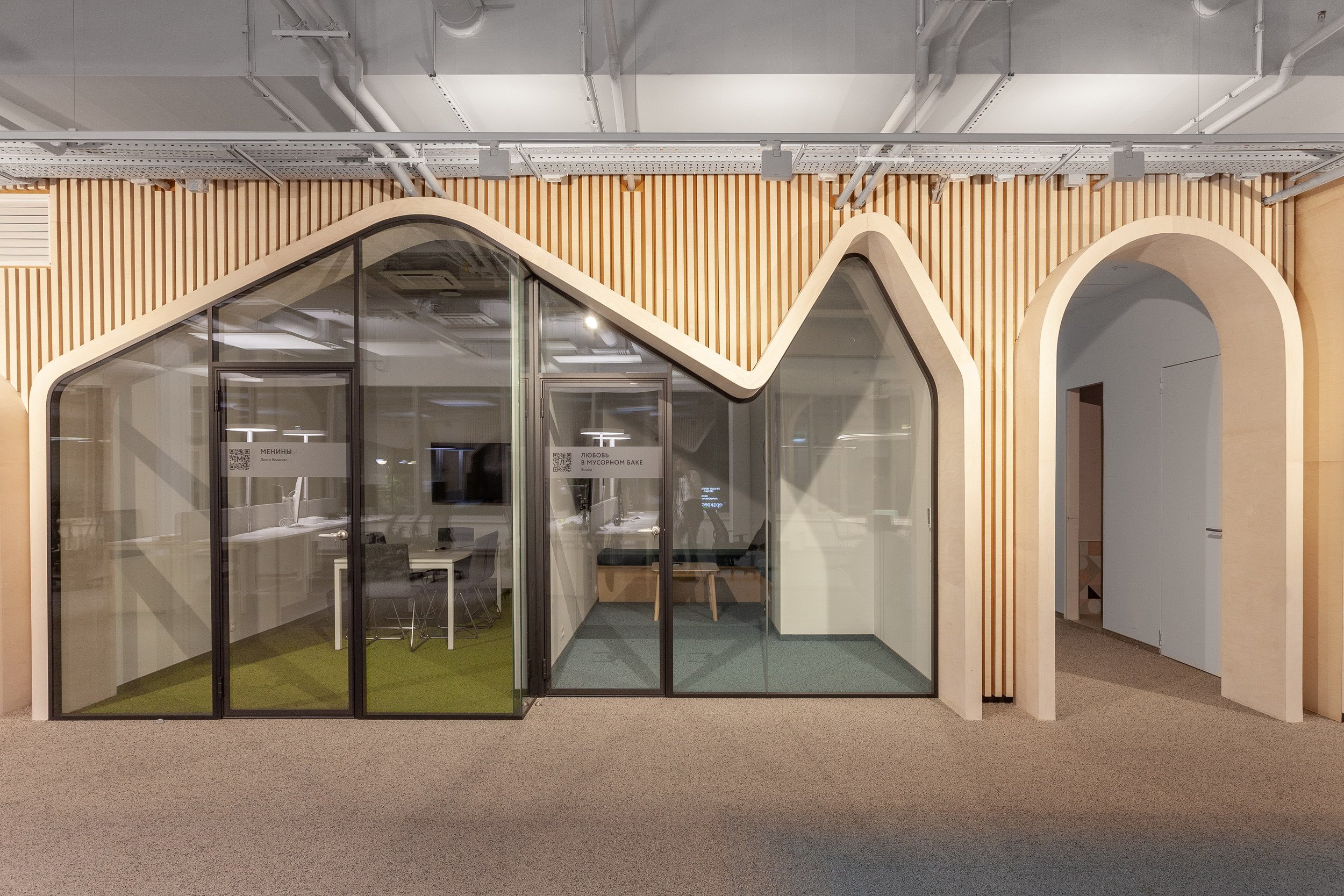
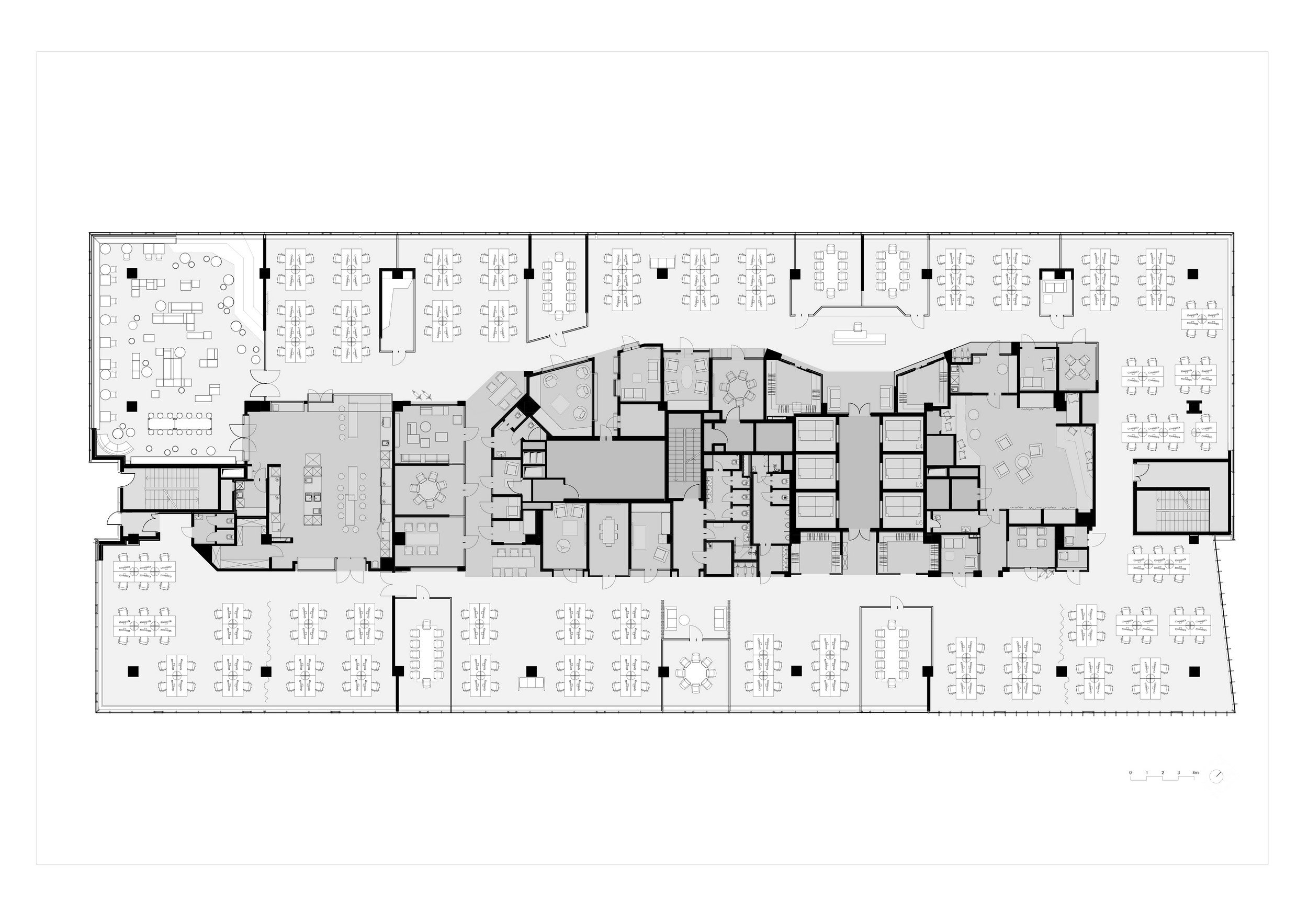
Joom is an international e-commerce platform connecting global consumers with manufacturers worldwide. Its new headquarters in Moscow occupies an entire floor of the Aerodrom Business Center on Leningradsky Prospekt, overlooking the surrounding urban fabric. The architects were invited only a few months before construction began, so the design process unfolded in parallel with implementation, requiring a rapid reconsideration of the initial zoning strategy and spatial logic. The brief called for a conceptually clear, non-trend-driven workplace reflecting the dynamics of a fast-growing tech company. The core idea evolved into an interpretation of an internal «city» — a dense mono-structure composed of interlocking volumes that form streets, squares and blocks. This central plywood cluster acts as the social and functional heart of the office, around which everyday work unfolds.
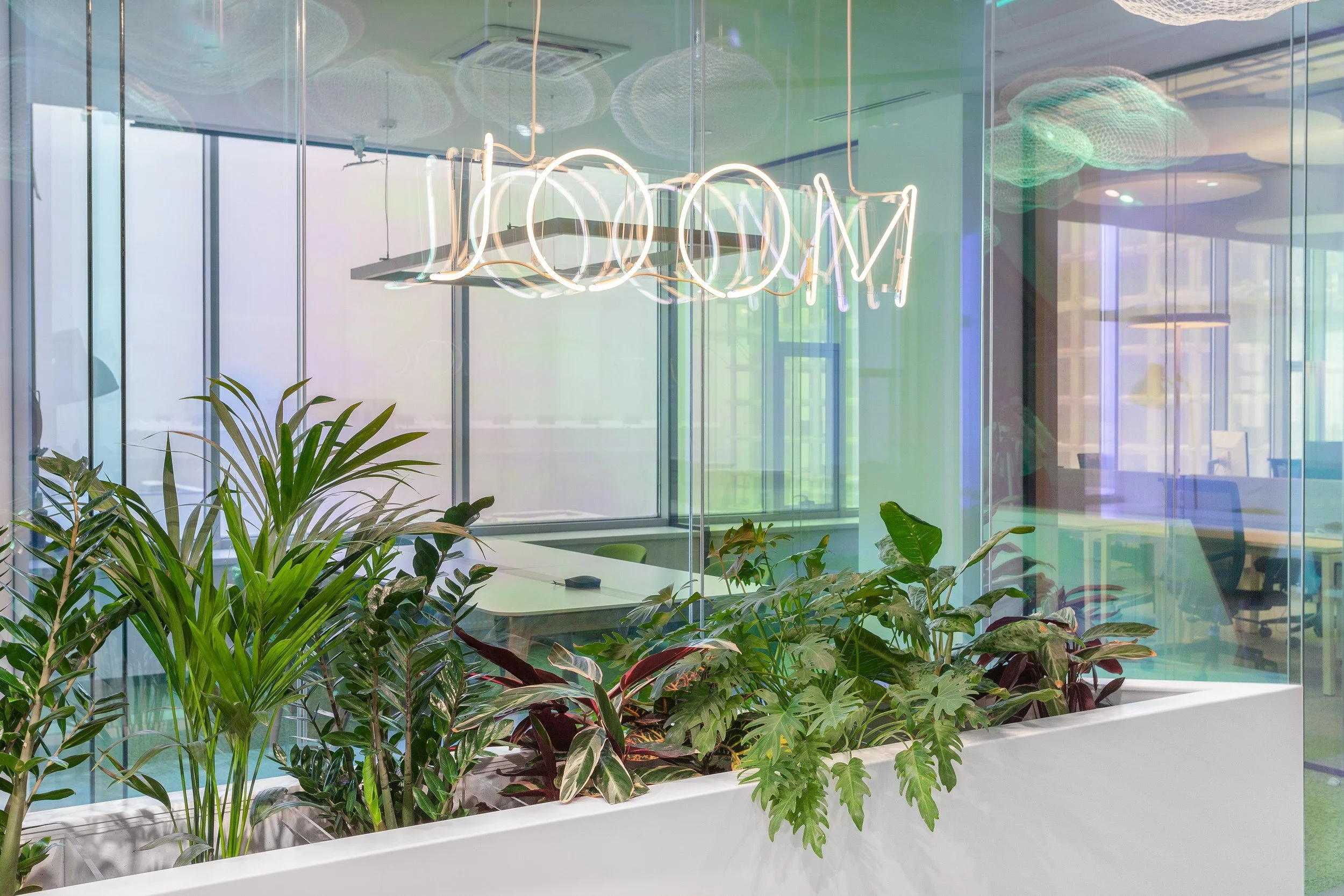
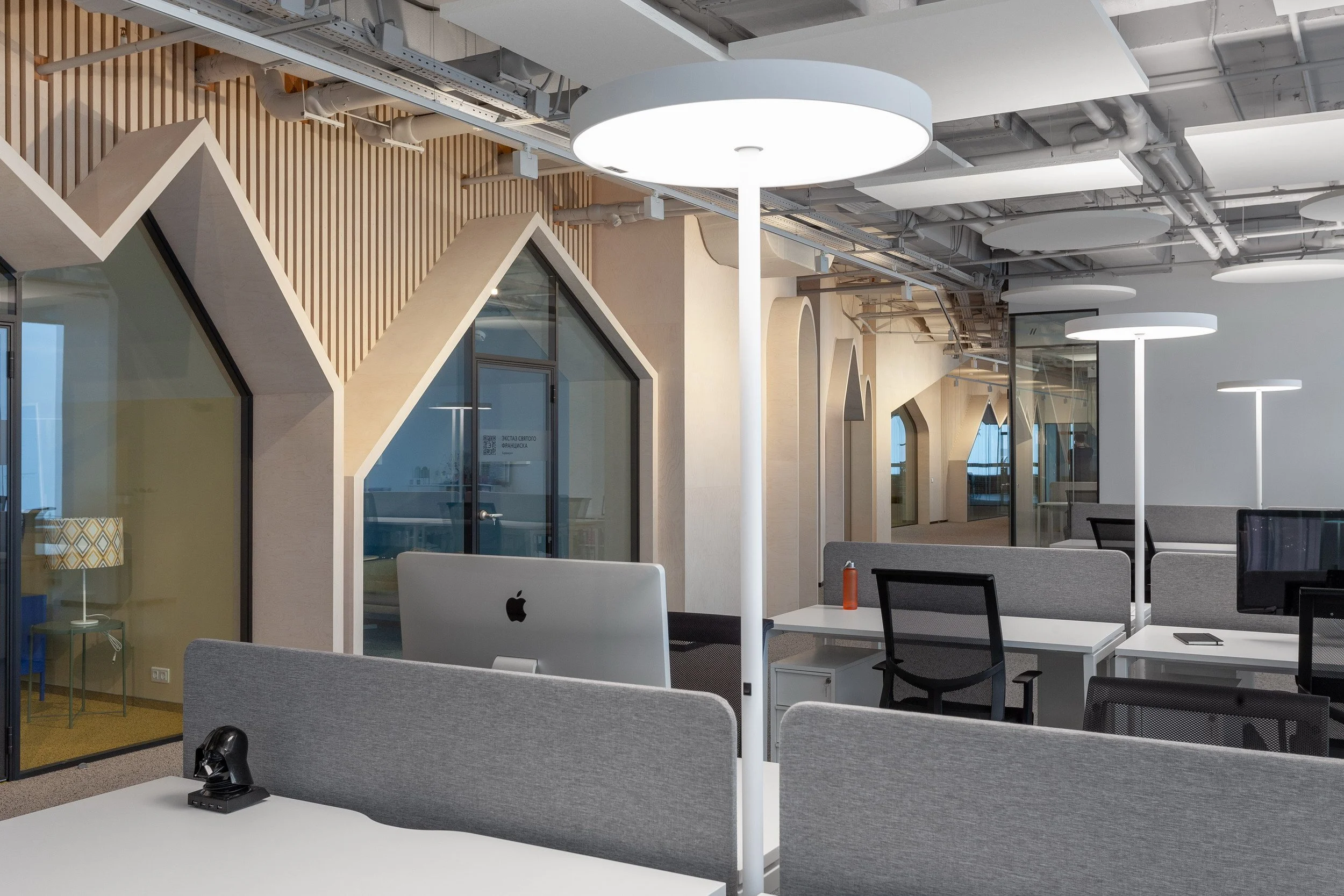
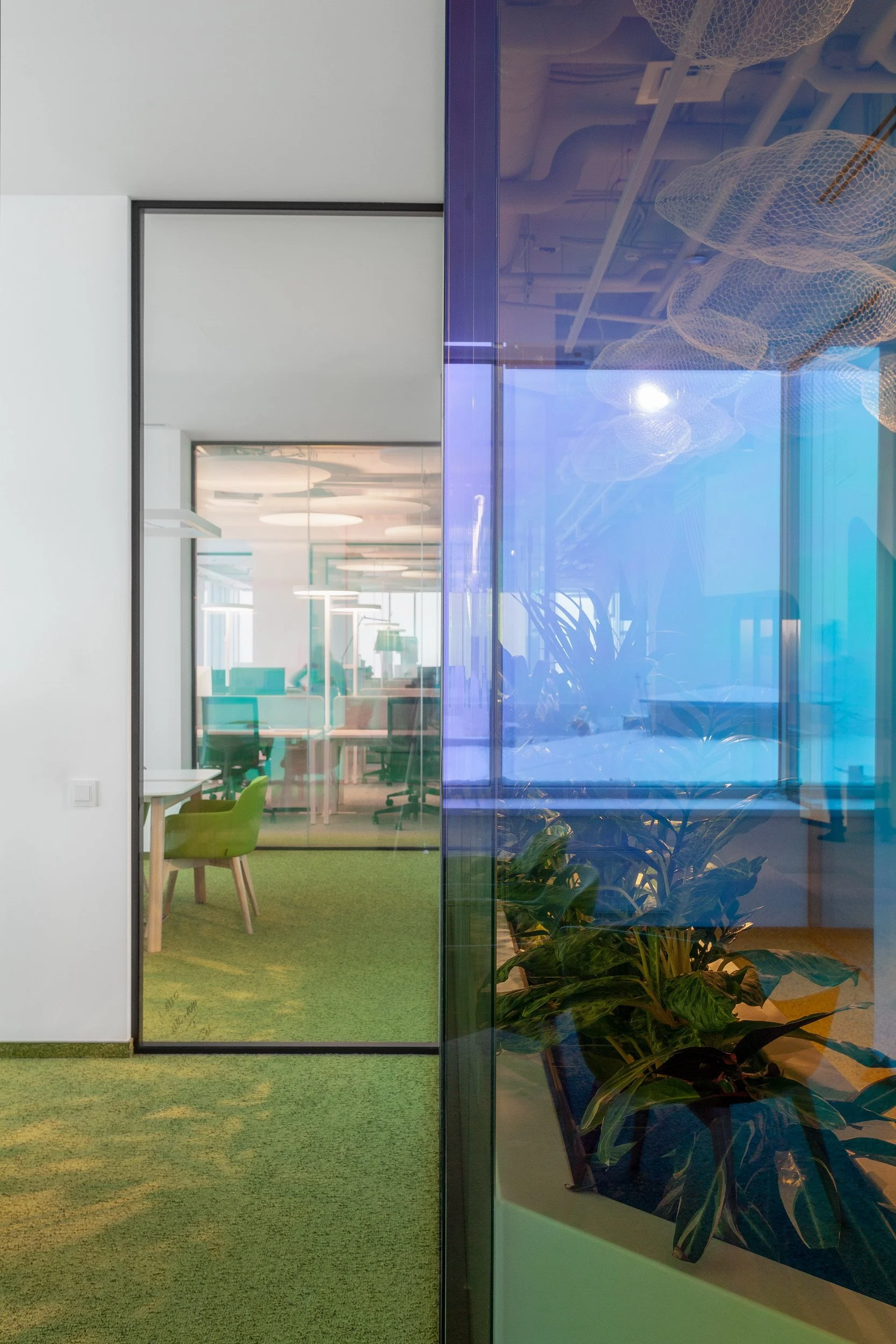
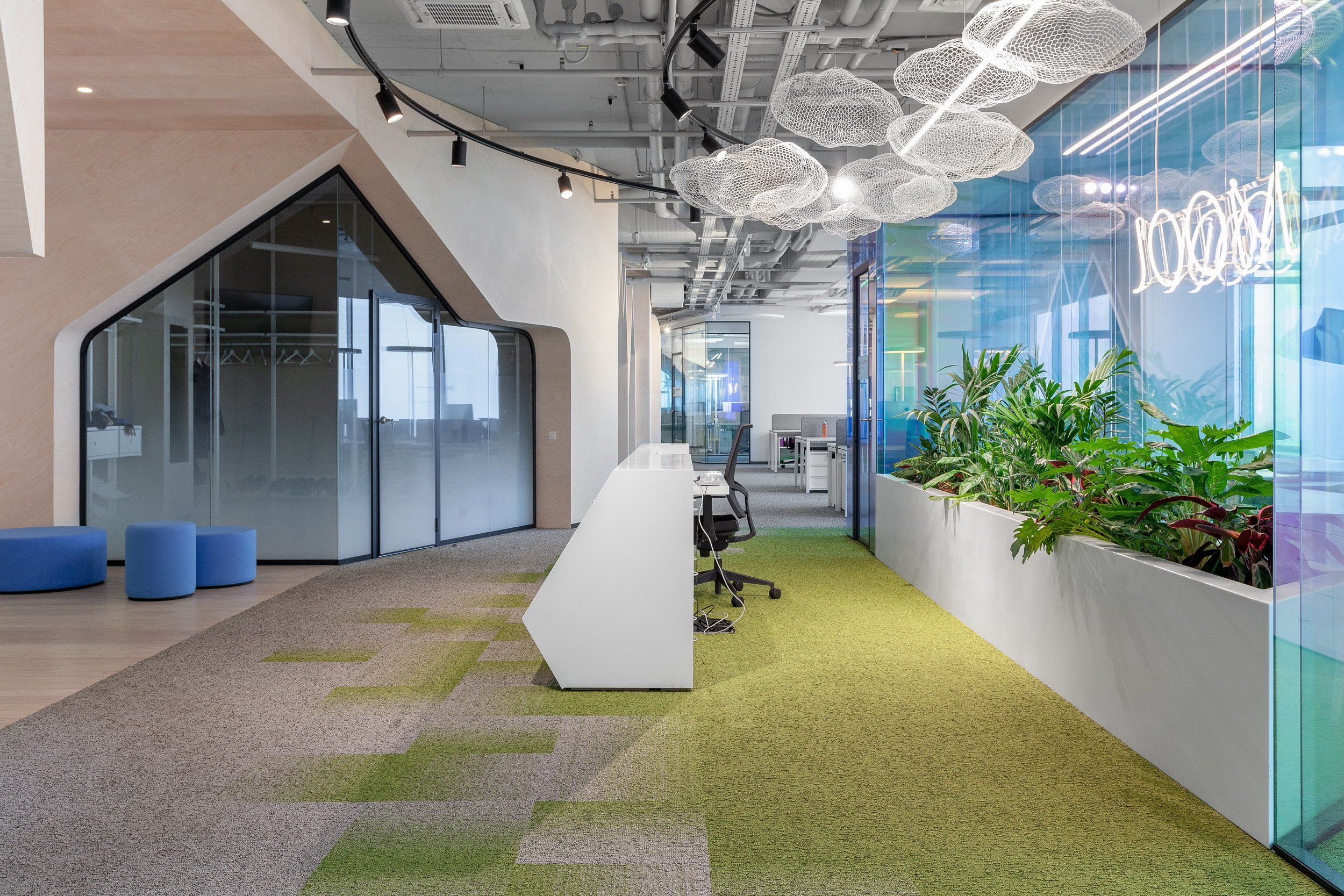
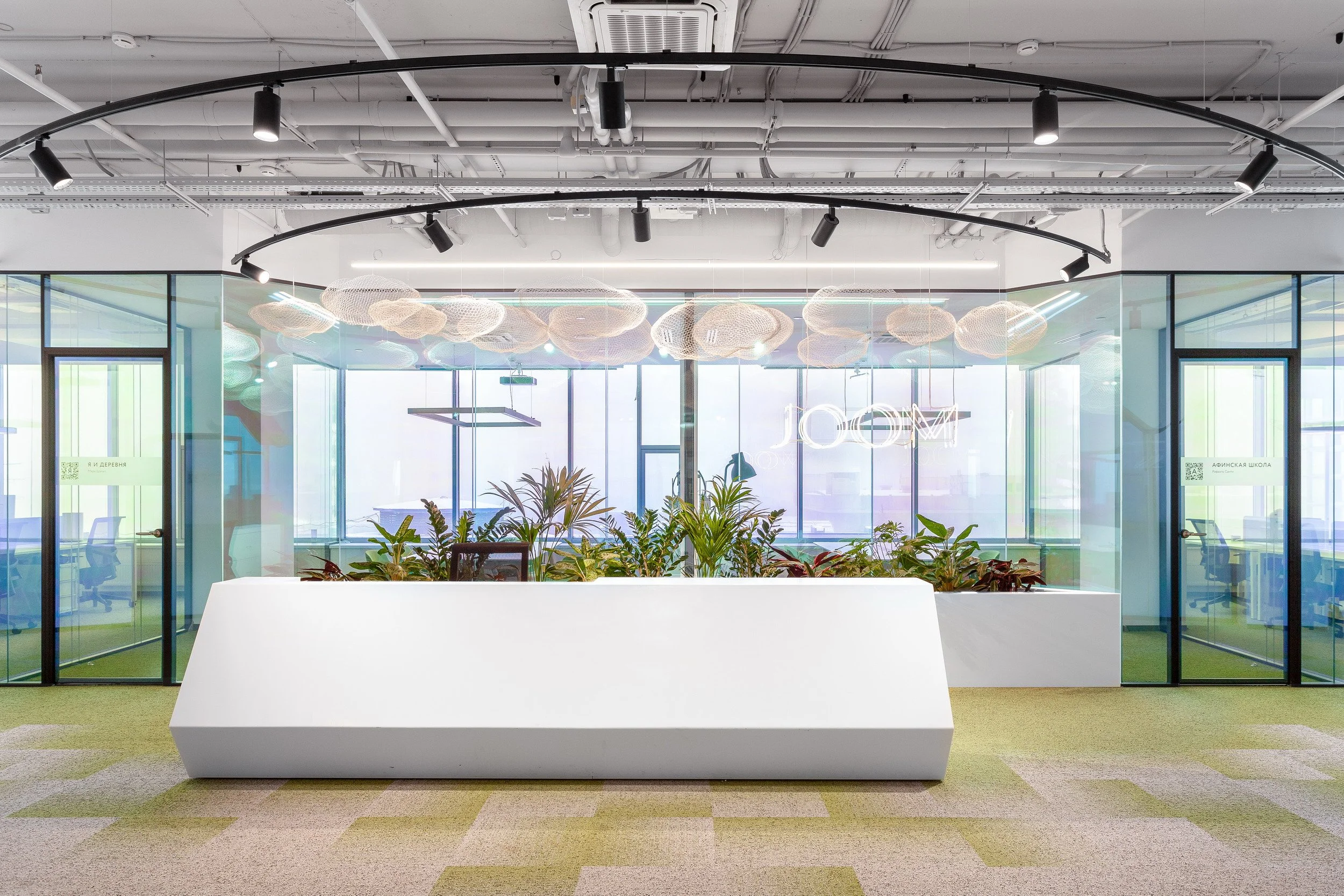
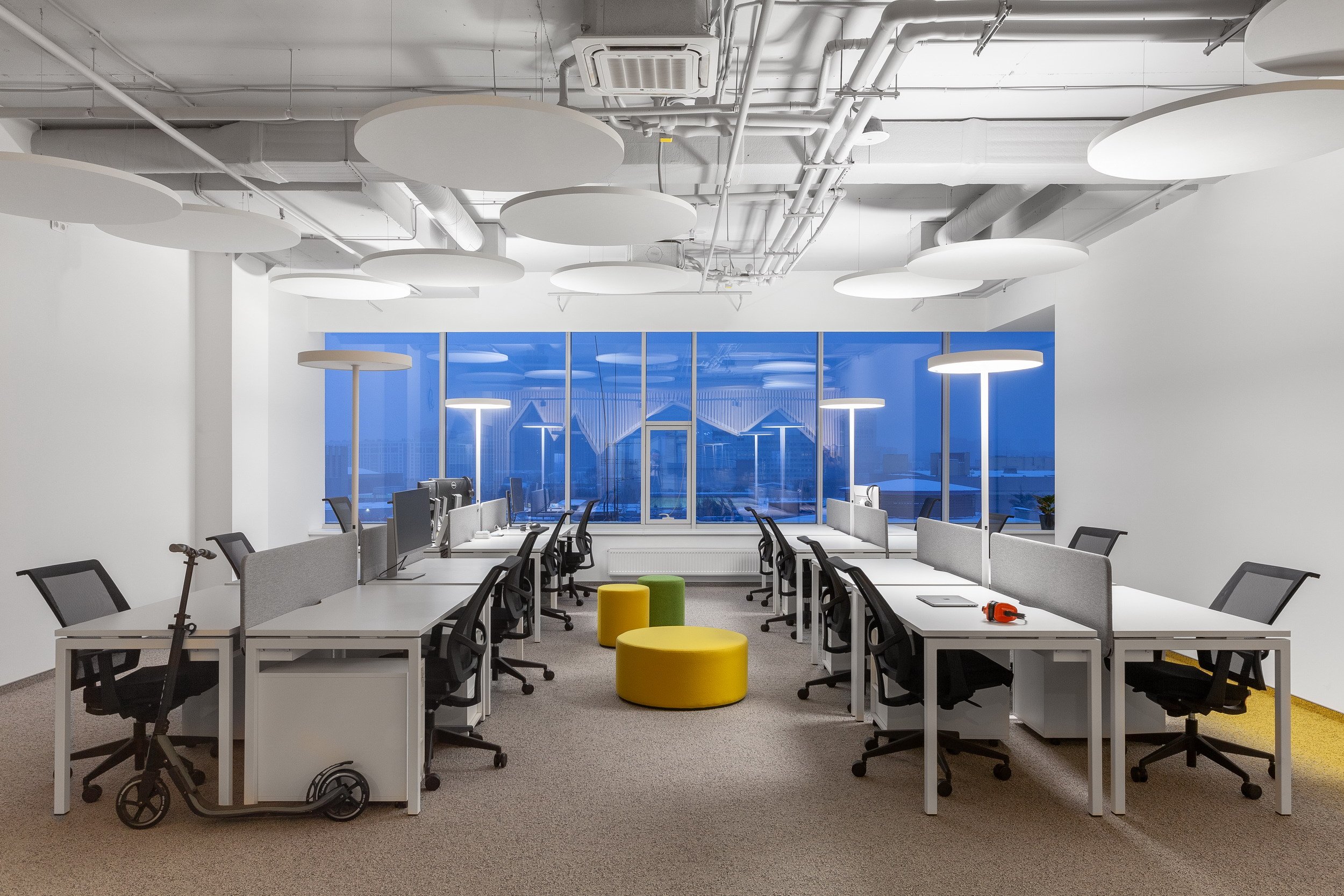
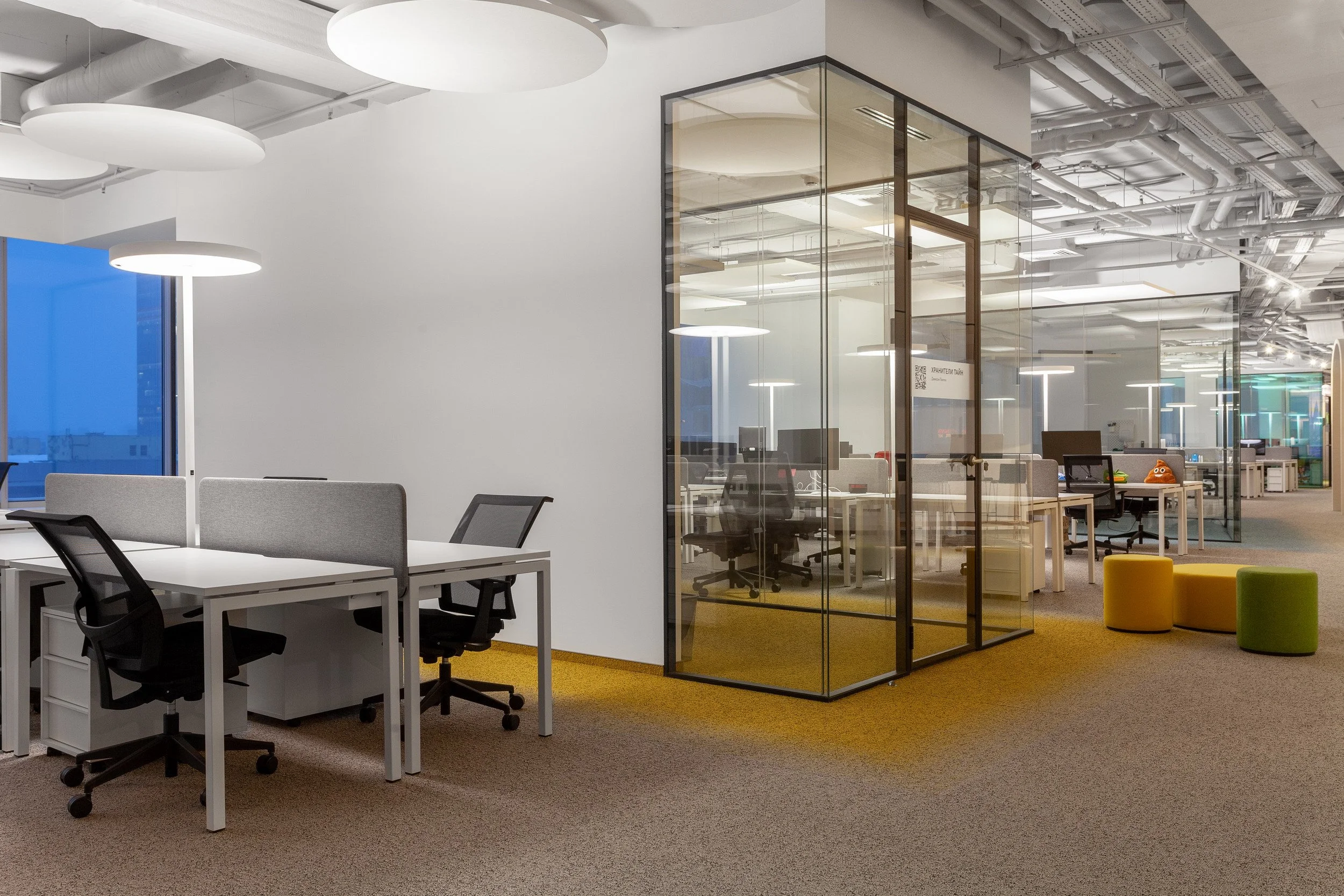
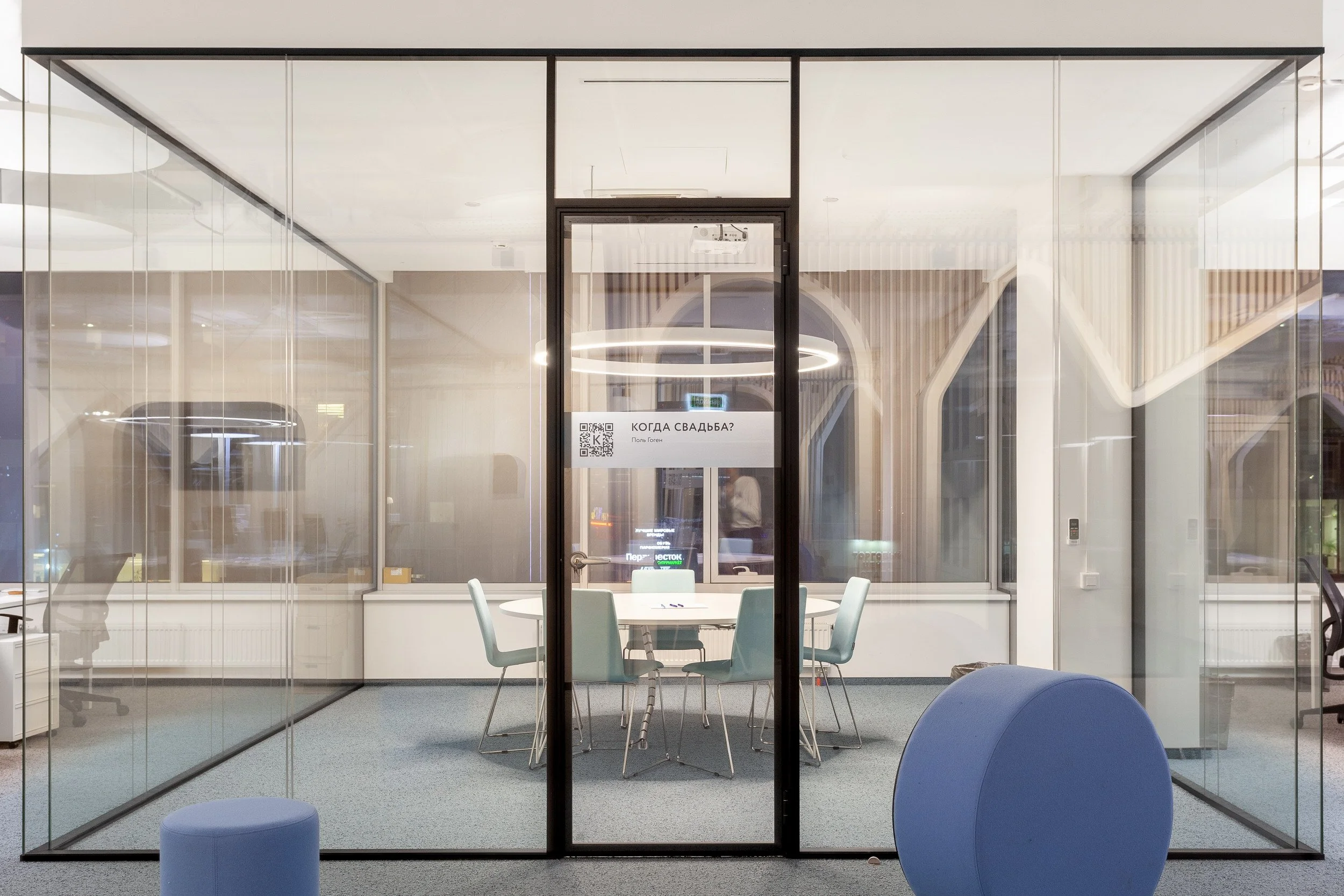
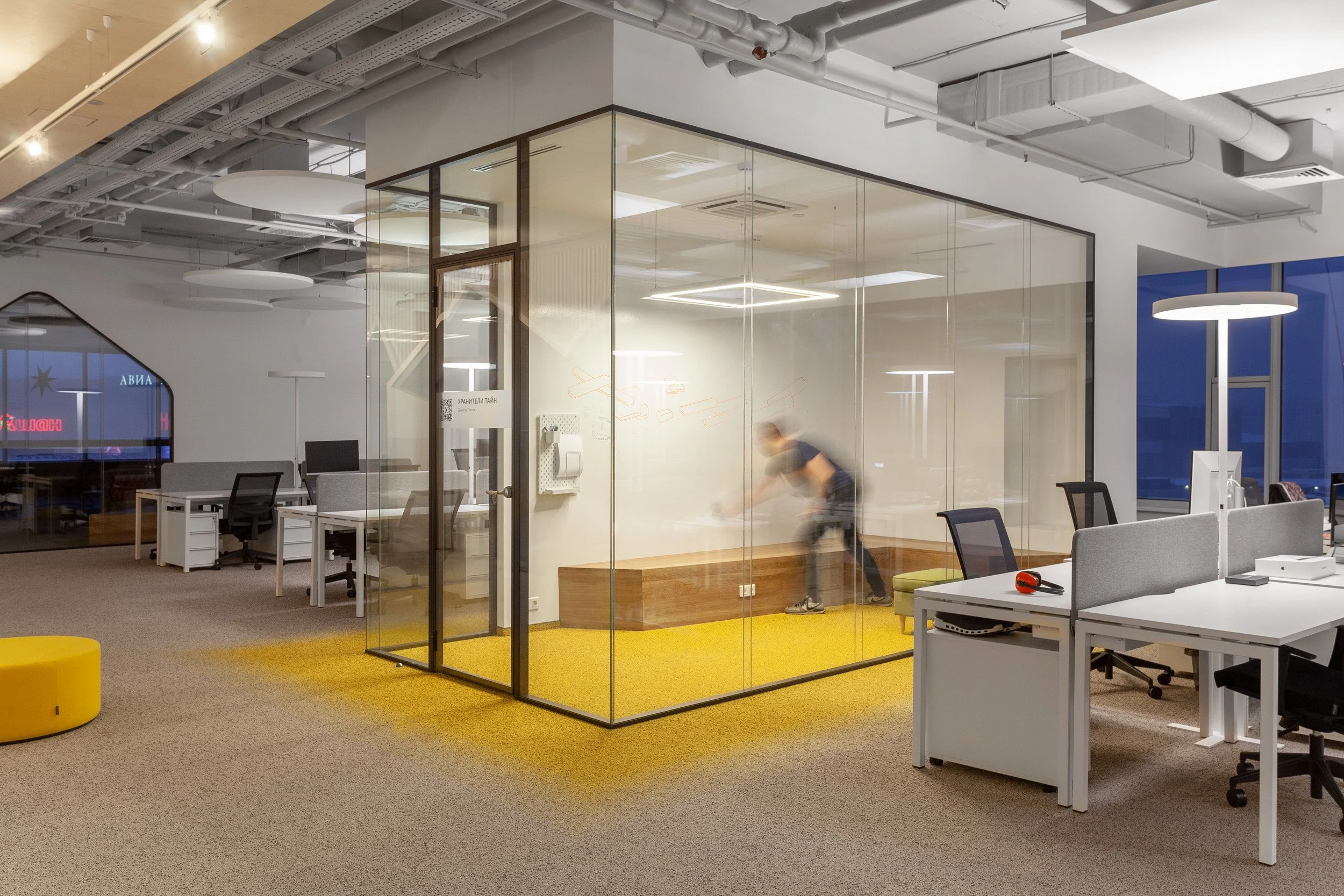
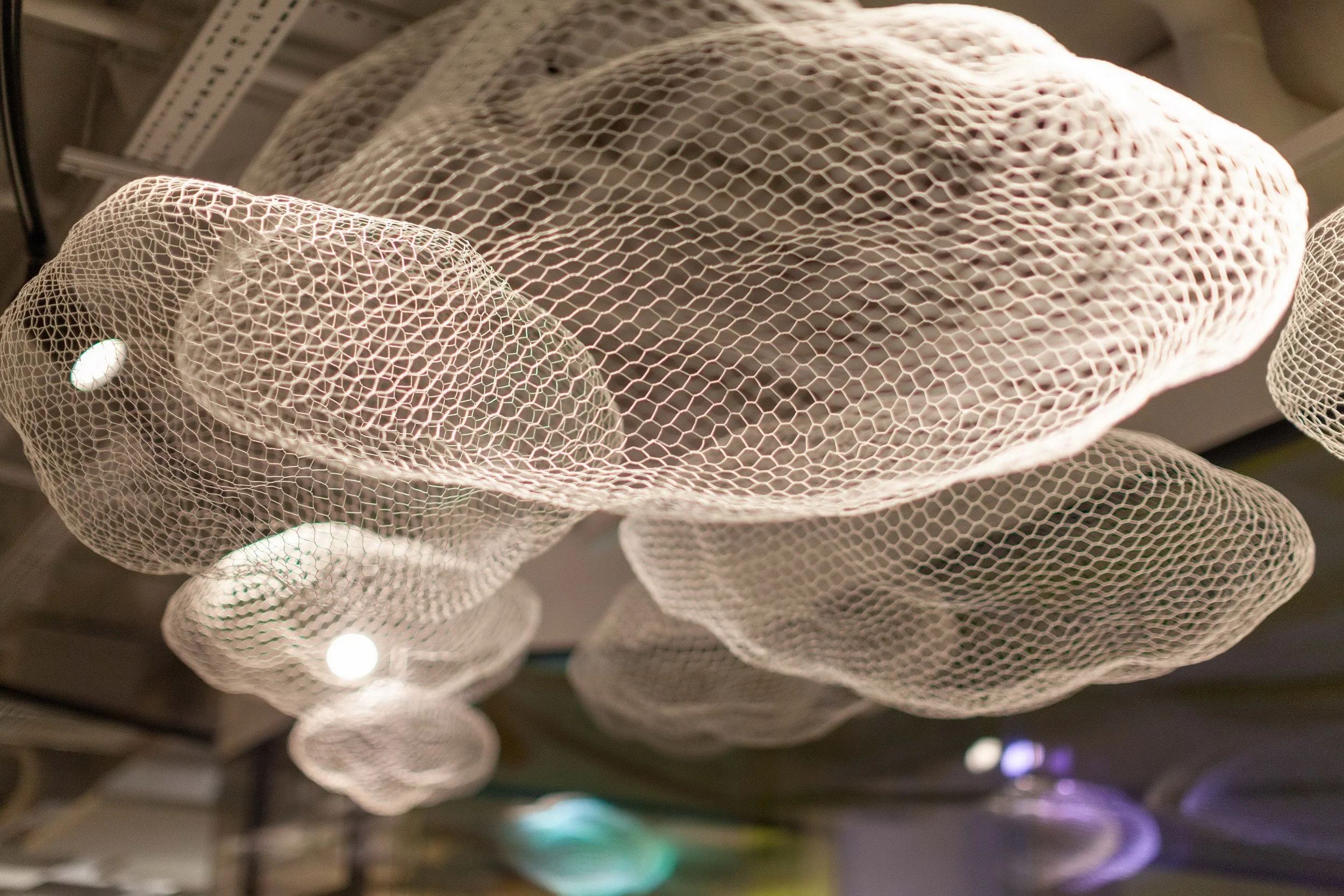
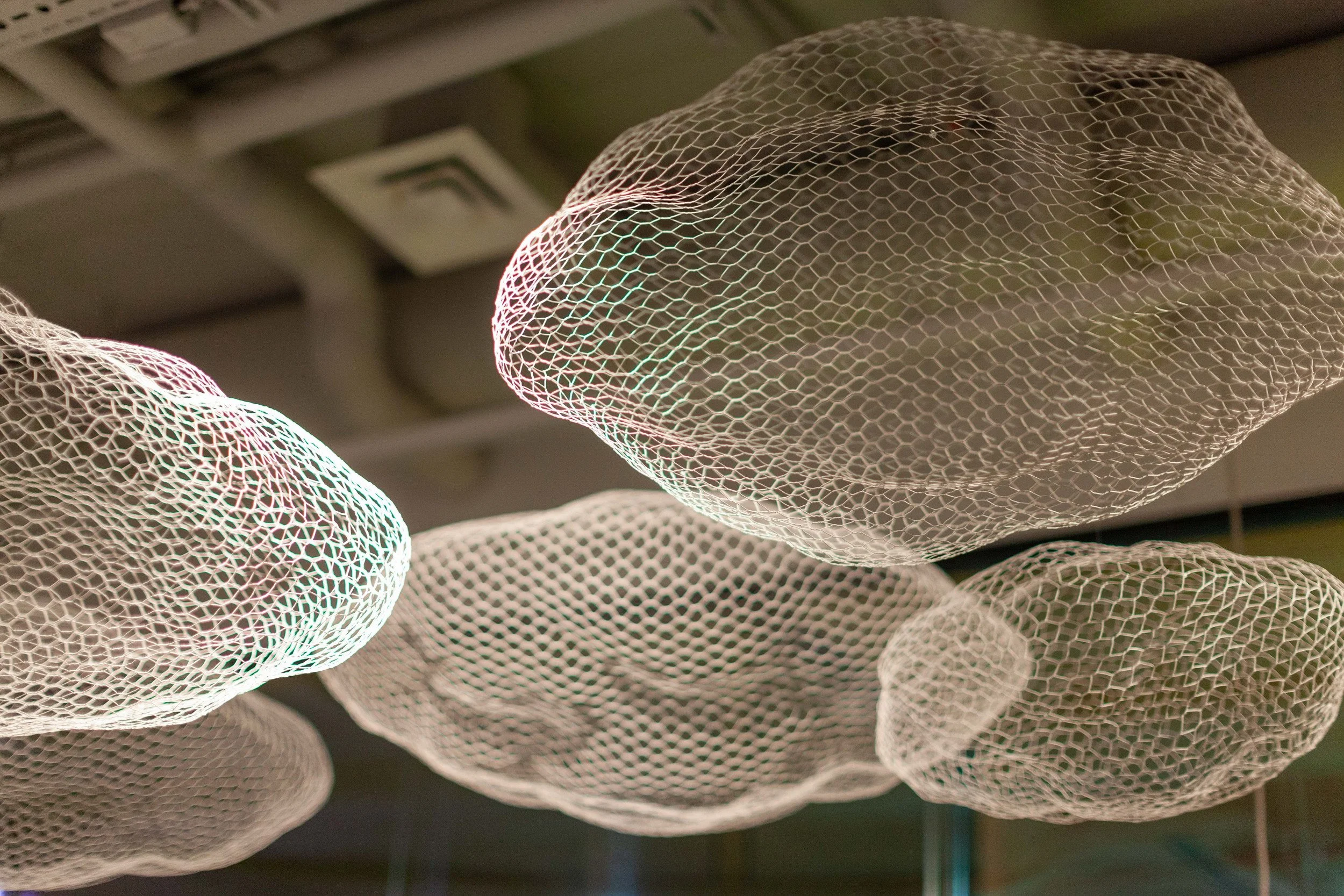
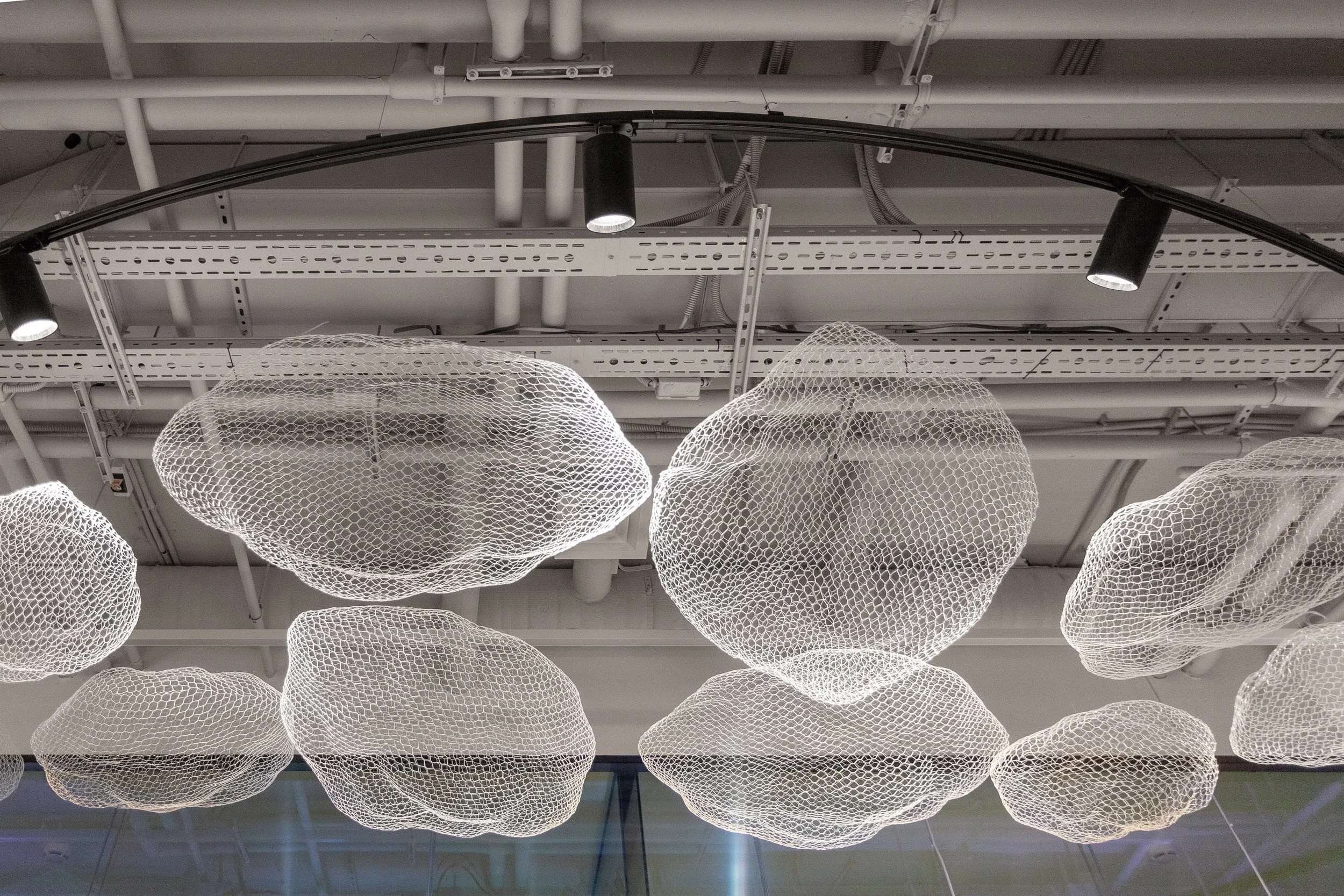
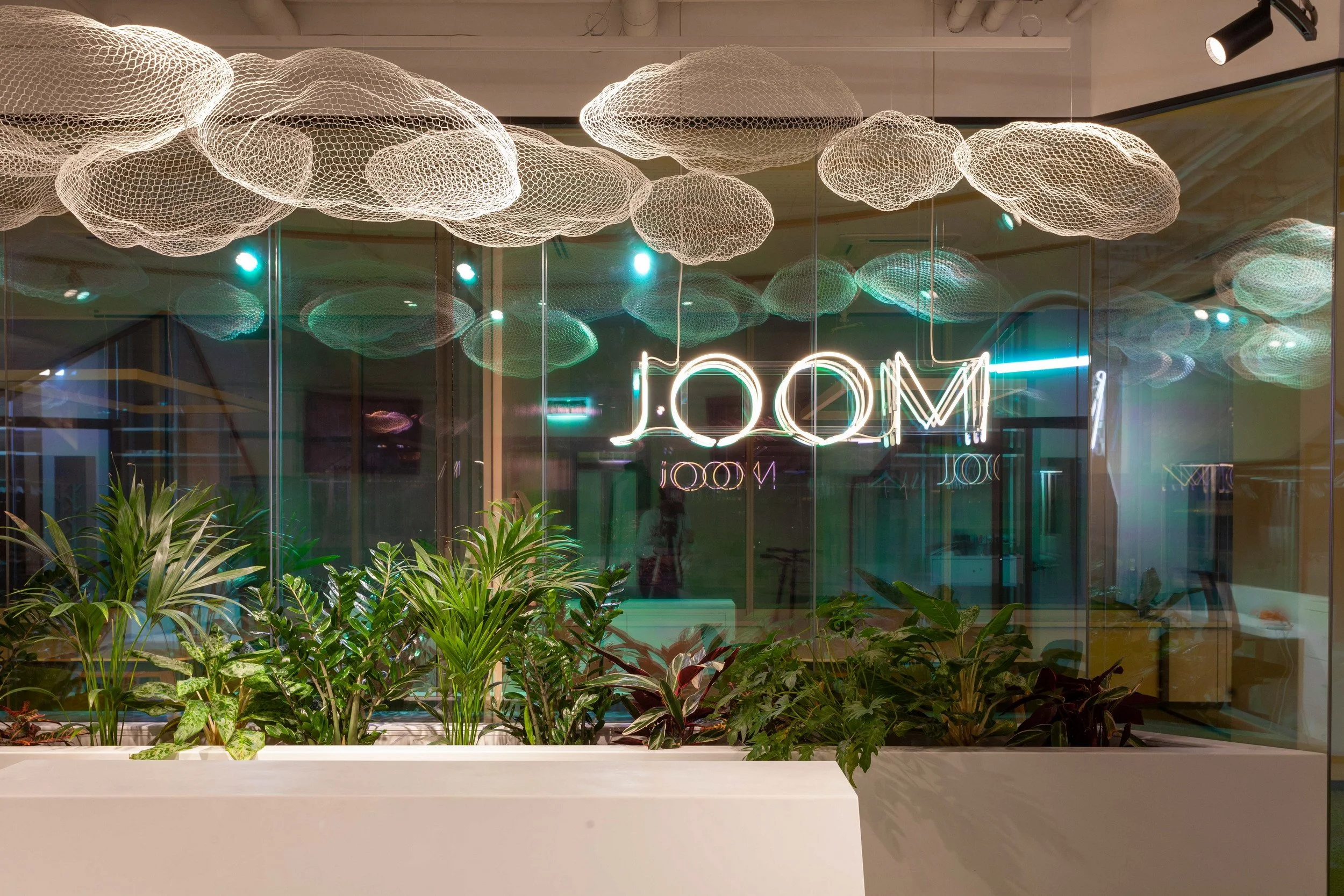
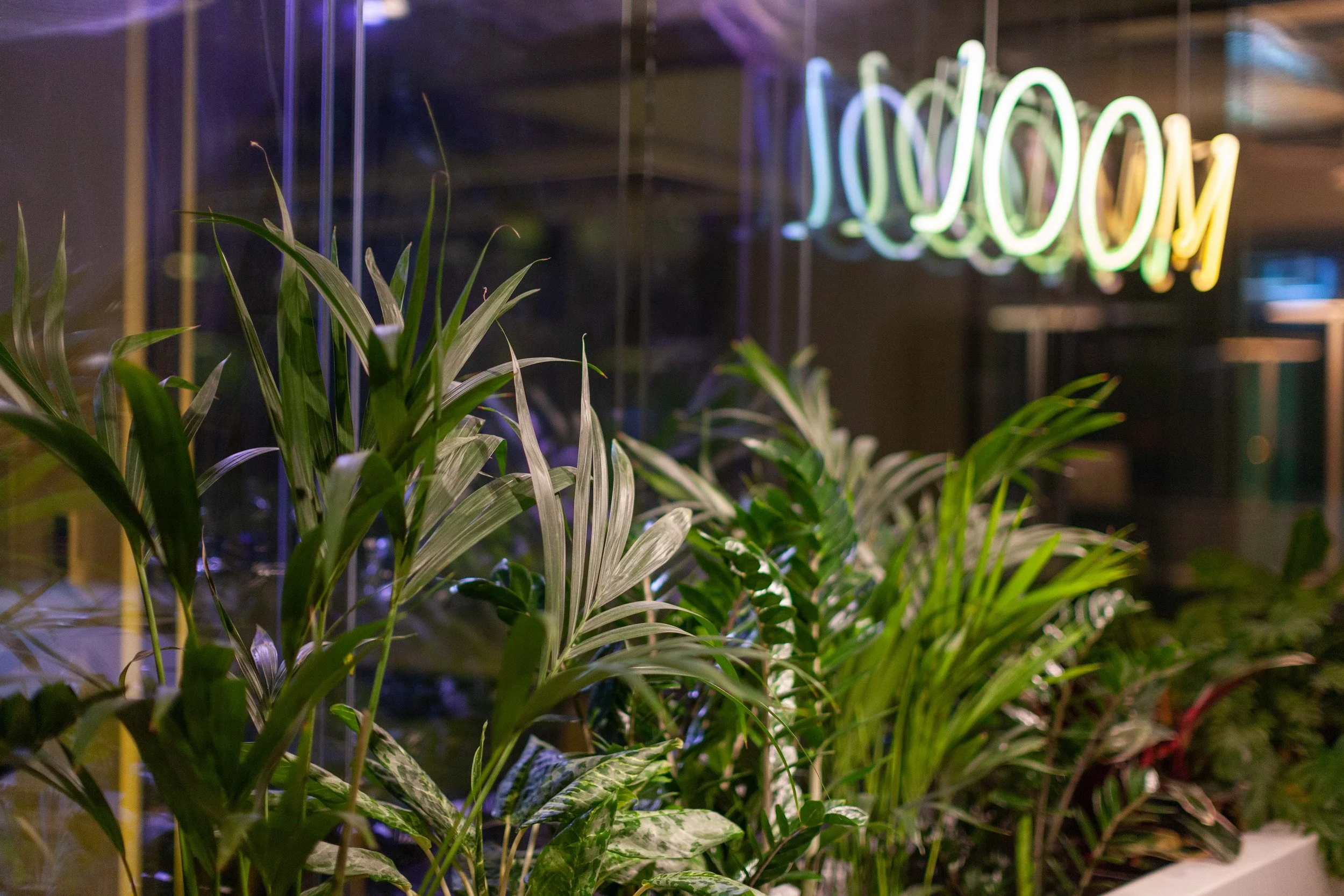
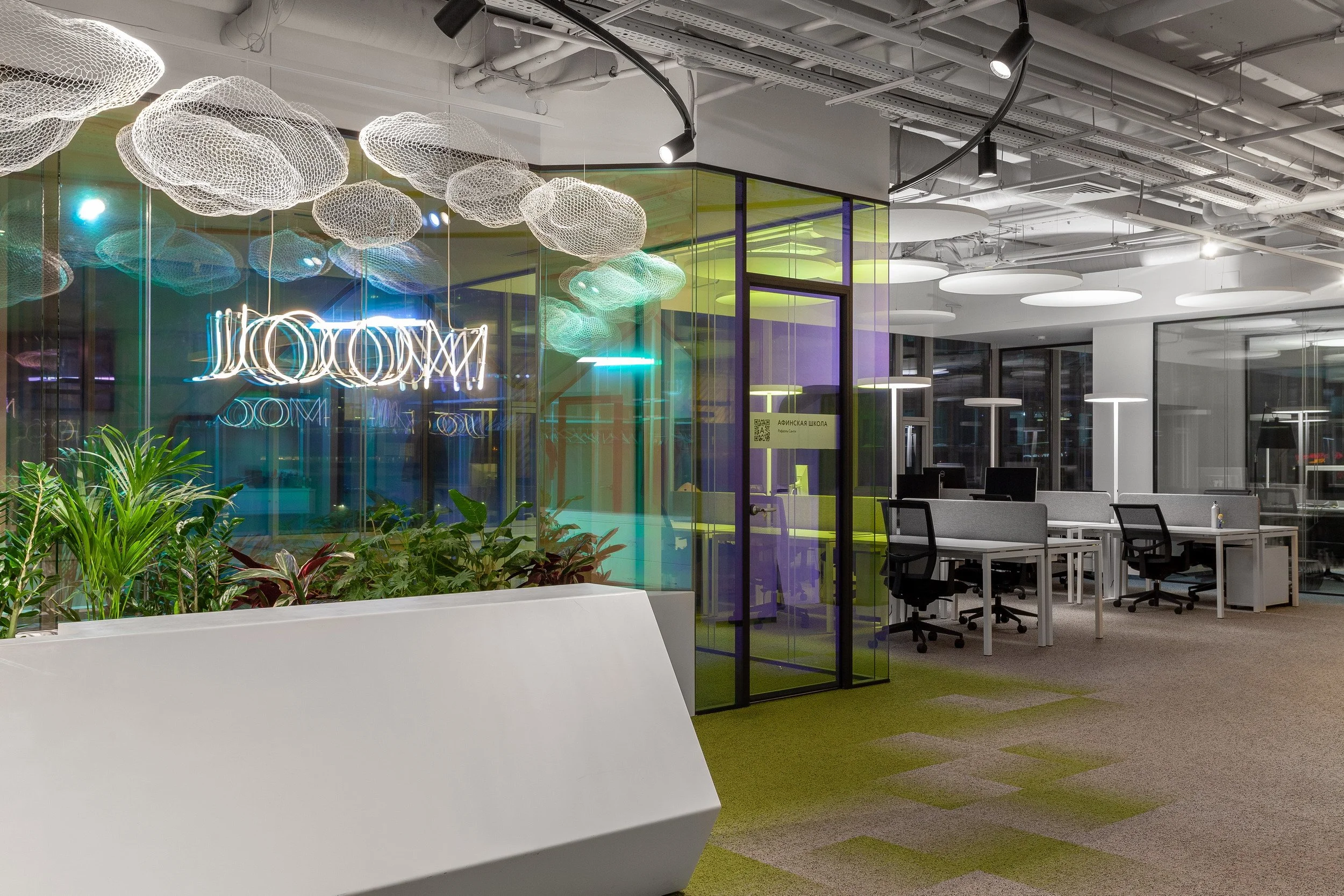
Embedded within this compact core are meeting rooms of various sizes, informal lounges, collaborative areas and coffee points, alongside a cafeteria, storage and technical spaces. A quiet relaxation room with an island fireplace and an acoustically isolated music room introduce a more intimate layer to the otherwise open landscape. Workstations are arranged along the glazed perimeter to maximize daylight. Transparent partitions — visible immediately from the elevator lobby — frame panoramic views and allow natural light to penetrate deep into the floorplate, creating a layered and permeable environment. To avoid the atmosphere of a corporate «factory floor,» the open workspace is interrupted by freestanding glass volumes accommodating informal meetings and focused work. Each meeting room is individually coded and named after significant artworks, while several spaces within the central core were painted by invited street artists, reinforcing the identity of each «block.» The navigation system treats the office as an urban landscape: circulation is fluid, and even scooters are used to move across the floor. Lighting plays a defining role in shaping the spatial character. Instead of a conventional ceiling-based general light, workstations are illuminated by freestanding direct–indirect floor luminaires by Lightnet. The circular head of each fixture visually echoes the acoustic absorbers suspended above the desks. They operate individually — manually or via motion sensors — so in the evening only active areas remain lit, forming islands of light within the larger volume. The central plywood structure is accentuated by integrated track lighting, while meeting rooms incorporate more expressive decorative fixtures. The reception area is marked by suspended mesh clouds, indoor landscaping, a neon logo and dichroic film applied to glass partitions — elements that soften the architectural composition and introduce subtle chromatic shifts that change with movement and daylight.
Project team: Evgeniy Shchetinkin, Elizaveta Seminova, Polina Nikolaeva Lightning design: Solo Light Solutions, Artwork: Zukclub General contractor: Capital Direct Photo: Polina Poludkina