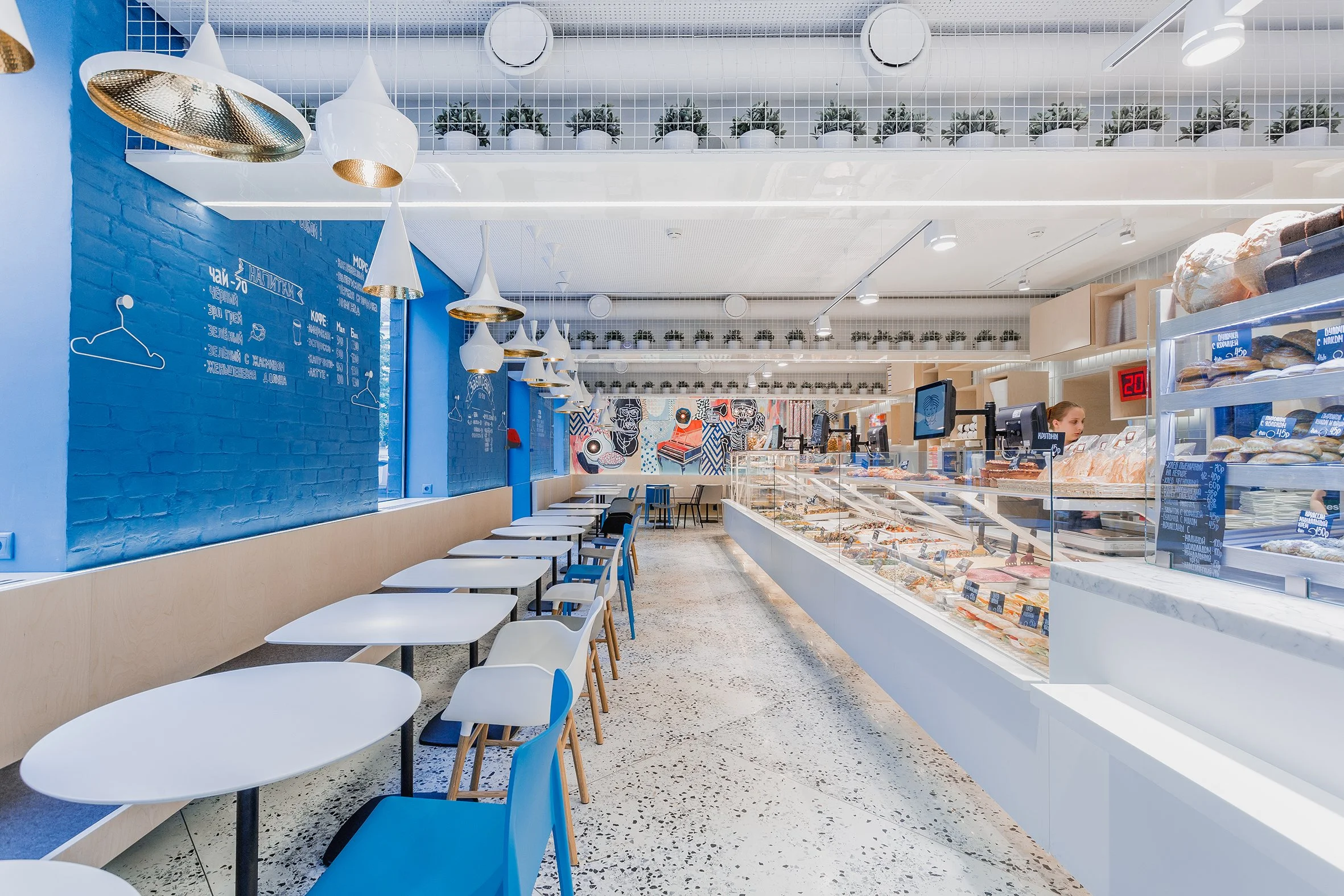
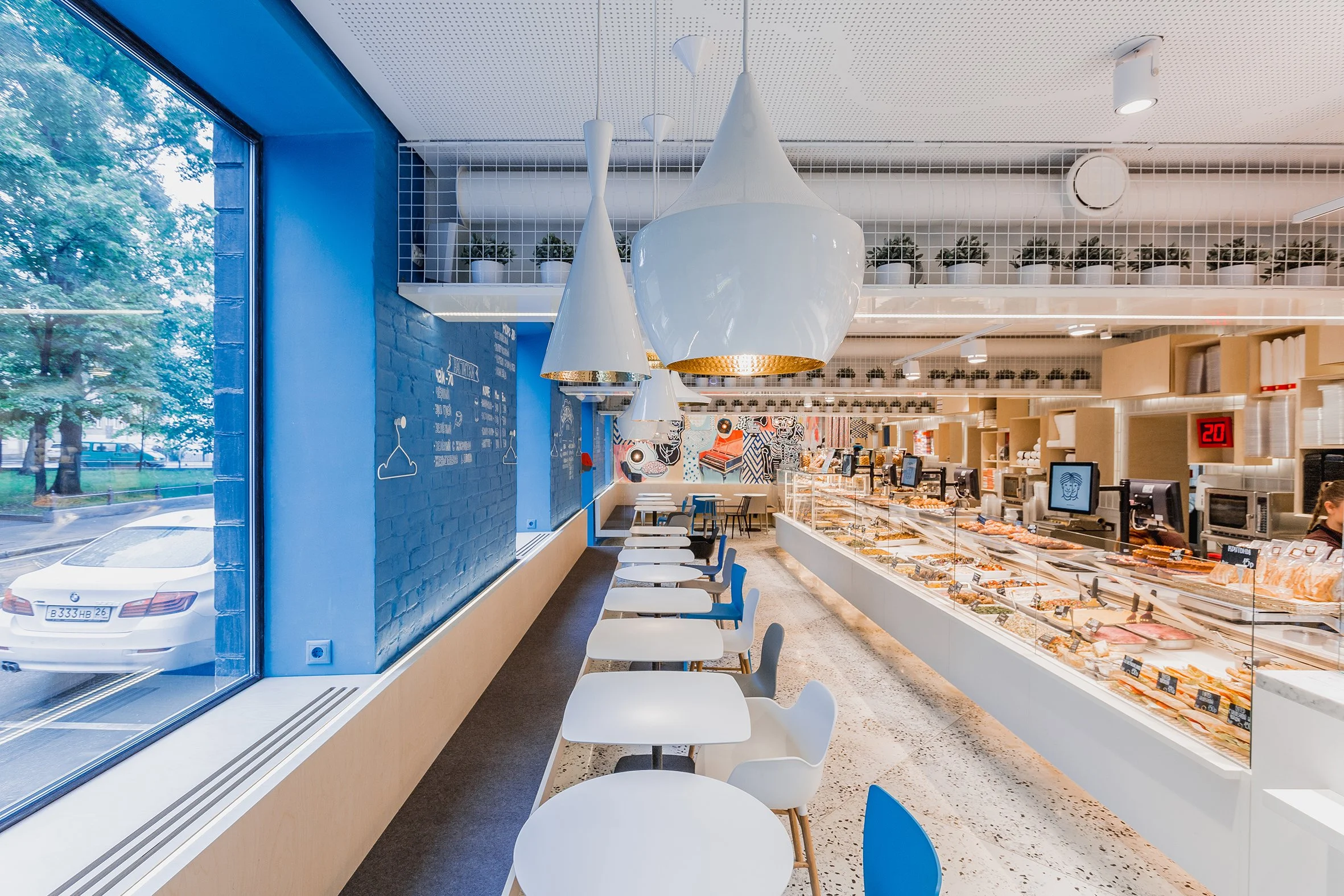
The first café for the Karavaevi Brothers chain opened in 2016 in Moscow’s Khamovniki district, occupying a corner unit on Bolshoy Levshinsky Lane. The space is located on the ground floor of a late-1950s residential building — compact in plan, with low ceilings and pronounced structural beams that define the interior rhythm. The surrounding context informed the conceptual direction of the project. Several foreign embassies are situated within the same block, including that of Denmark, and directly opposite stands the monument to the Norwegian explorer and humanitarian Fridtjof Nansen, known for his relief work during the Volga famine. Rather than relying on literal Scandinavian references, the project translates its ethos — functionality, clarity and material honesty — into architectural decisions.
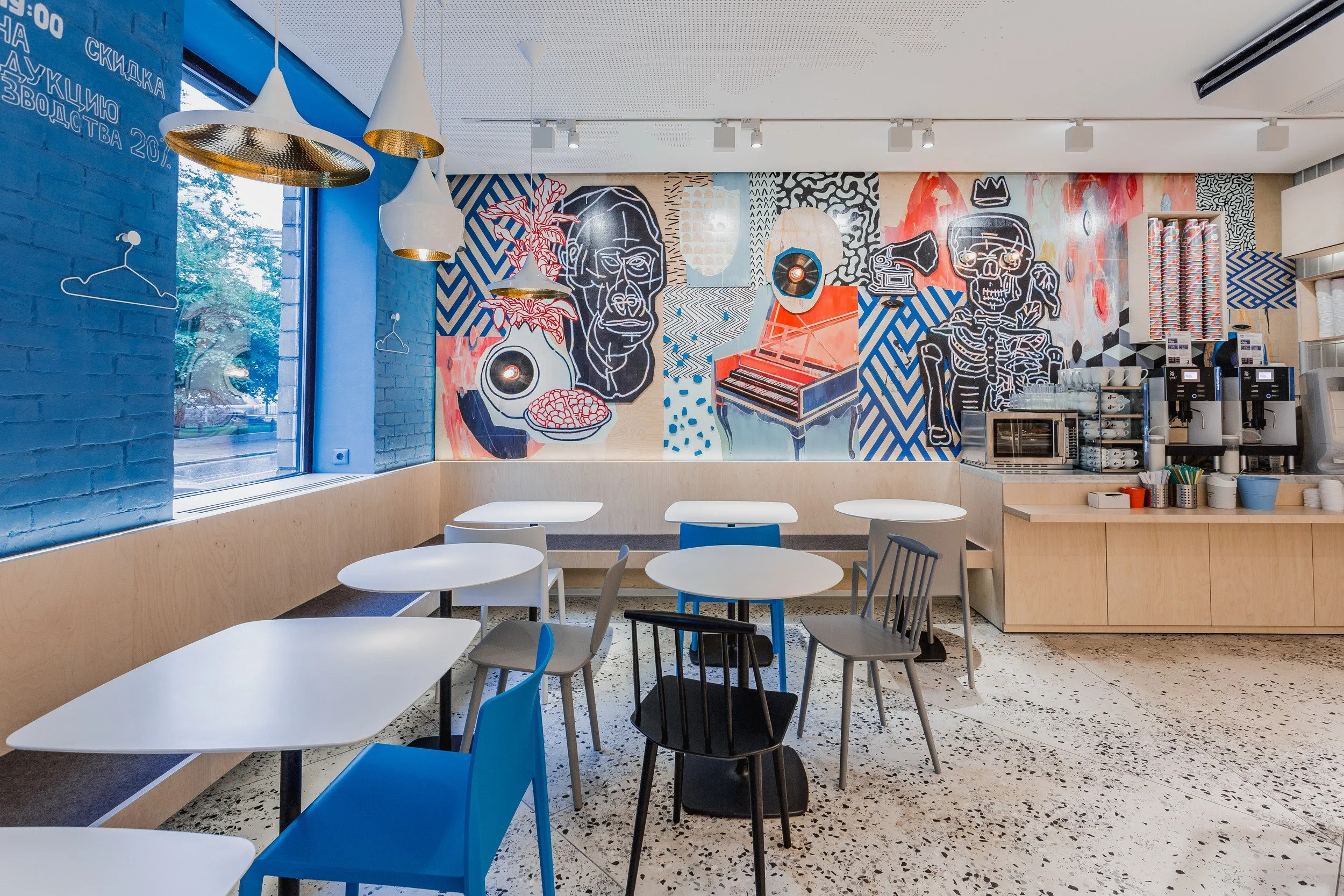
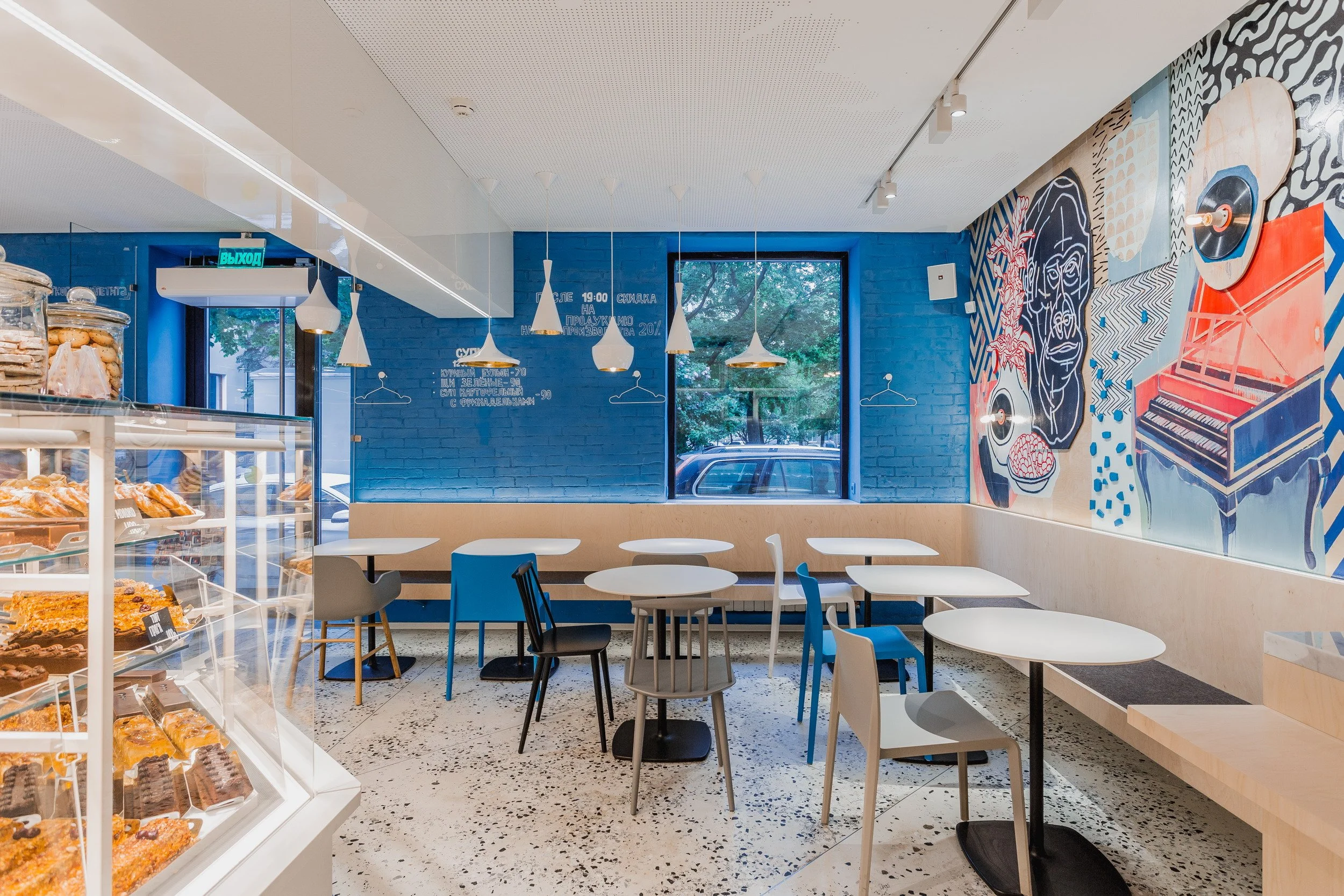
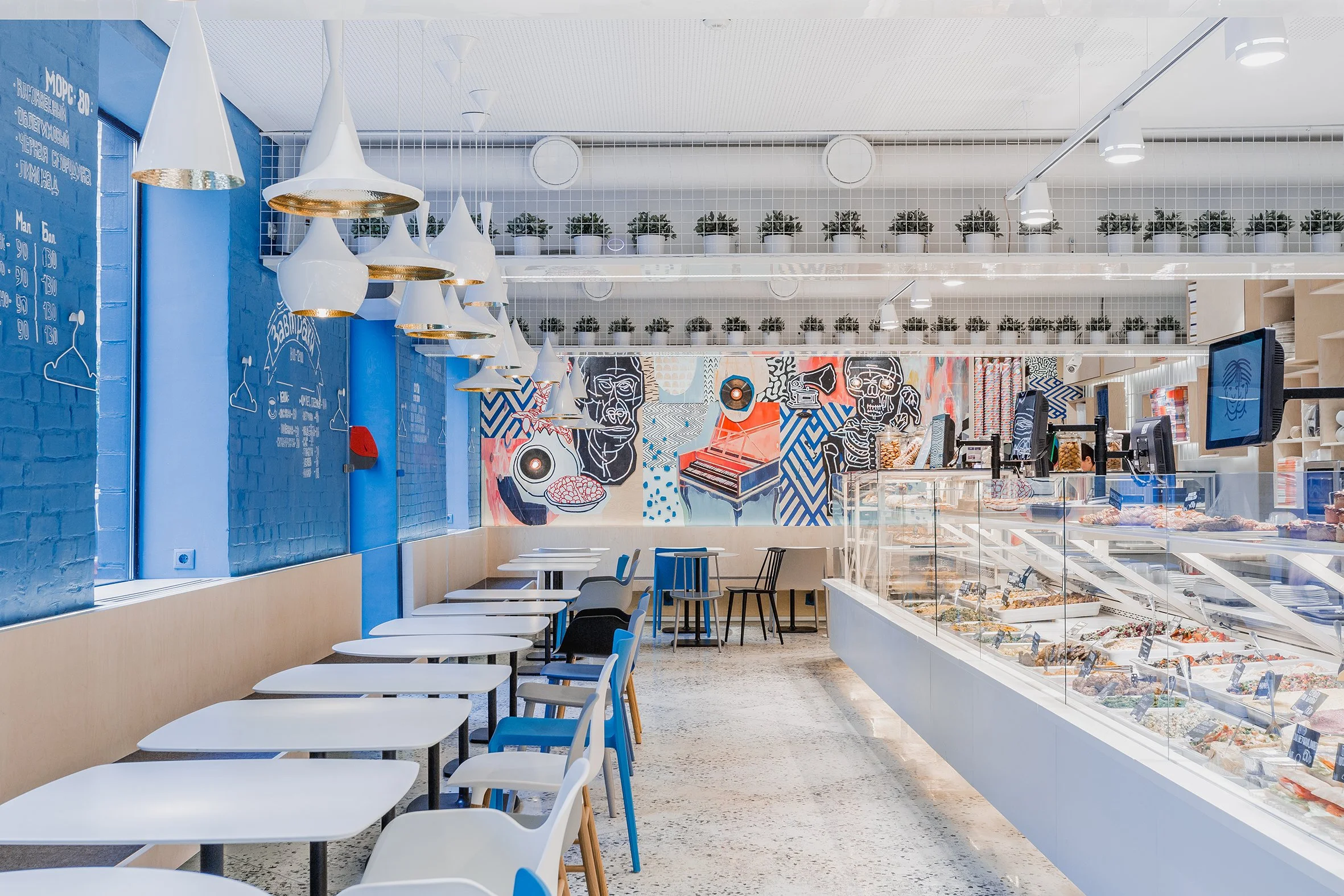
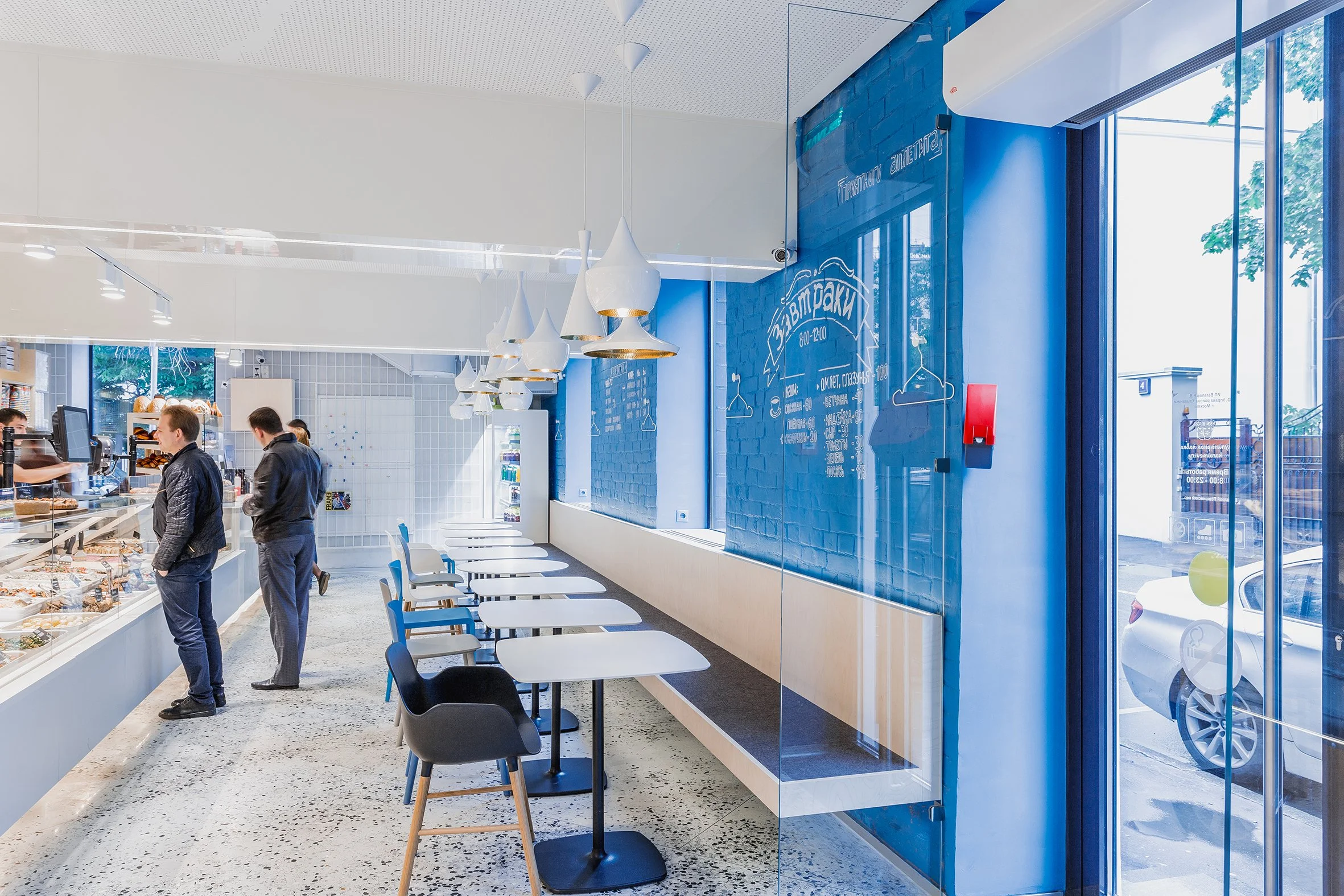
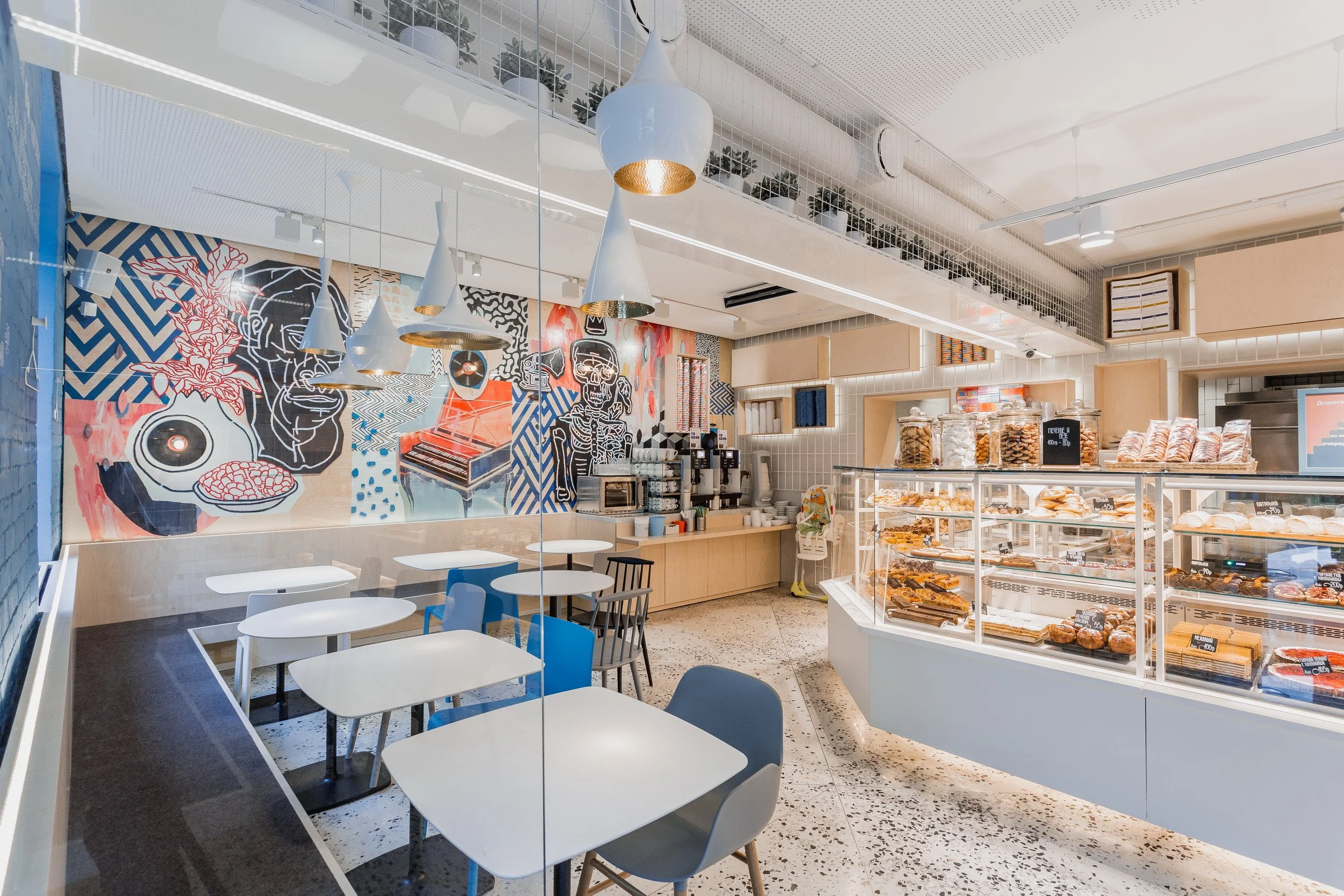
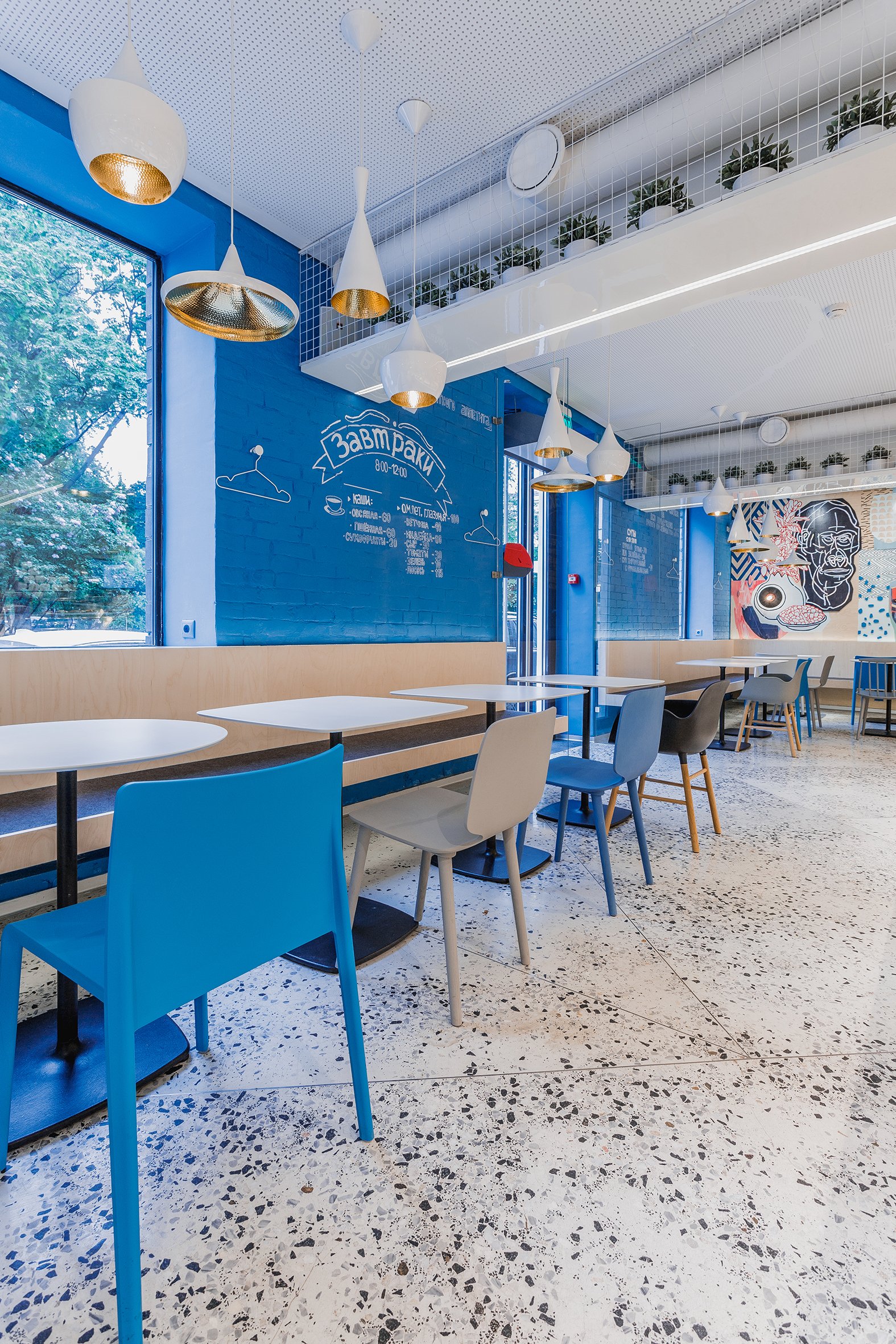
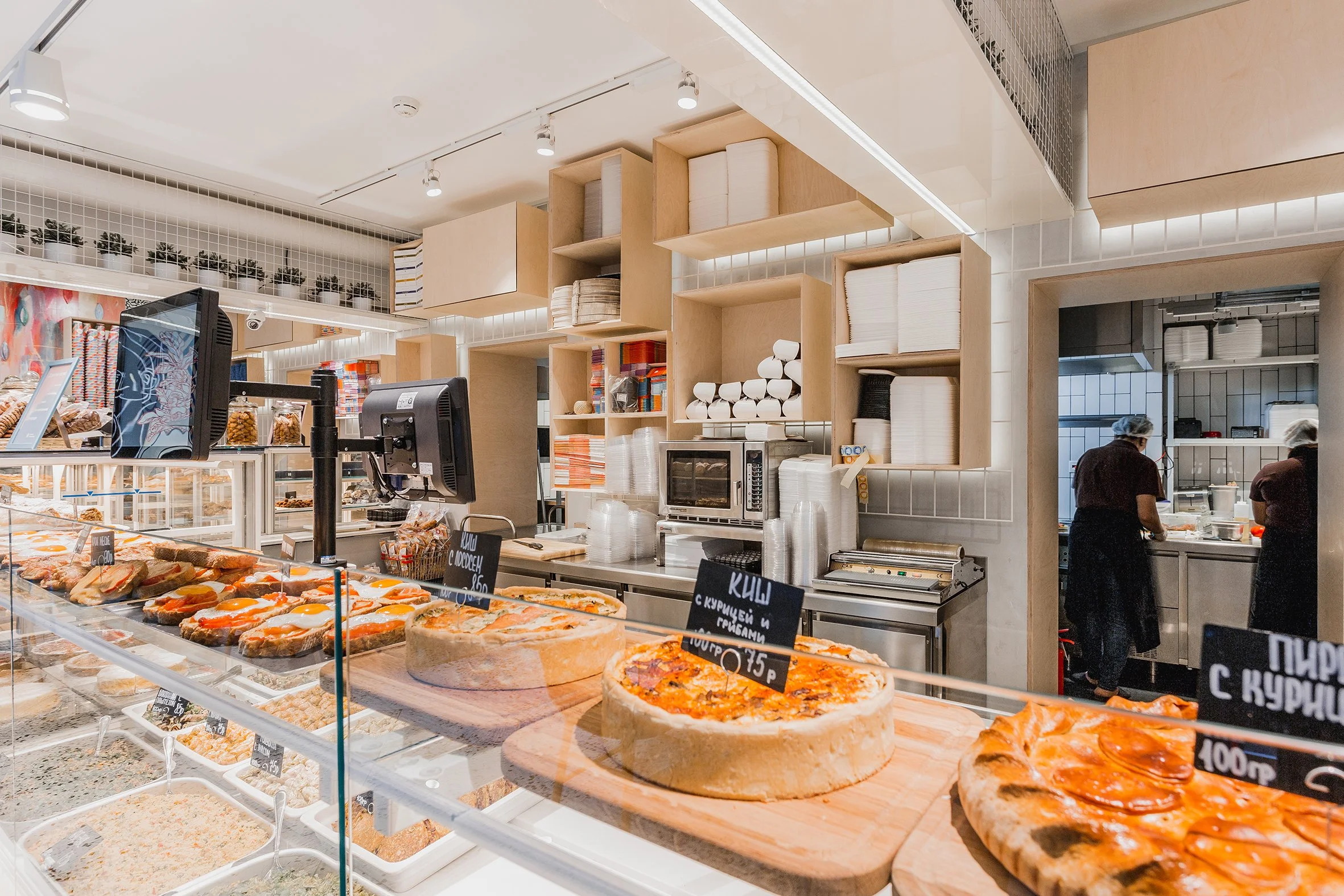
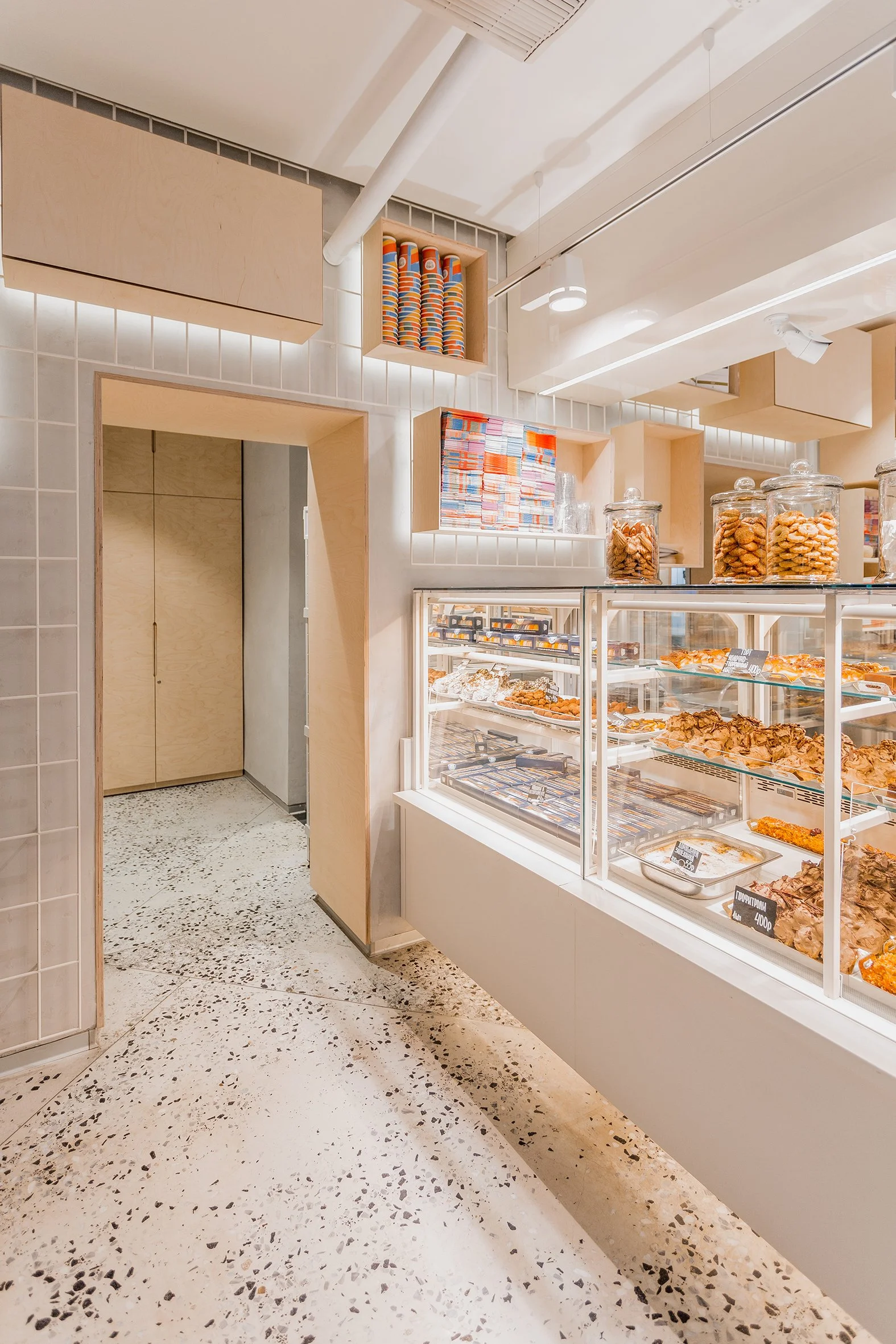
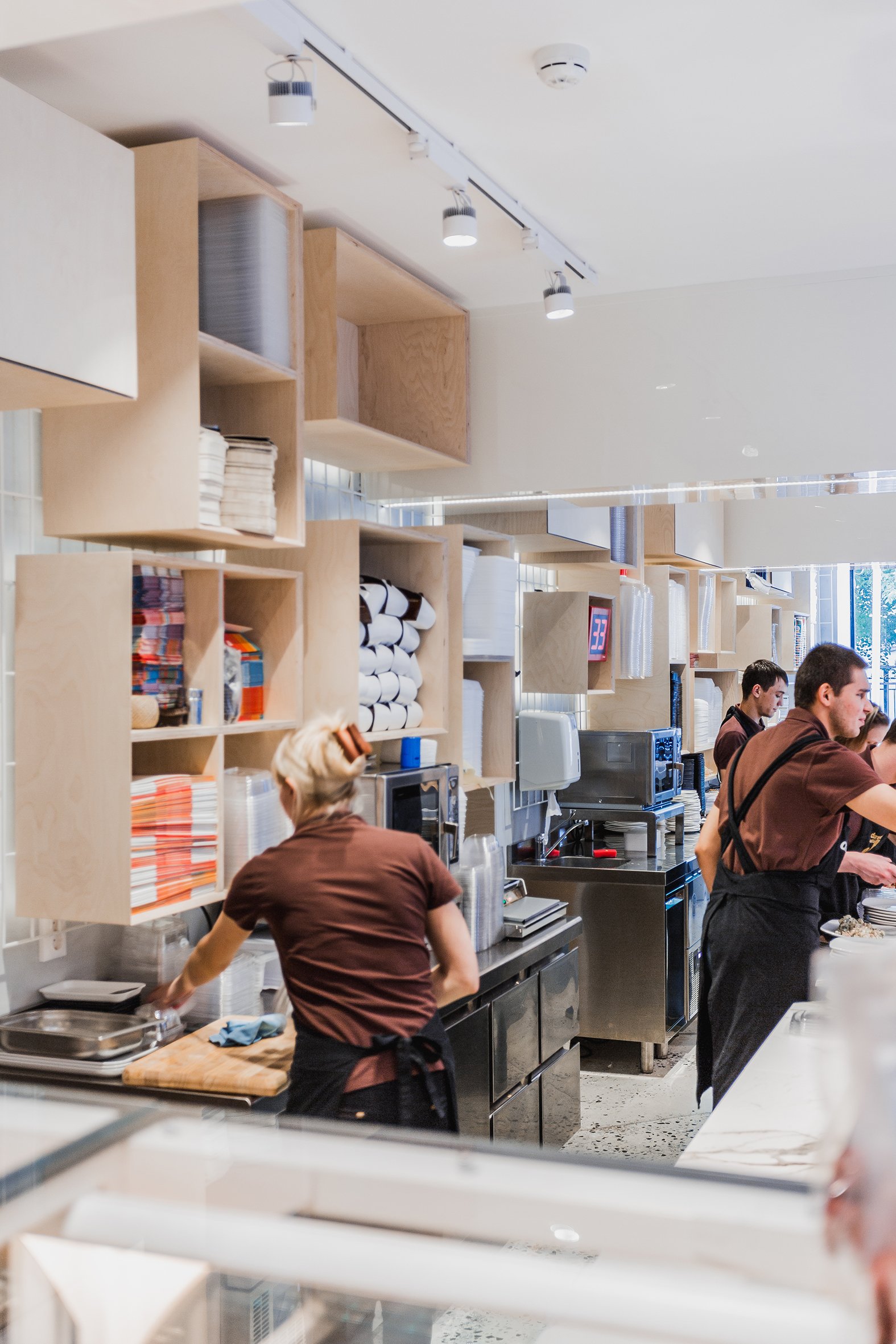
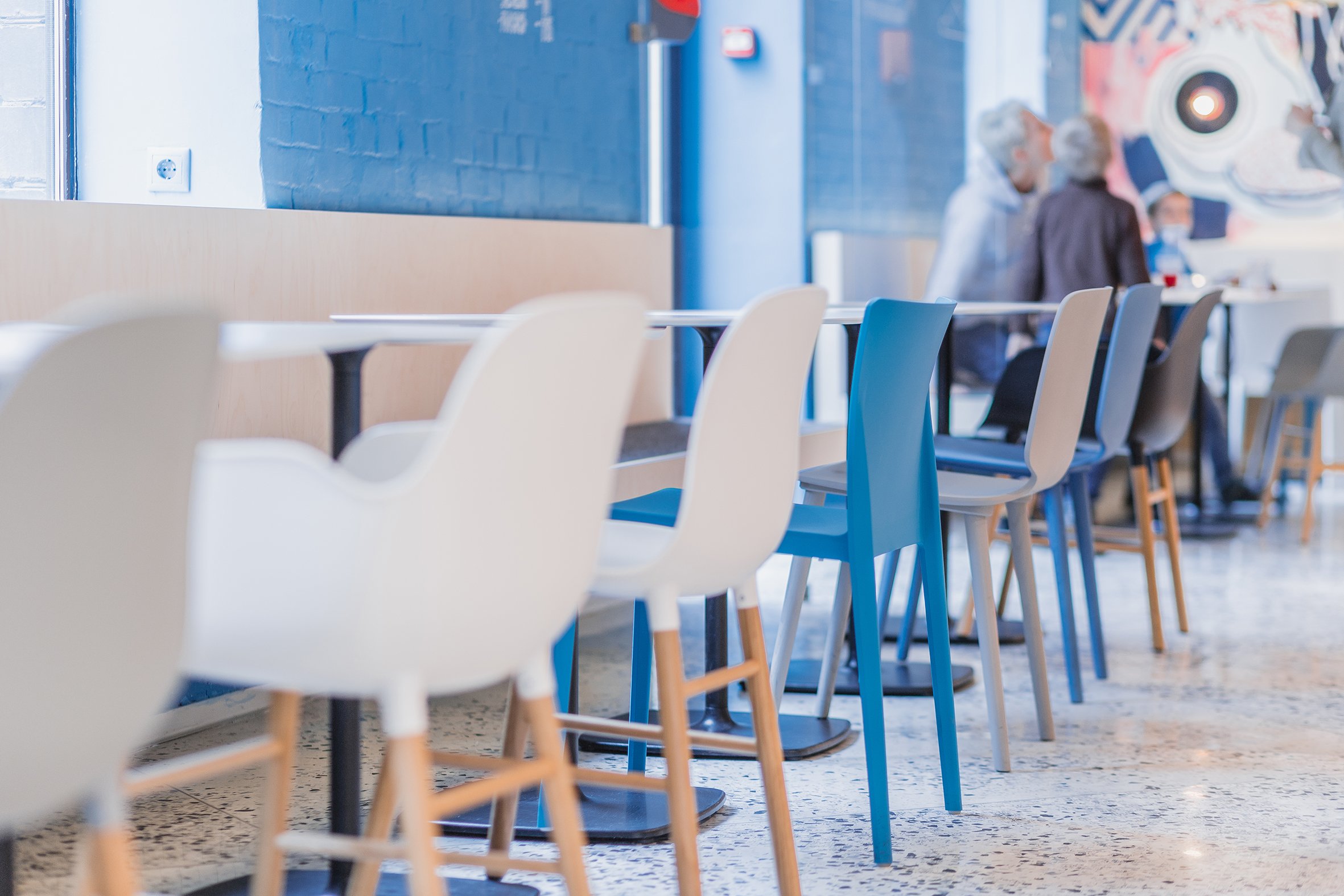
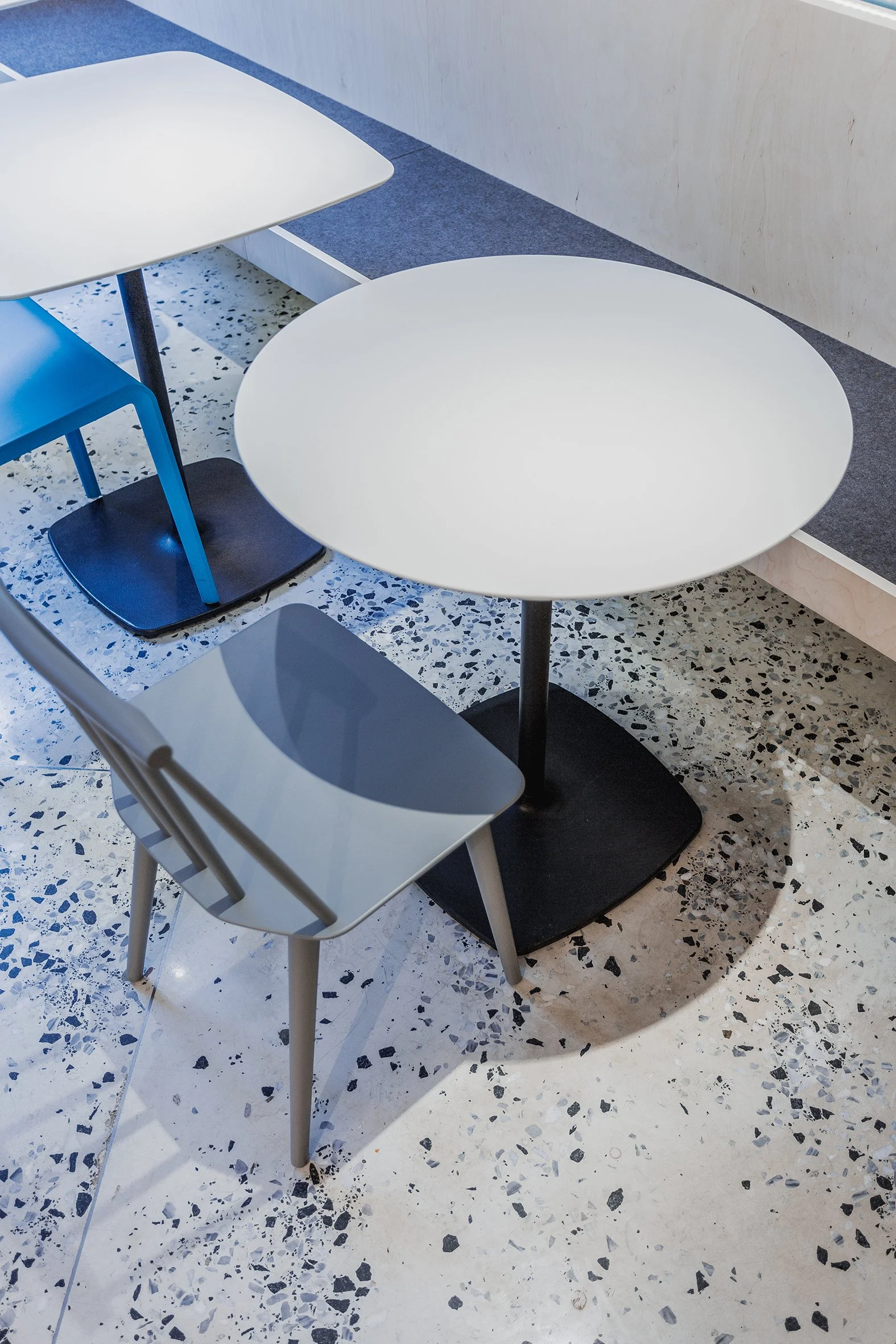
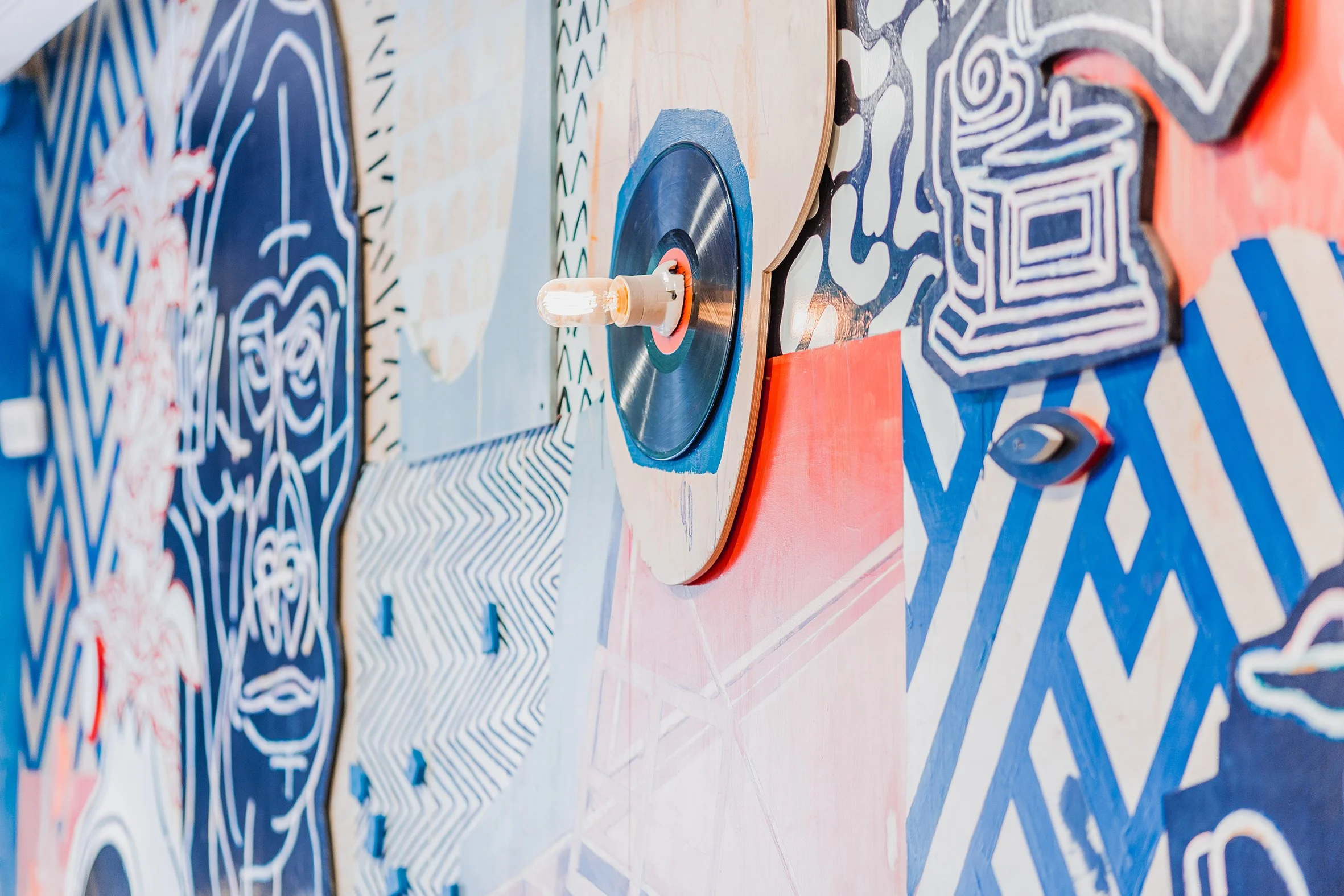
Spatially, the café is organised as a clear and efficient layout shaped by the narrow footprint. Seating lines the windows, while the kitchen and display counters are placed deeper inside. Storage — essential for a café-canteen format with a significant takeaway component — is not concealed but integrated into the architecture. Custom plywood boxes of varying depth are mounted on a metal grid, forming a backlit cubic wall visible from the street. This storage system operates simultaneously as infrastructure and a spatial feature. The grid framework allows the configuration to evolve over time, enabling adjustments without disrupting the overall composition. The modular logic continues in the main spatial accent — a painted plywood art wall created in collaboration with Marat Morik. Conceived as a mixed-media installation, it combines painting, applied fragments and integrated lighting. The piece introduces a contrasting layer of visual density against the restrained character of the interior. Light materials, bright colour accents and embedded lighting scenarios visually expand the narrow volume. Ventilation and technical systems are carefully concealed within the existing beams to preserve spatial continuity. Durable, hard-wearing finishes were selected throughout, including a white terrazzo floor with dark marble aggregate suited to high foot traffic. The perforated acoustic ceiling subtly outlines the map of Norway, while exposed brick walls are coated with writable paint, allowing menu notes and announcements to become part of the interior surface and reinforcing the café’s informal character.