Karavaevi Brothers 2

Type: Cafe, Culinary Shop | Scope: Interiors
Location: Michurinsky Avenue, Moscow
Year: 2017 | Area: 200 sq m
Status: Completed

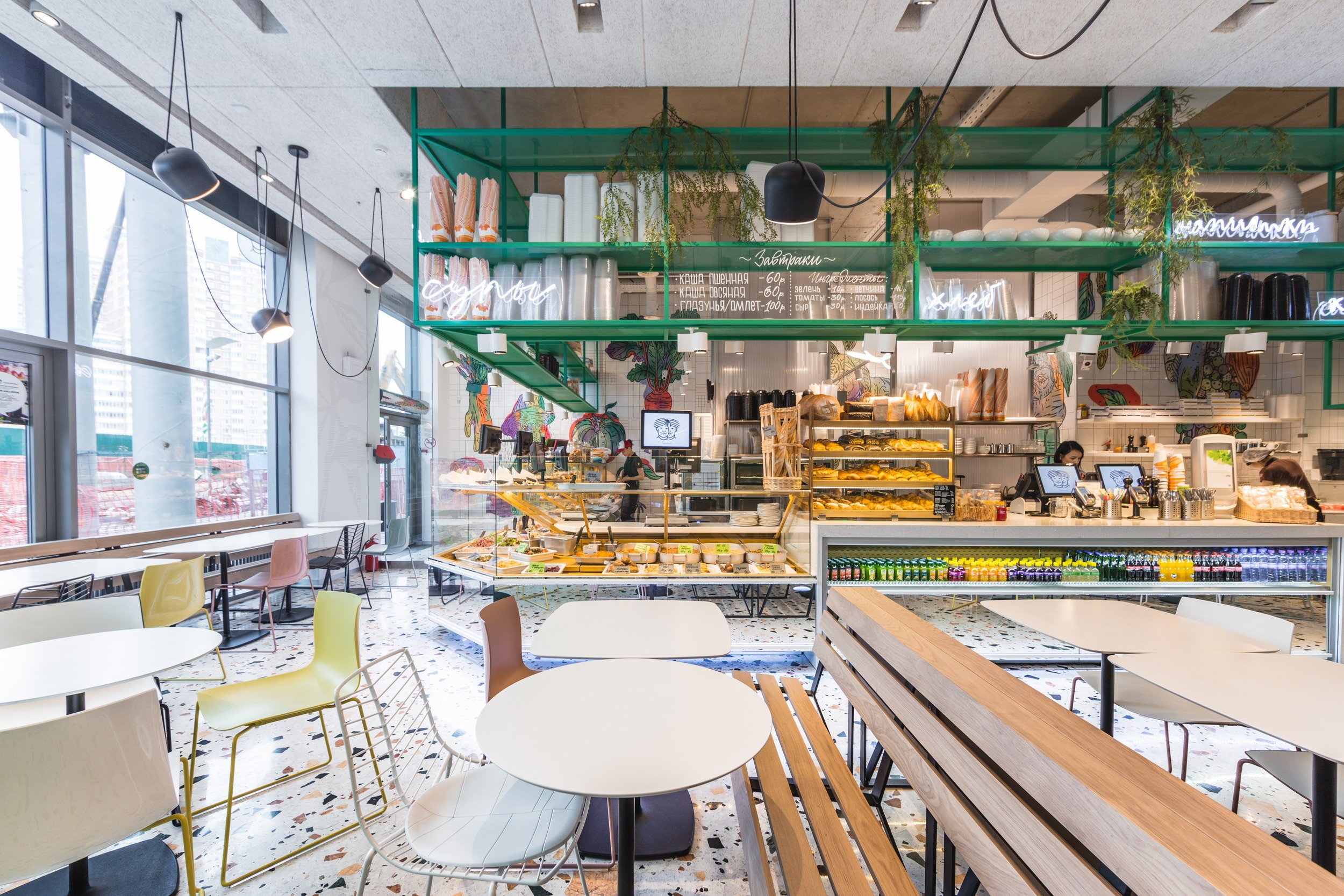
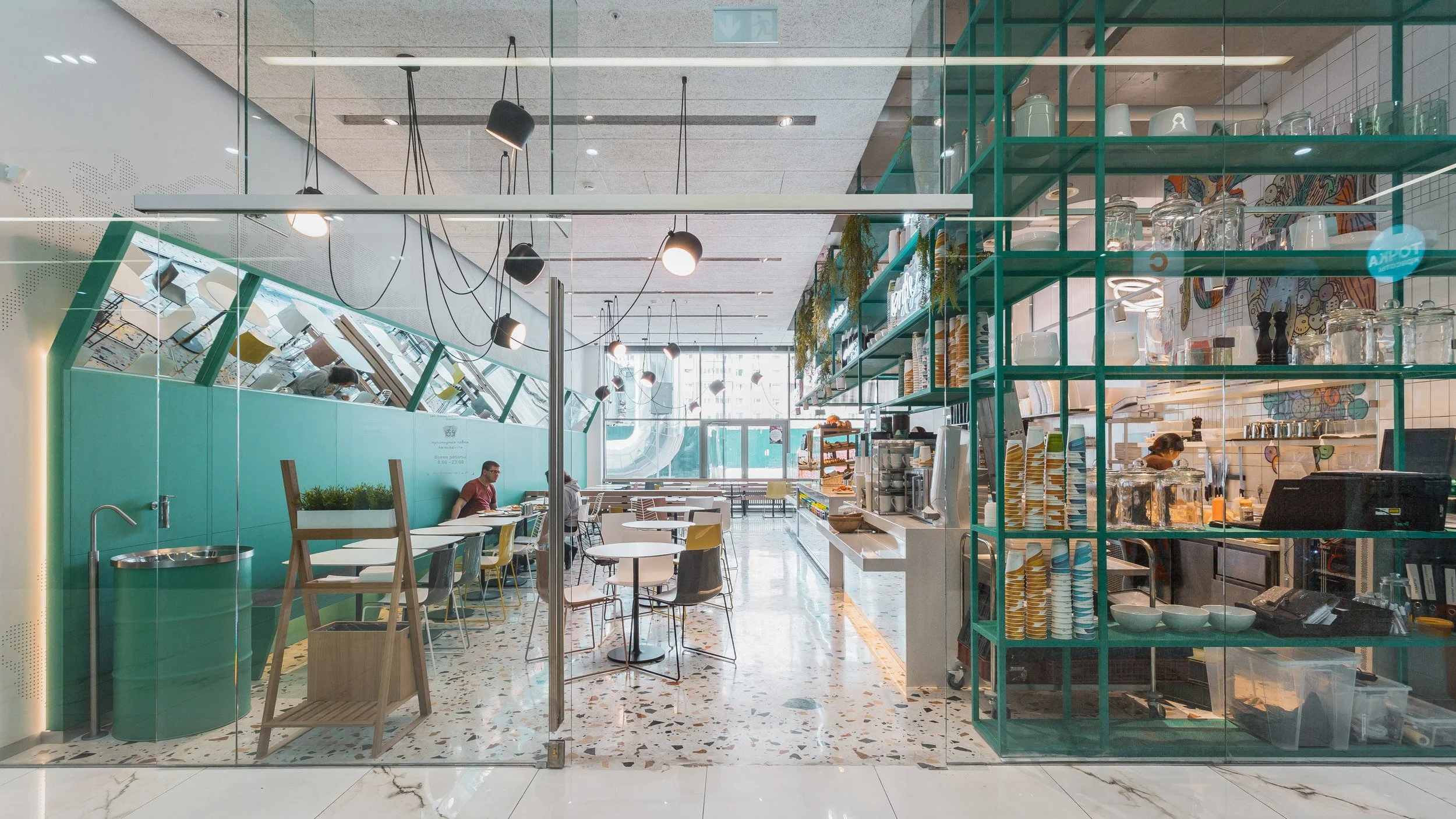
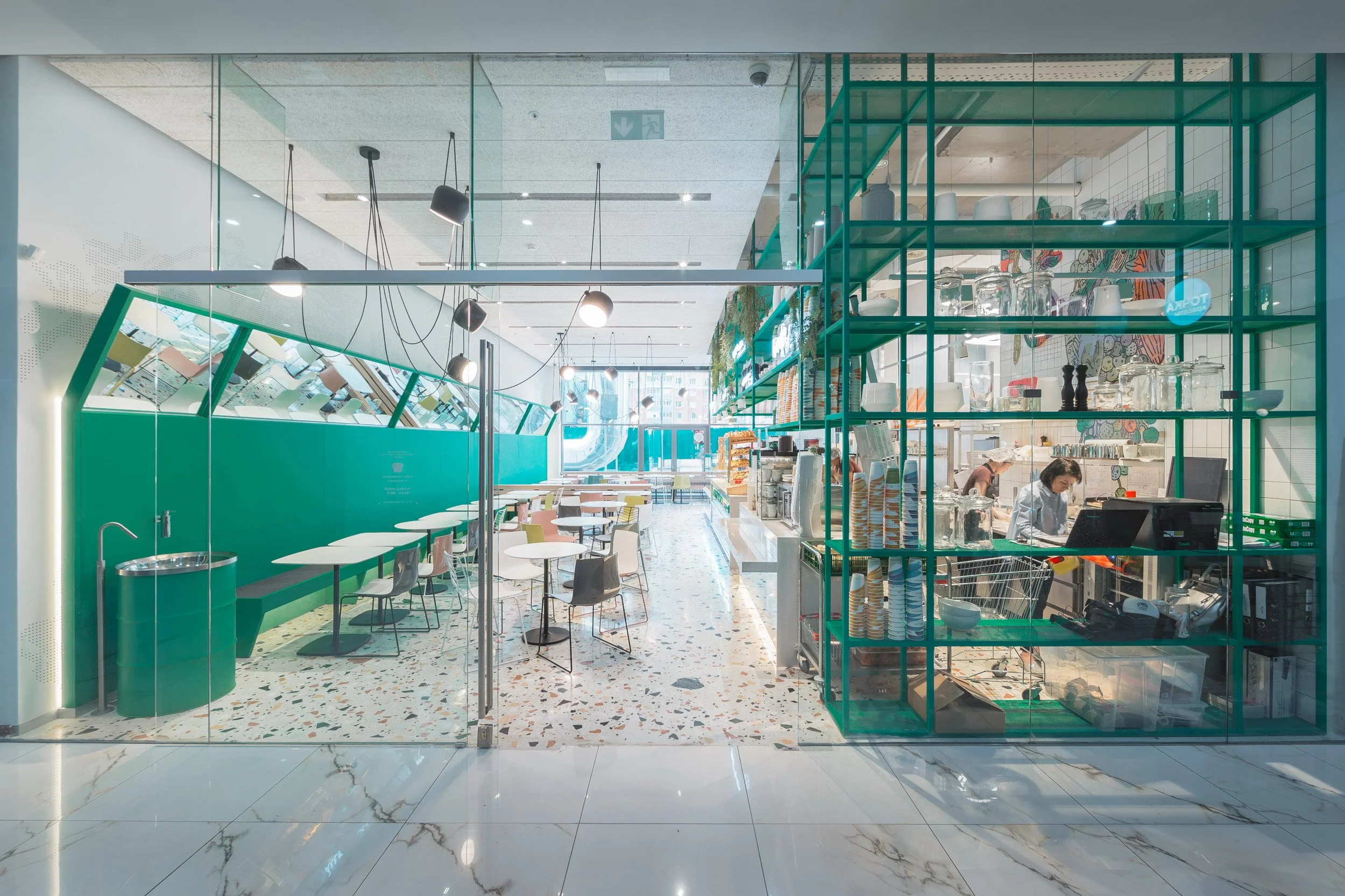
The second café designed for the Karavaevi Brothers chain marked the brand’s first expansion beyond Moscow’s Garden Ring. Located in the Ramenki district on the ground floor of the Tiara shopping centre, the project occupies a tall, fully glazed unit with dual access — from the street and directly from the mall.
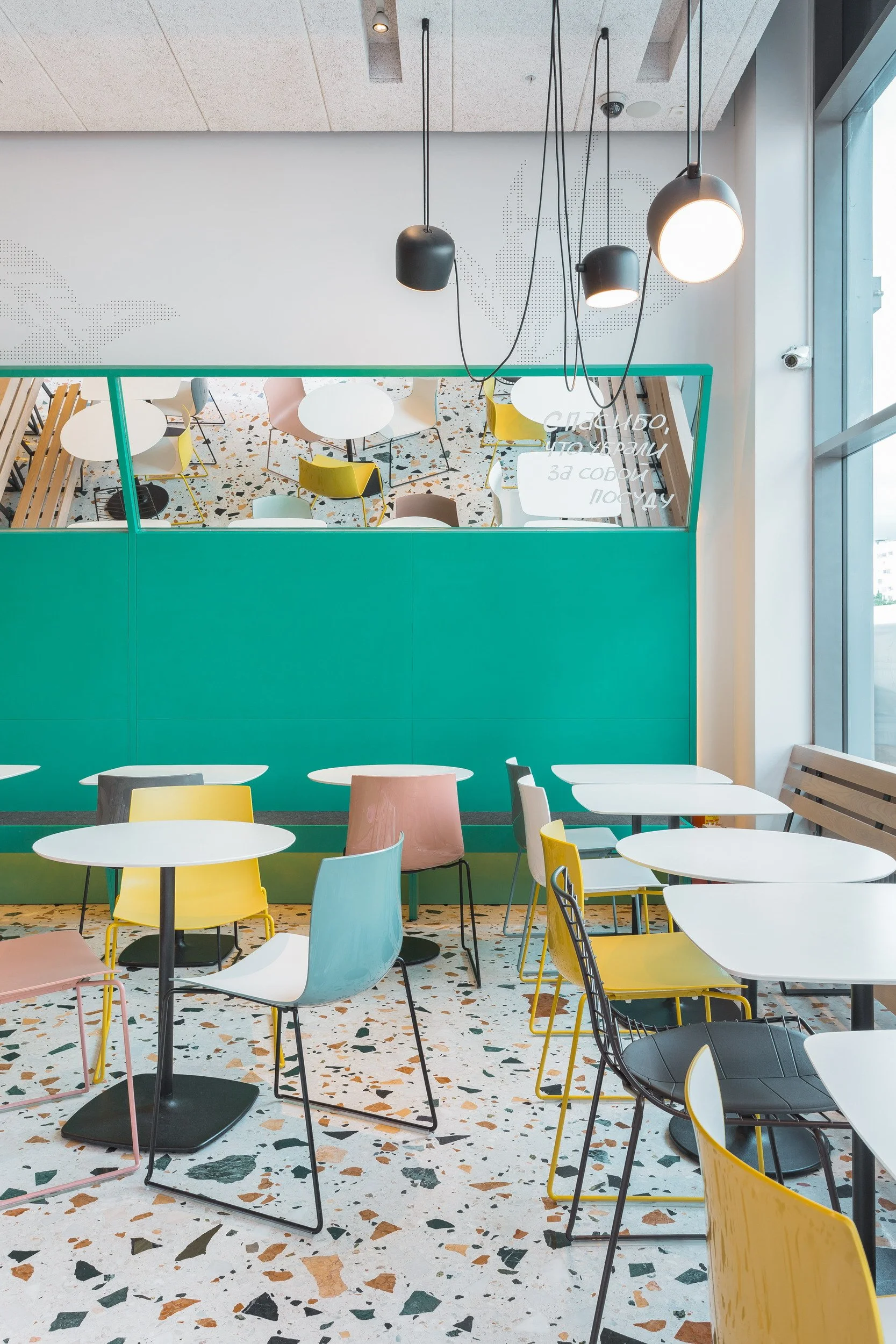
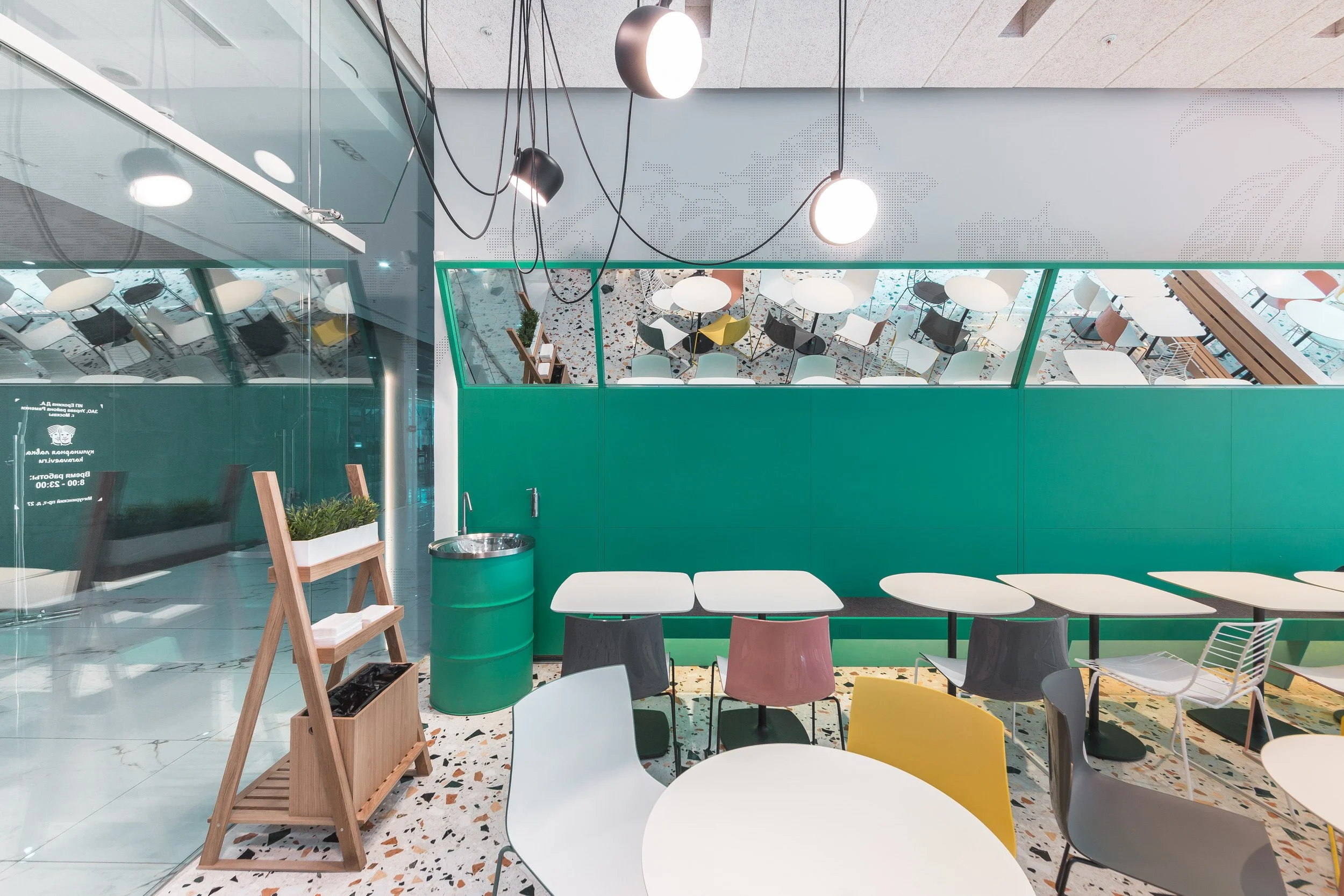
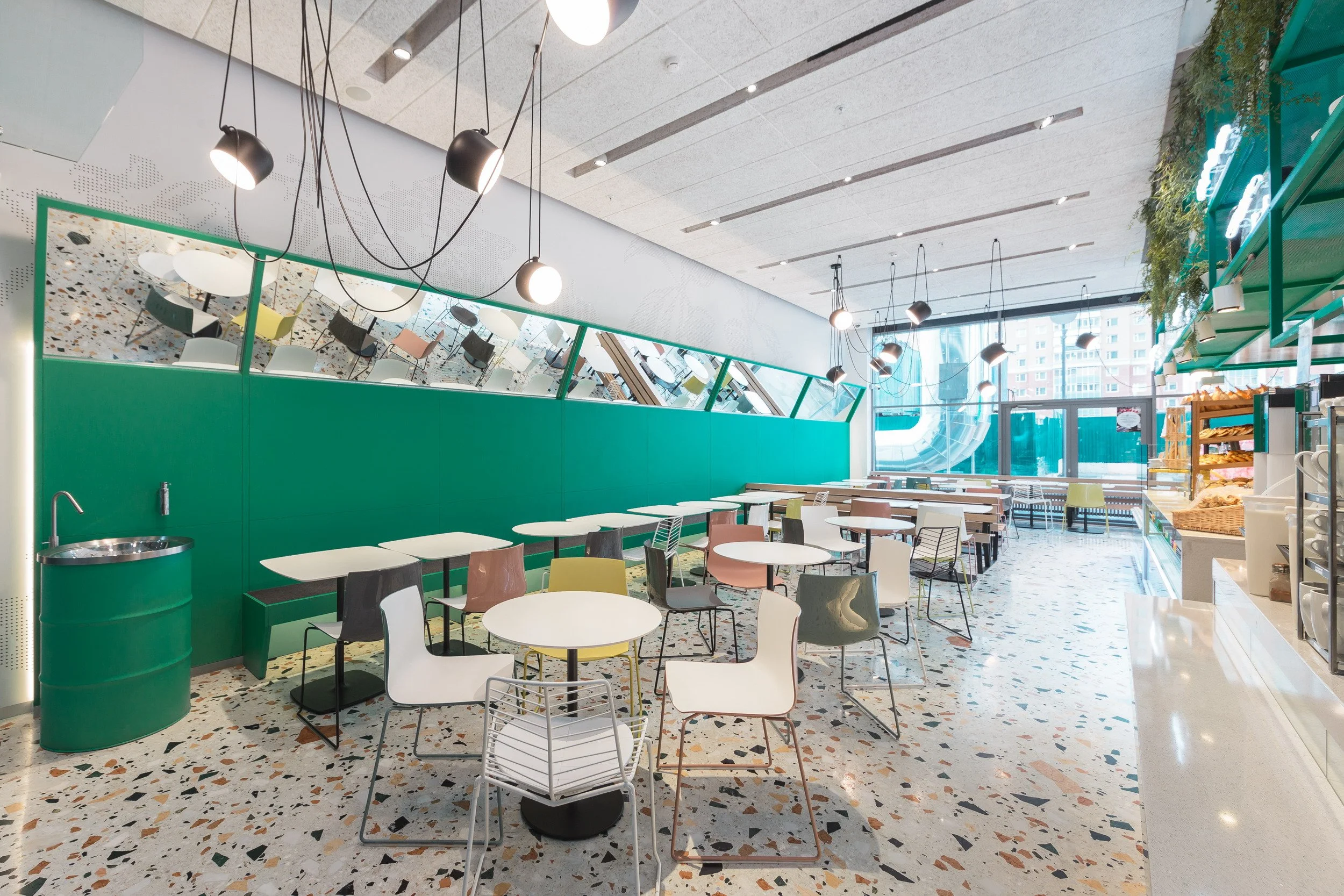
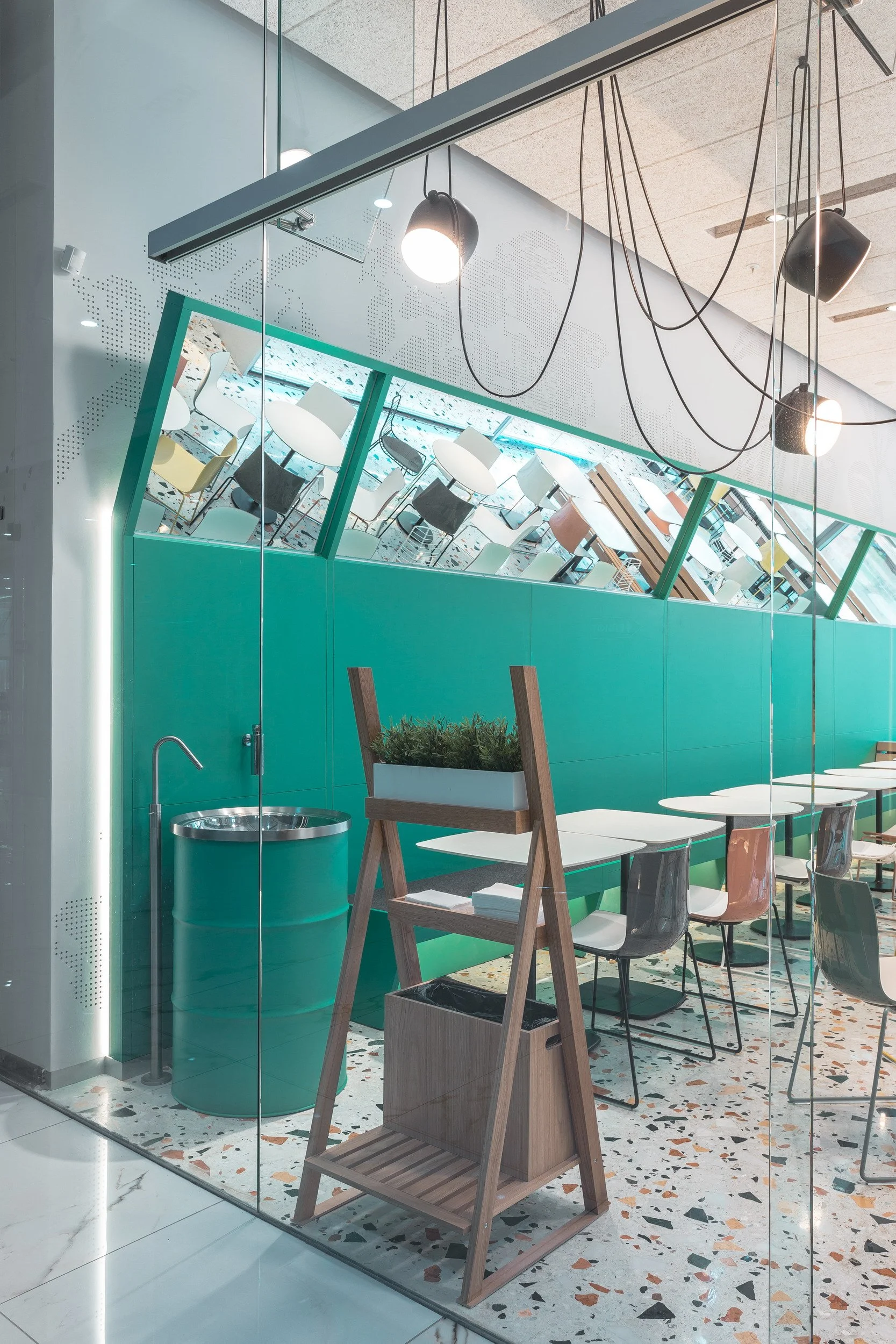
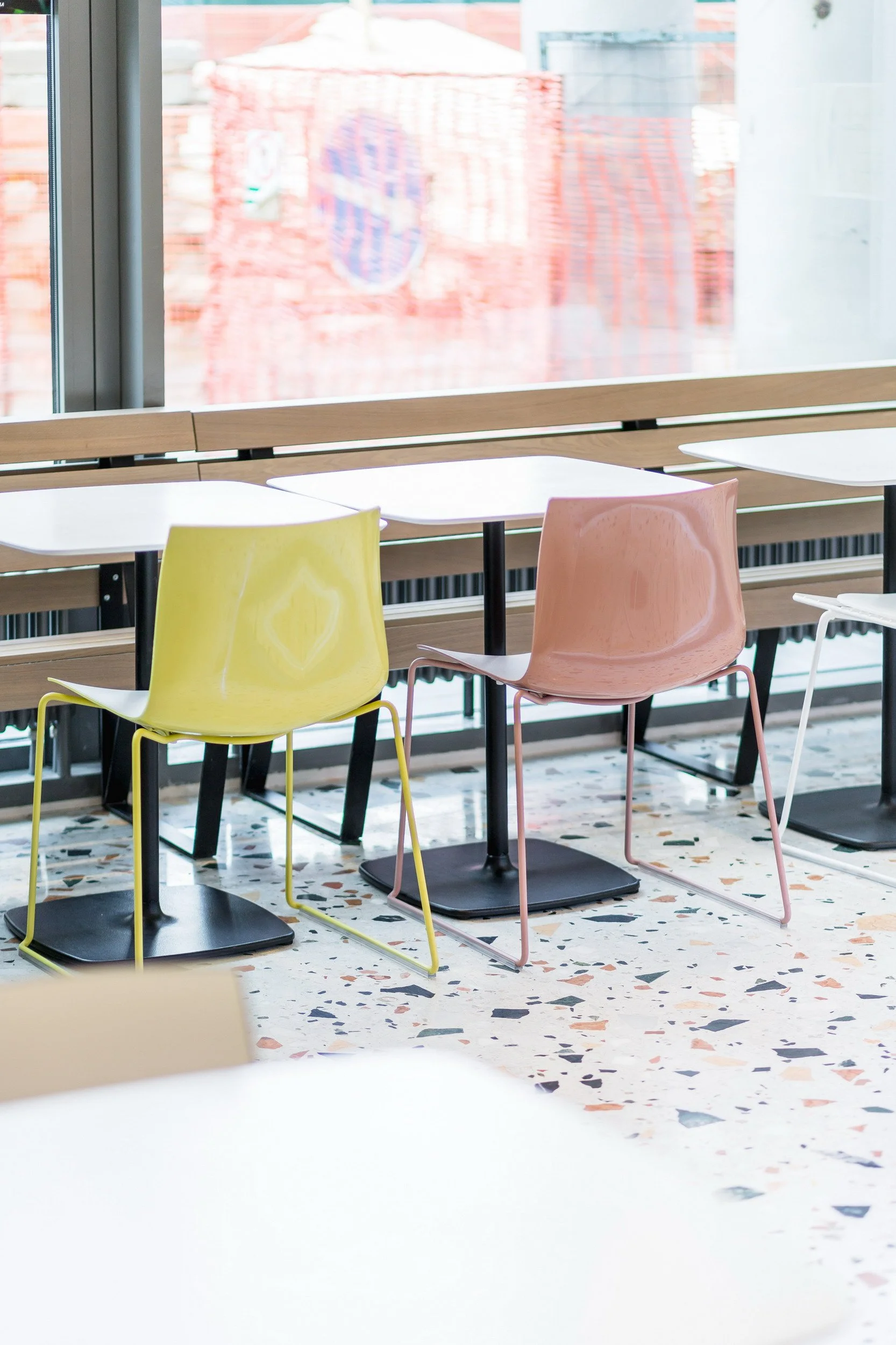
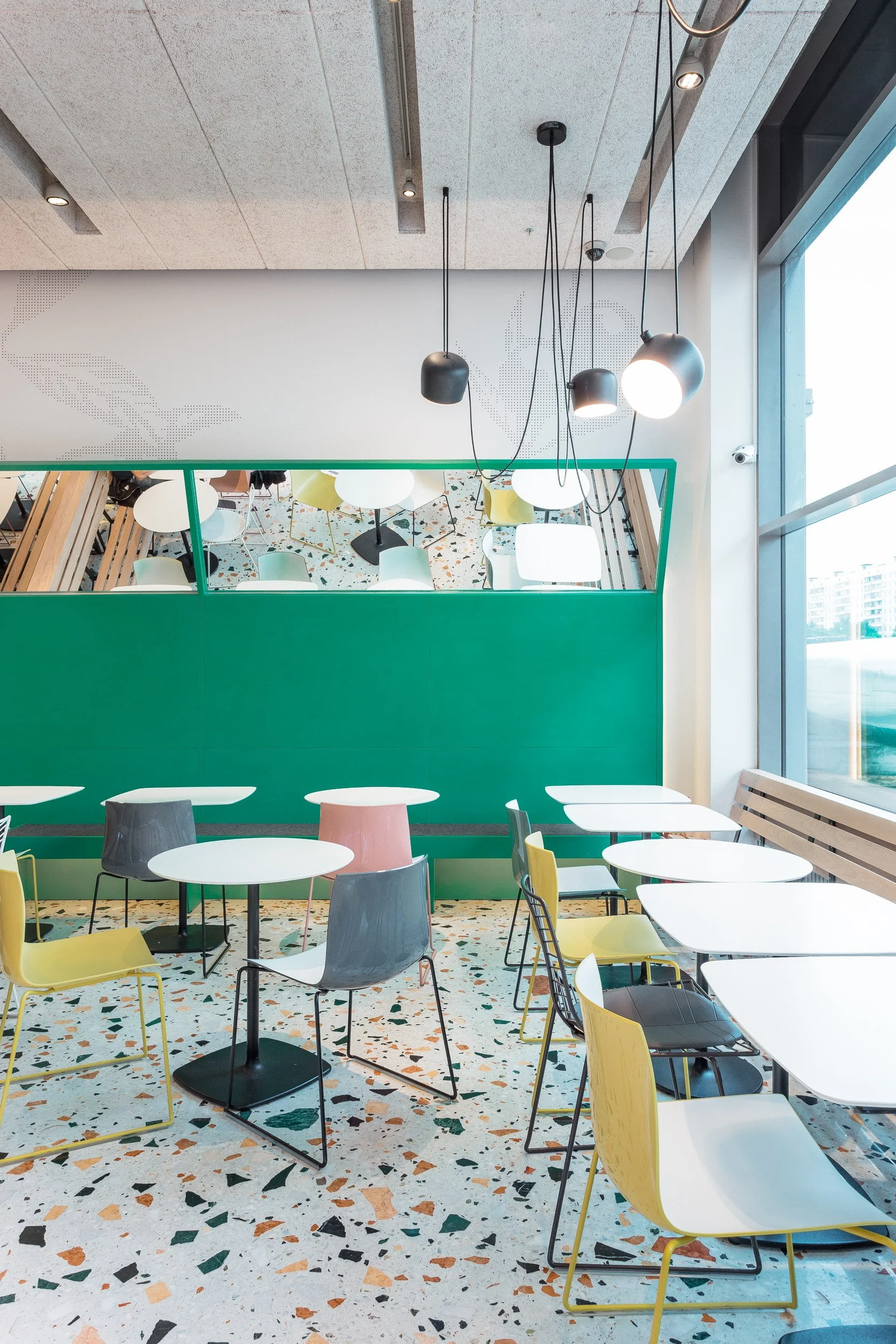
The surrounding context informed the conceptual direction. Ramenki is characterised by abundant greenery and proximity to the Botanical Garden of Moscow State University. Instead of relying on literal decorative references, the interior interprets this setting through the theme of cultivation and experimentation associated with the work of horticulturist Ivan Michurin. A palette of vivid green accents runs throughout the space, combined with garden benches, a barrel-shaped washbasin and brightly coloured furniture that introduces a subtle element of play into the structured composition of the interior.
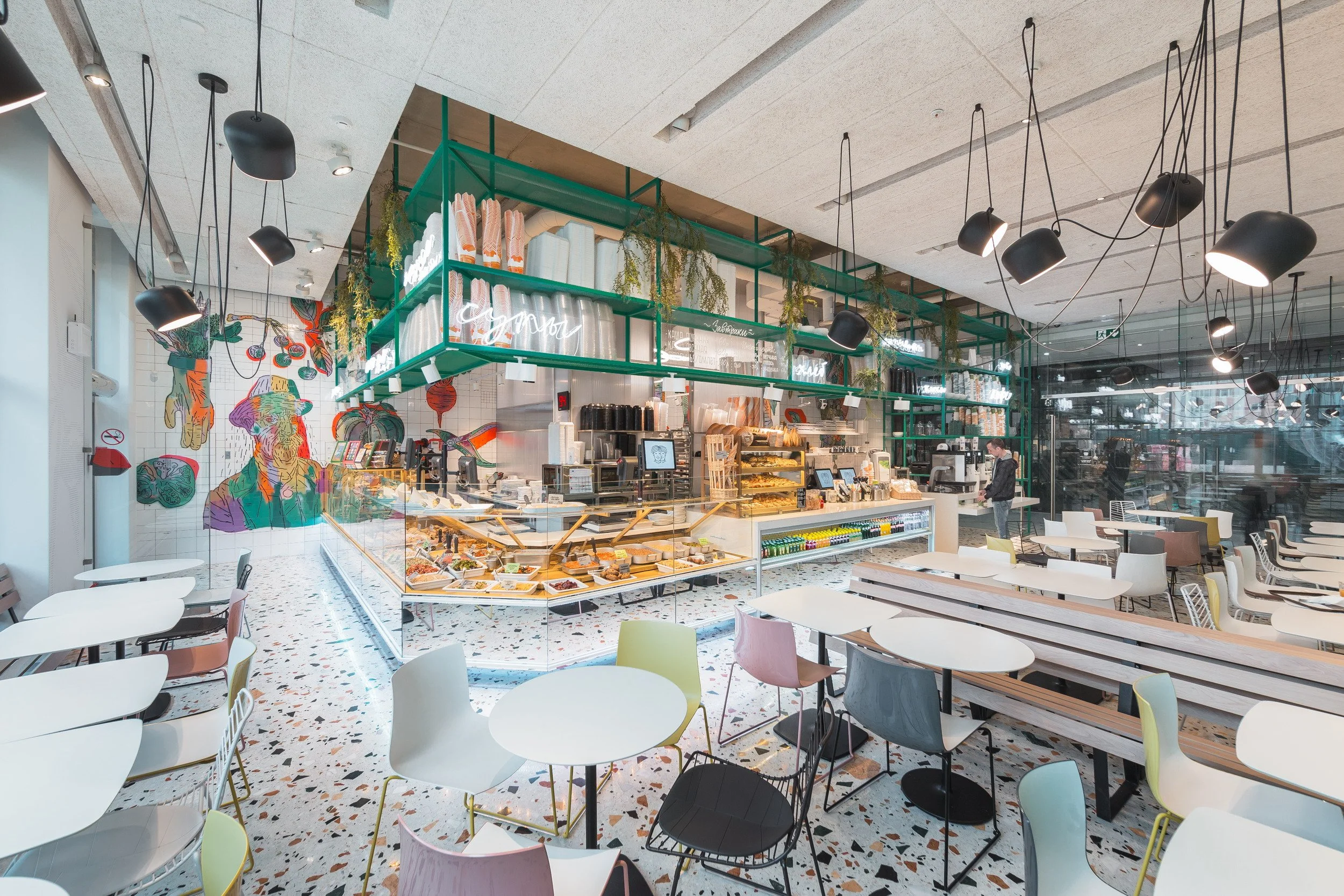
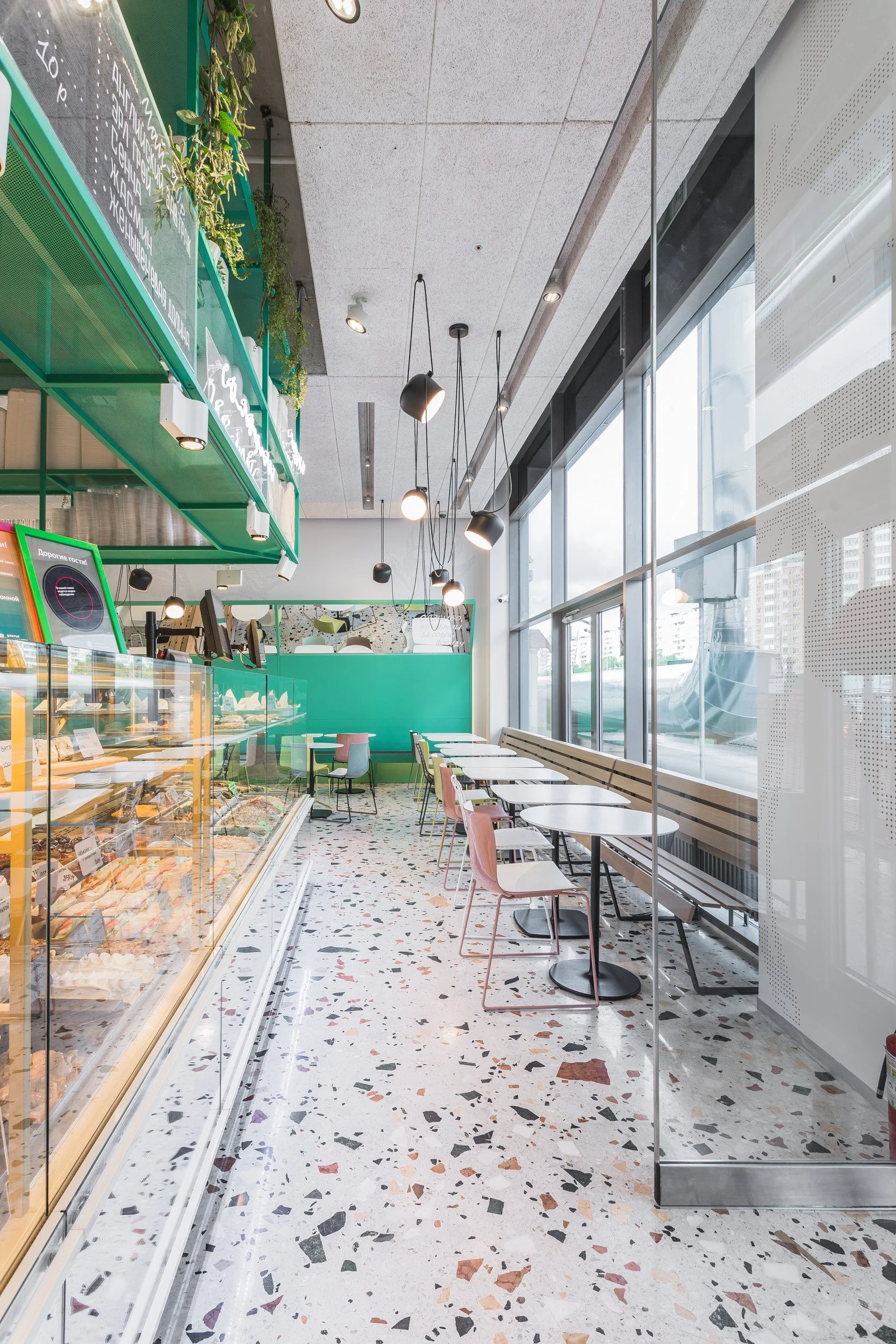
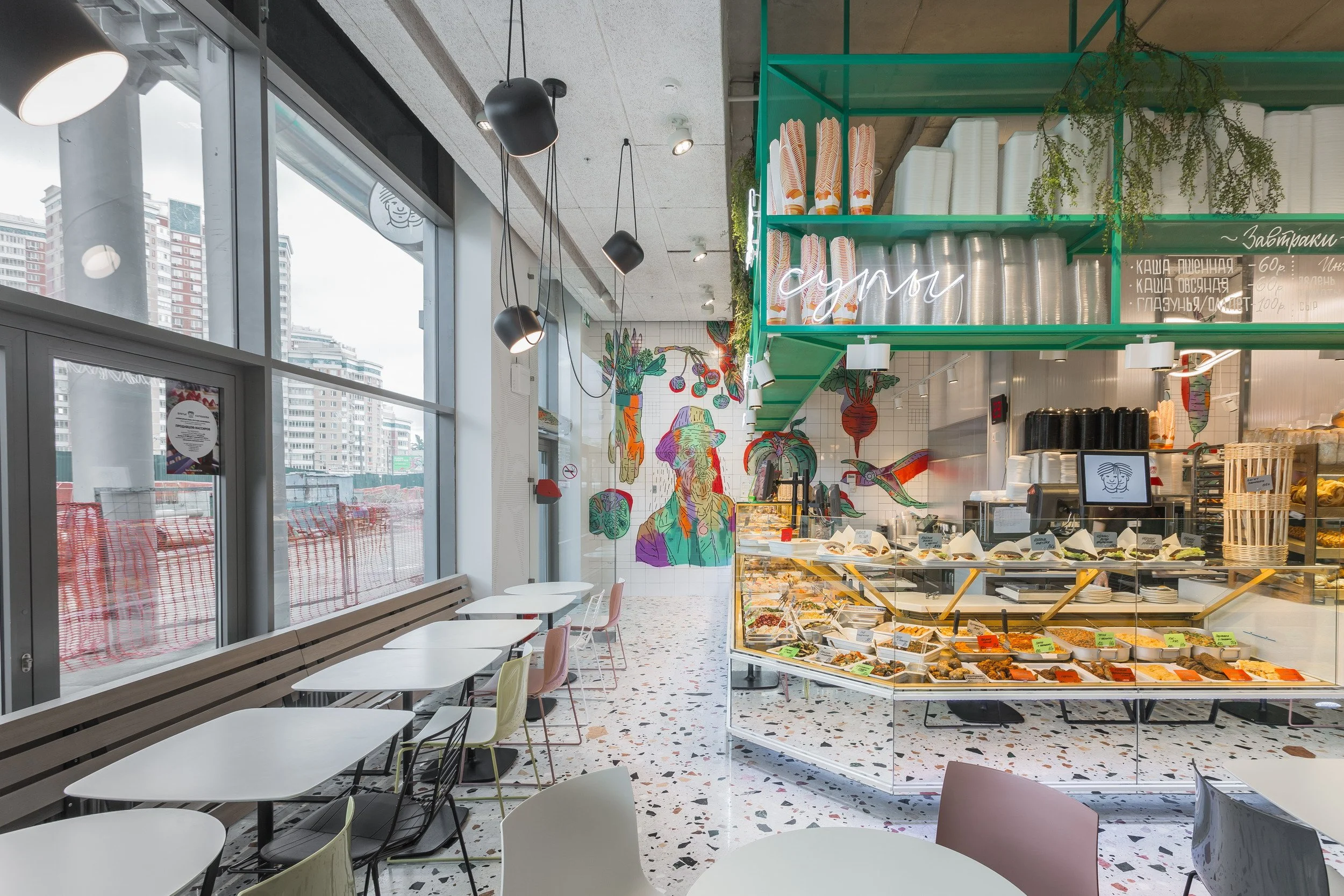
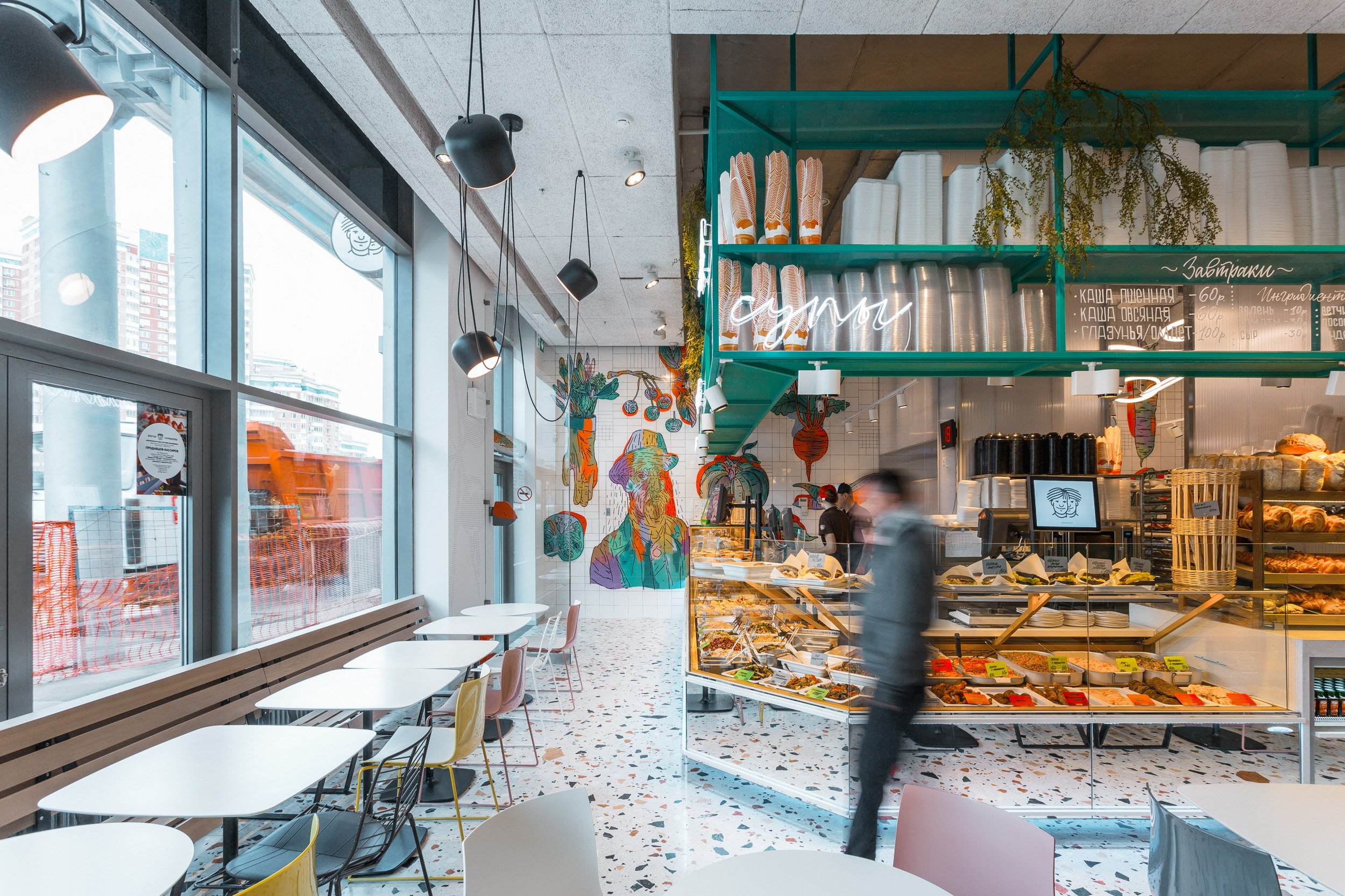
A translucent polycarbonate partition separates the dining area from the open kitchen, evoking the atmosphere of a greenhouse while maintaining visual connection. The originally passage-like layout was reconfigured: one entrance was relocated and the second replaced with a wide sliding system, improving circulation and allowing for additional seating along the glazed façade.
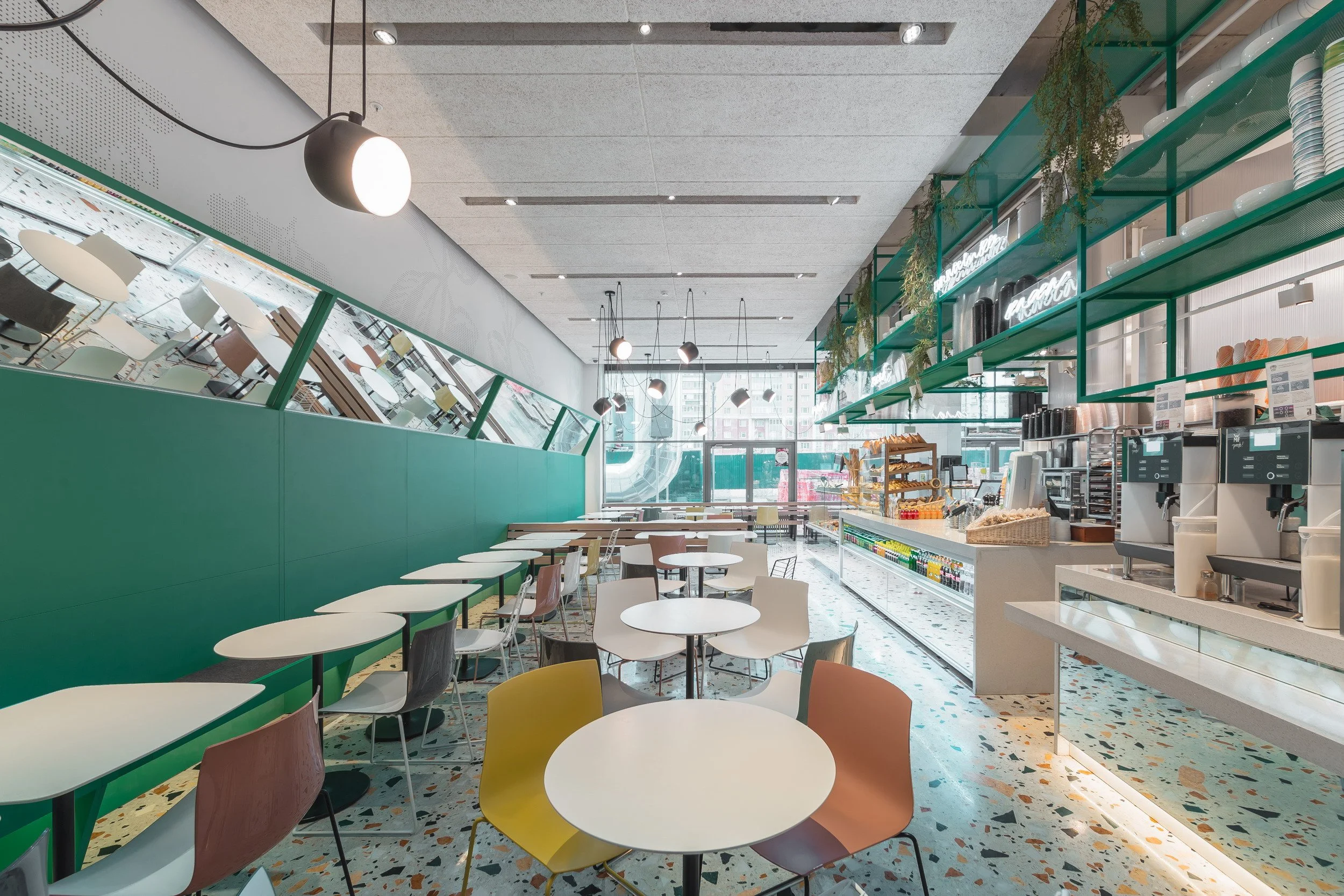
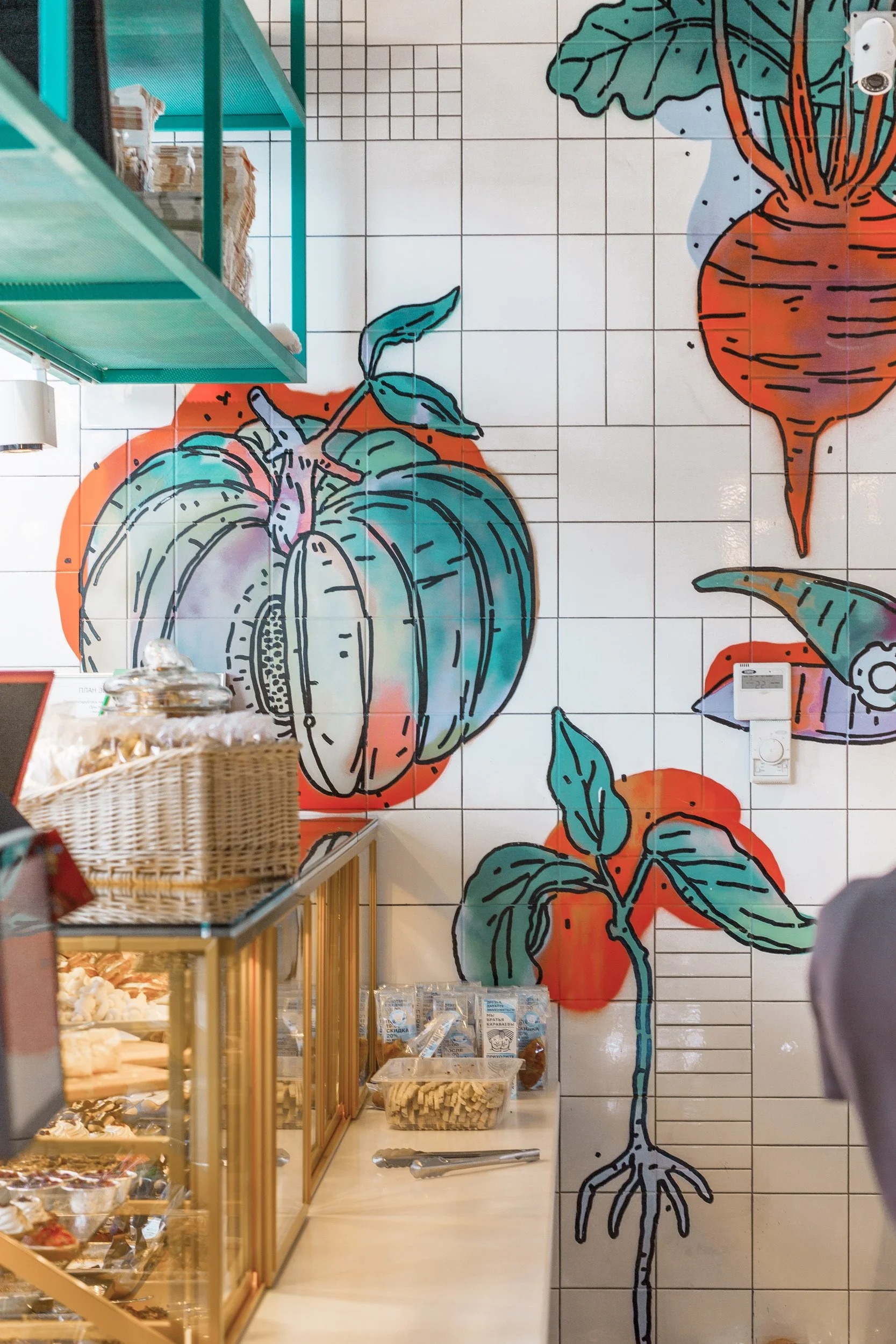
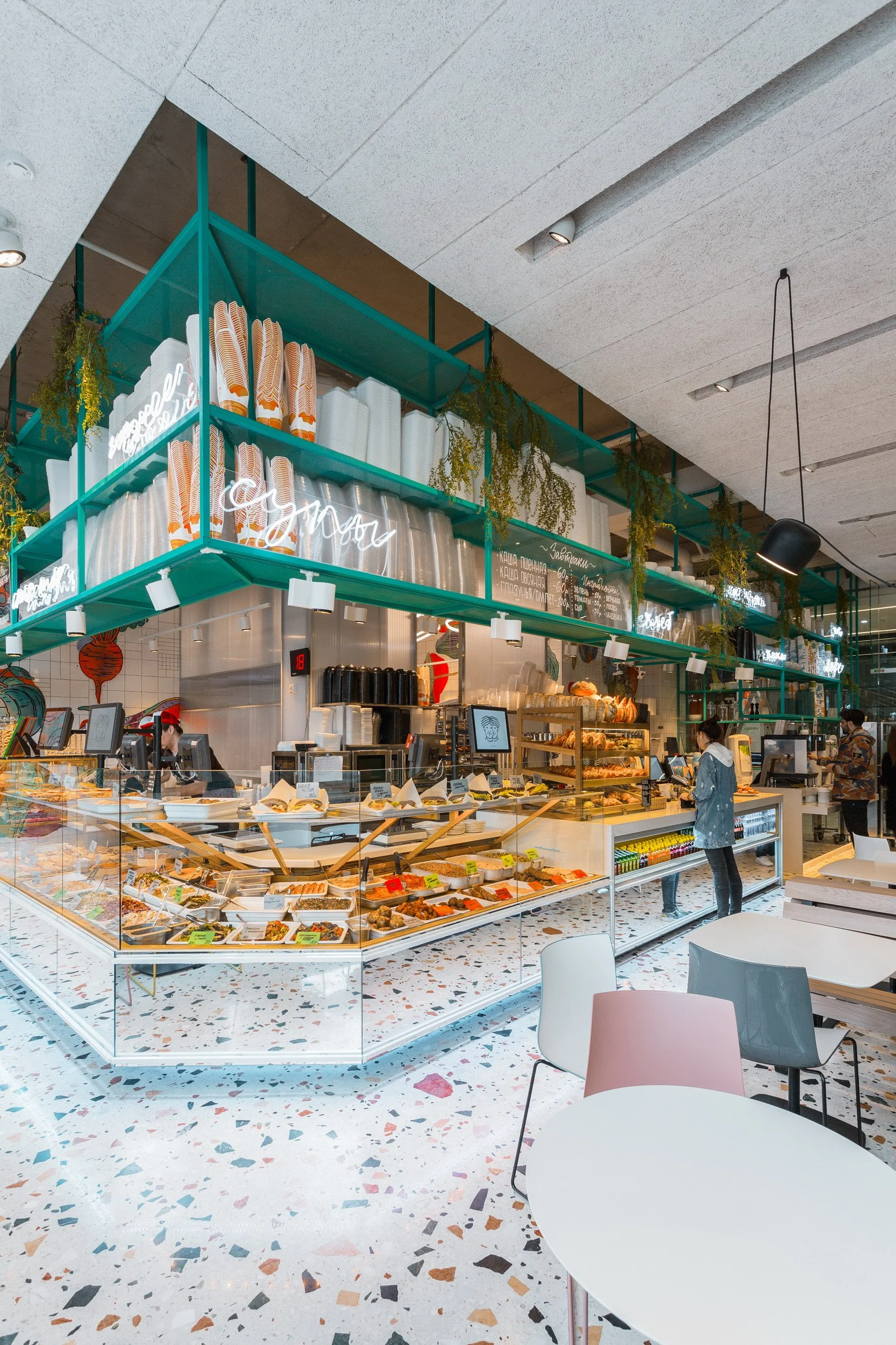
Given the significant takeaway component, extensive storage for disposable packaging was necessary. Instead of concealing it, a suspended metal structure integrates shelving and transitions into a rack, turning this practical requirement into a visible architectural feature. All fixed furniture elements were developed specifically for the project, including customised display counters with mirrored fronts and a green wall bench with an inclined mirror — both reflecting the interior and visually expanding the perceived space.
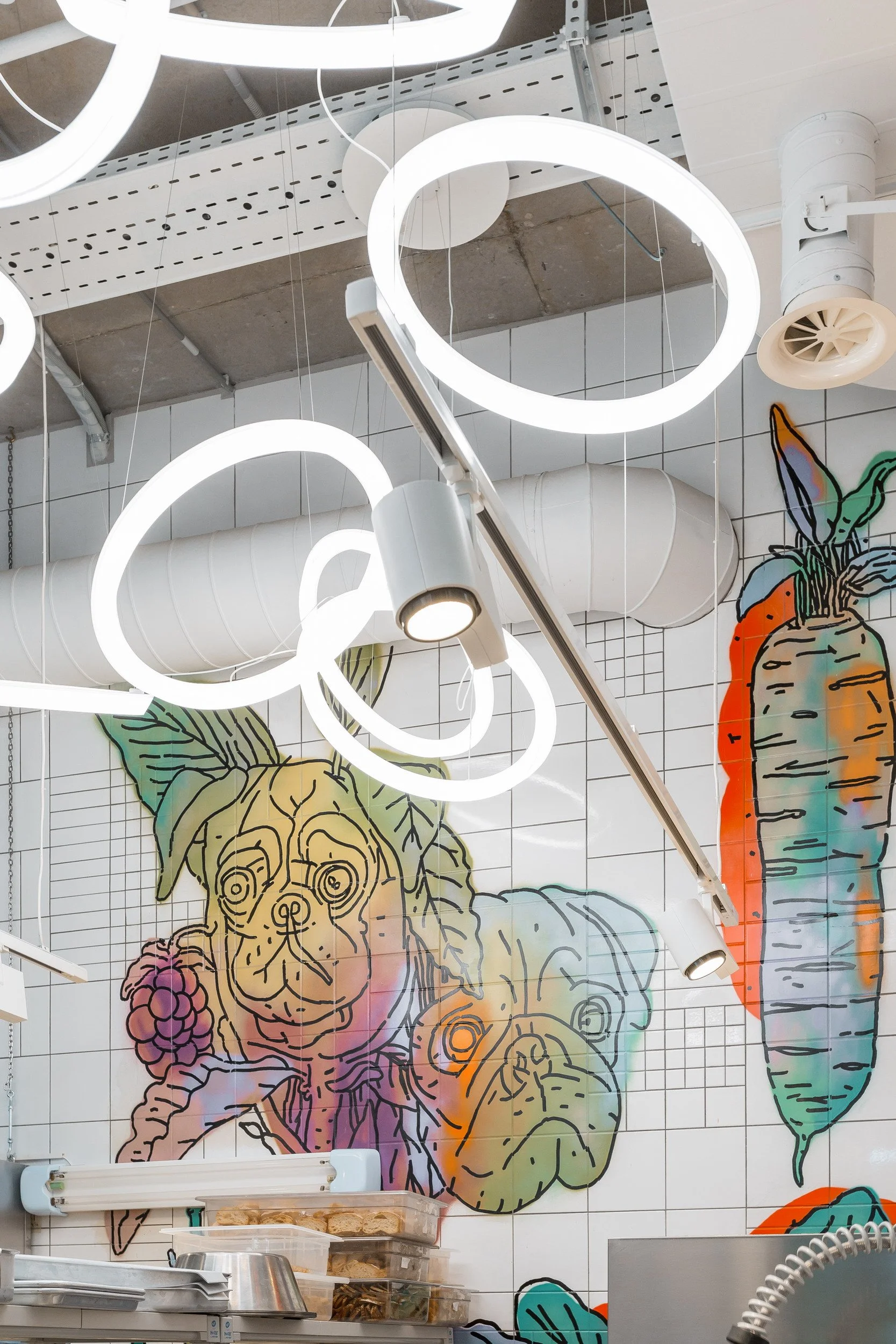
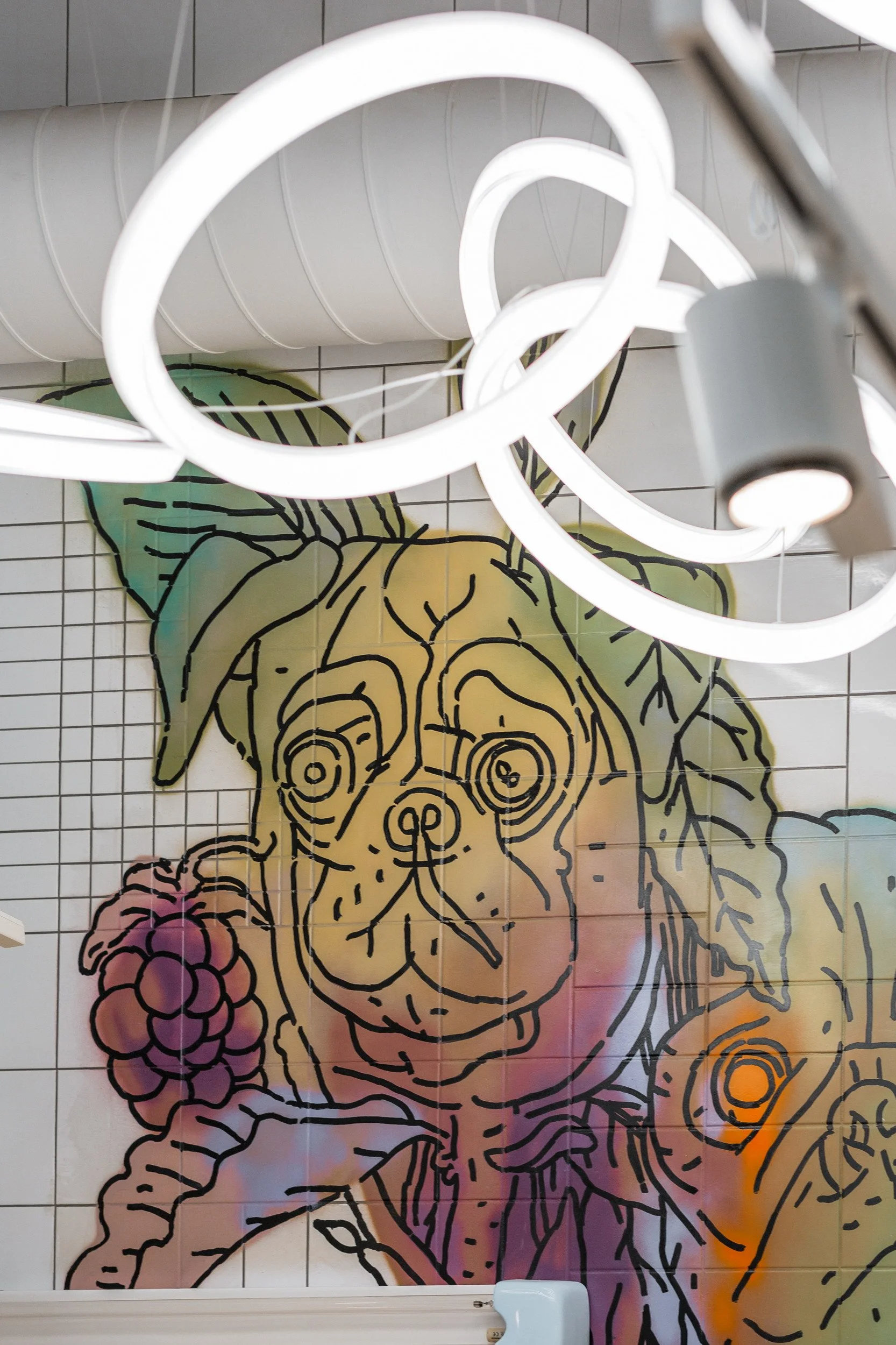
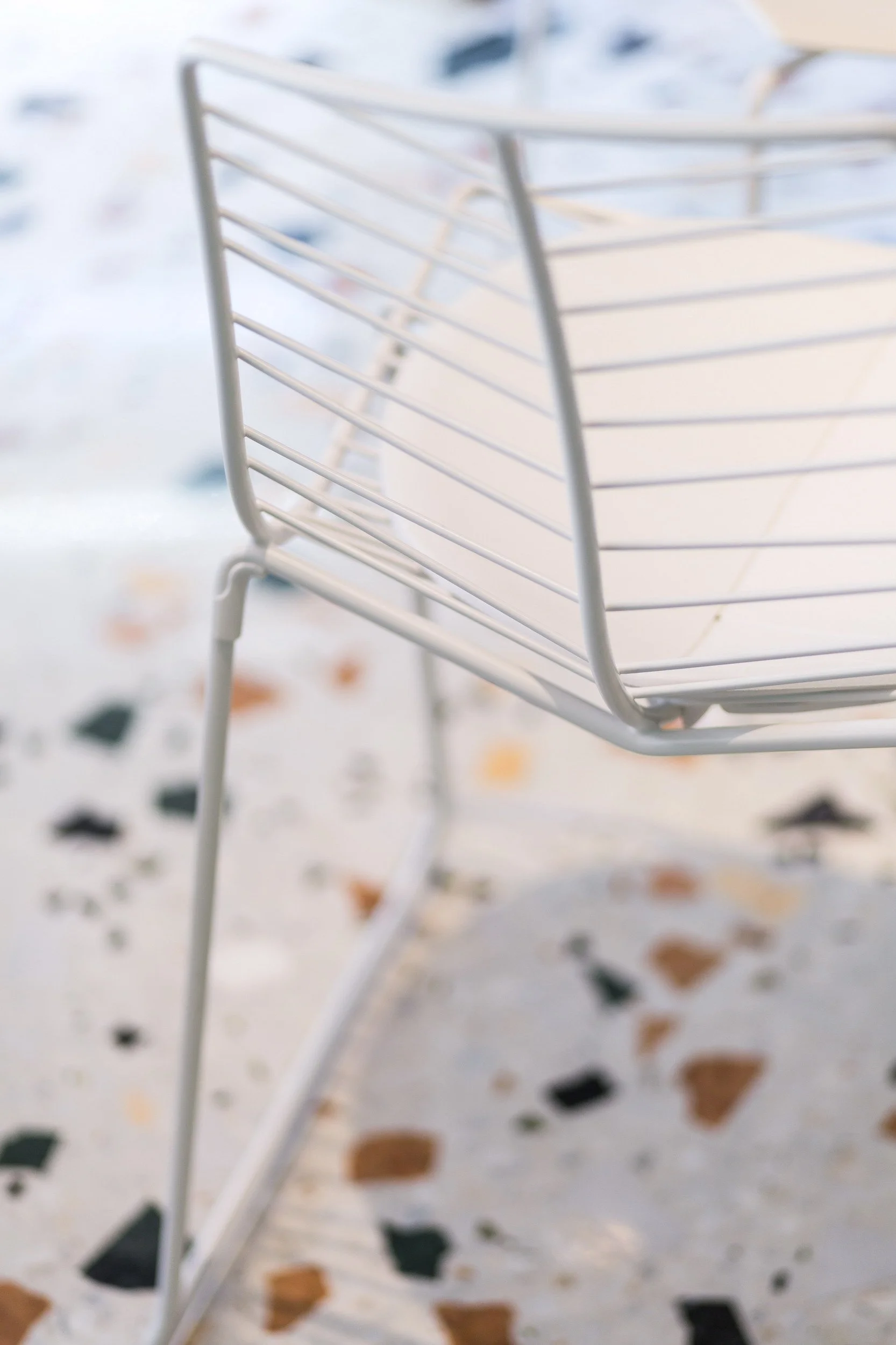
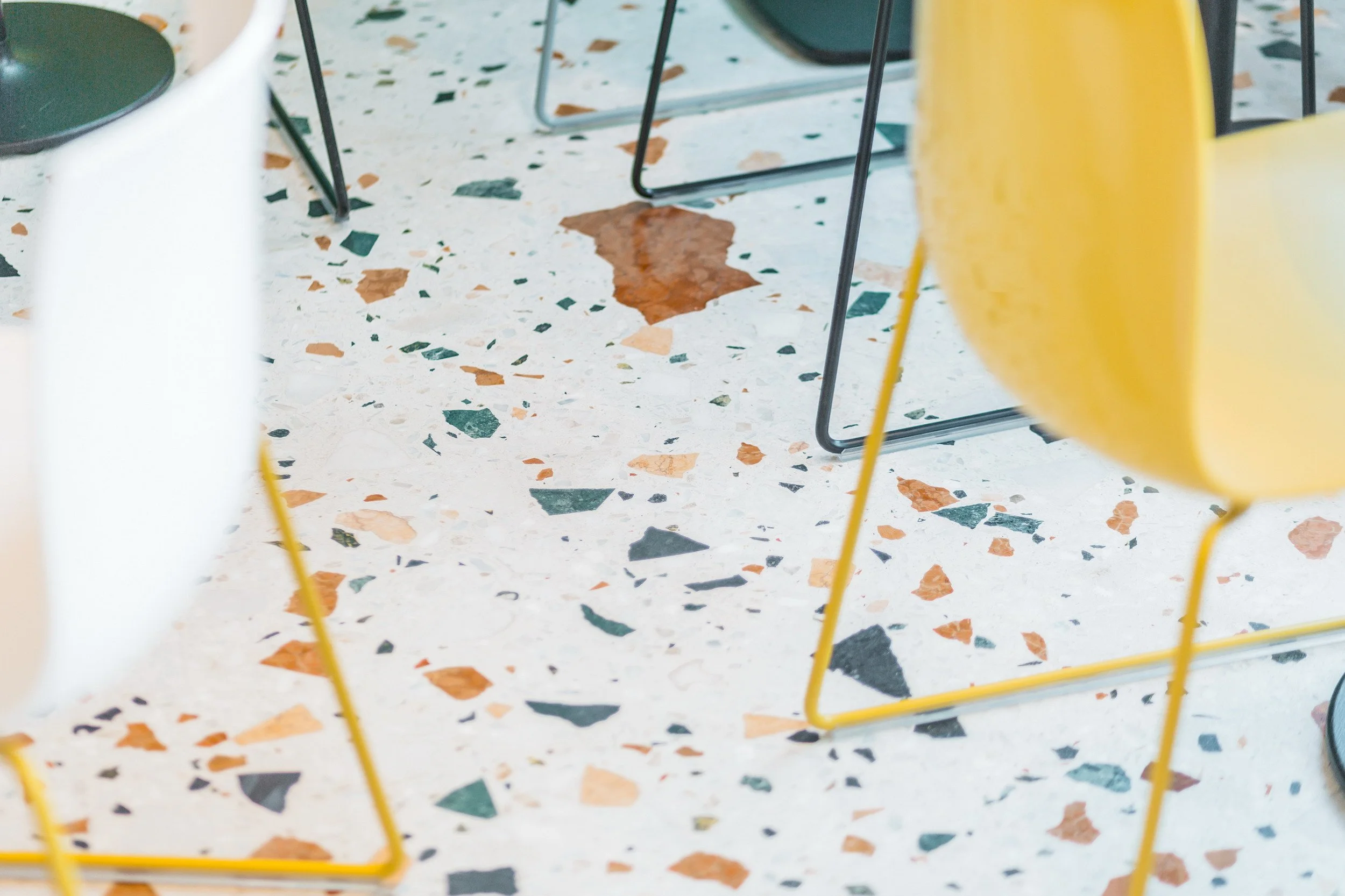
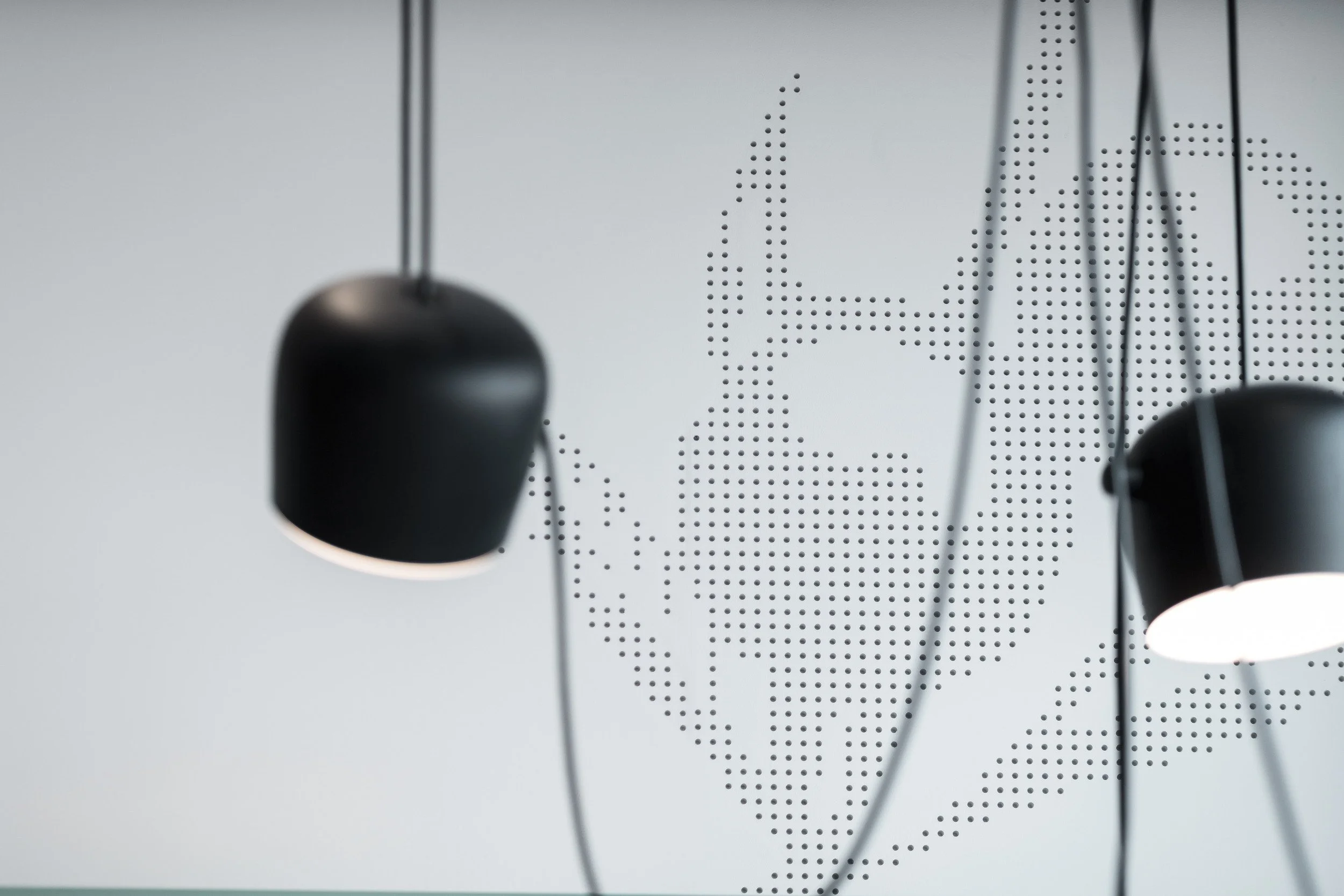
Durable, hard-wearing materials were selected to withstand intensive use, including hand-laid terrazzo flooring. A combination of precise architectural lighting and decorative accent fixtures ensures both functional clarity and a comfortable atmosphere, while dedicated illumination enhances the food displays. Acoustic comfort is achieved through perforated gypsum panels with plant-pattern cut-outs and fibrous ceiling boards concealing ventilation systems. Neon signage by Contrast Foundry integrated into the suspended green structure and ceramic graphics by Marat Morik distributed across tiled surfaces function as visual highlights within the interior.

Project team: Evgeniy Shchetinkin, Elizaveta Semeonova | Artwork: Marat Morik
Photo: Alex Zarodov

Publications: Superfuture, Interior+Design, OBJEKT, BOB Magazine, ARPER Selected References