Karavaevi Brothers 3

Function: Cafe-Culinary Shop
Location: Krzhizhanovskogo str, Moscow
Project: 2017, Total area: 200 m2
Status: Completed

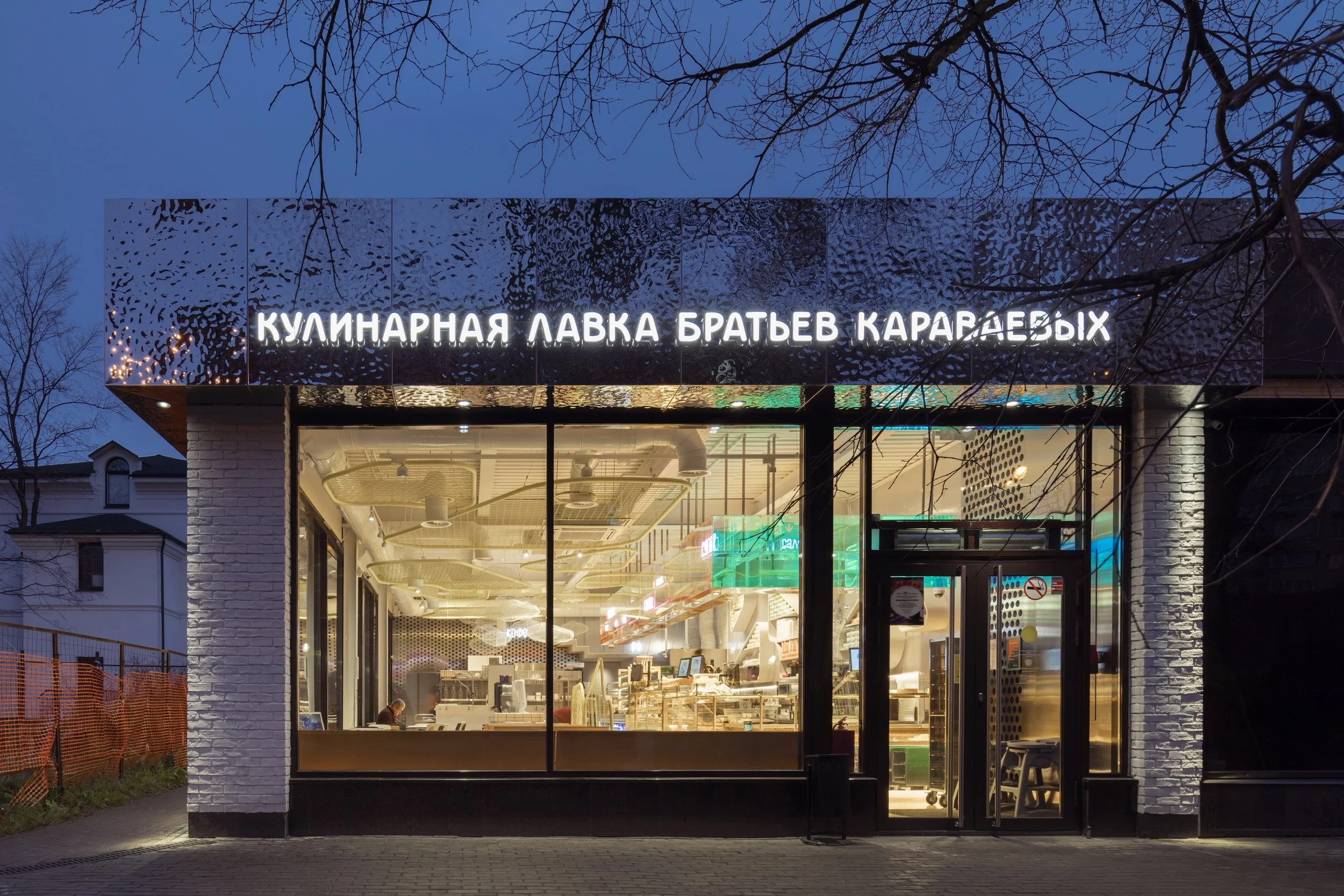
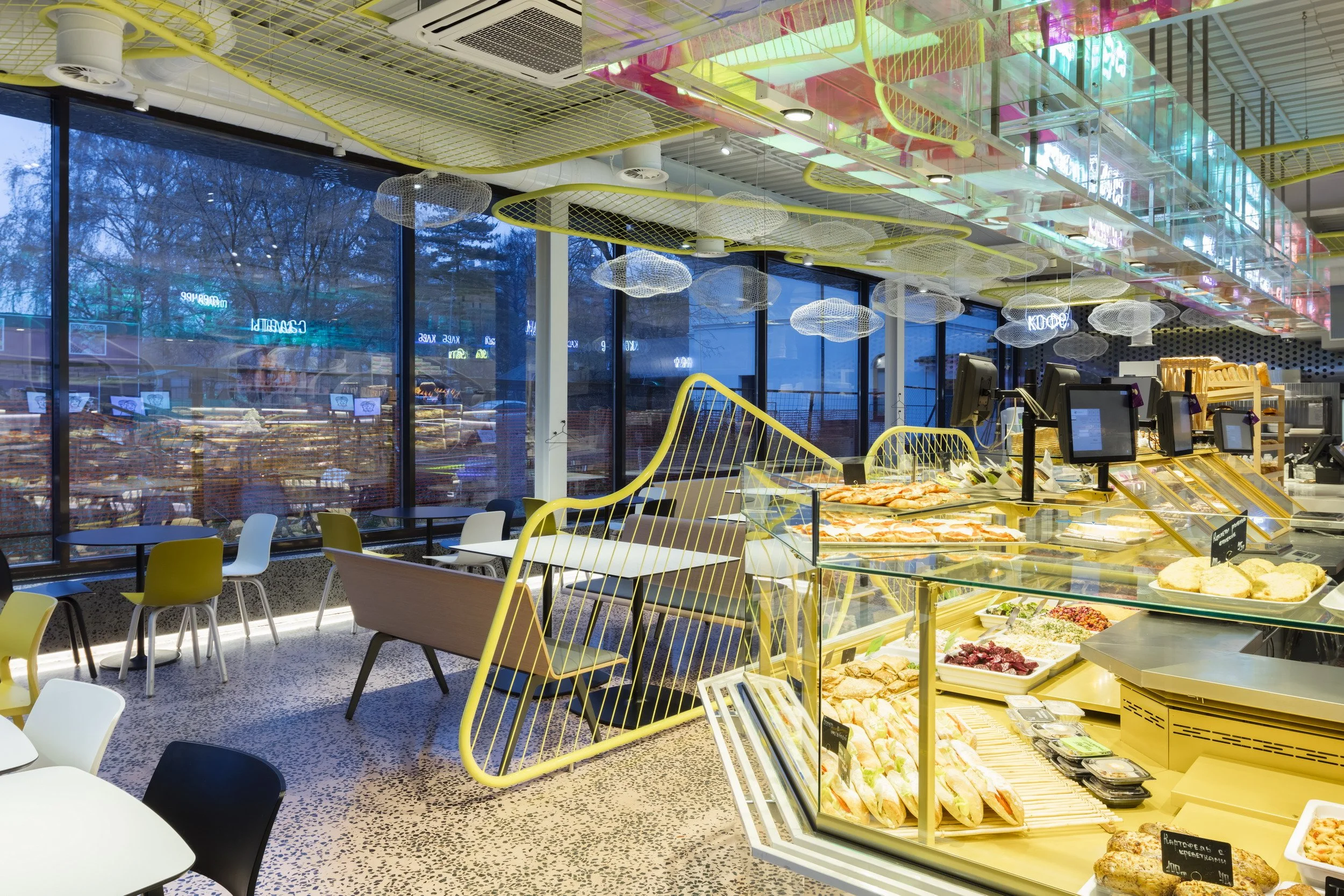
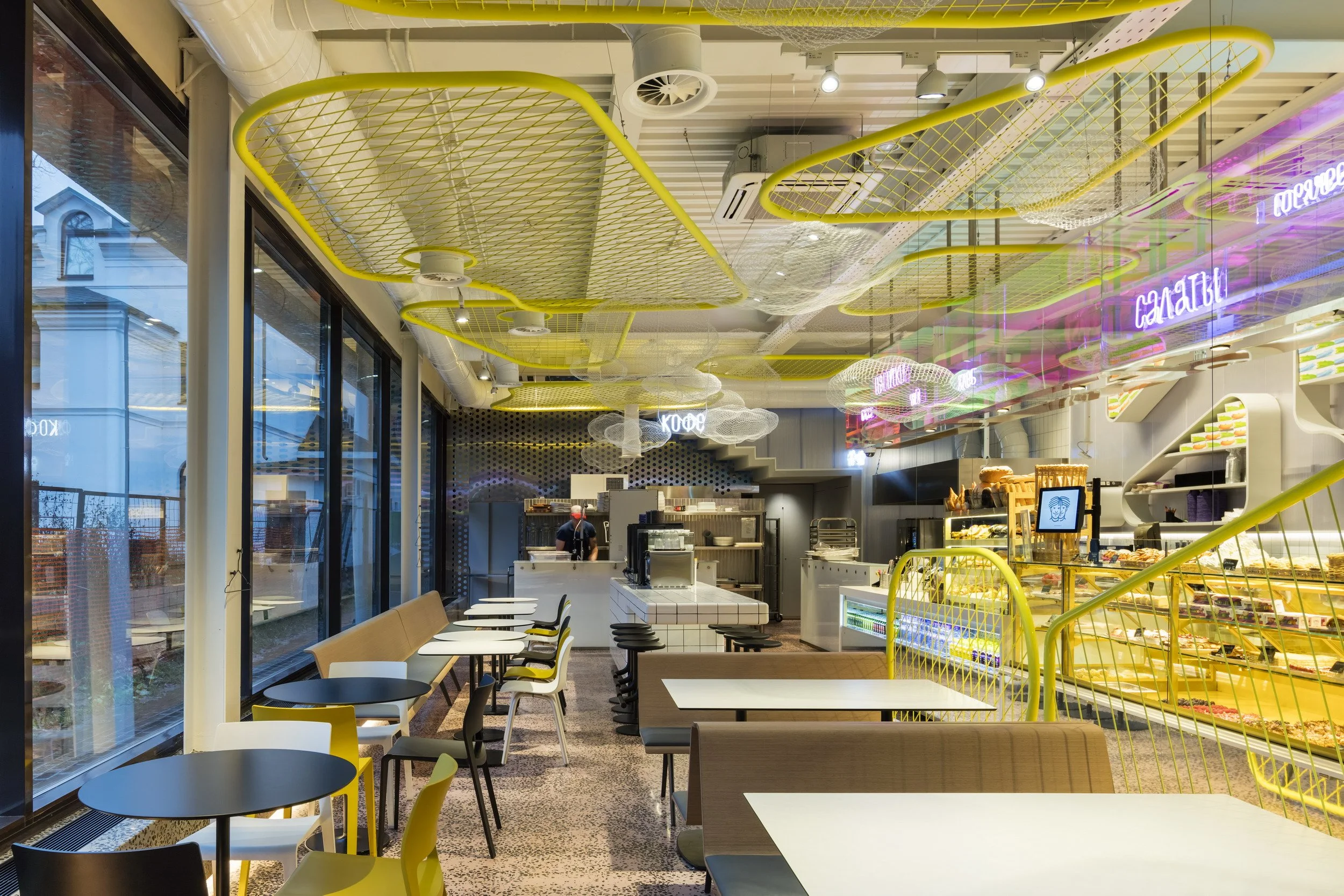
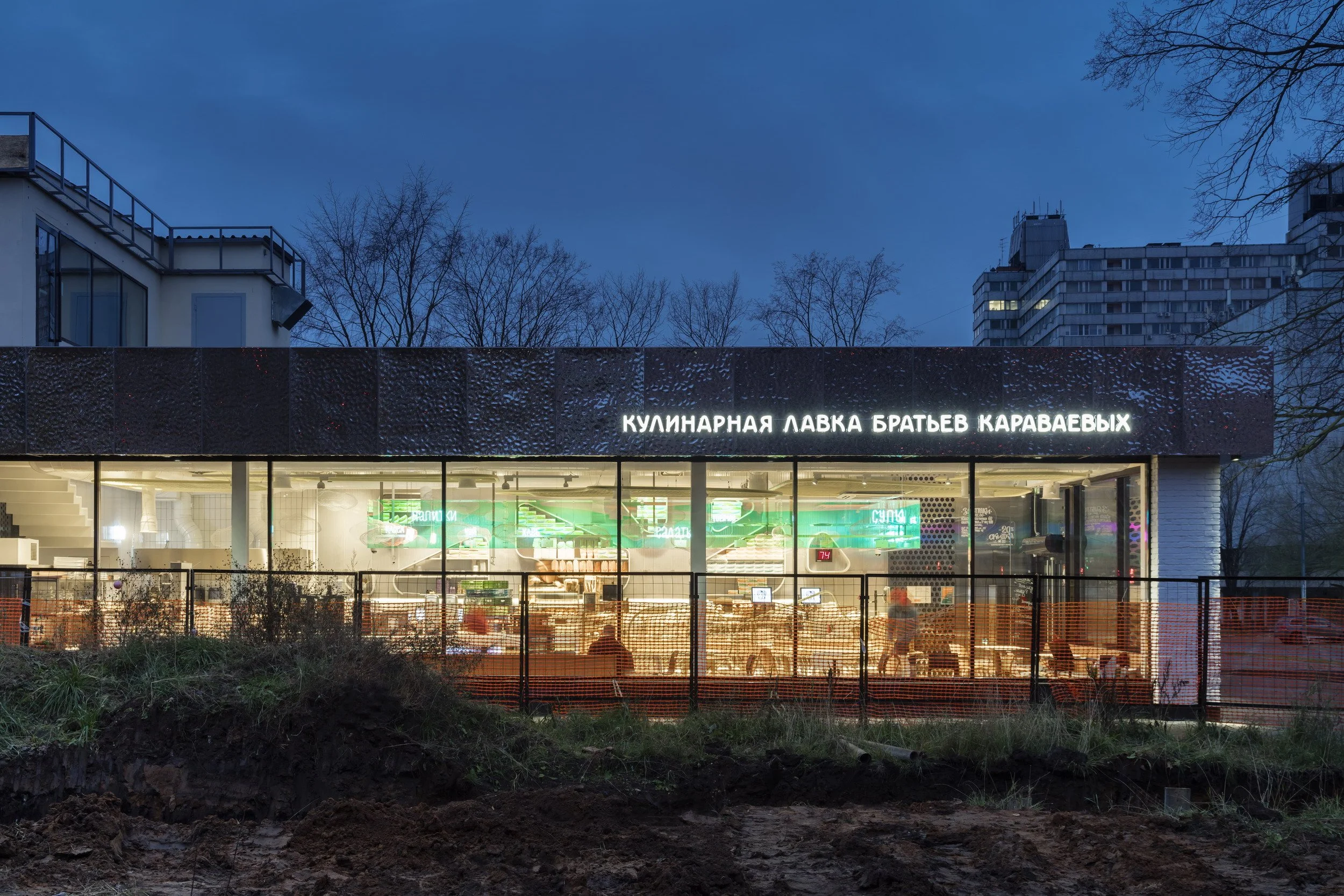
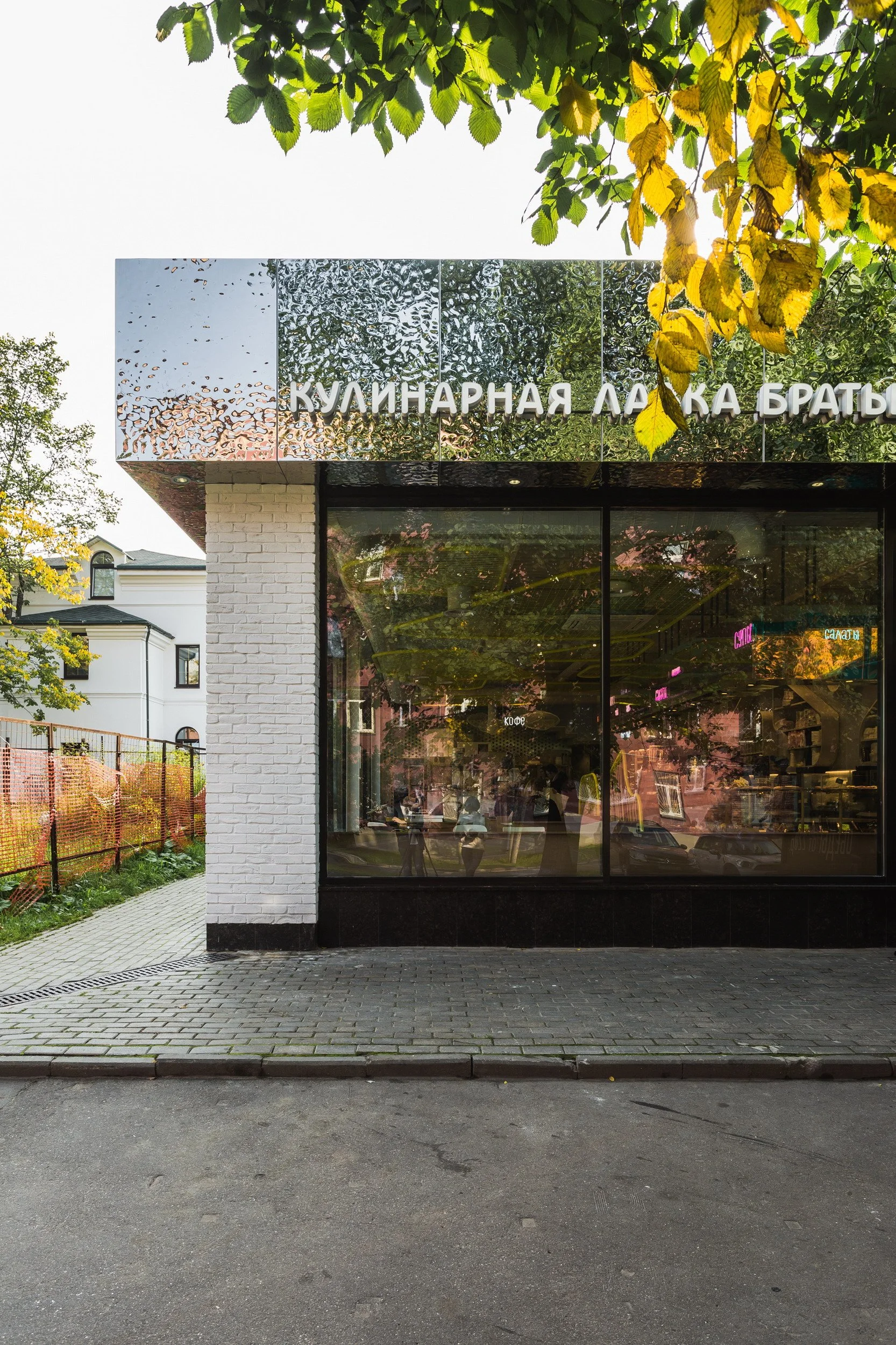
The third café designed for the Karavaevi Brothers chain occupies a freestanding single-storey pavilion in Moscow’s Akademichesky district. Slightly removed from primary pedestrian flows and set back within the block, the building benefits from perimeter glazing and clear visibility from the crossroads, allowing it to function as a recognisable neighbourhood landmark despite its recessed position.
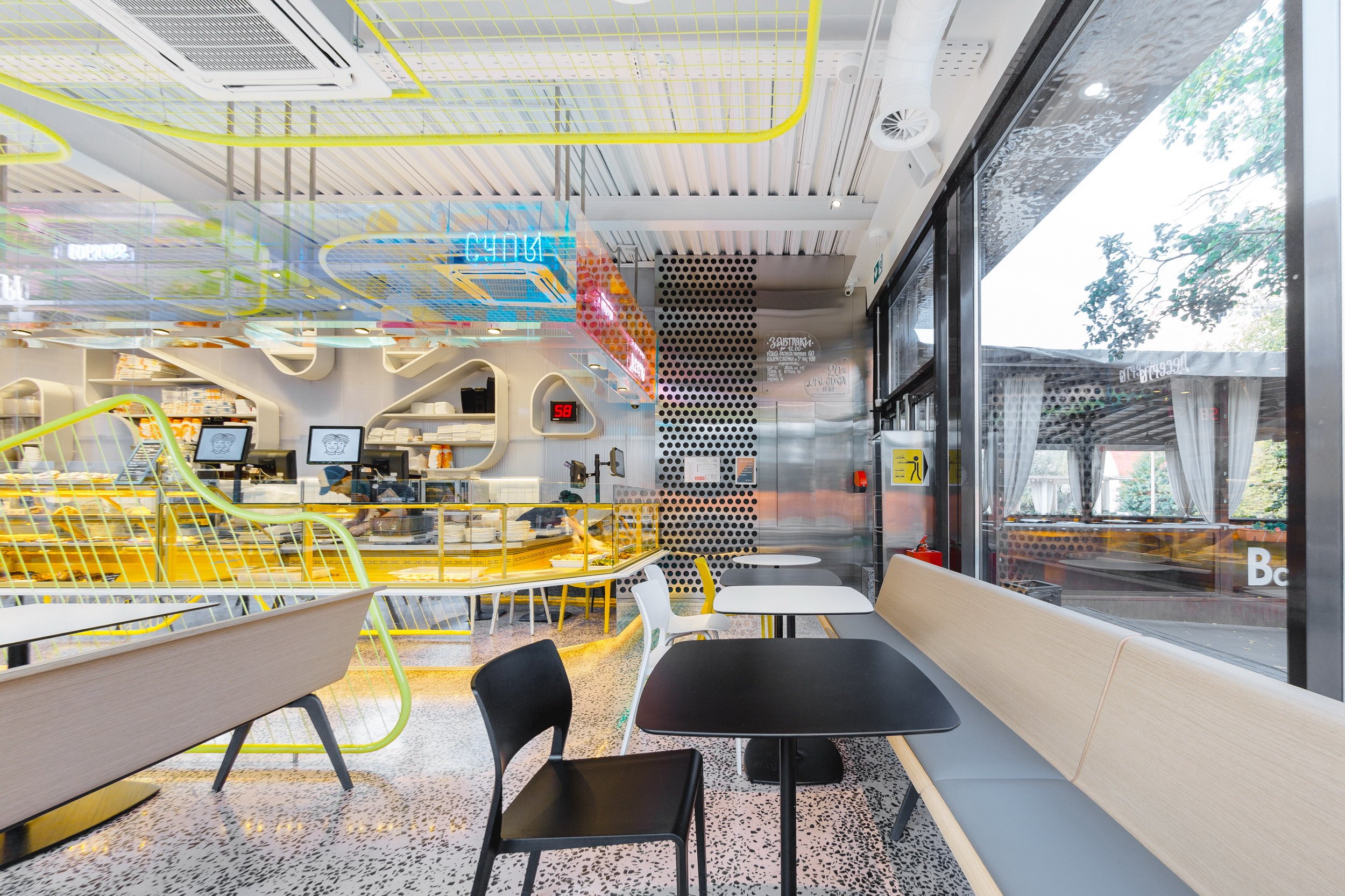
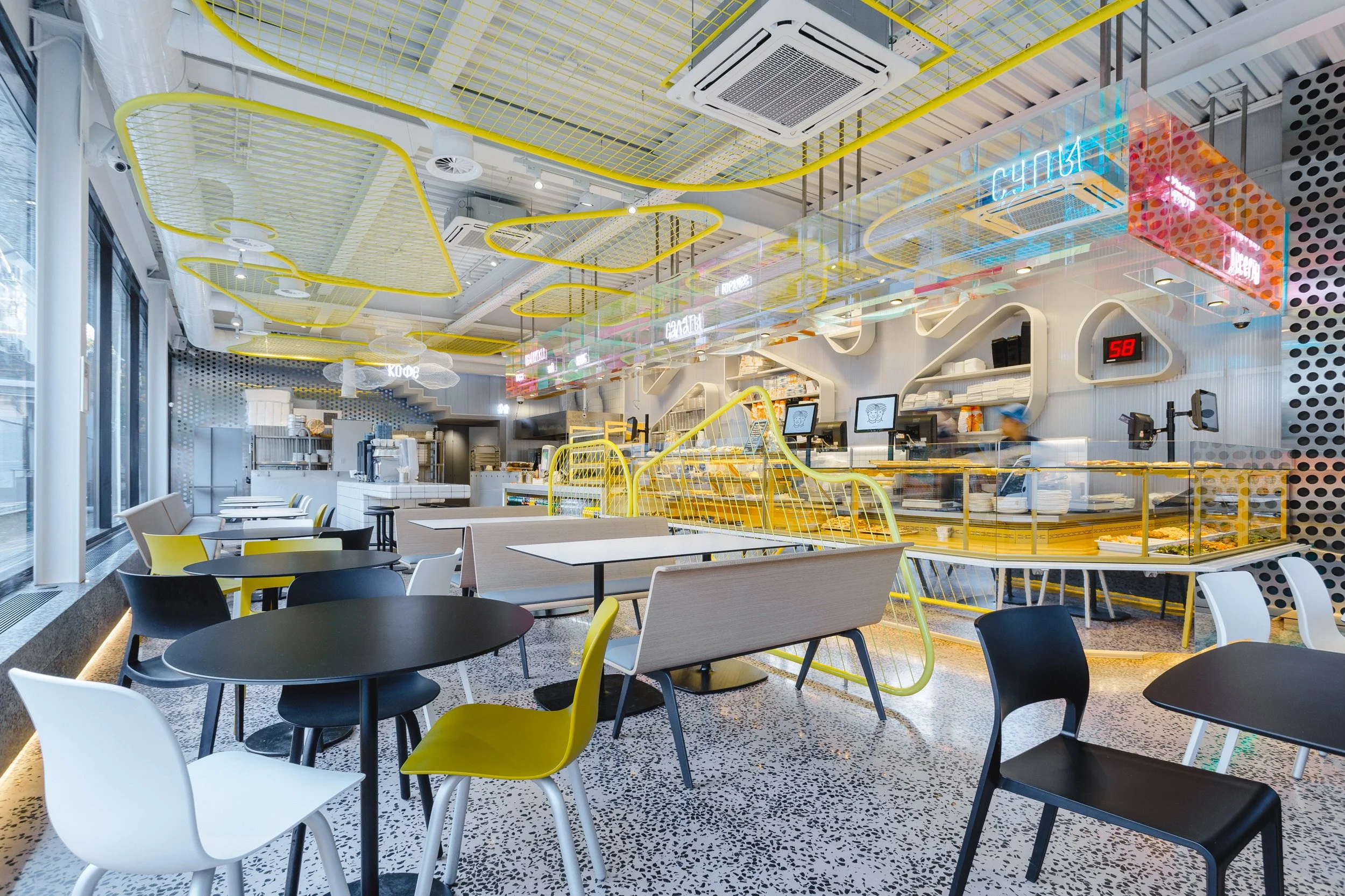
The conceptual direction was shaped by pre-design contextual research, leading to a deliberate collision of structured and expressive elements. This approach informed an interior language that combines retro-futuristic undertones with tactile materials and saturated colour accents. The neutral glass volume was activated from within, becoming a luminous object perceptible across the surrounding area.
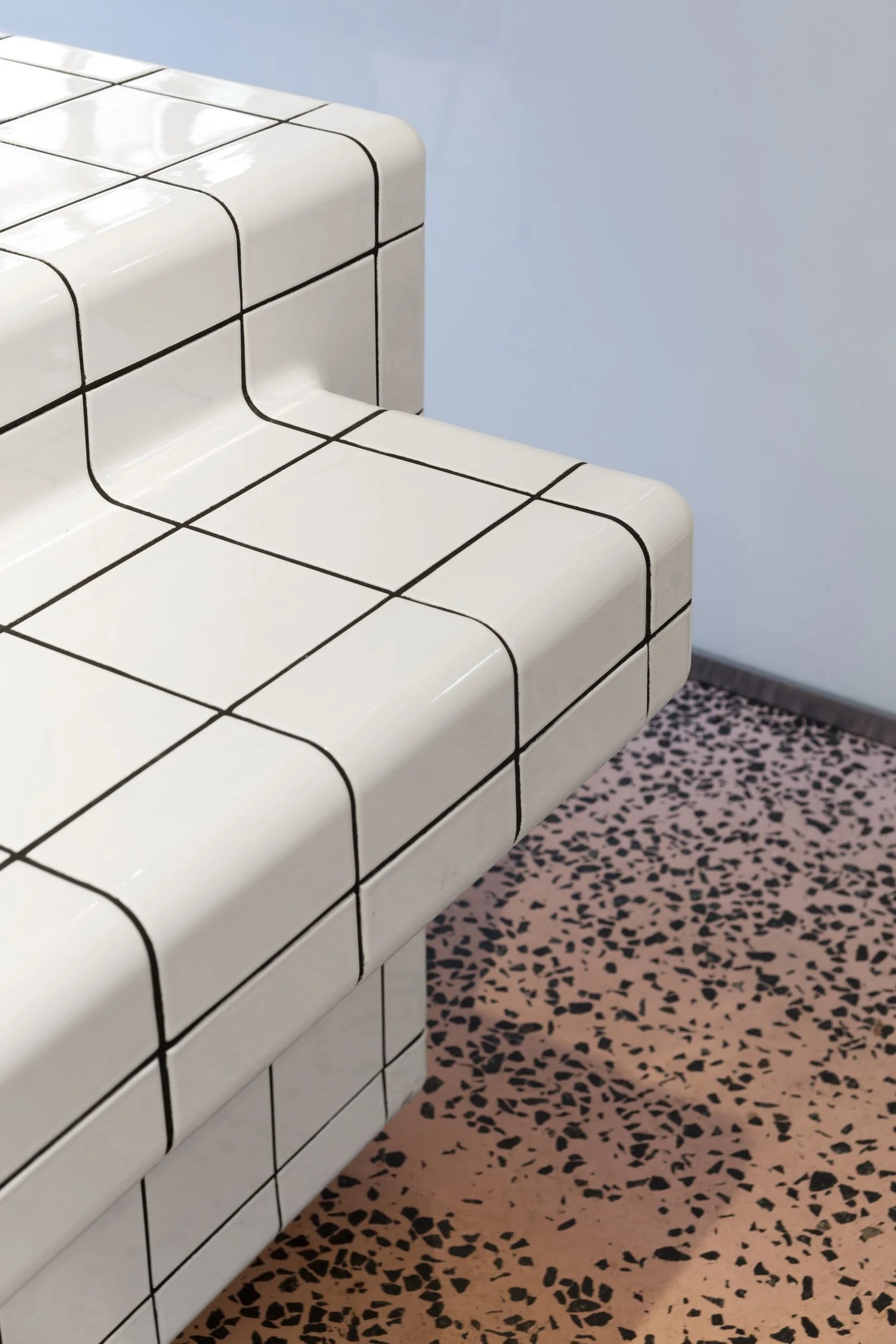
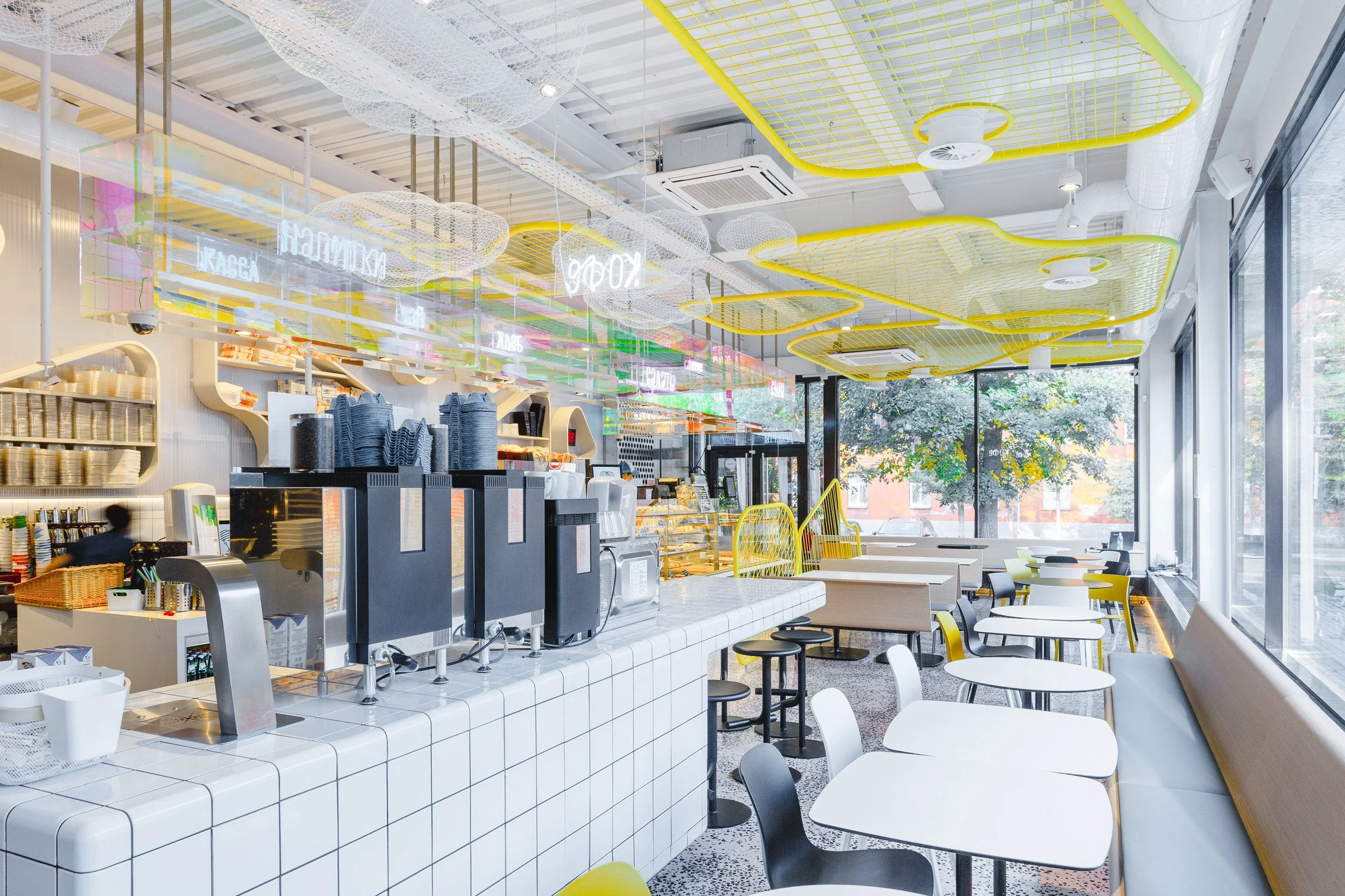
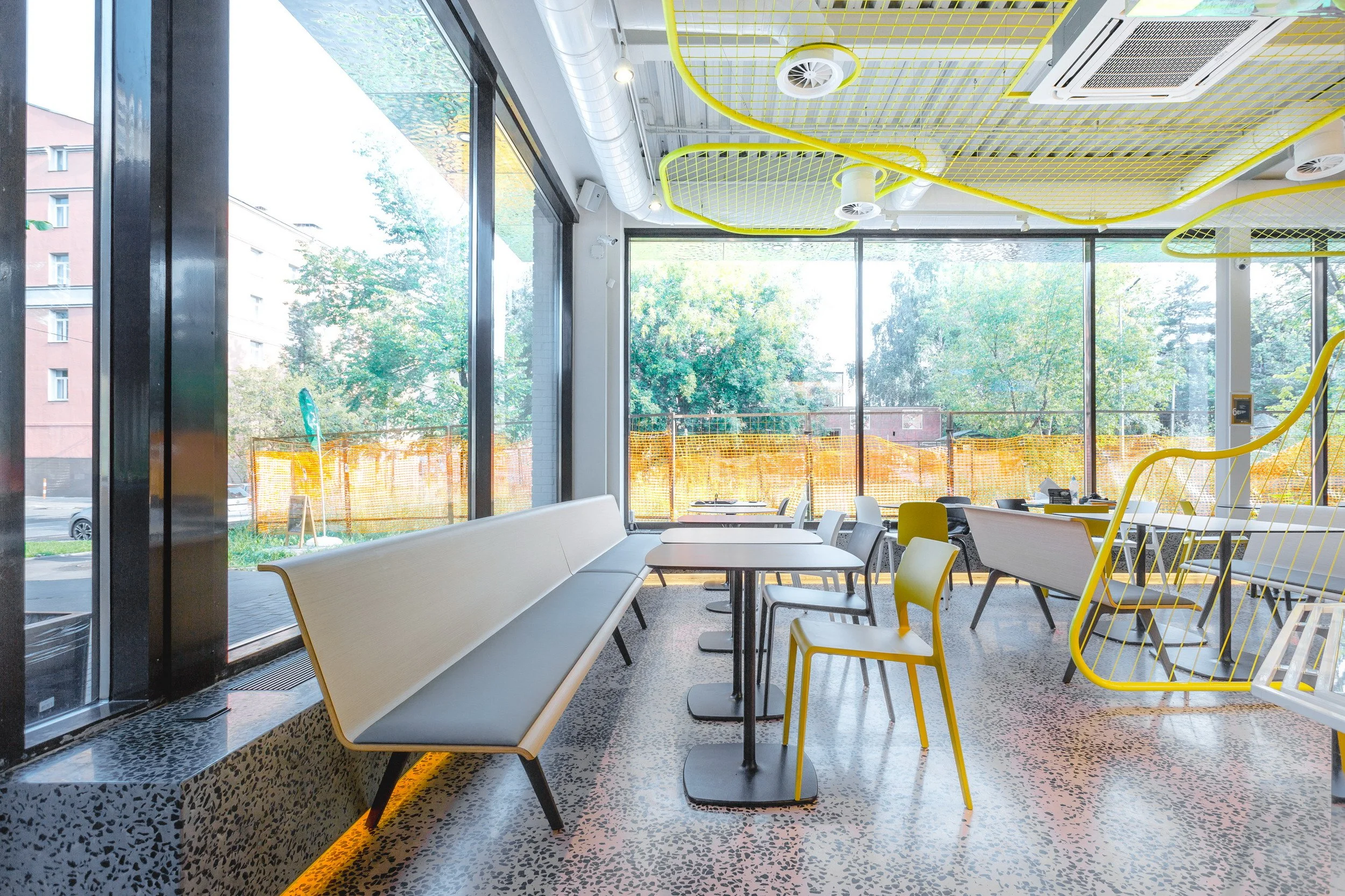
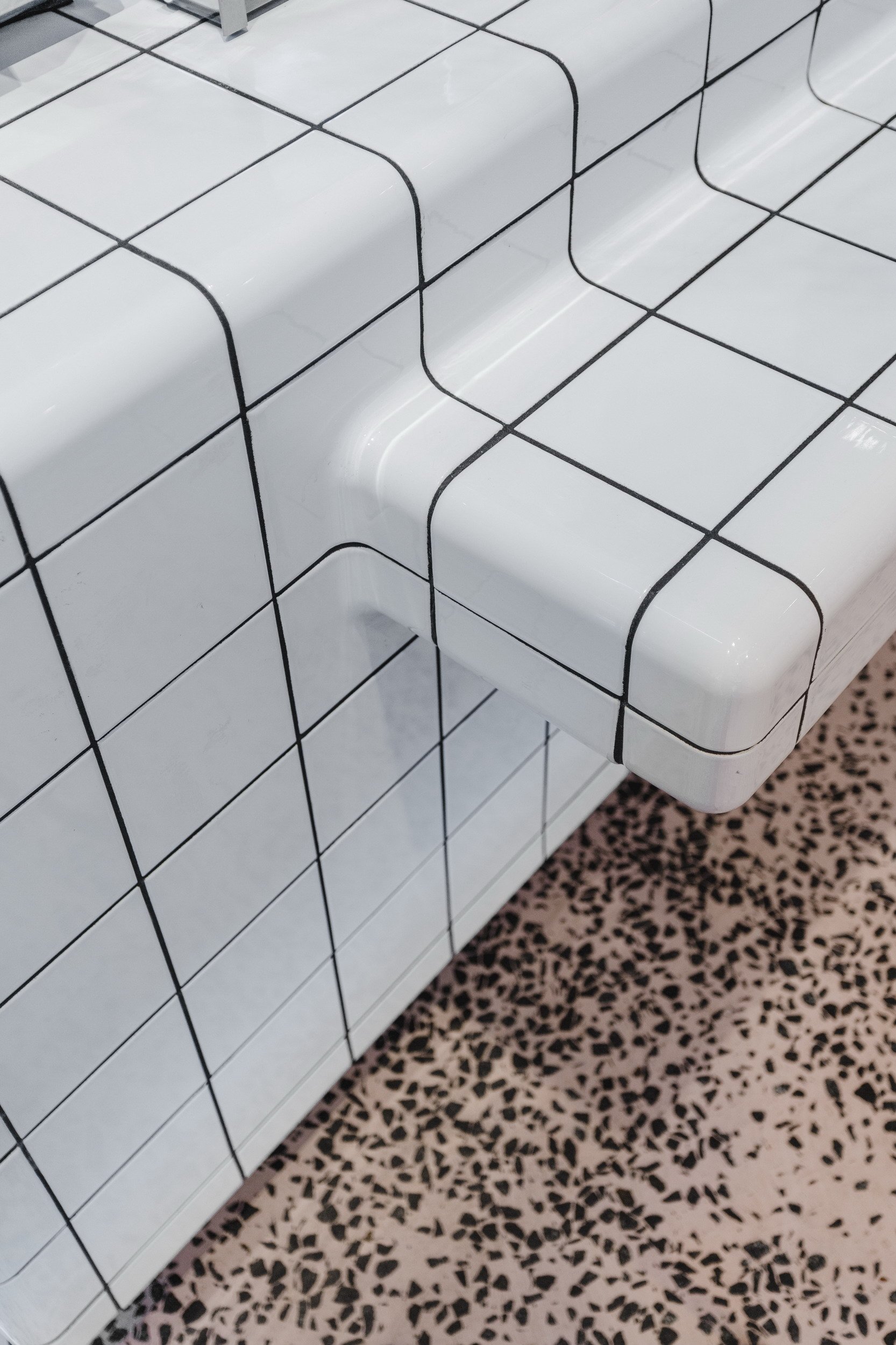
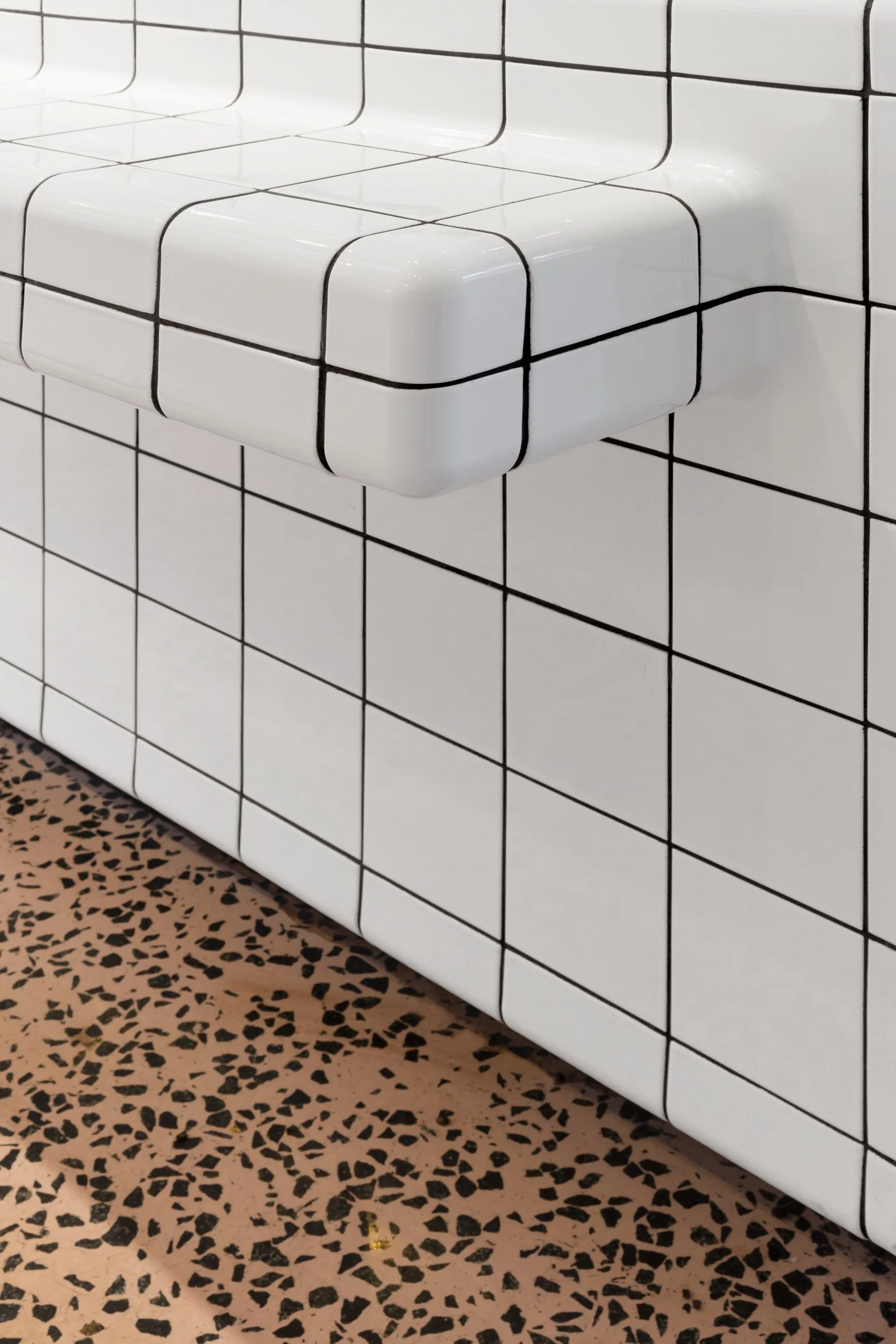
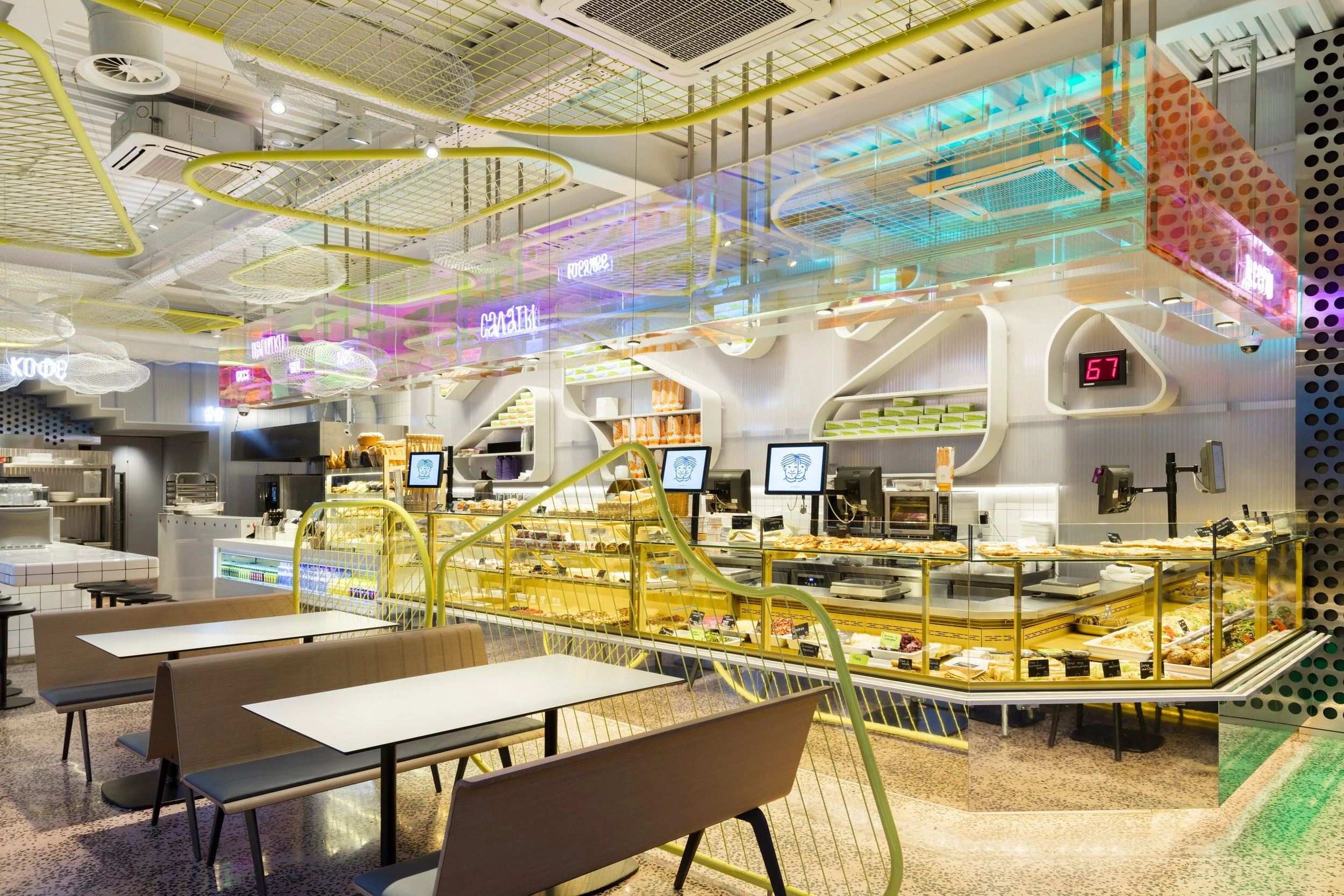
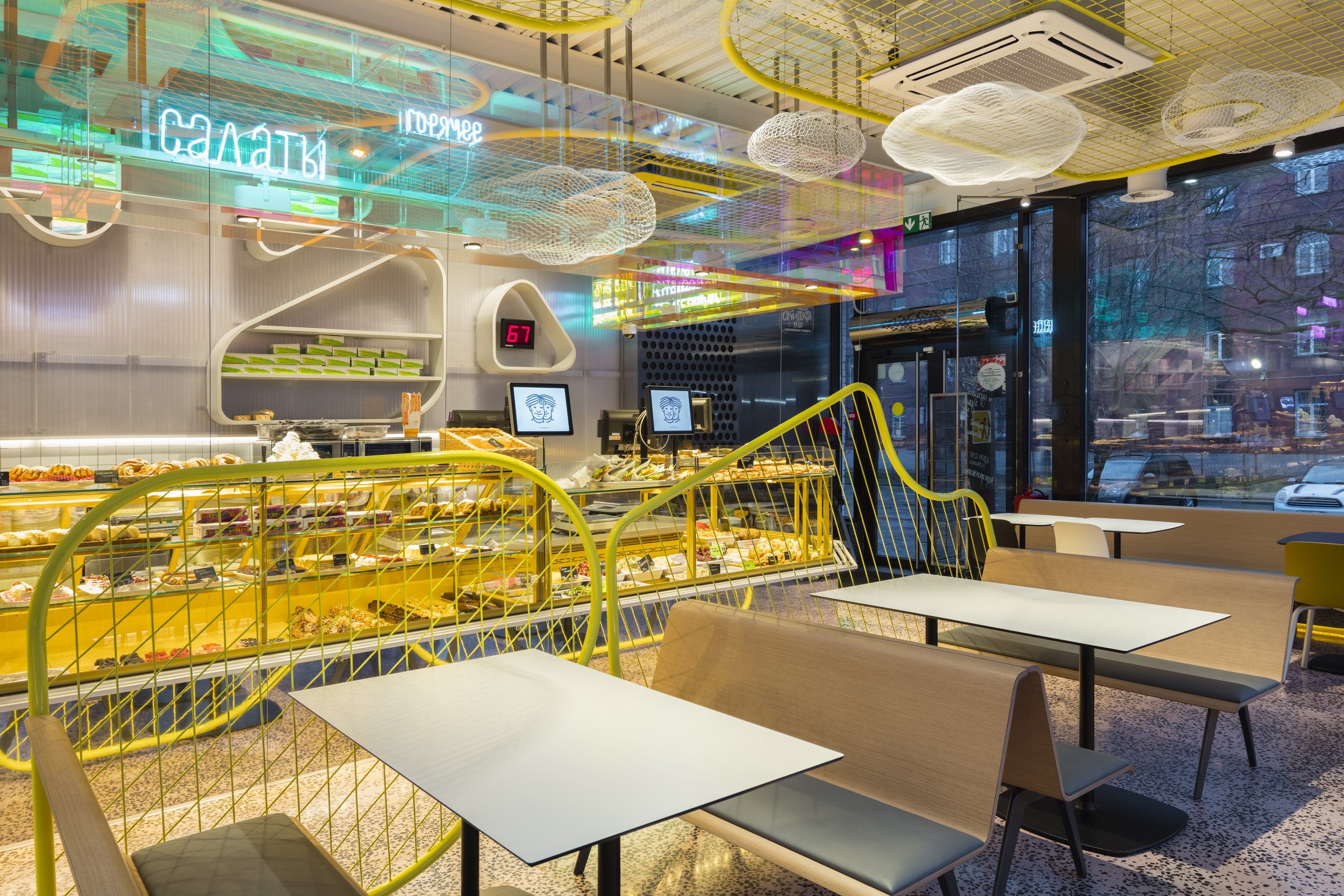
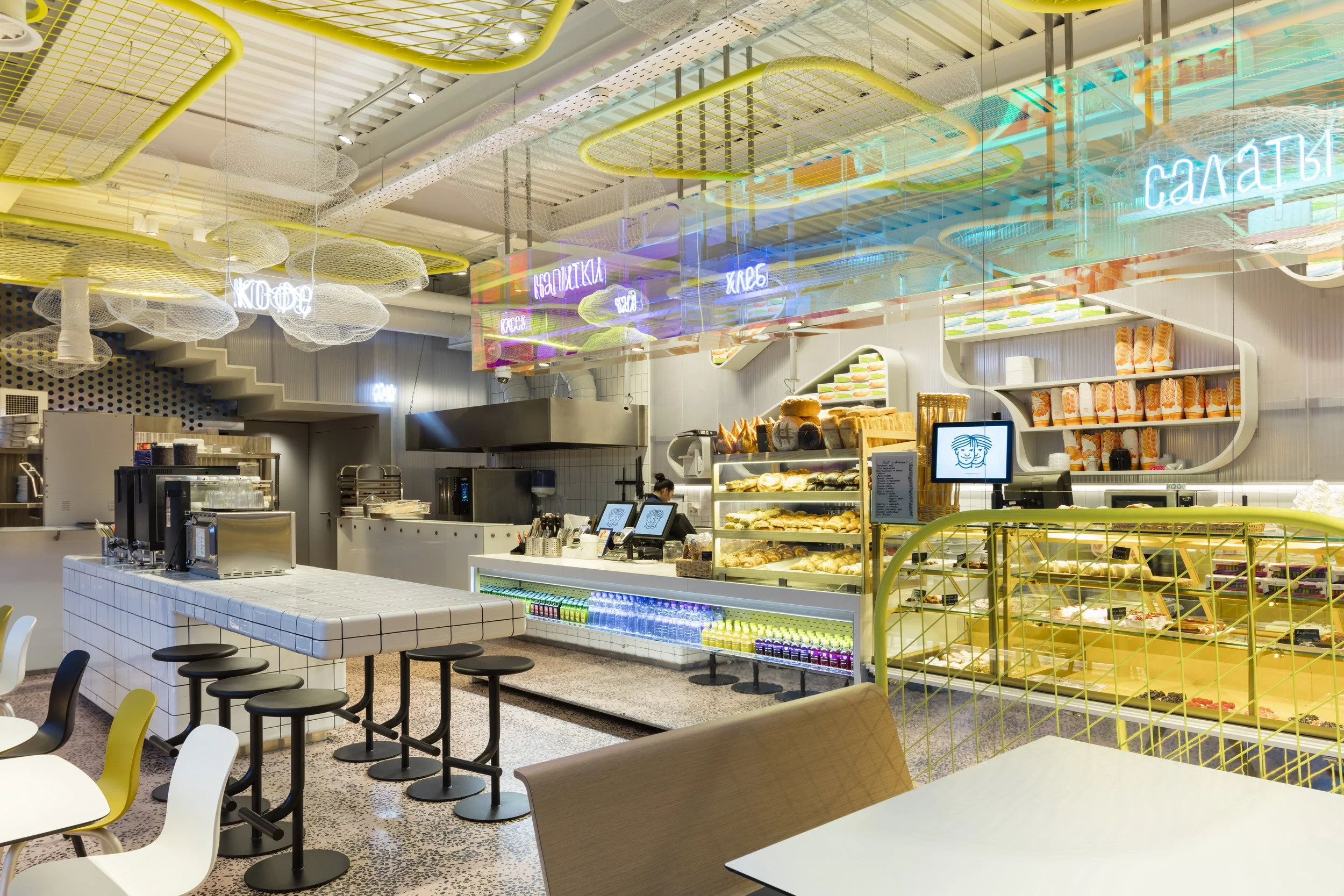
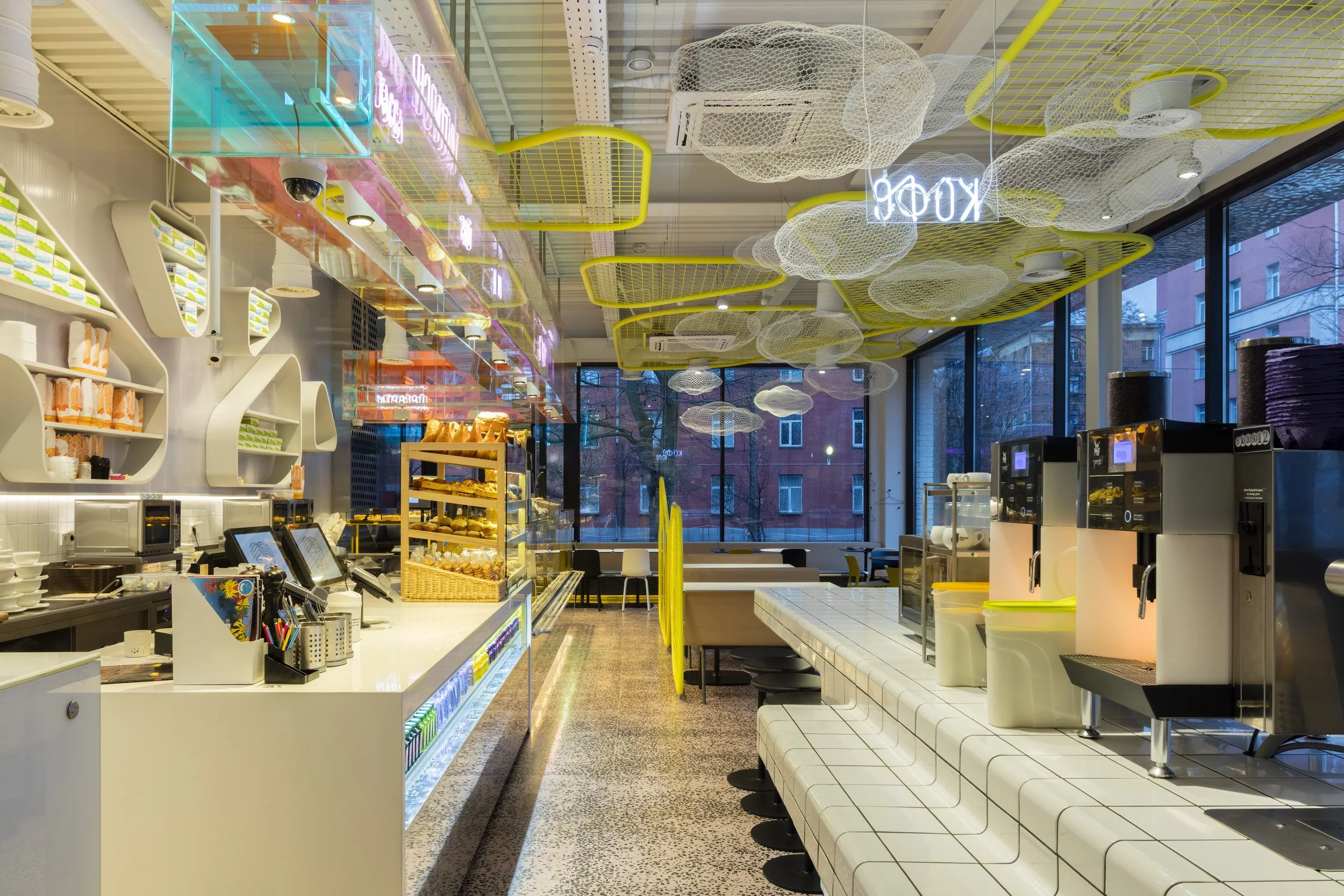
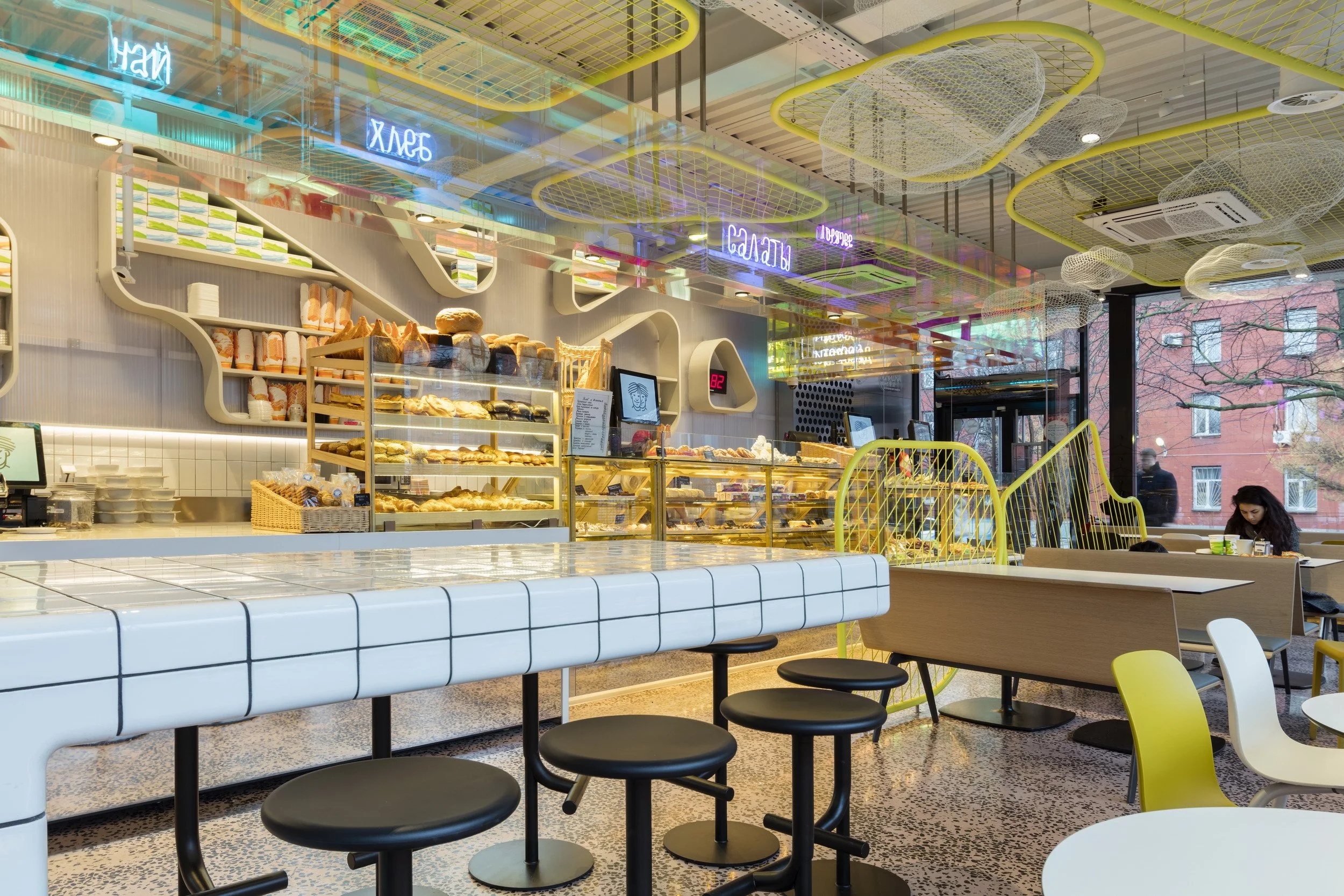
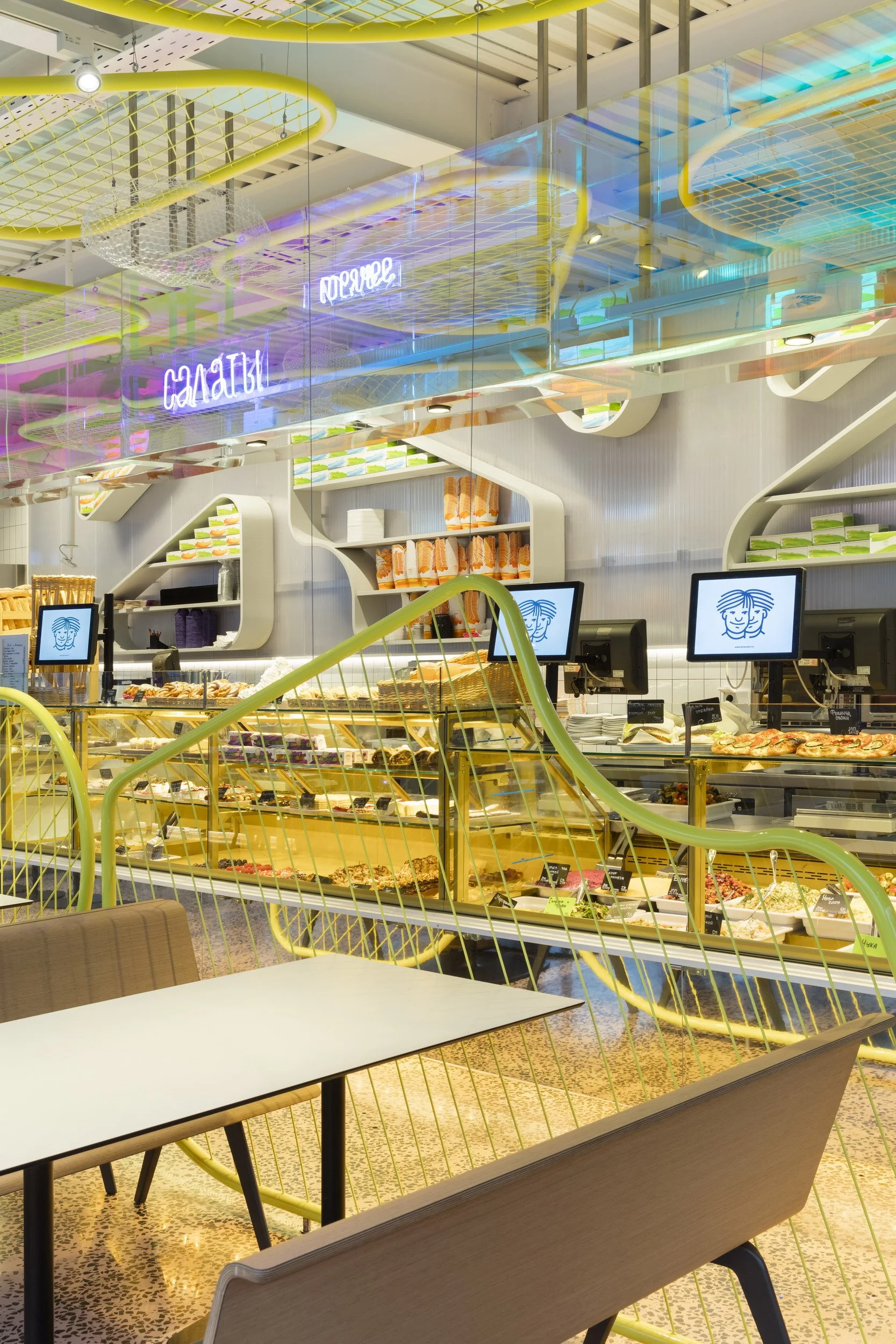
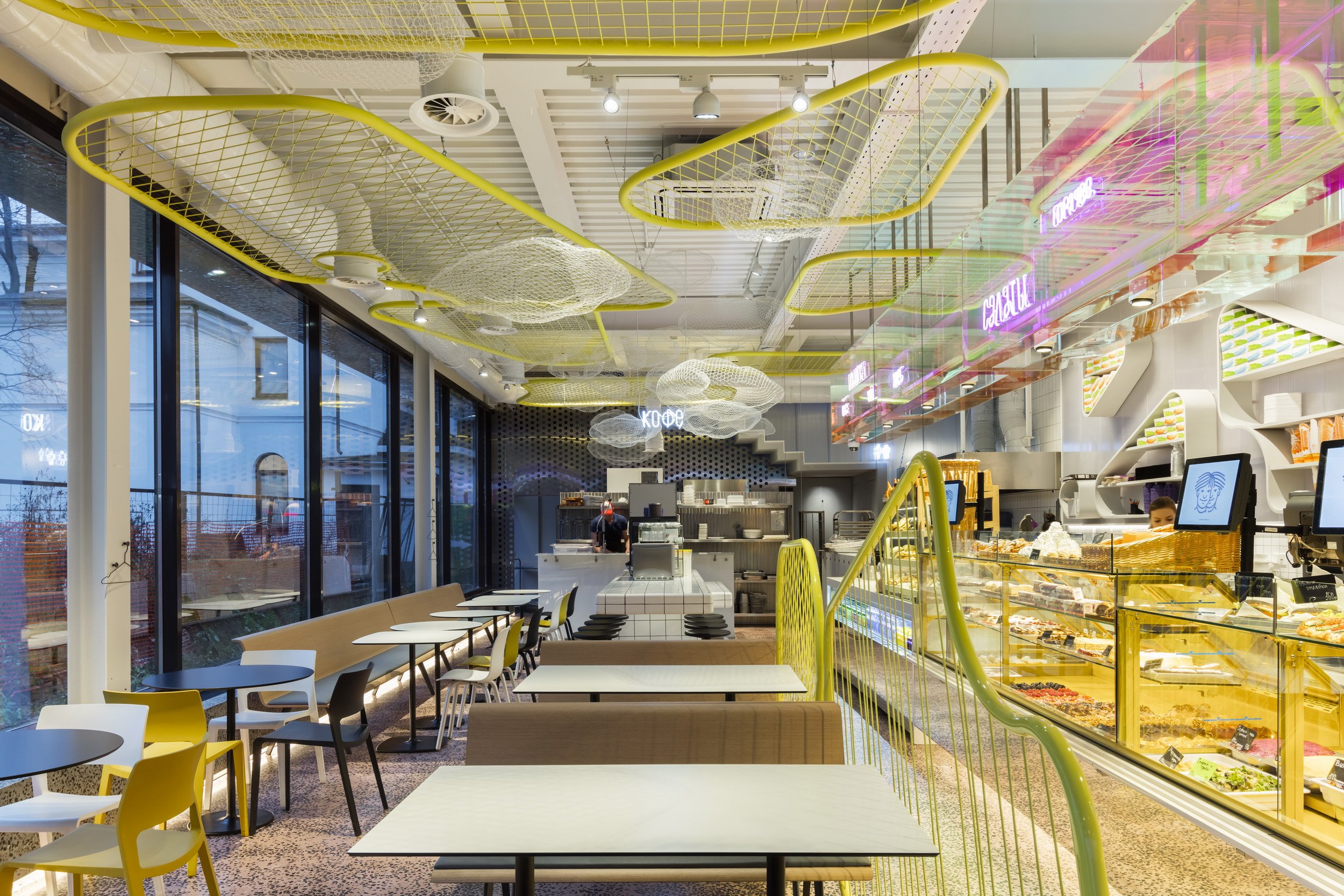
The programme integrates an open kitchen, dining area with a range of seating options and service areas within a single continuous space. A central sculptural counter clad in handmade Dutch ceramic tiles operates simultaneously as coffee point, informal seating and concealed storage. Its softly rounded three-dimensional form introduces a pronounced tactile quality while organising circulation around the cashier zone. The cantilevered semi-bar seating area required a reinforced internal frame, allowing the ceramic cladding to remain visually continuous despite the structural load.
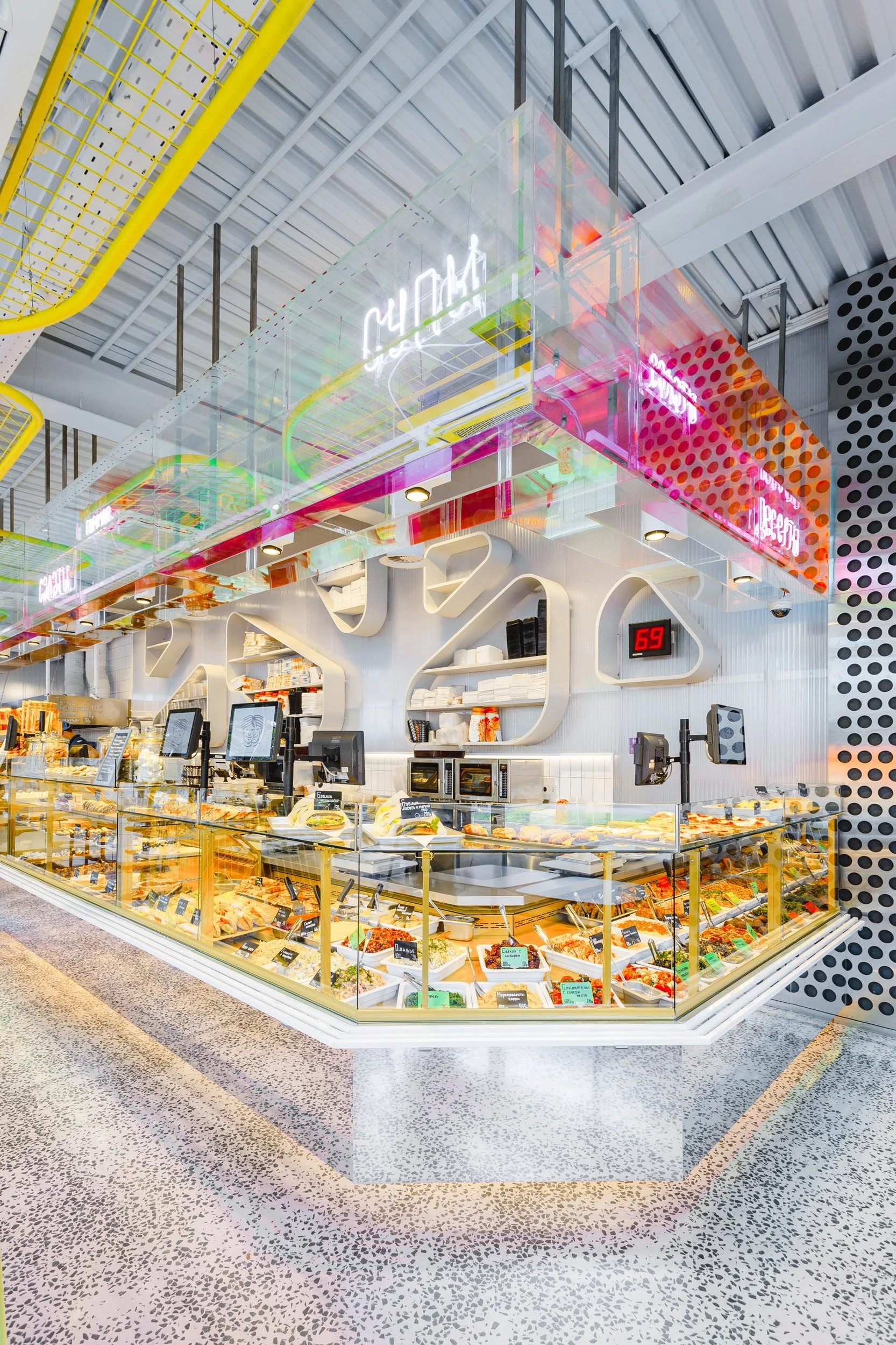
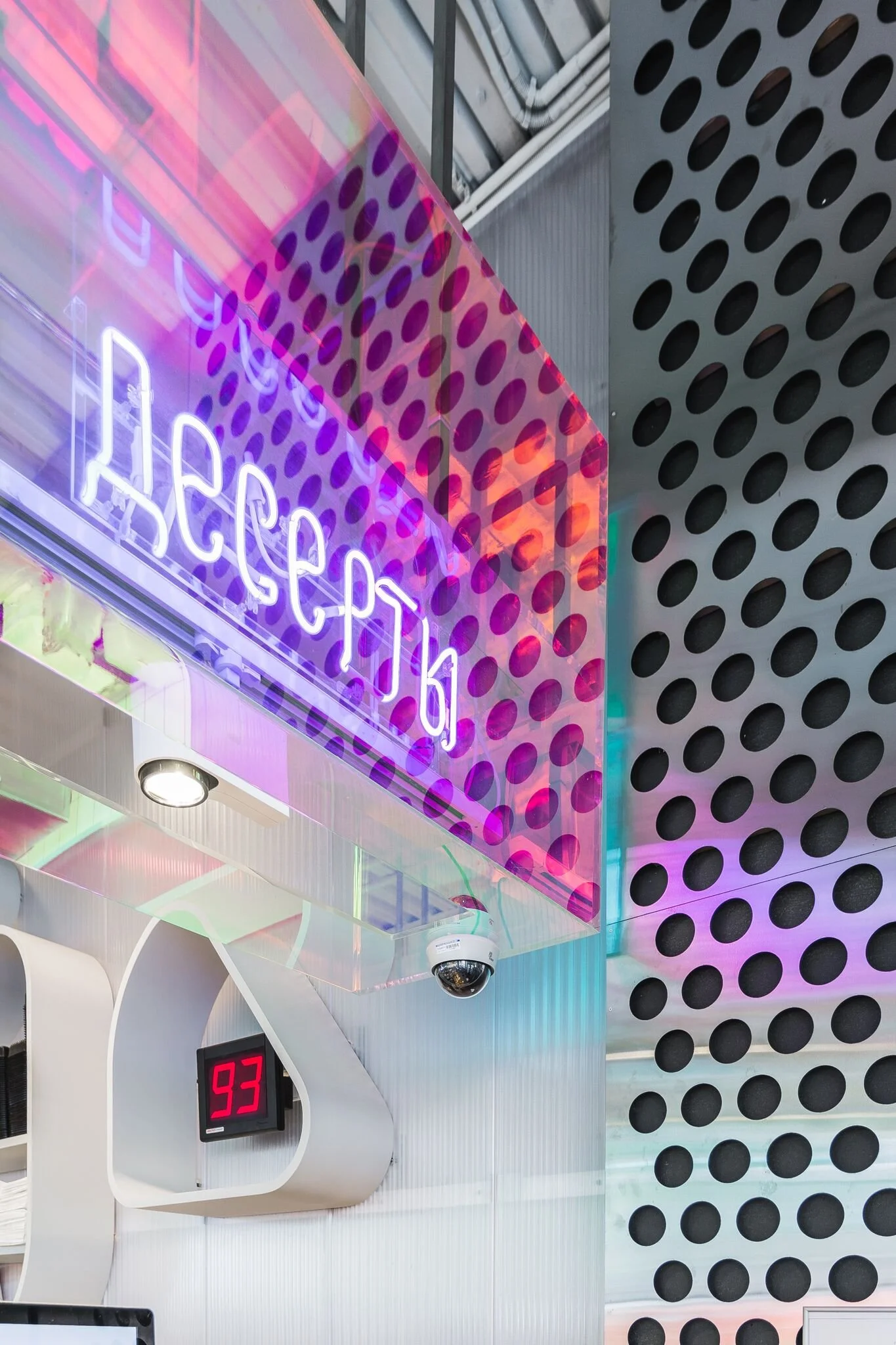
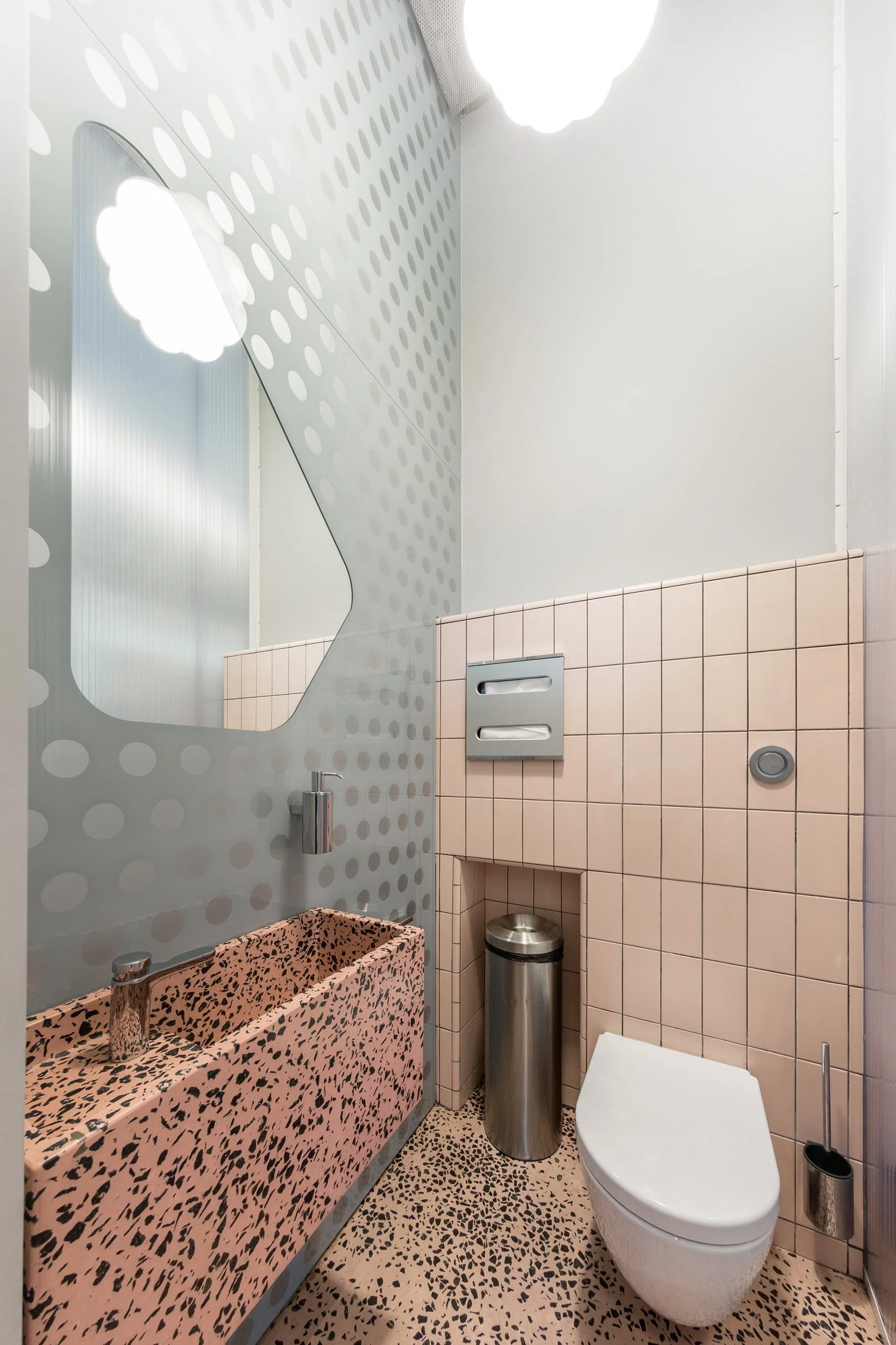
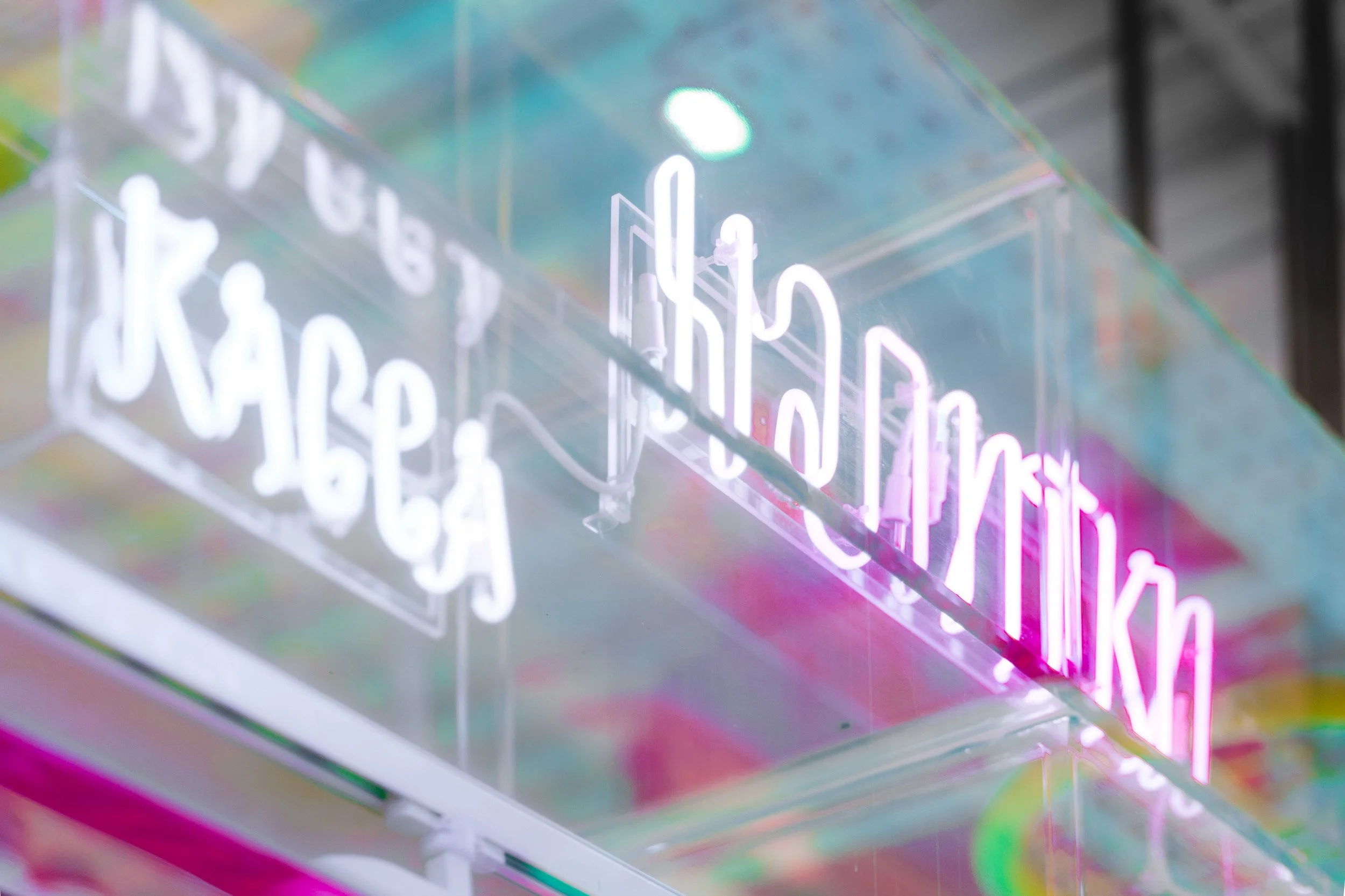
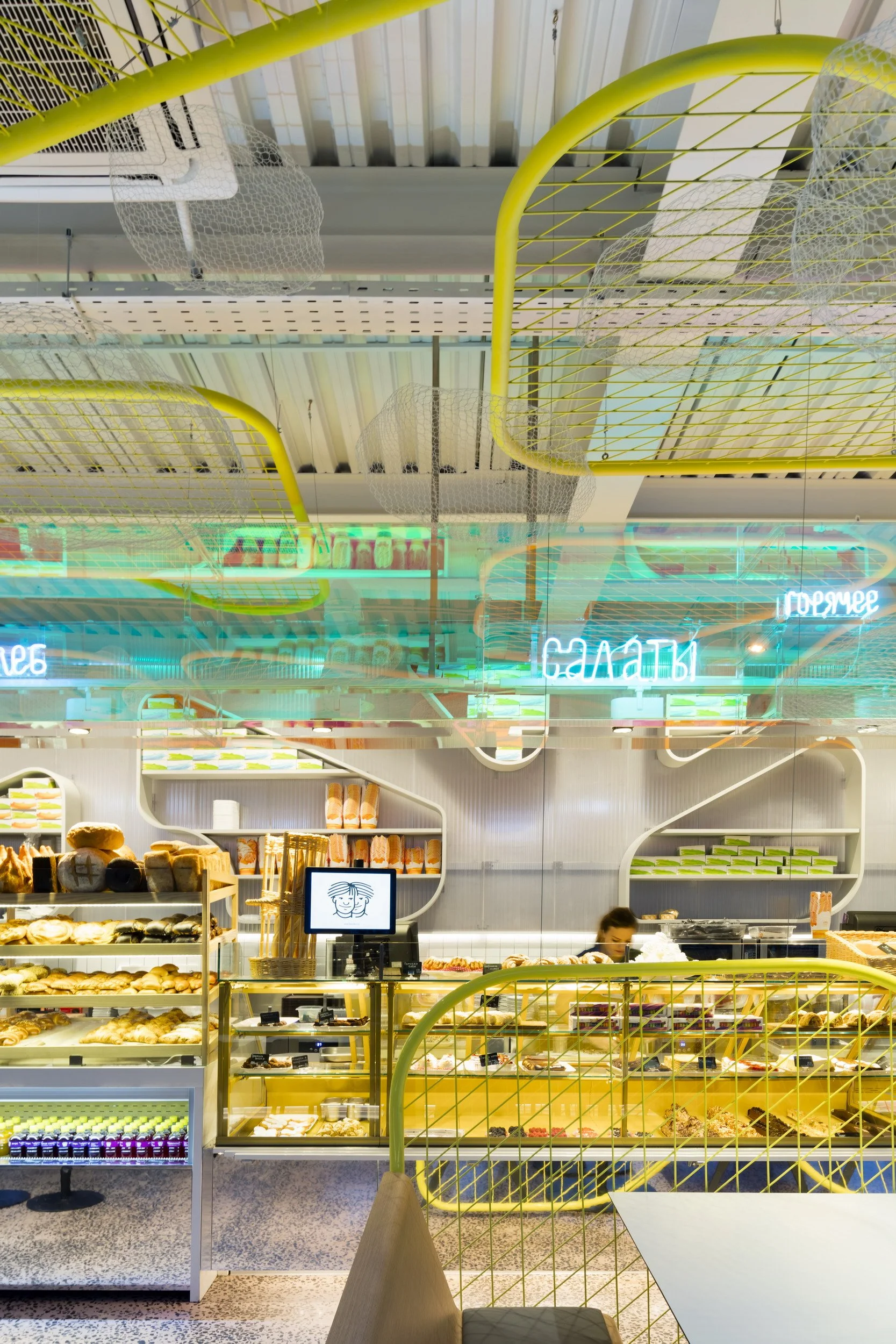
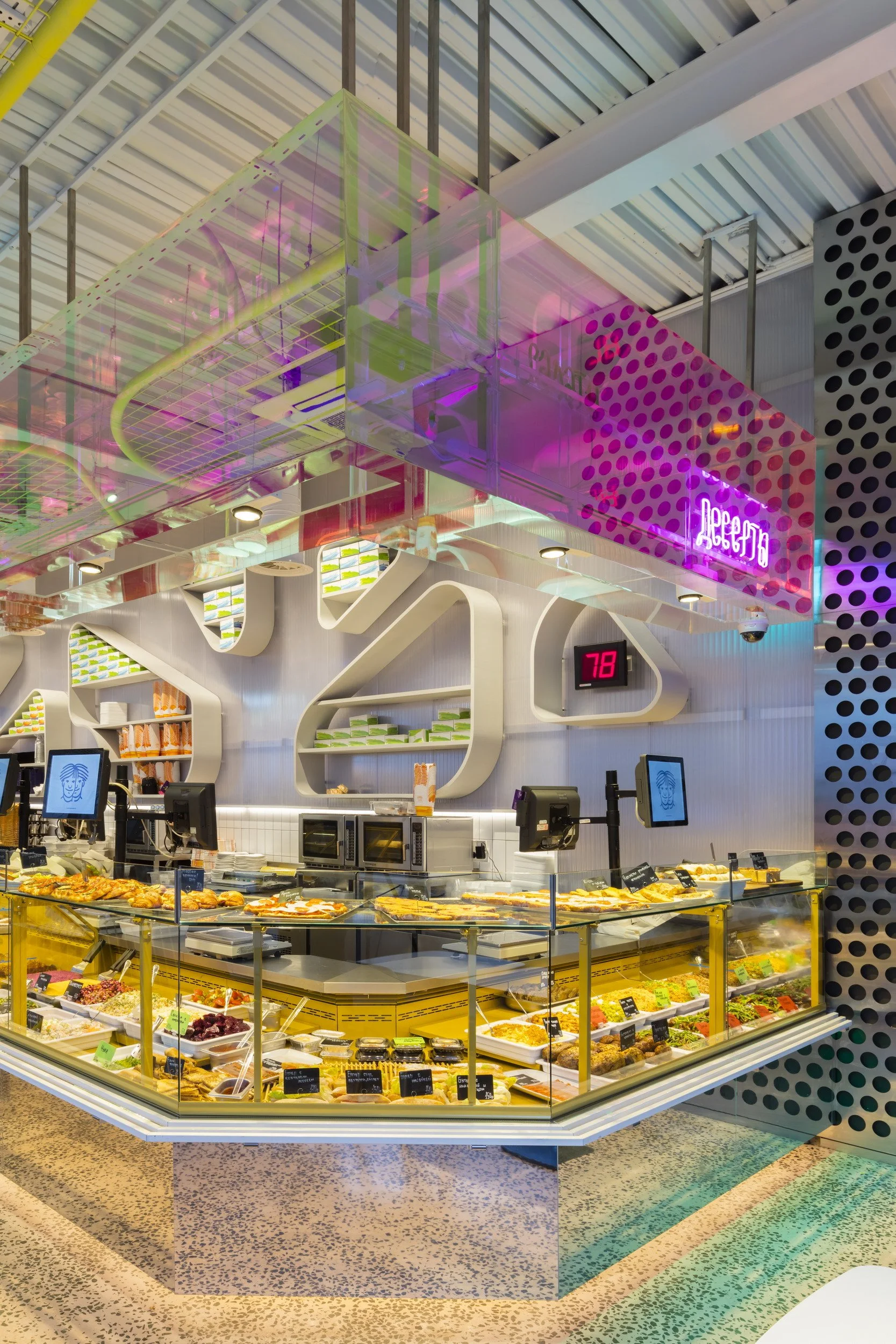
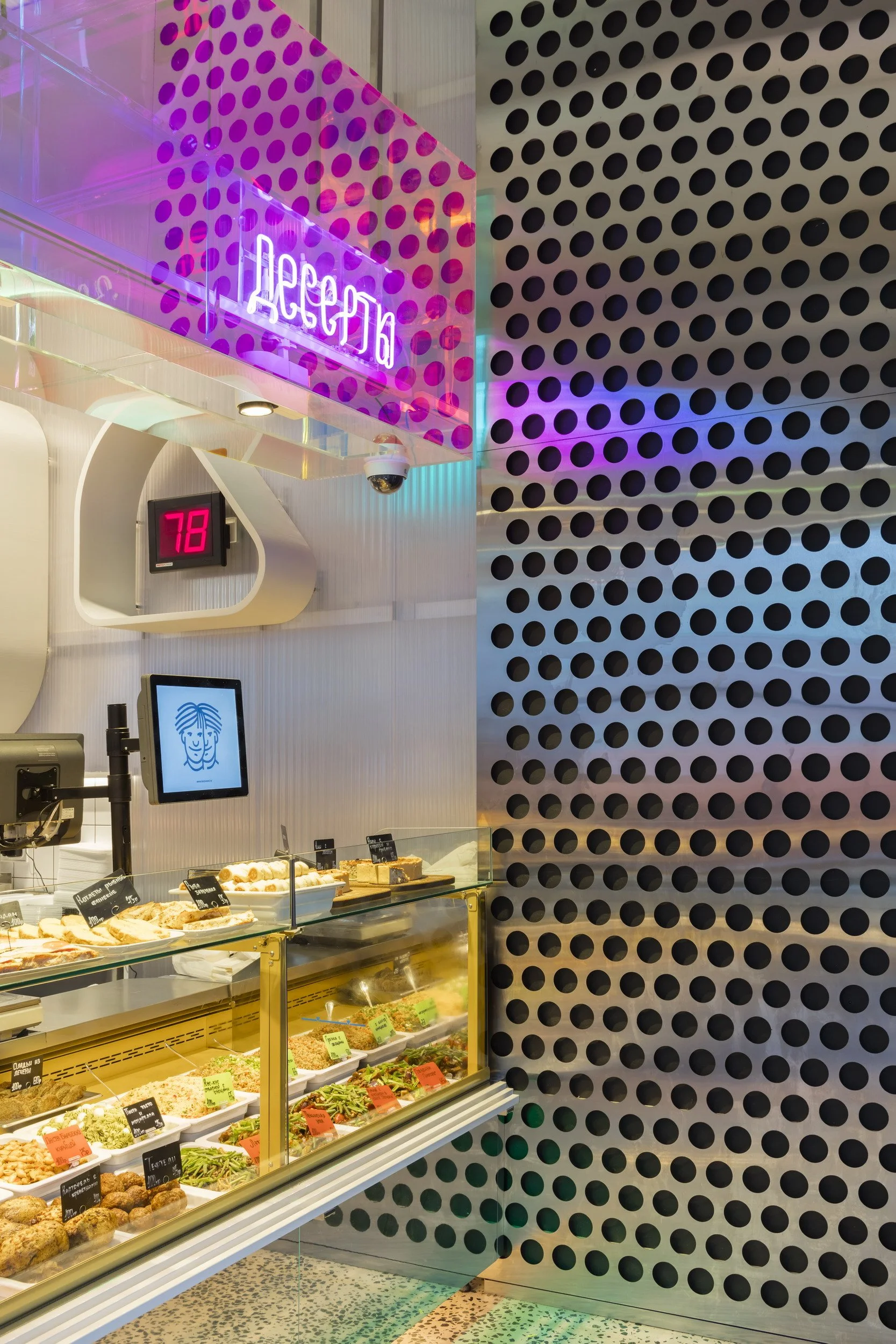
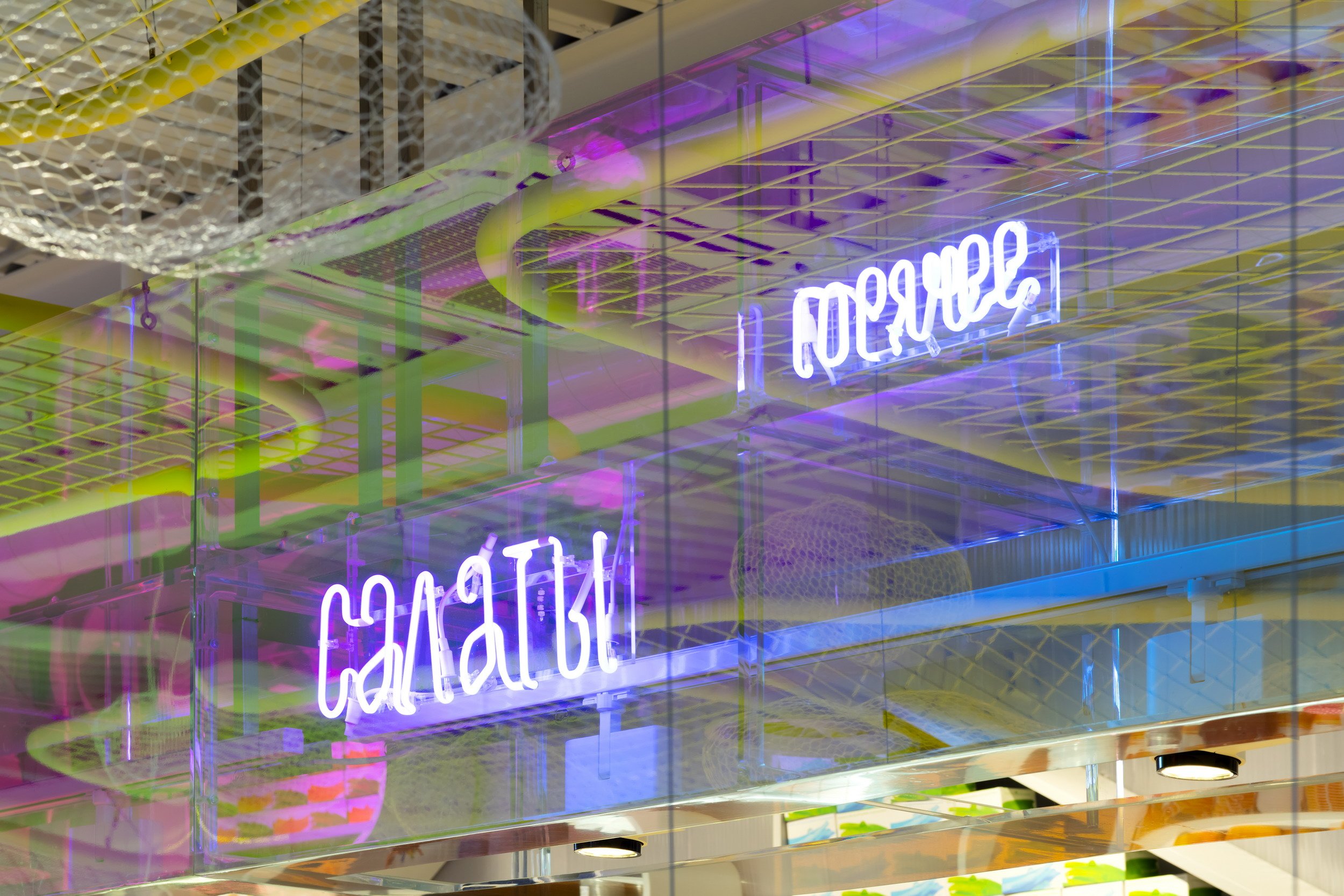
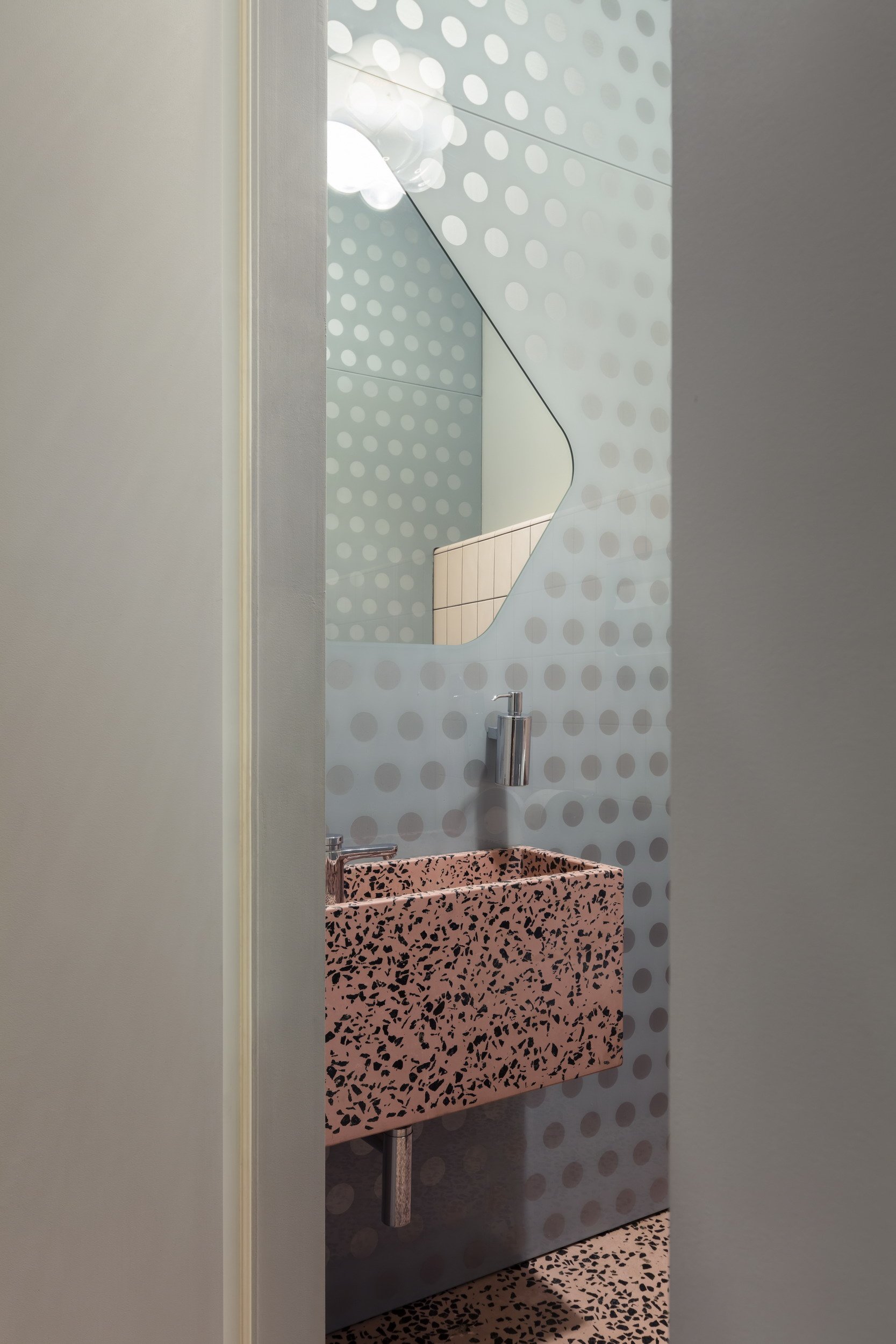
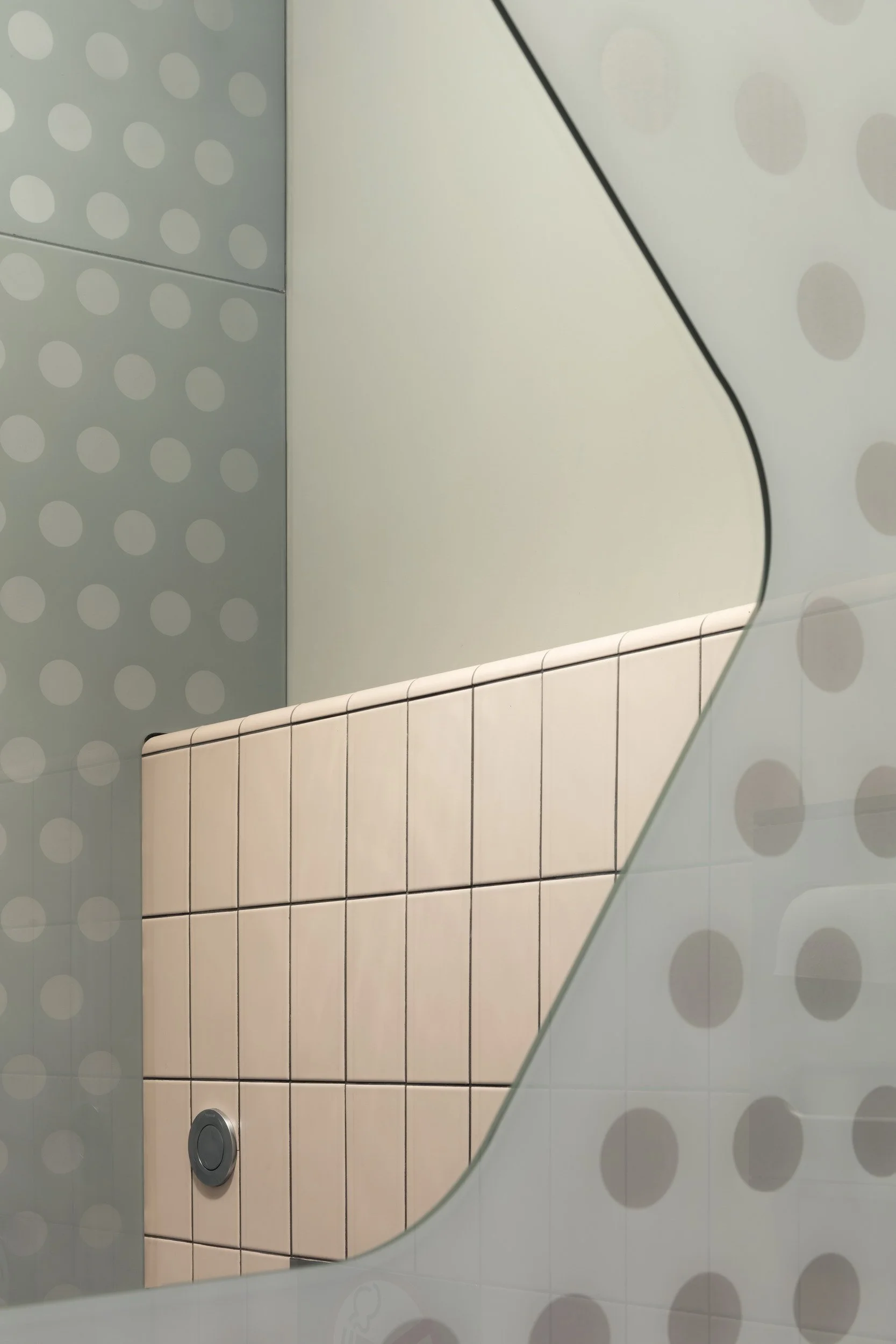
Above the display zone, a multifunctional suspended acrylic installation accommodates takeaway packaging, integrated lighting and neon signage by Contrast Foundry. Wrapped in dichroic film, the object shifts in tone from yellow-green to blue-pink depending on light conditions and angle of view, subtly transforming the atmosphere throughout the day. A cluster of translucent, nearly weightless Clouds by Magis above the coffee counter and yellow metal mesh ceiling panels created from the authors’ original sketches form a cohesive overhead layer; their flowing outlines reappear in the curved shelving of the display zone and in the bathroom mirrors, visually linking the different parts of the interior.
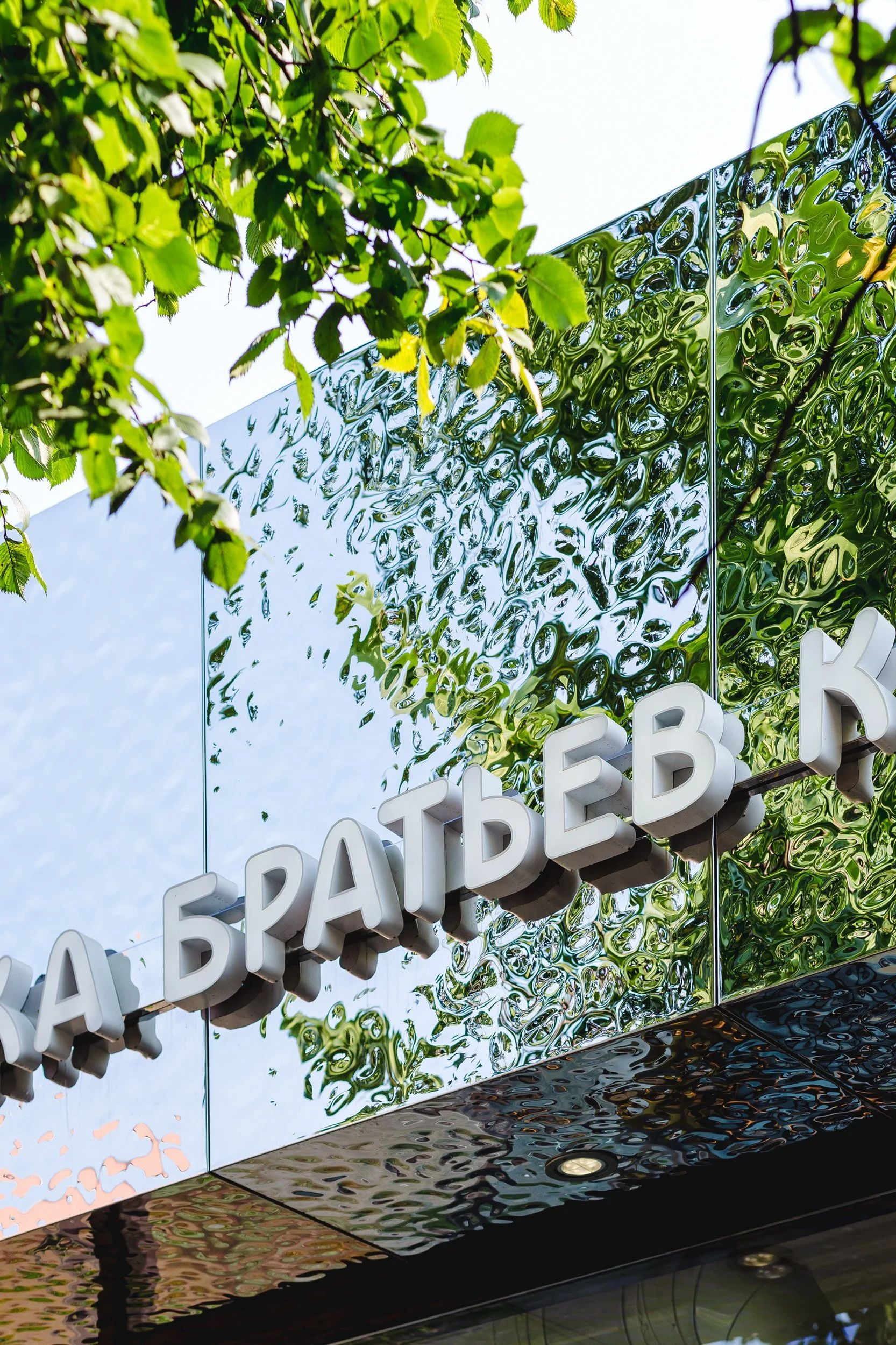
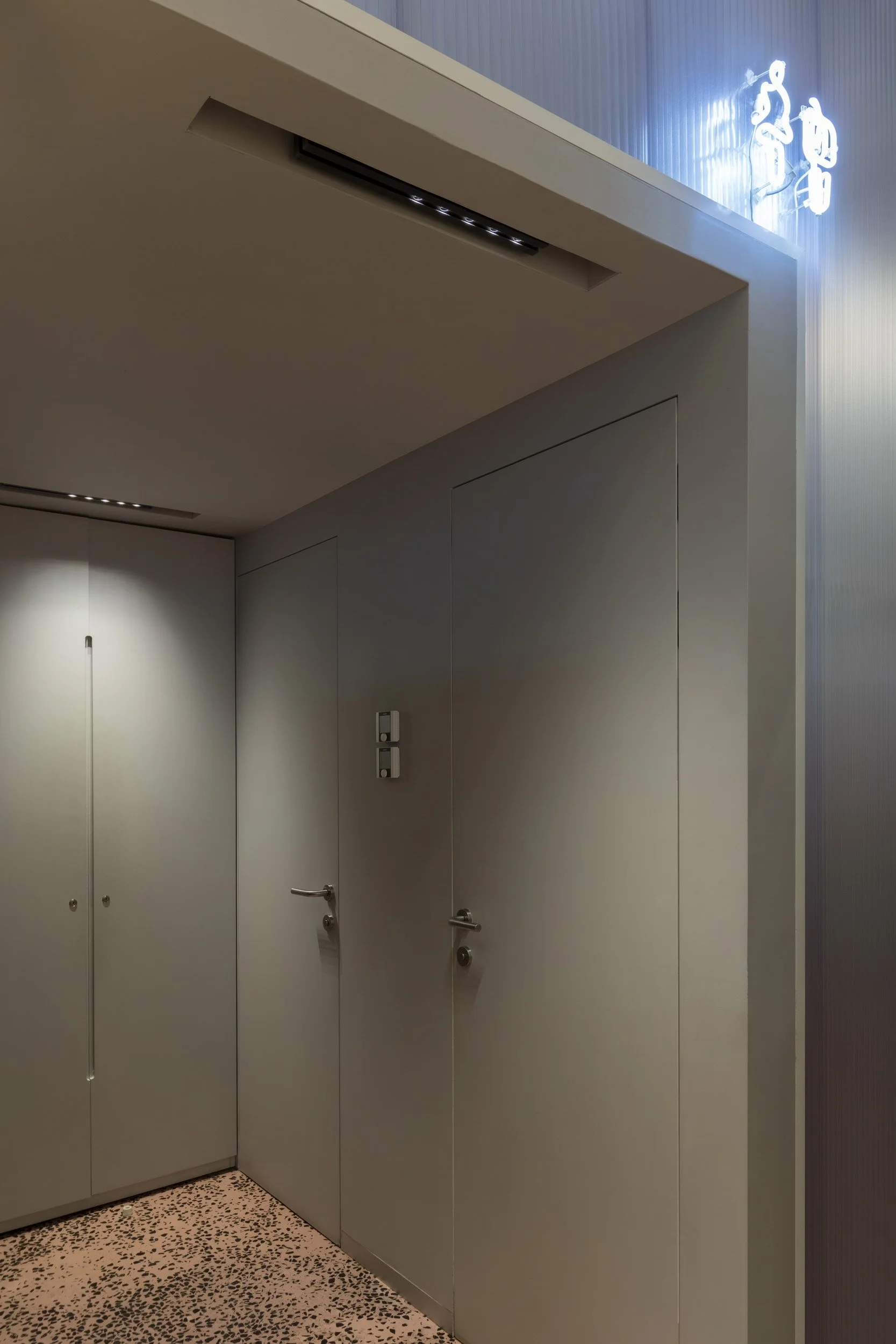
Durable materials were selected with consideration for intensive daily use: terrazzo flooring, ceramics, metal mesh and perforated panels appear throughout both public and service zones. Custom terrazzo washbasins reflect the texture of the floor. The façade frieze is clad in rippled stainless steel panels that mirror the sky and surroundings; at certain times of day it nearly dissolves into its context, allowing the illuminated interior to take visual precedence.

Project team: Evgeniy Shchetinkin, Elizaveta Semeonova
Photo: Dmitry Chebanenko, Alex Zarodov

Publications: AD Magazine, InteriorDesign, Design-Mate, Archello