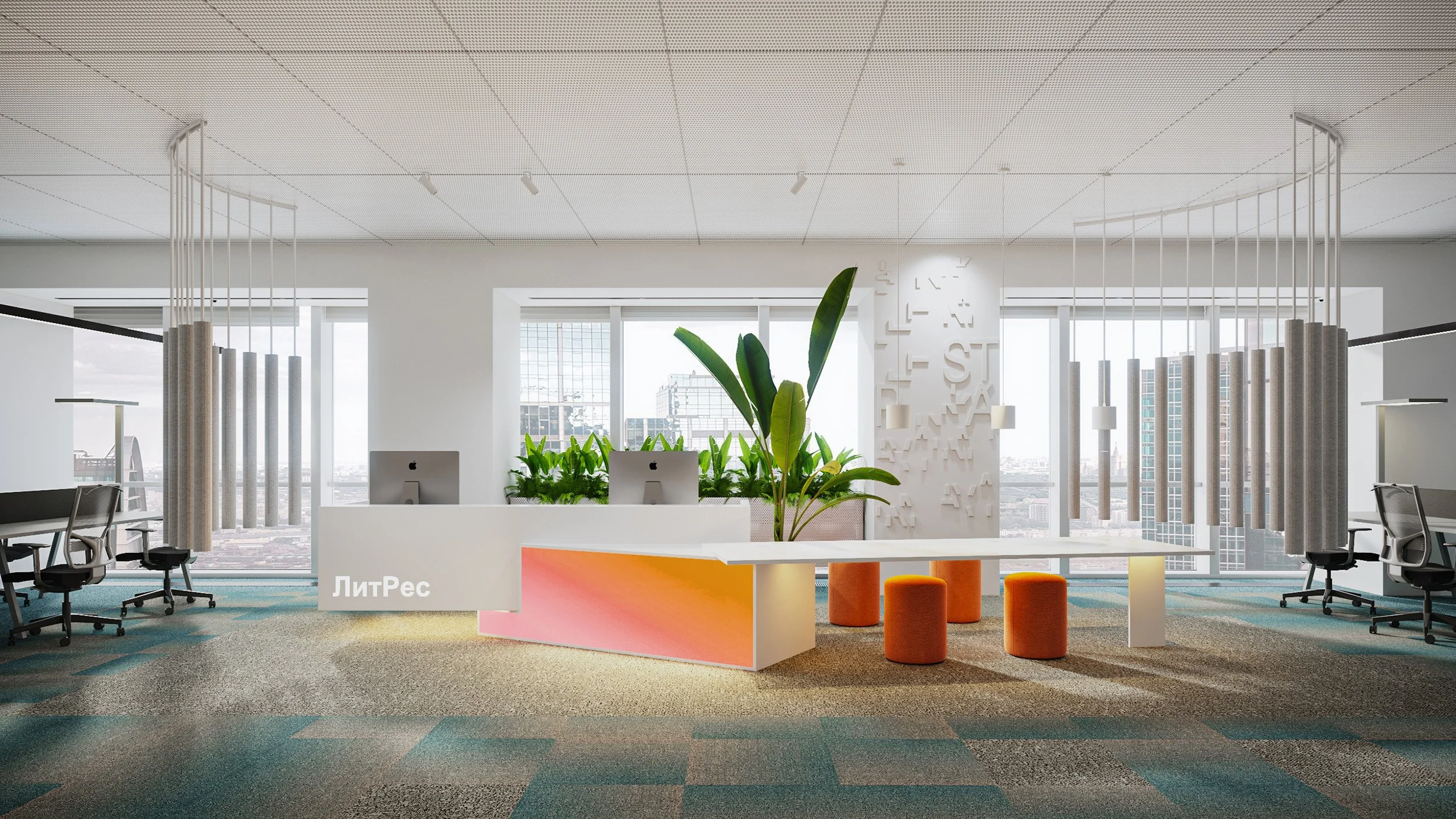
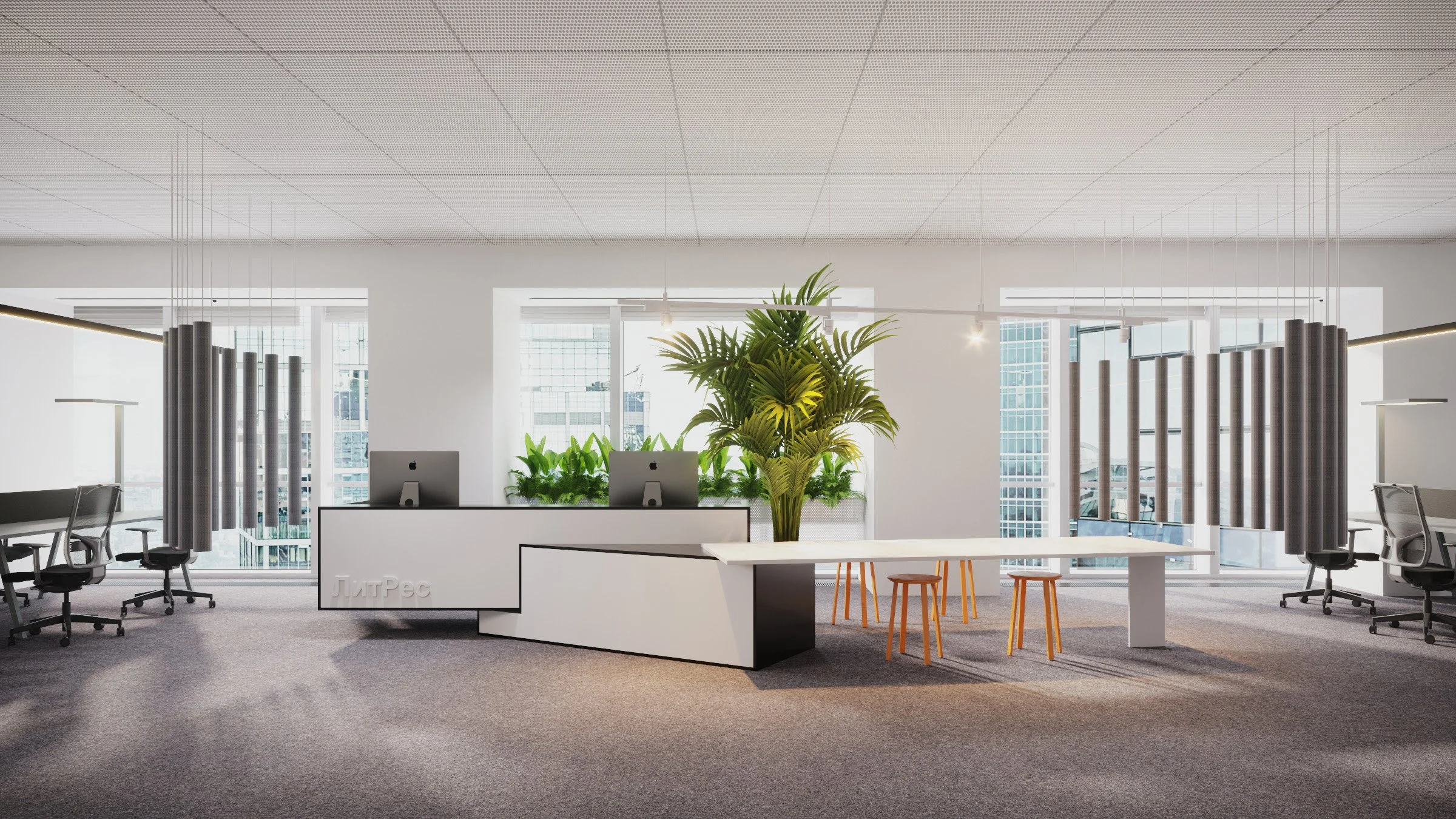
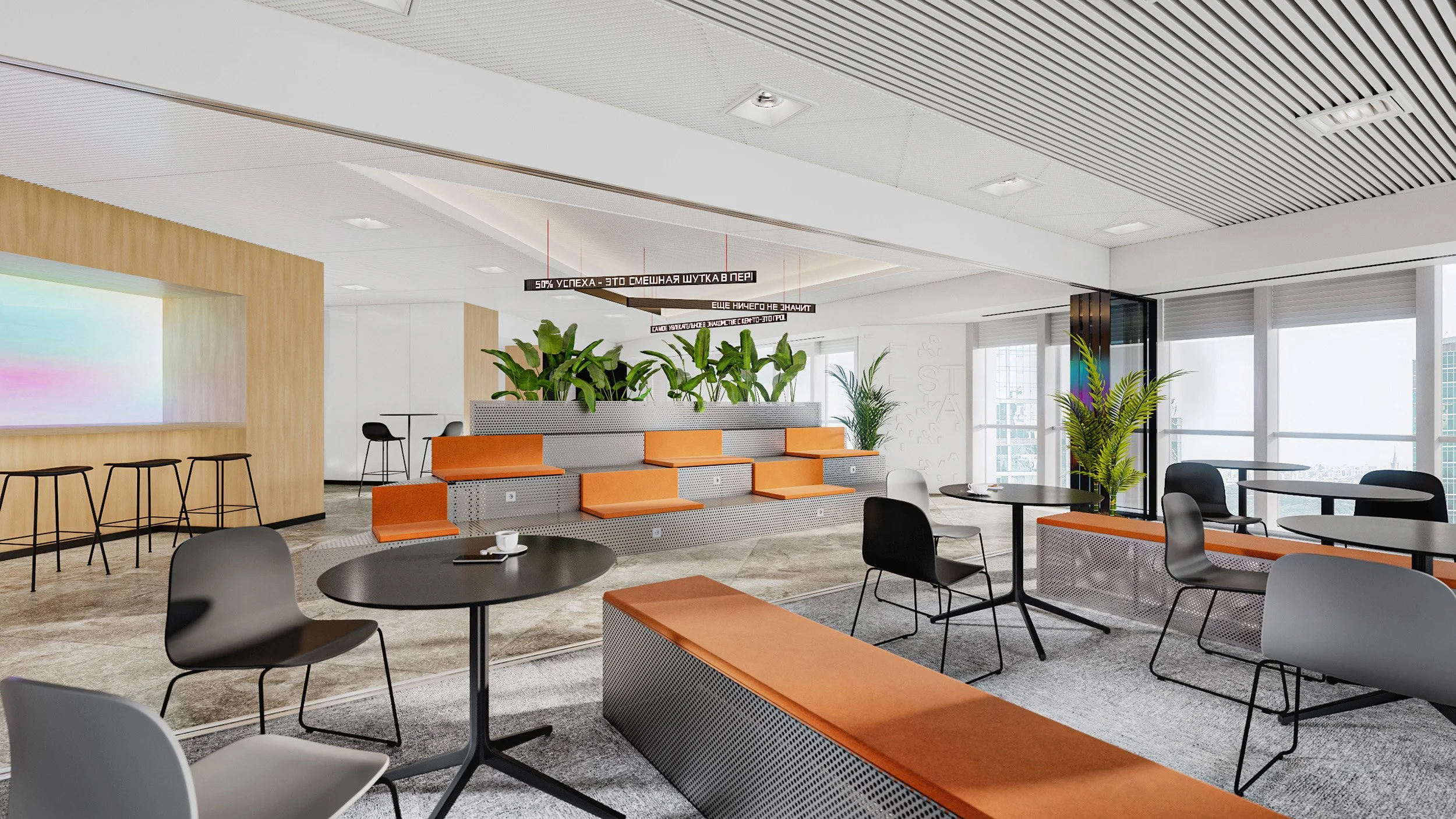
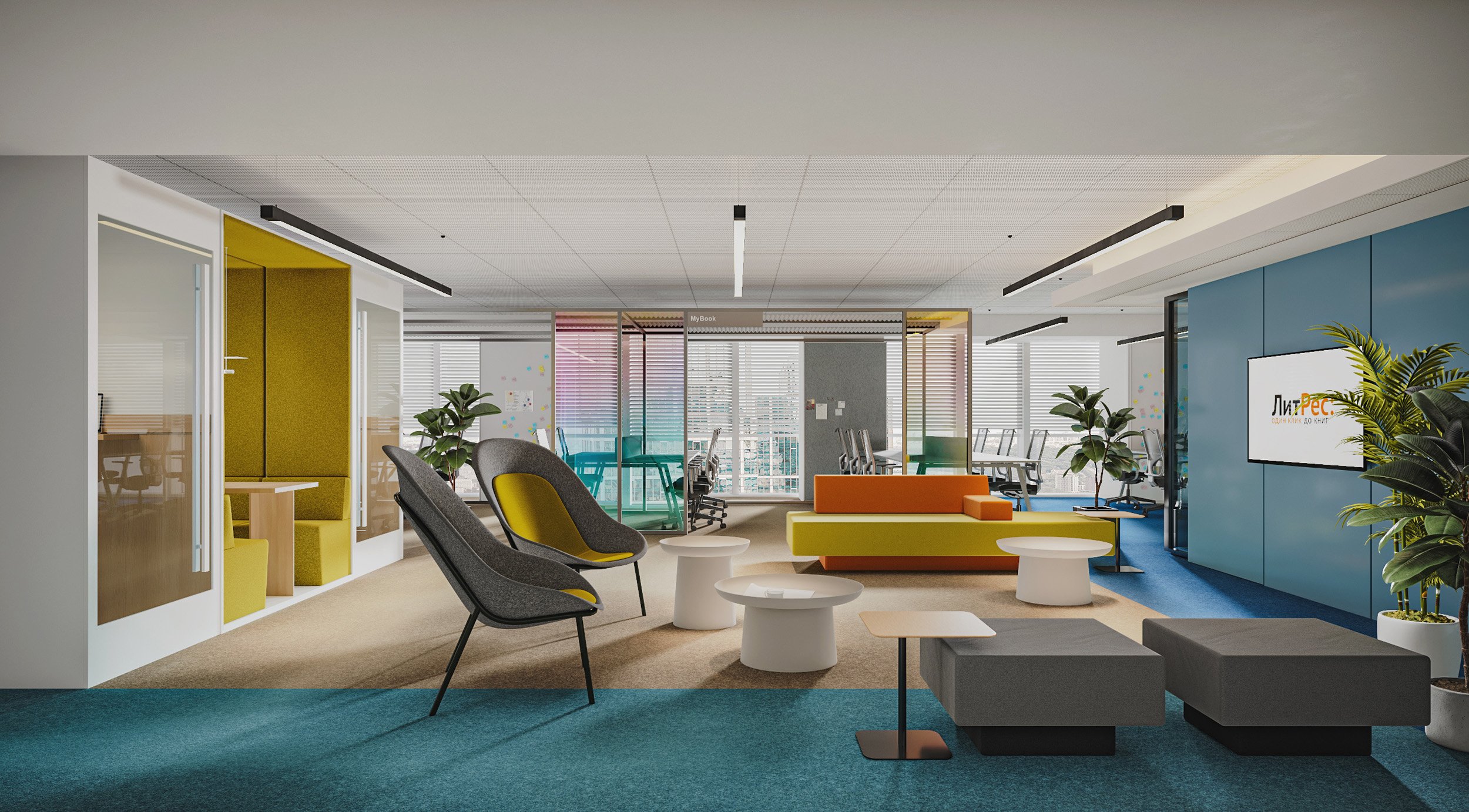
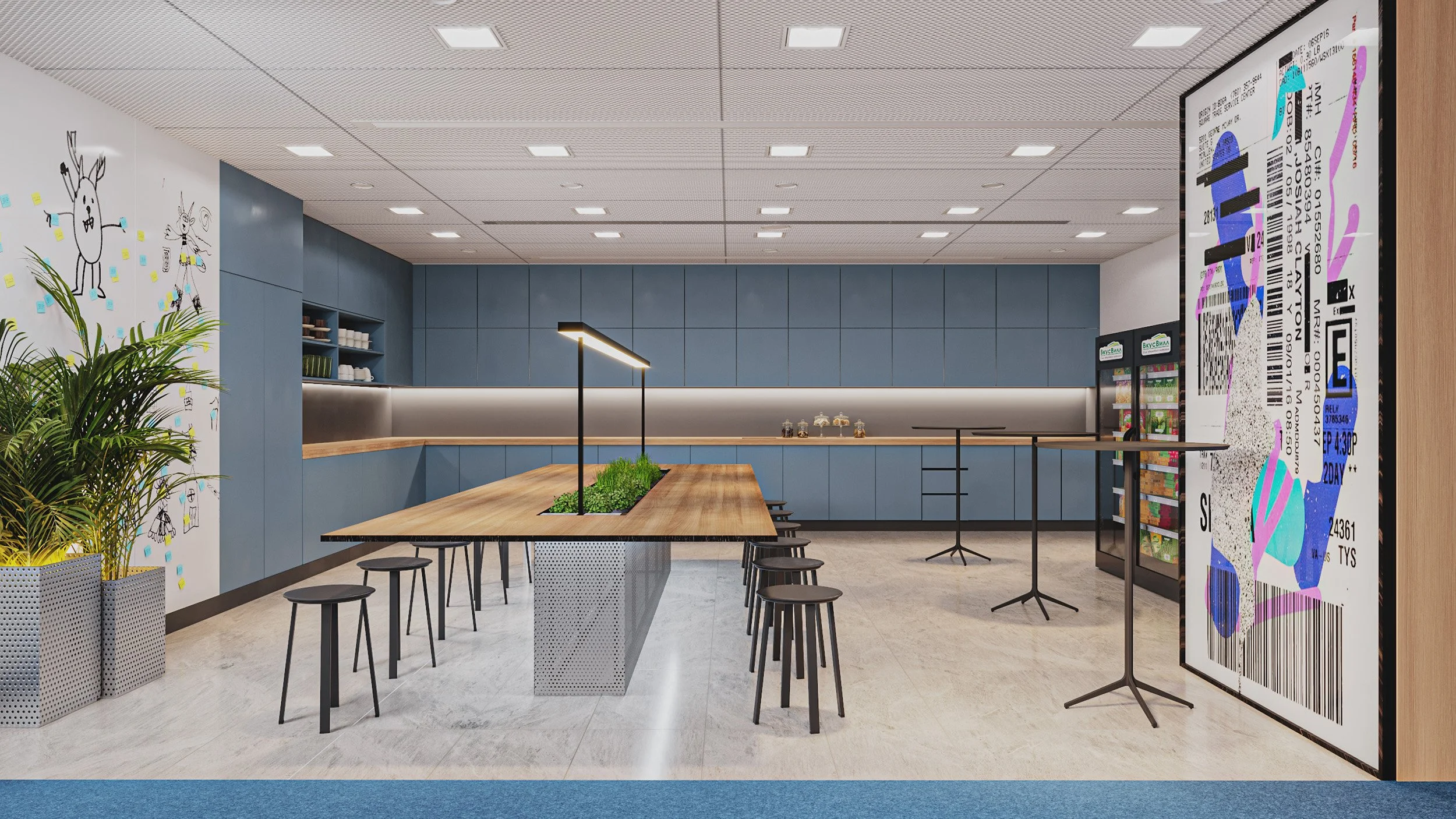
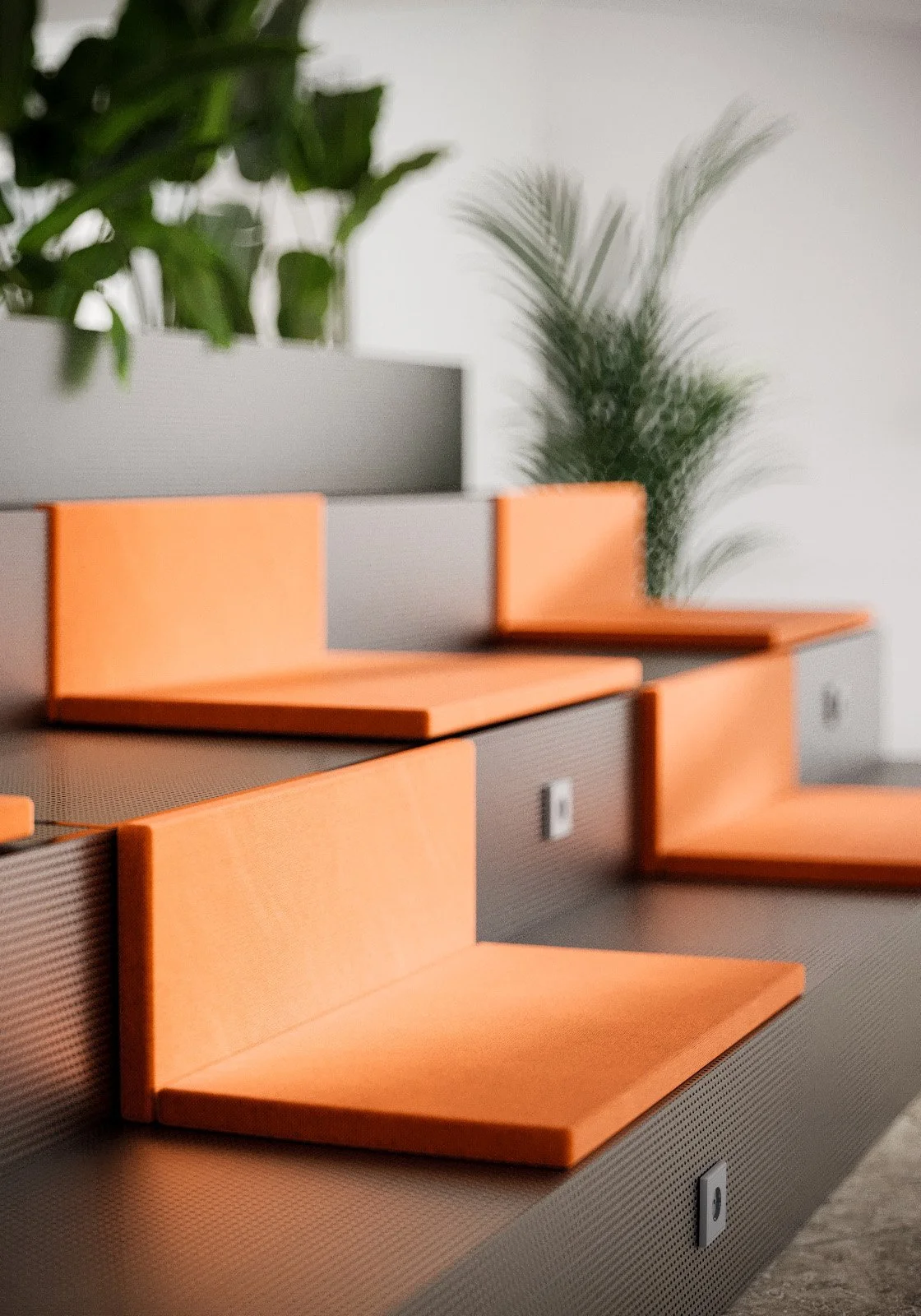
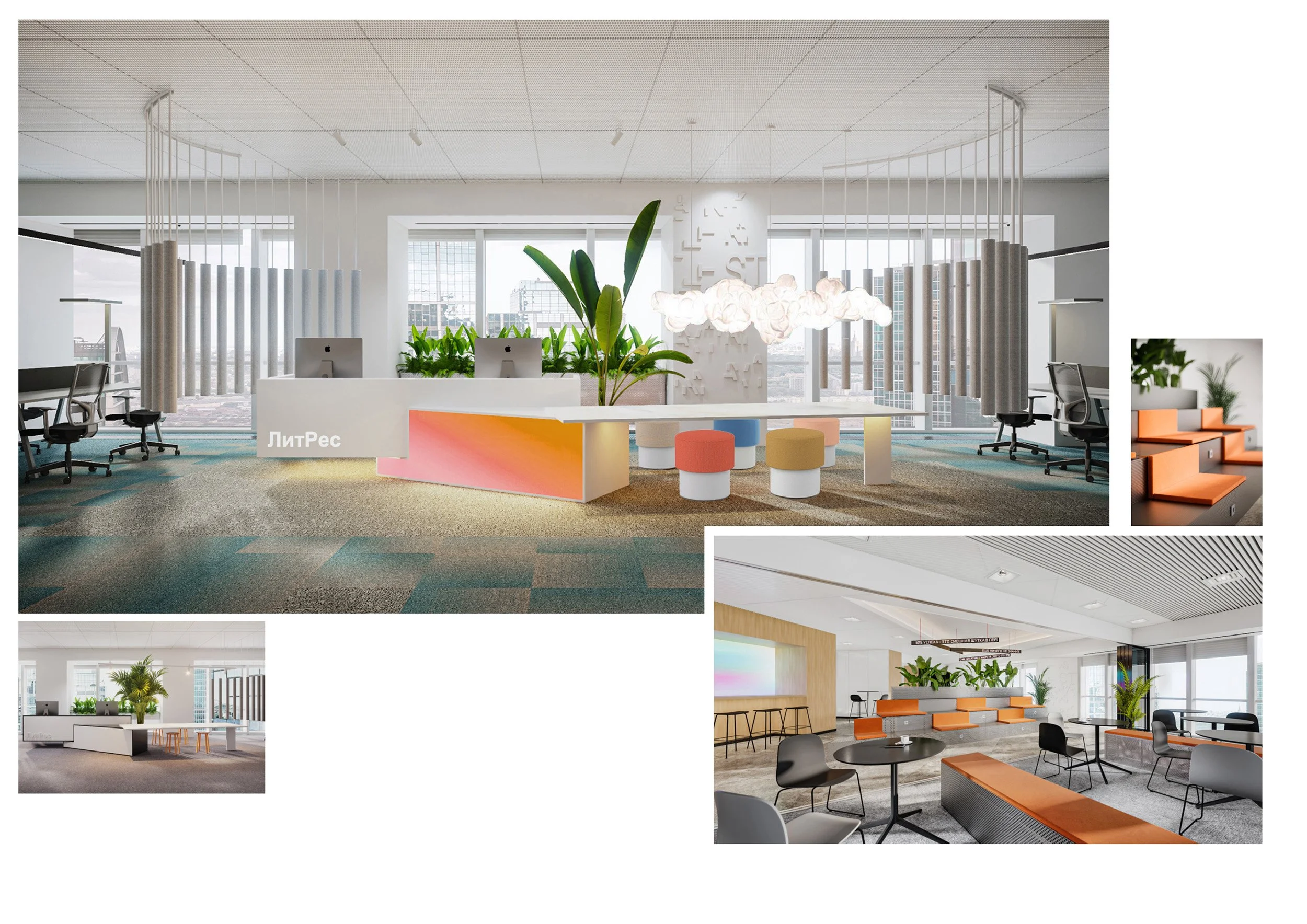
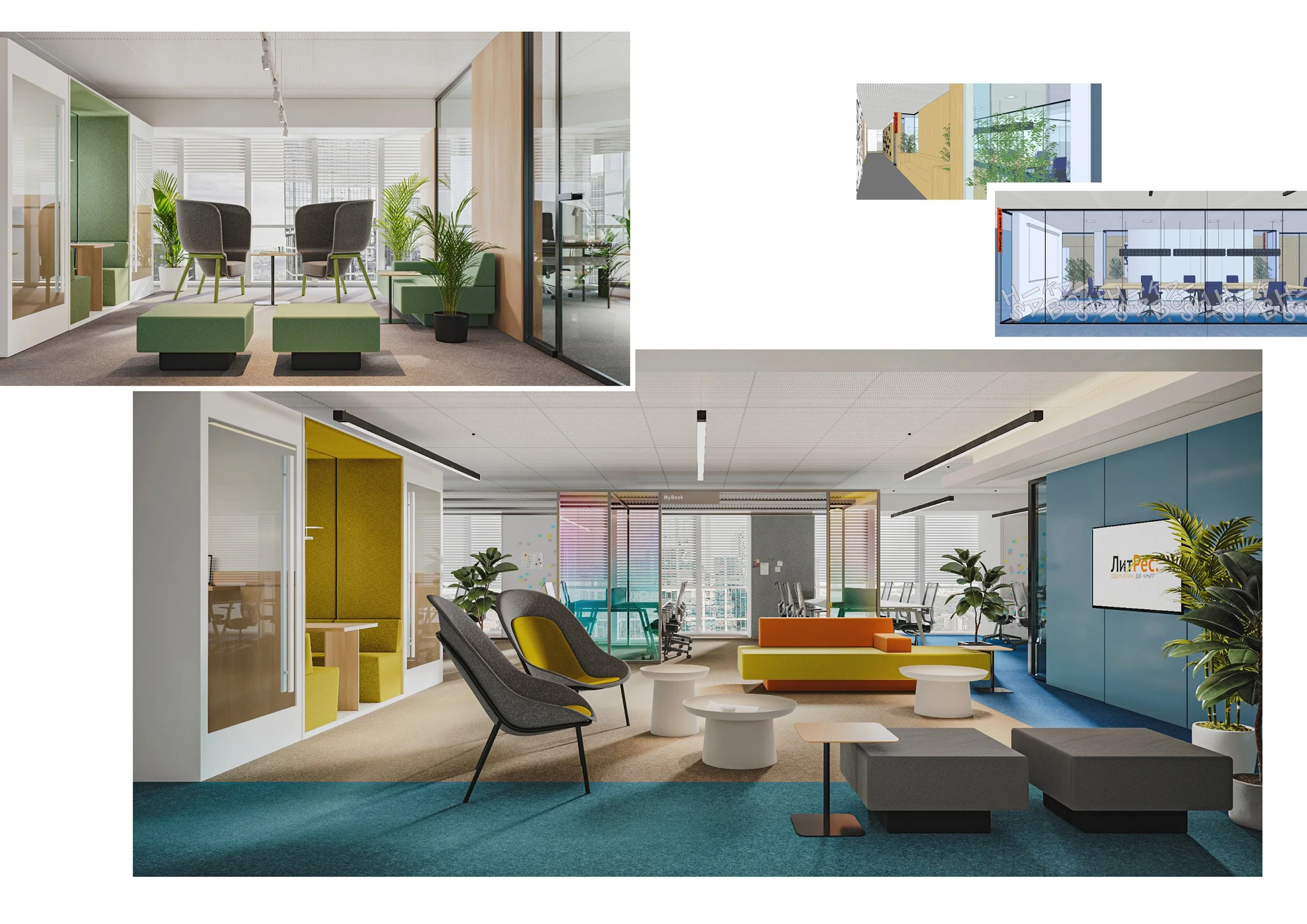
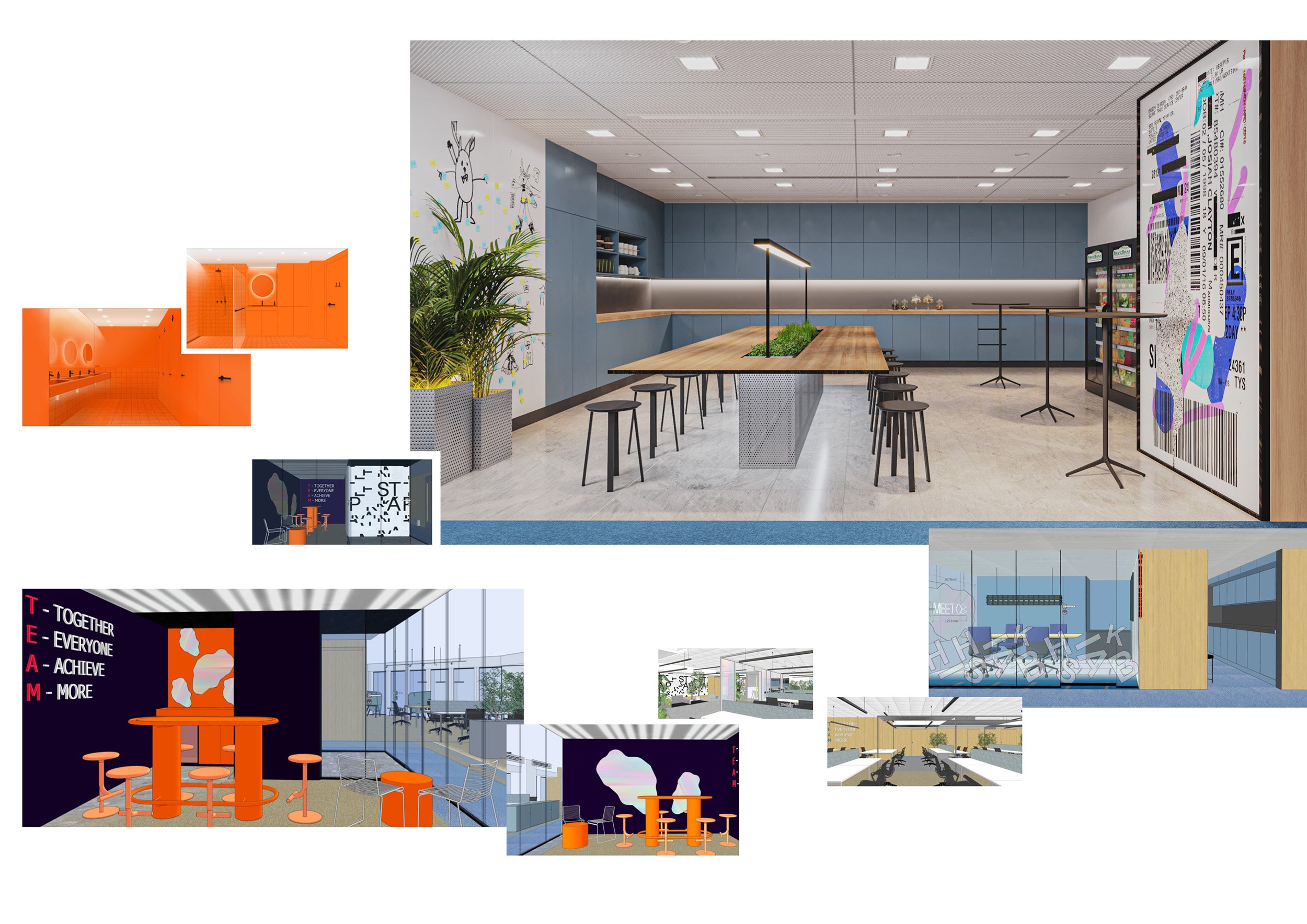
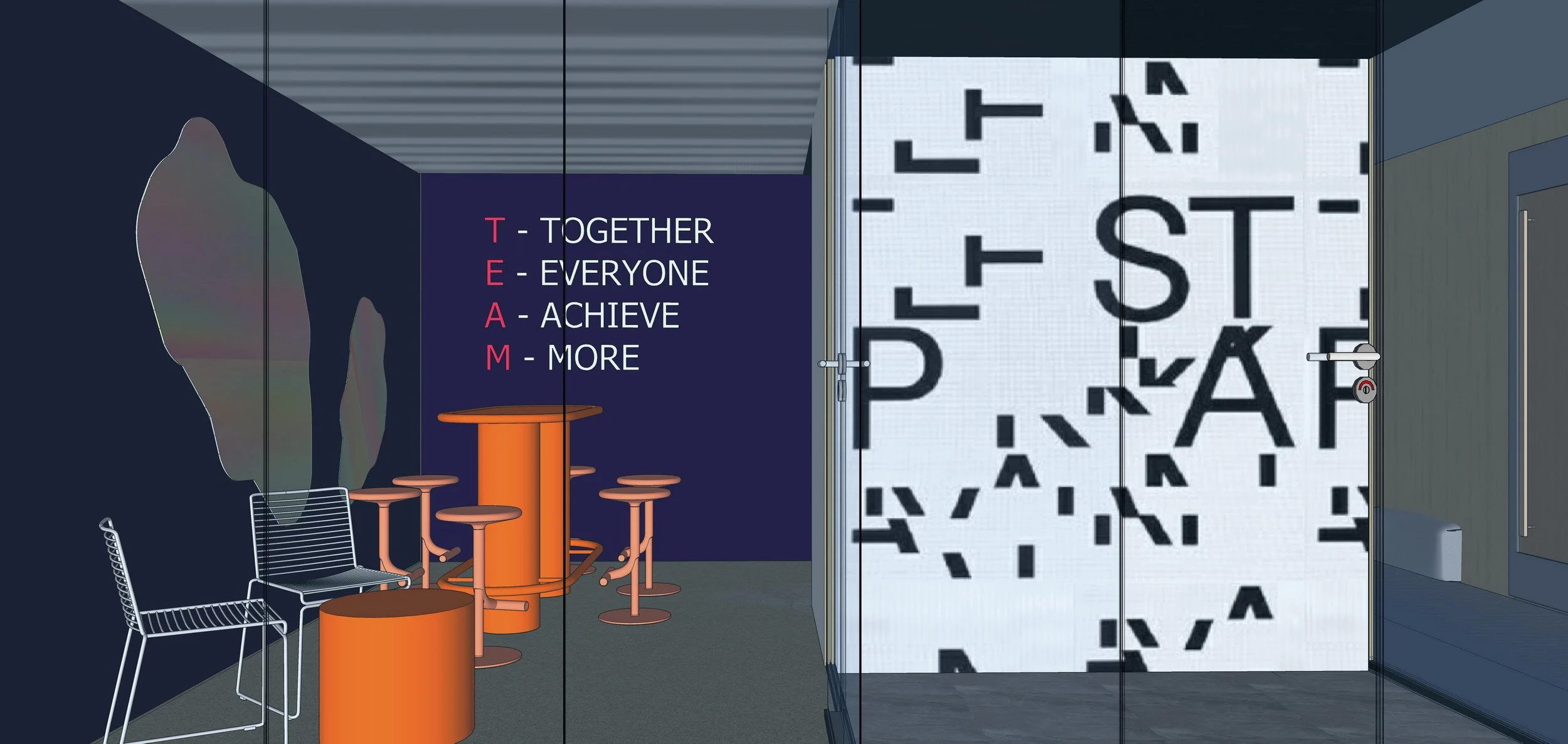
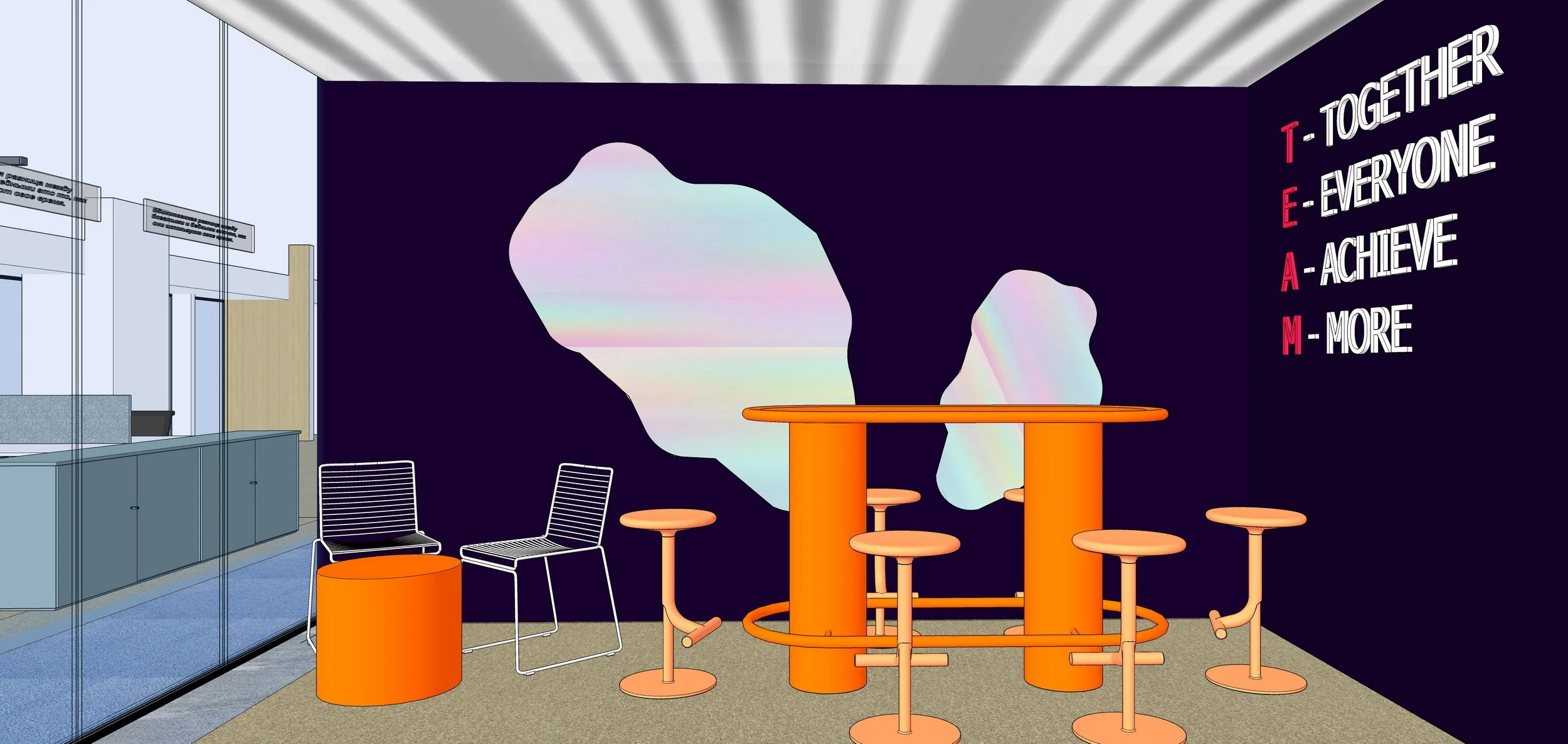
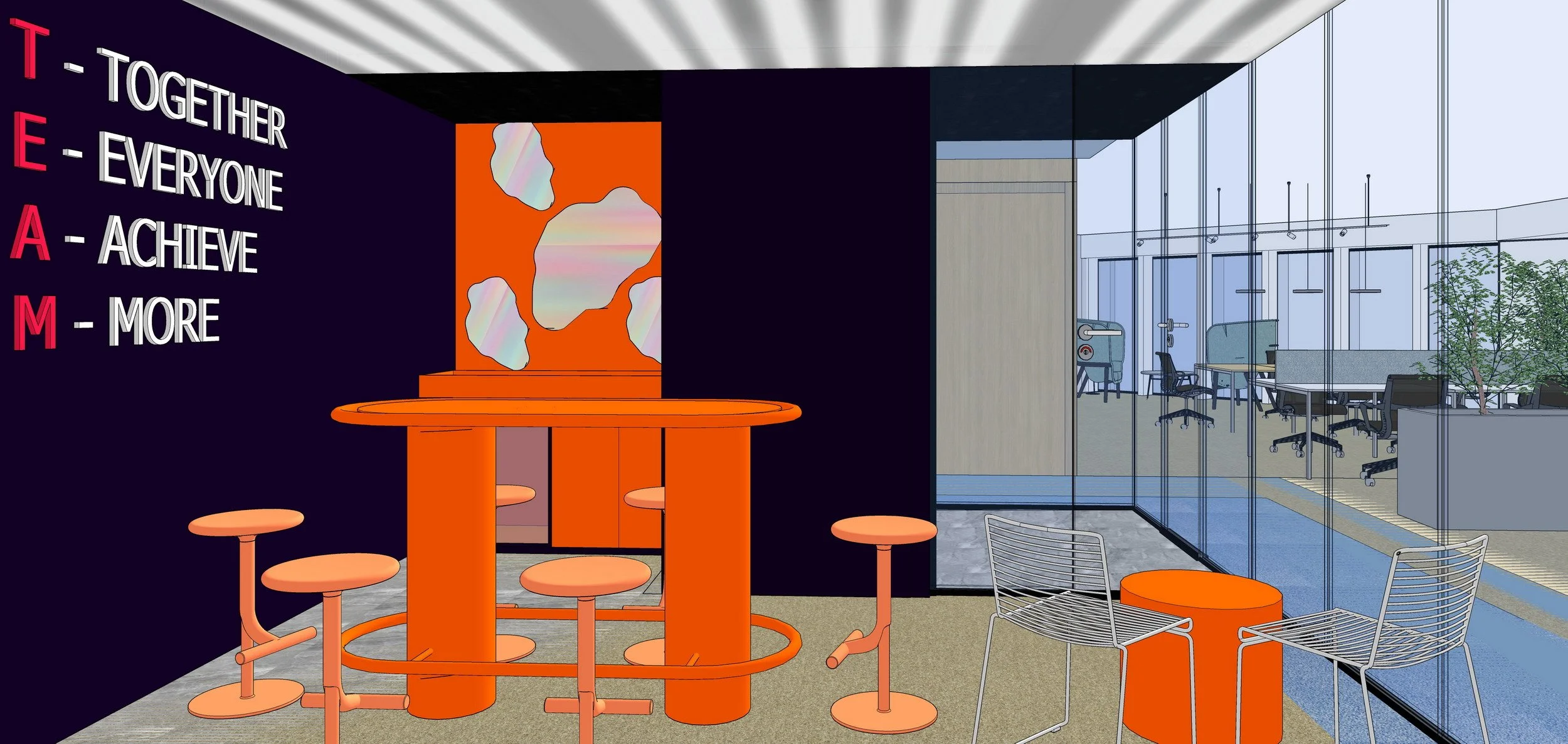
The design strategy therefore focused on insertion rather than reconstruction. A system of freestanding, modular steel-frame structures was introduced as an adaptable kit of parts. These volumes incorporate zoning, lighting, acoustic treatment, navigation, and writable surfaces, while forming semi-enclosed niches, meeting booths, and informal collaboration areas. In the coffee point and event zone, a self-supporting amphitheater element enables presentations and gatherings without altering the permanent fabric of the interior.
The concept avoids overt symbolic gestures, embedding references to book culture in a more nuanced way. Branding unfolds through contemporary graphic interventions — typographic compositions, subtle patterns, translucent layers, and poster-informed visual language applied to glass partitions and feature walls. These components derive from editorial culture and reading environments, becoming part of the spatial system instead of decorative additions. This approach establishes identity without overwhelming the original framework.
The office was conceived according to agile and activity-based principles, emphasizing flexibility, team-based collaboration, and spatial diversity. Open workstations are complemented by quiet alcoves, meeting pods, lounge areas, and informal zones designed for changing group dynamics. Acoustic comfort played a central role, achieved through integrated absorbent materials, soft furnishings, and suspended acoustic elements. The result is a layered and adaptable workspace — operating within strict physical limitations while projecting a distinct and contemporary character.
Project team: Evgeniy Shchetinkin, Elizaveta Semeonova, Ekaterina Turbina