Type: Training Center | Scope: Interiors Location: Yakymanka District, Moscow Year: 2011-2012 | Area: 1,680 sq m Status: Completed
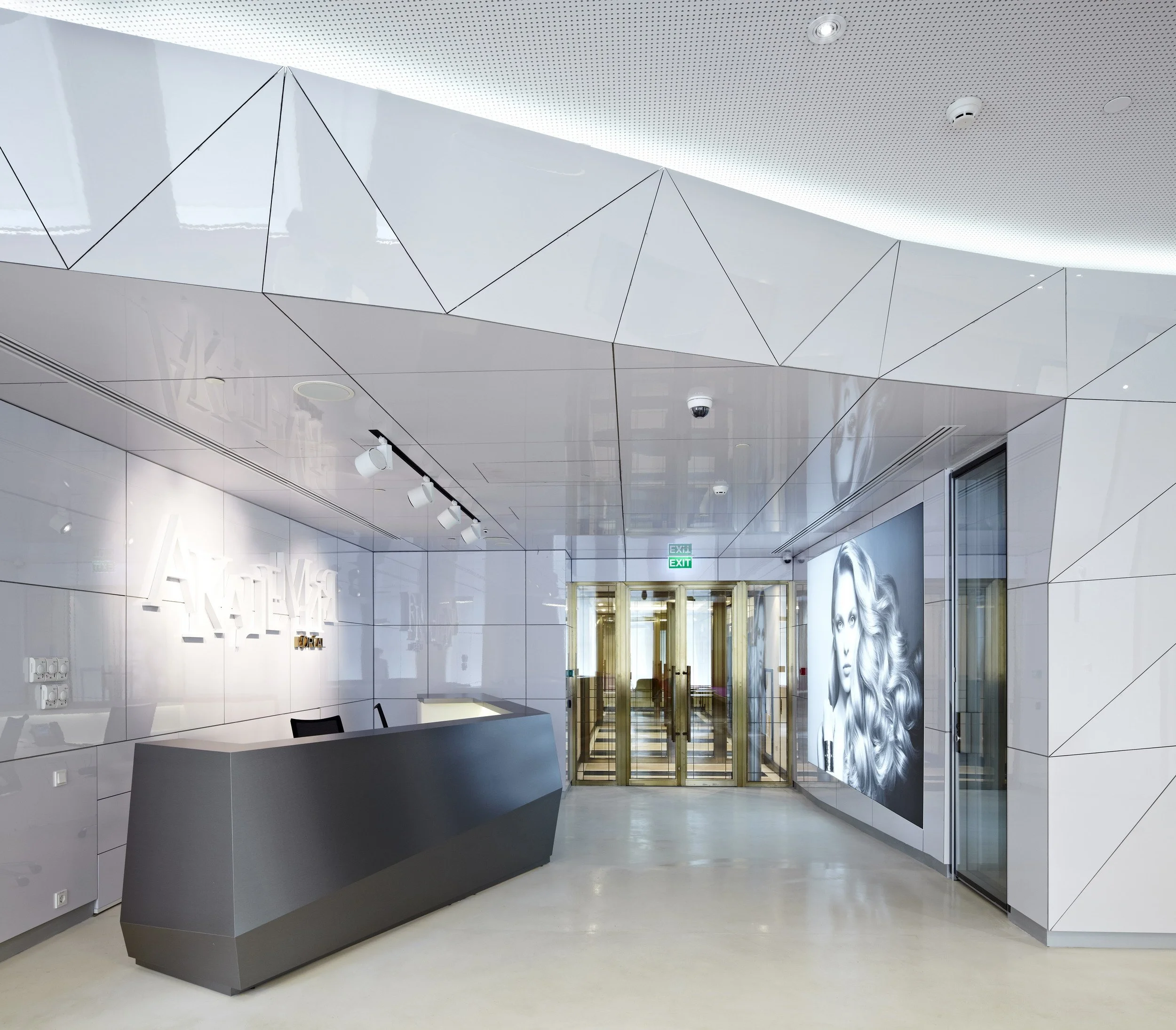
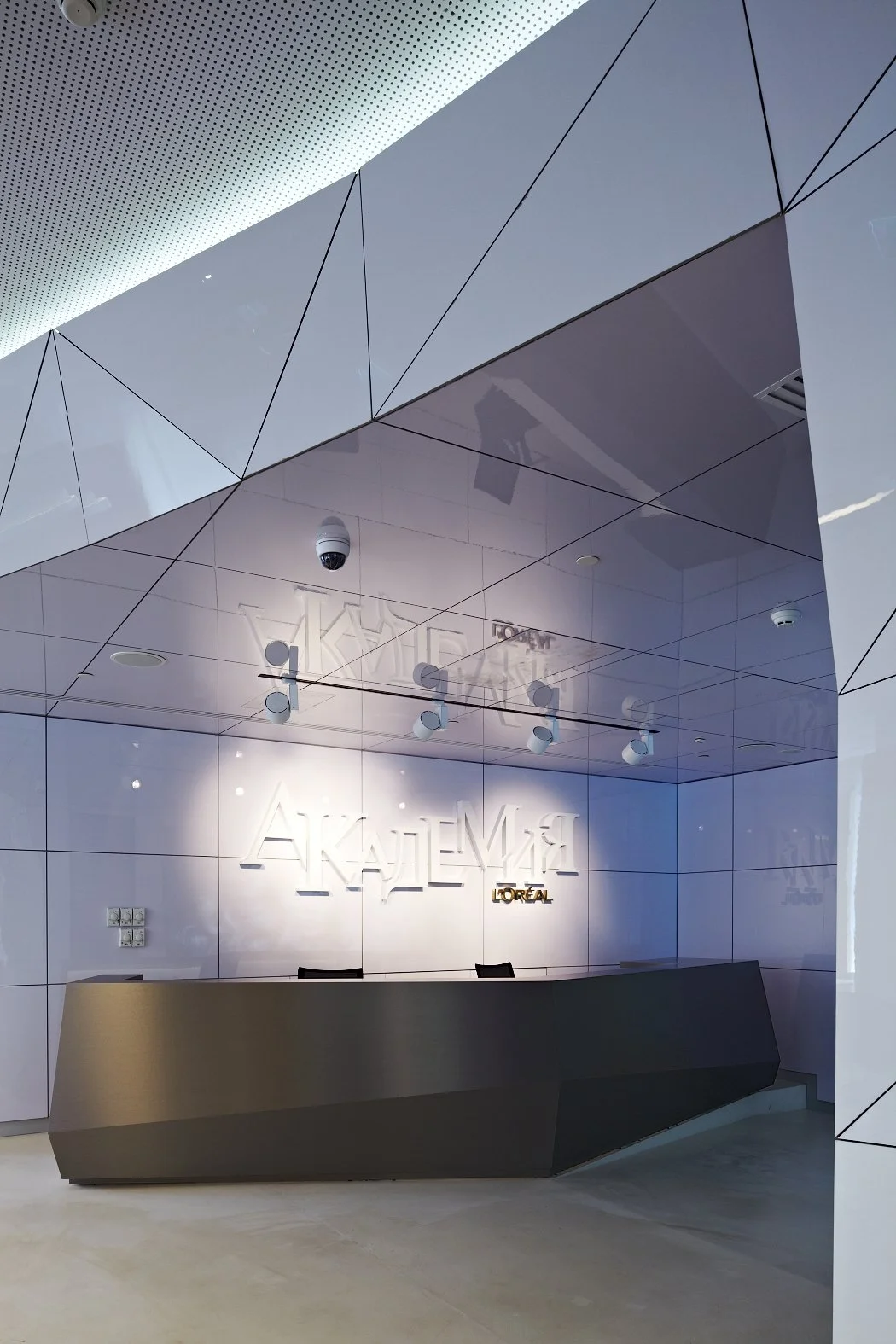
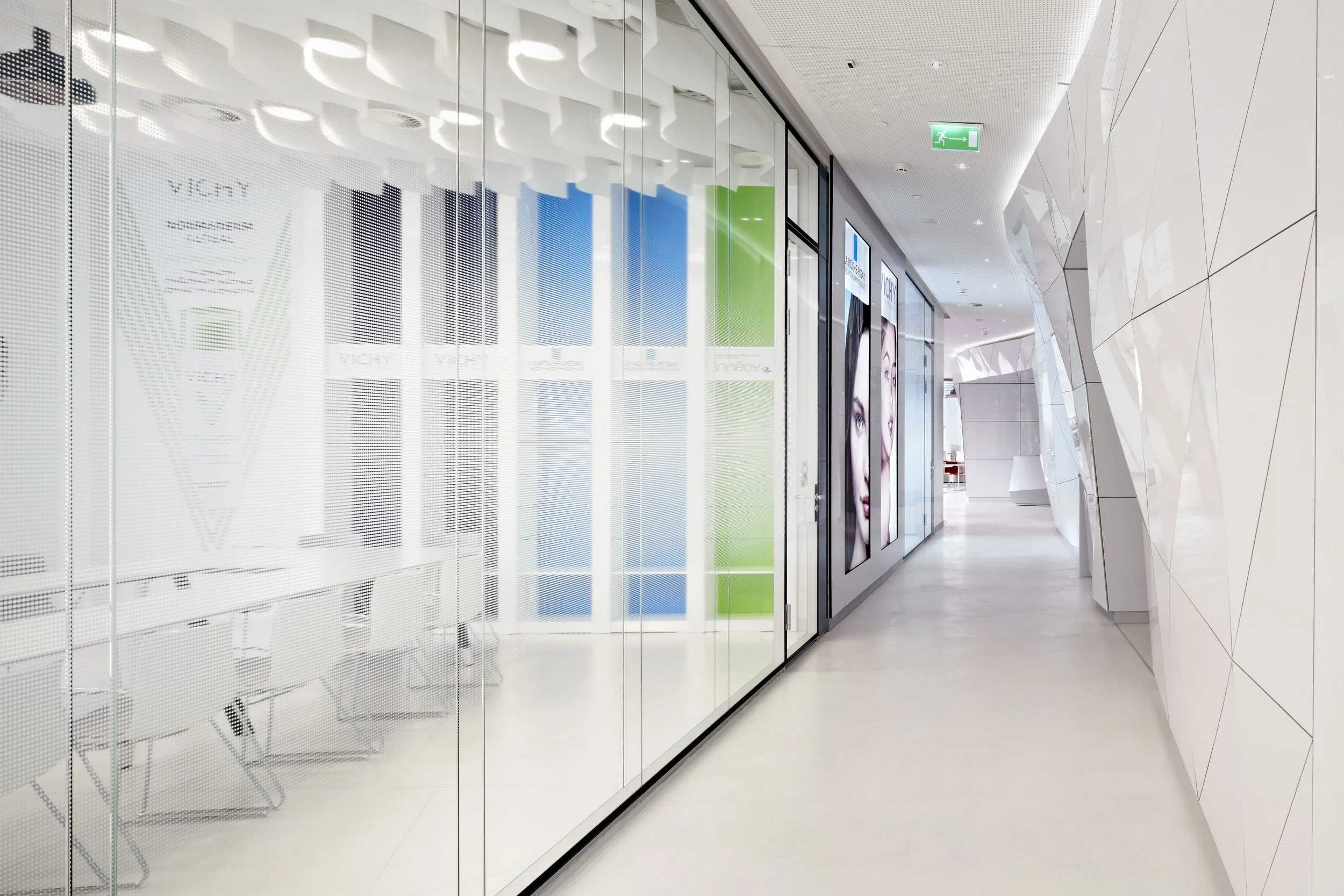
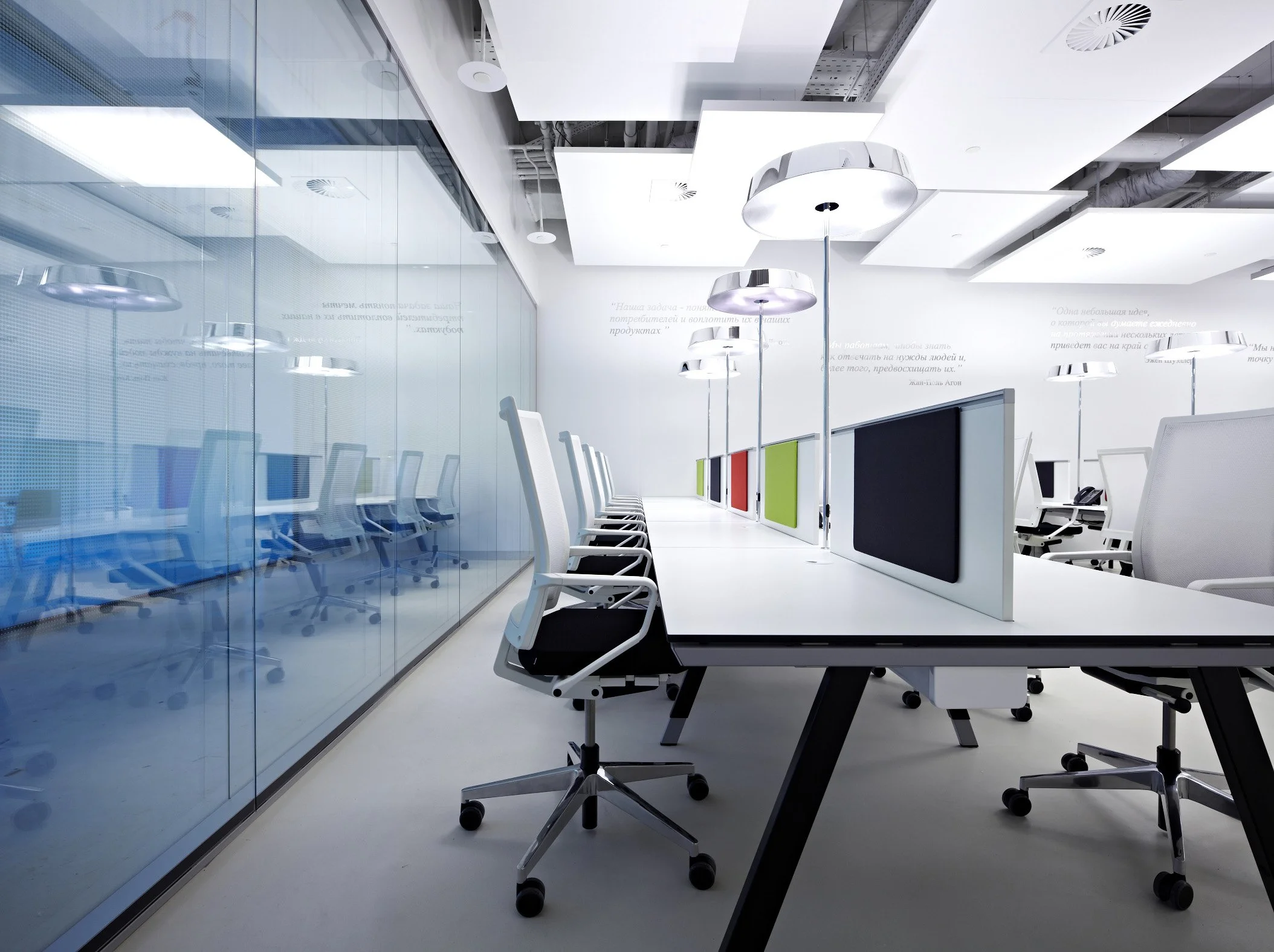
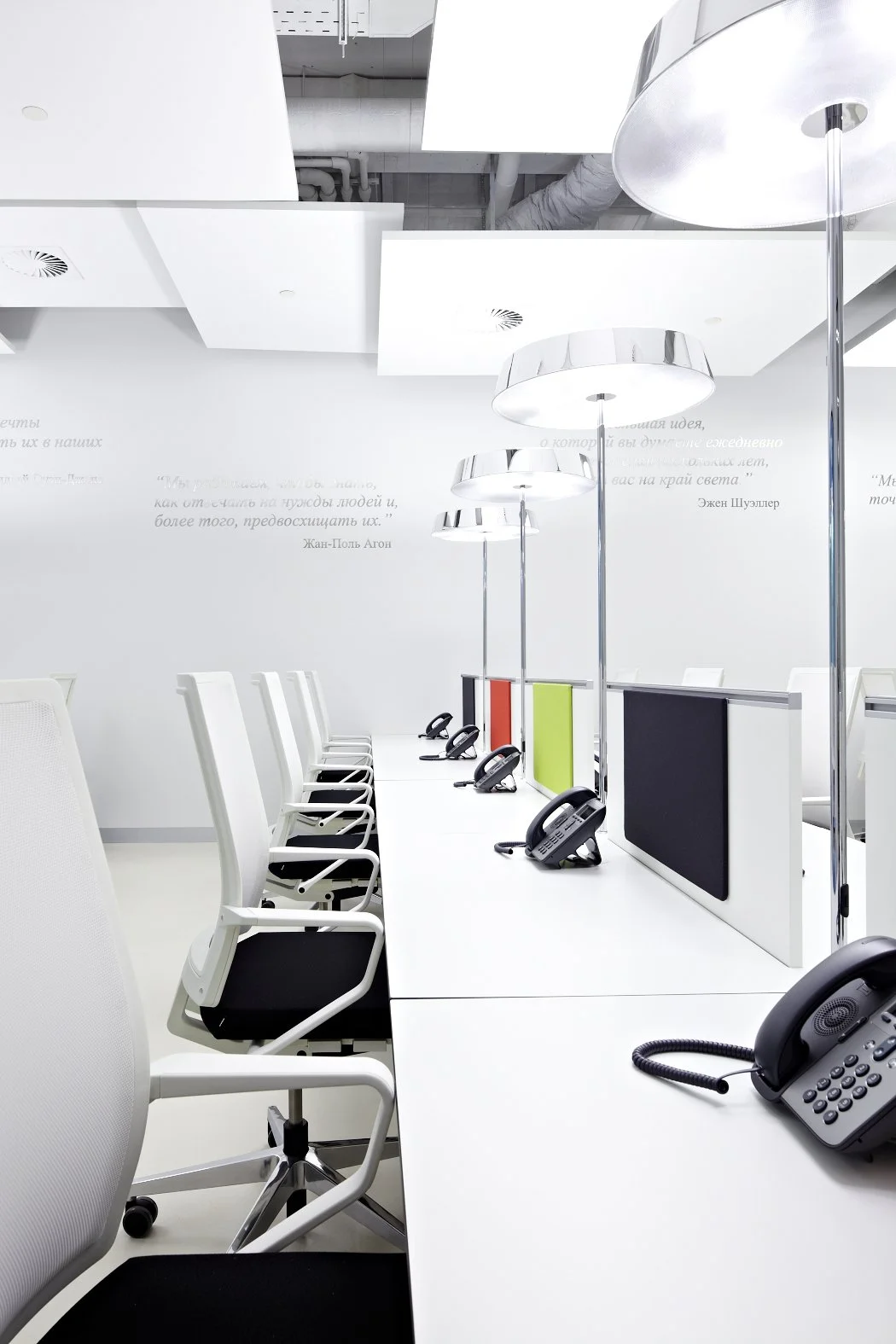
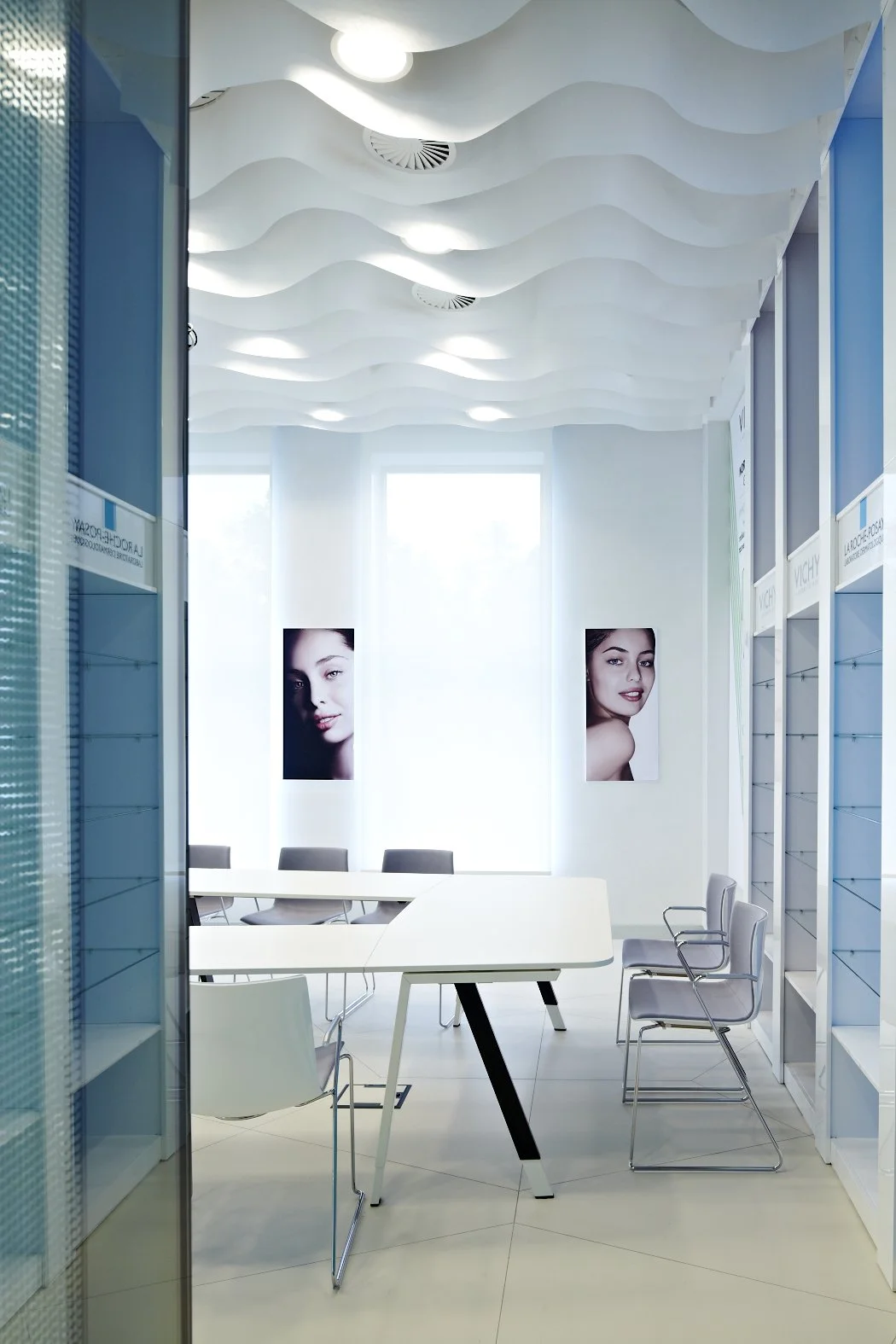
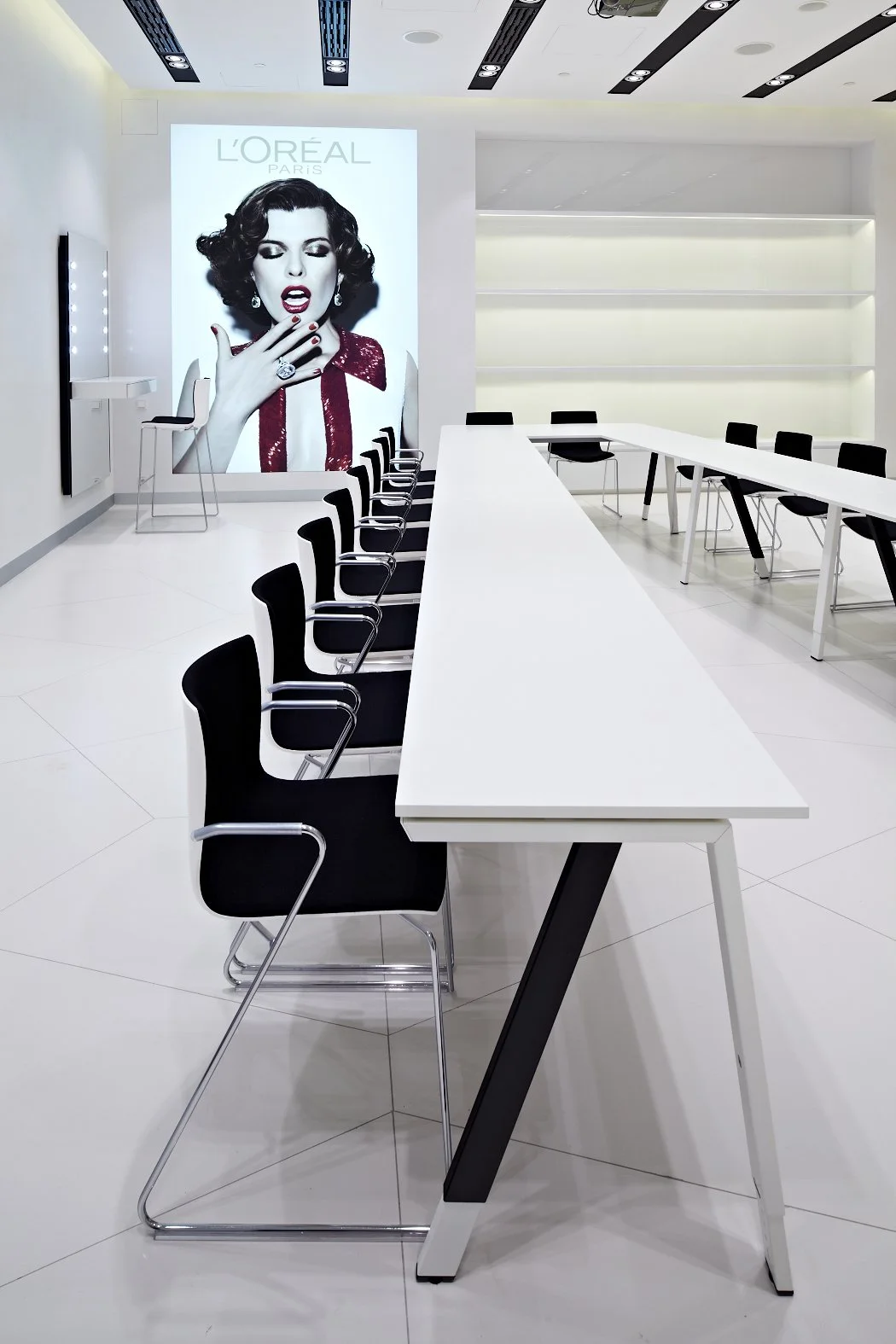
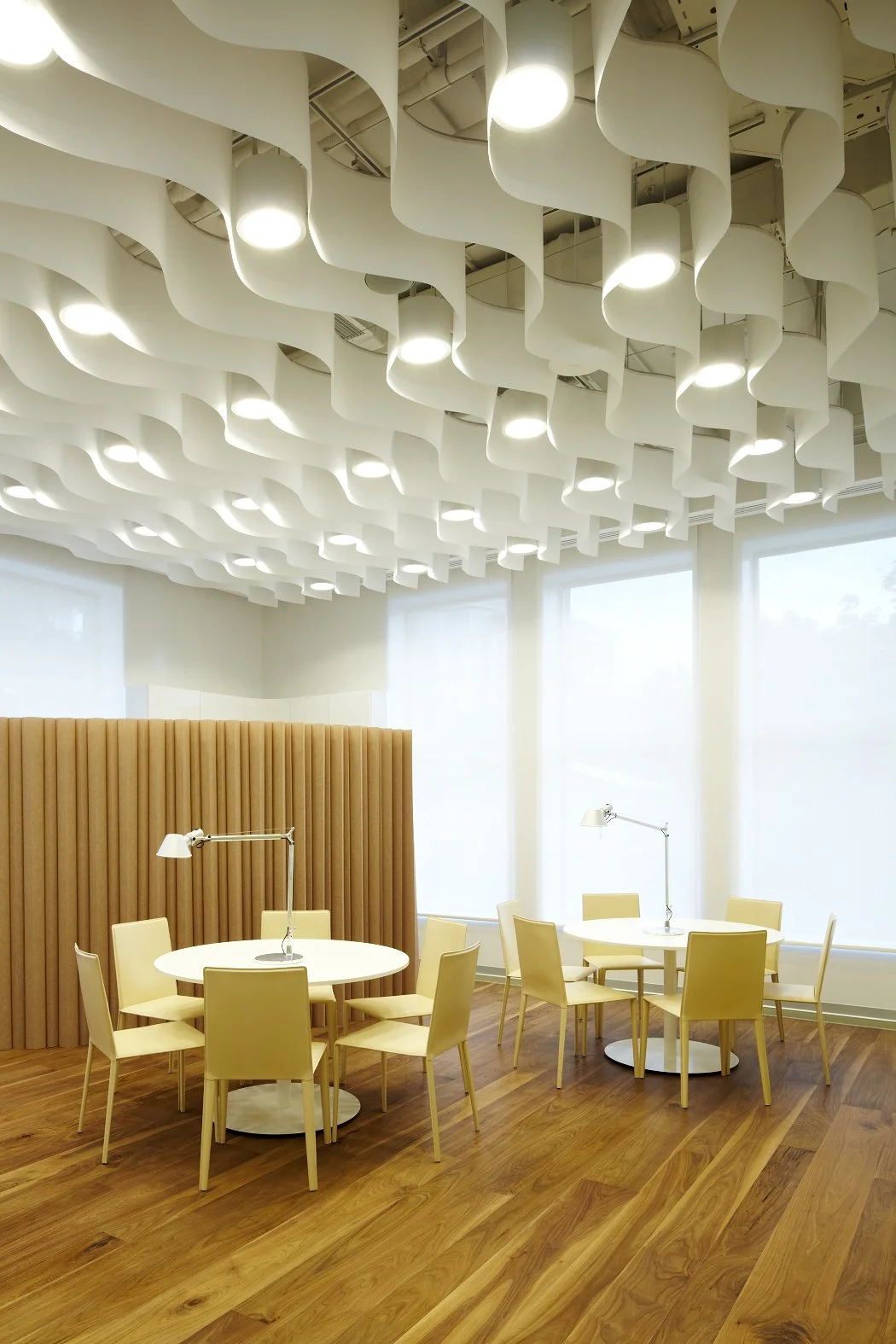
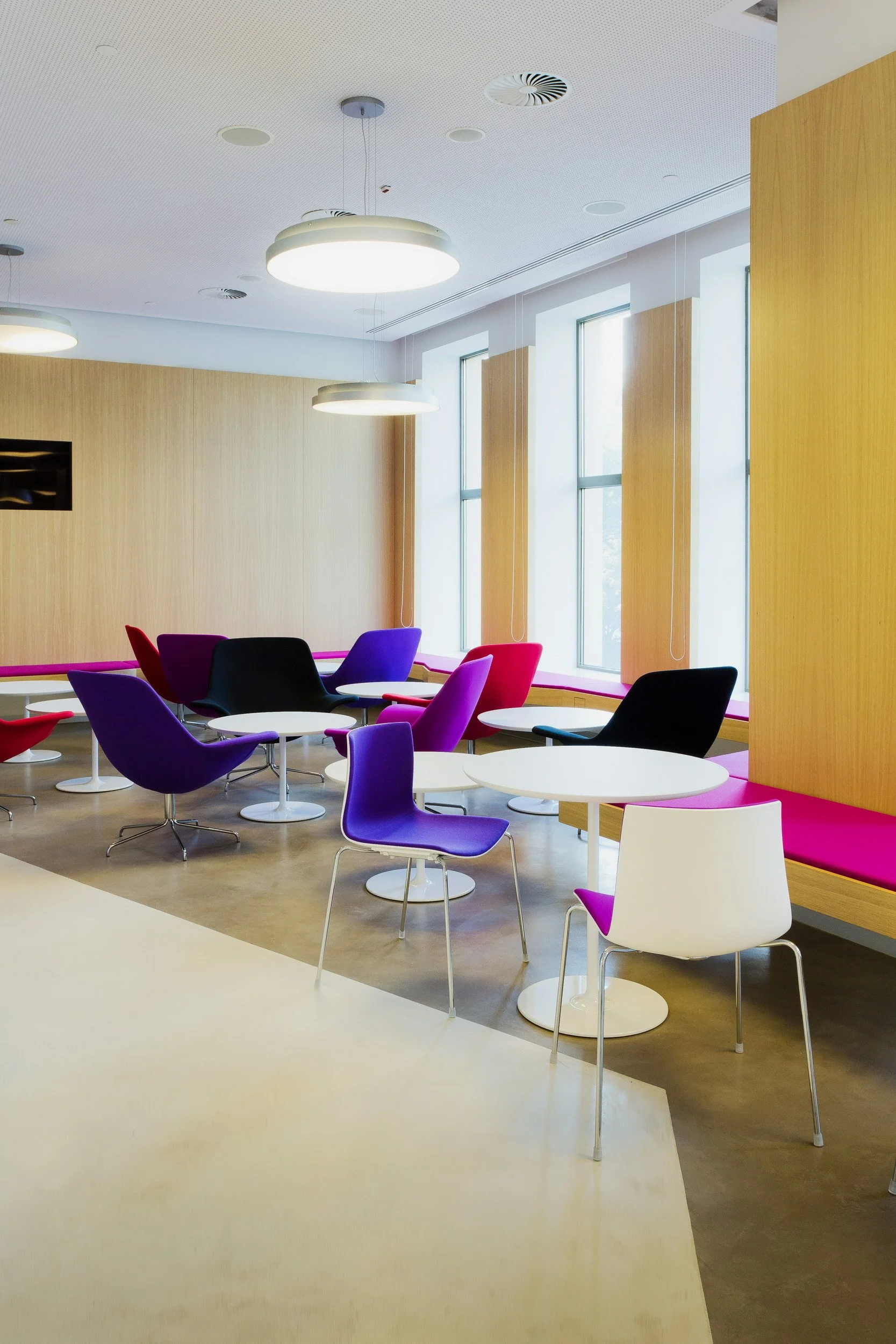
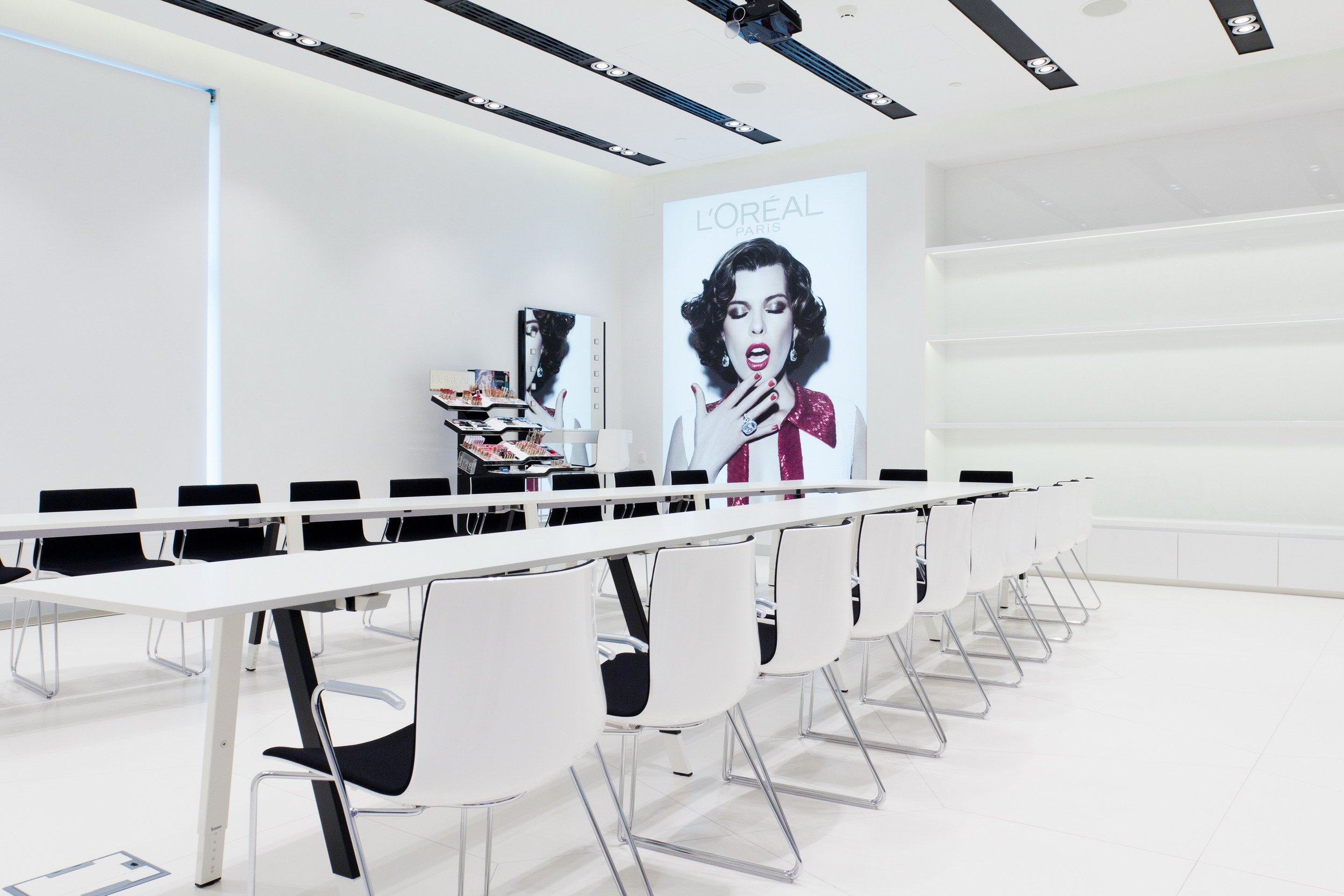
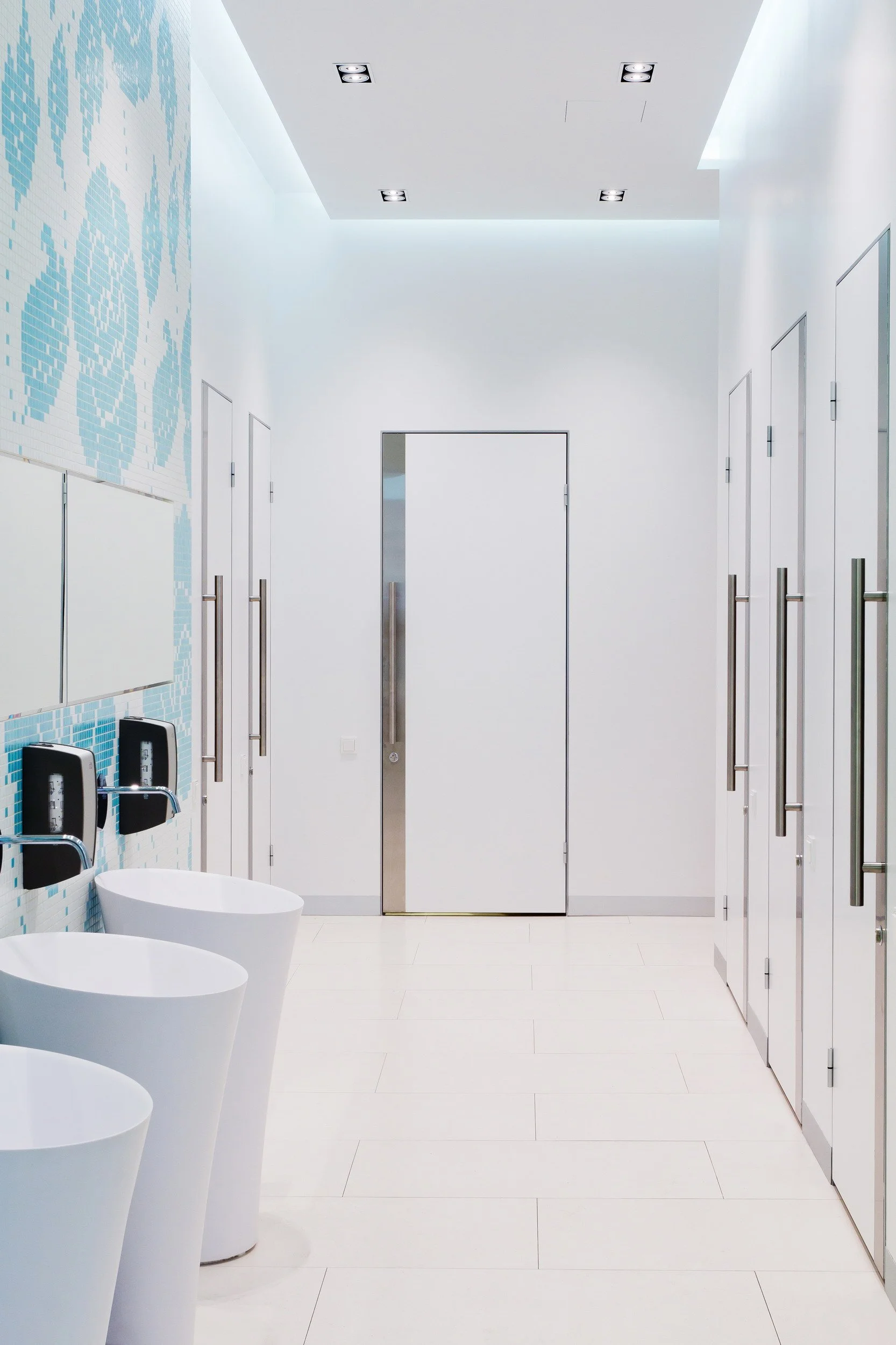
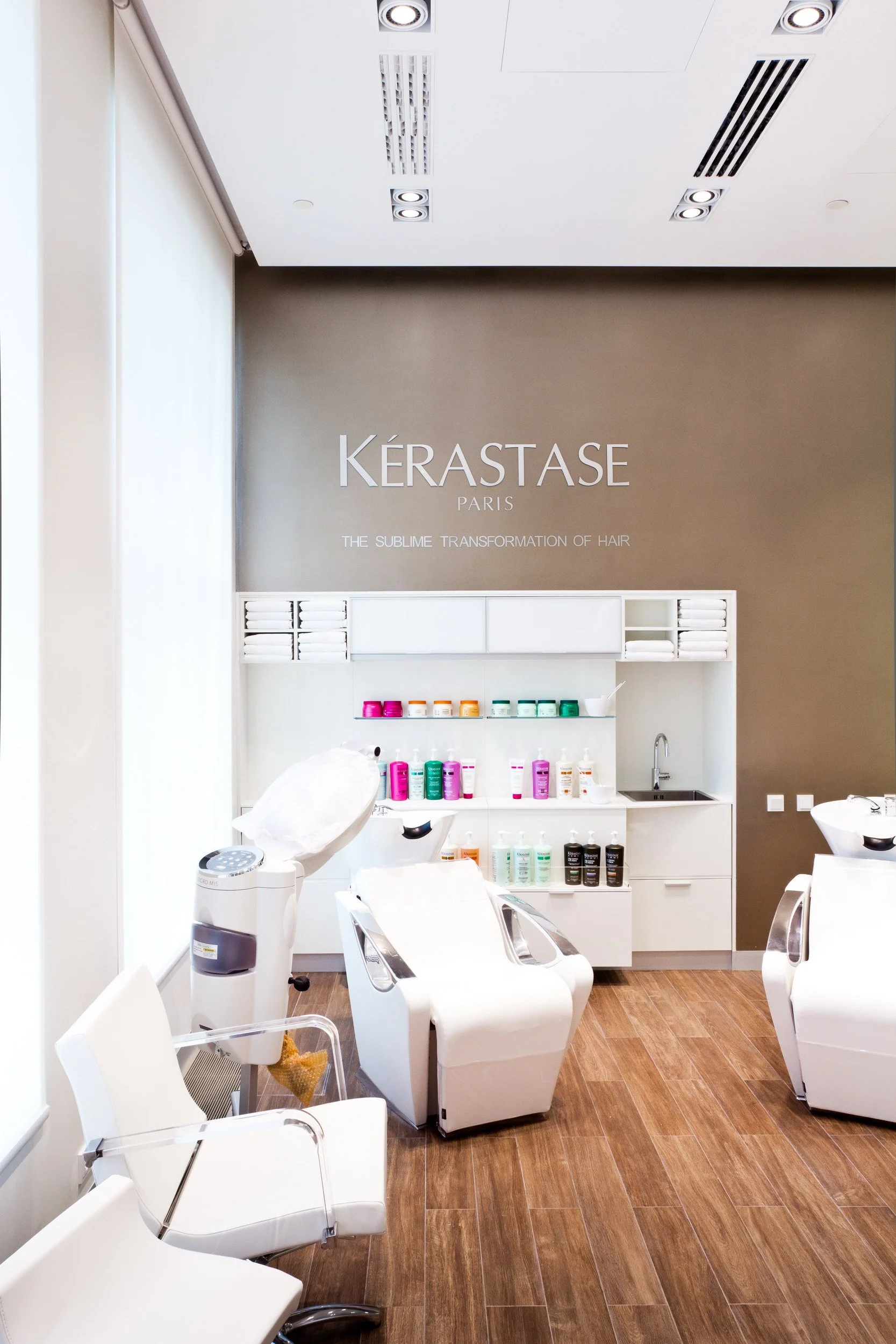
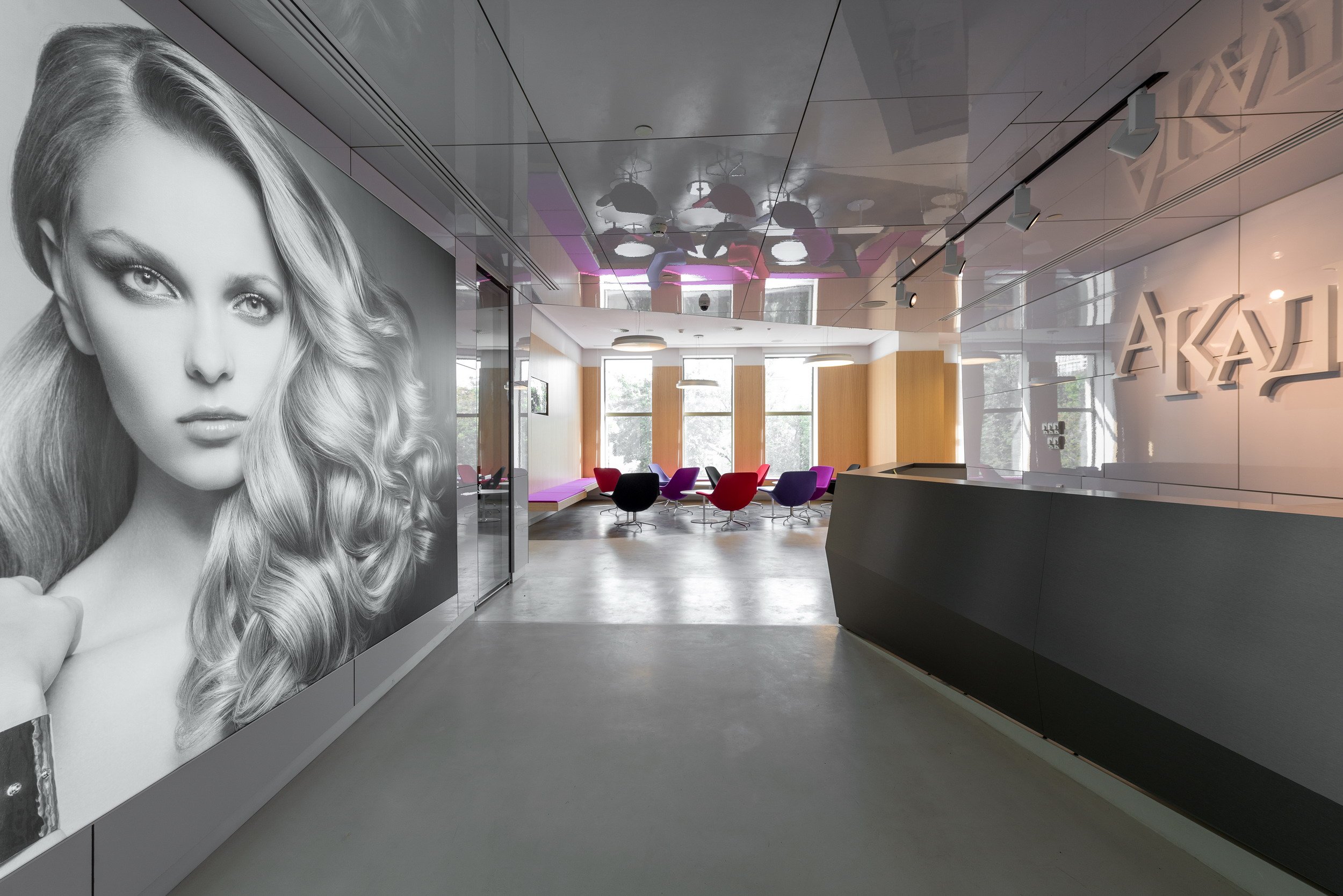
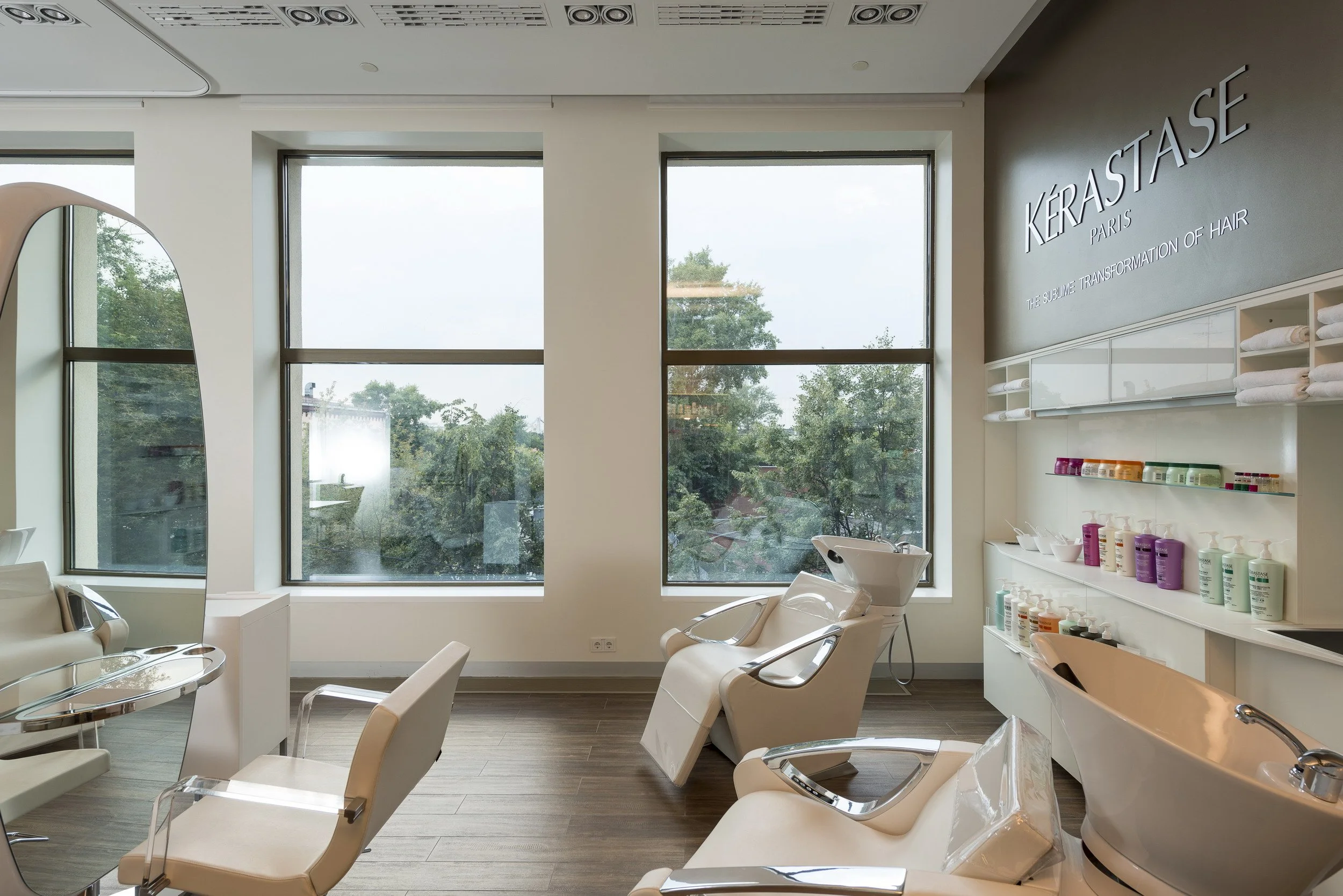
L’Oréal Beauty Academy is an educational center for future professionals in the beauty industry, part of a global network. The Moscow location became the first of its kind in the country and is situated in one of the city’s cultural quarters. Each project is conceived as a unique response by local design studios, with concepts reviewed by the brand’s headquarters in France. In this case, the proposal was approved at the first presentation and moved to development with minimal adjustments. The brief called for a light, contemporary, and fashion-forward environment with a subtle technological edge. Conceptually, the project draws inspiration from the beauty and fashion industries. Since L’Oréal products are created to enhance beauty, the architectural idea was to give students a tangible sense of belonging to this professional world, while preserving clarity and focus for learning. The concepts of runway, stage, and backstage informed the design language, shaping spatial hierarchy and atmosphere rather than serving as decorative motifs.
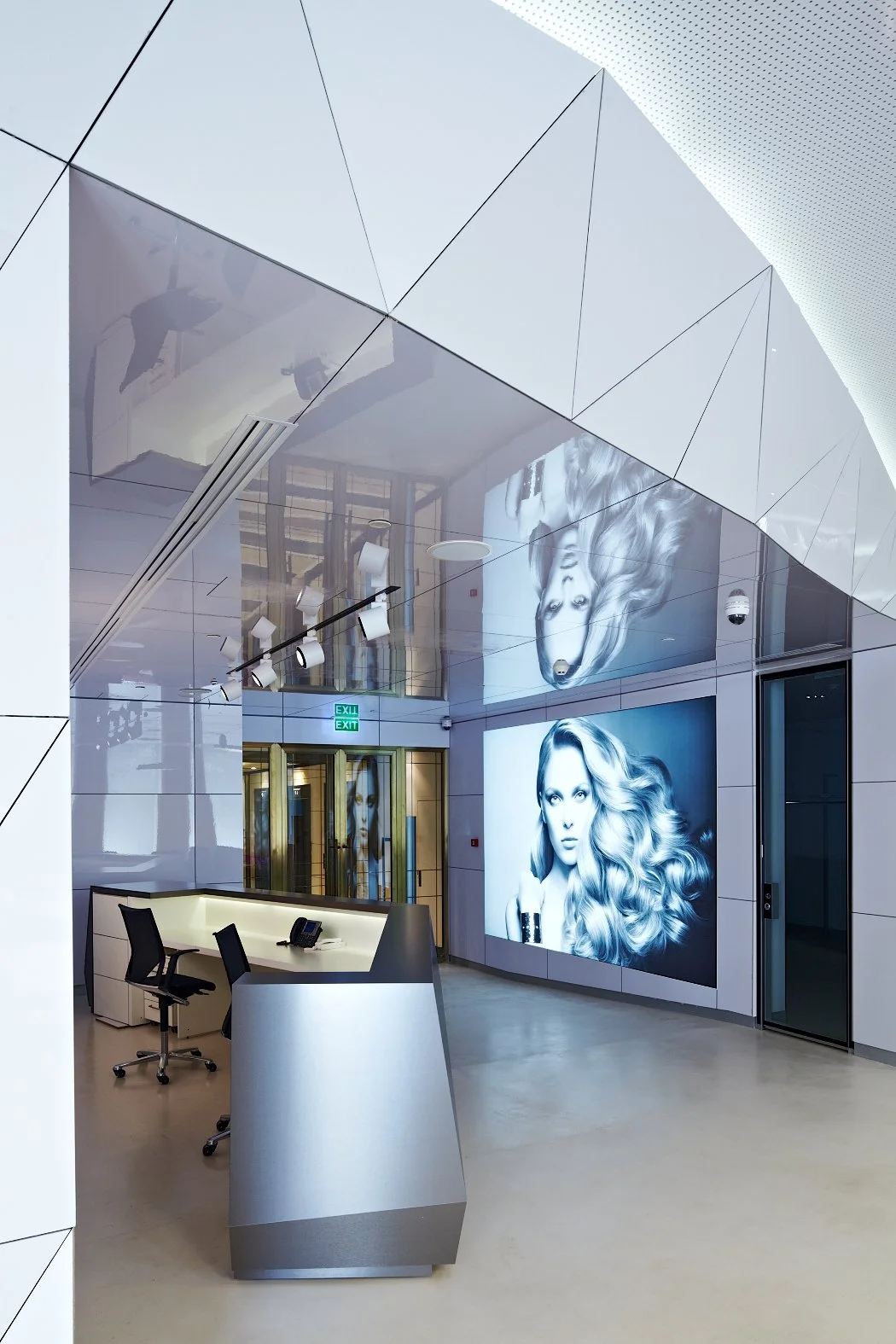
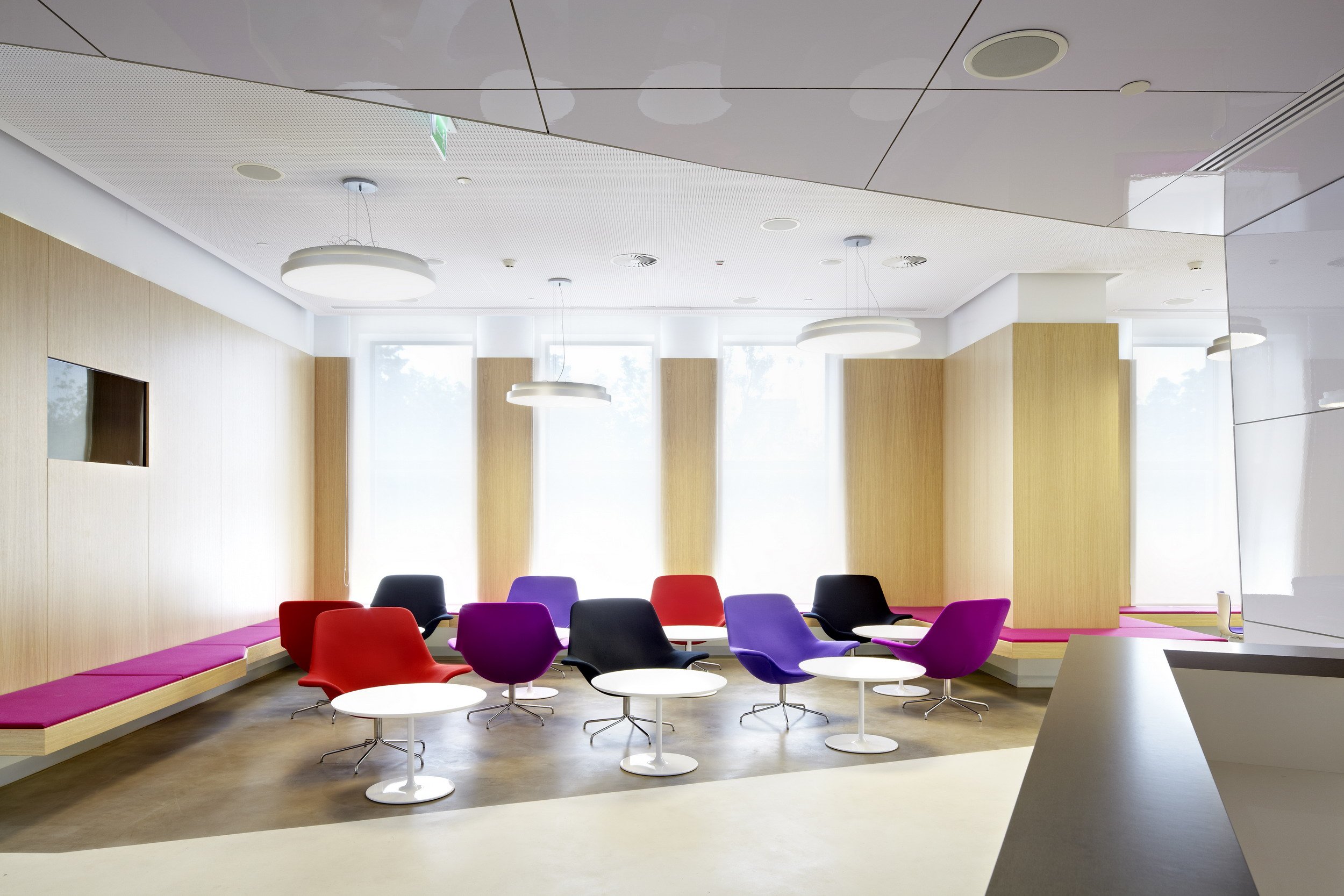
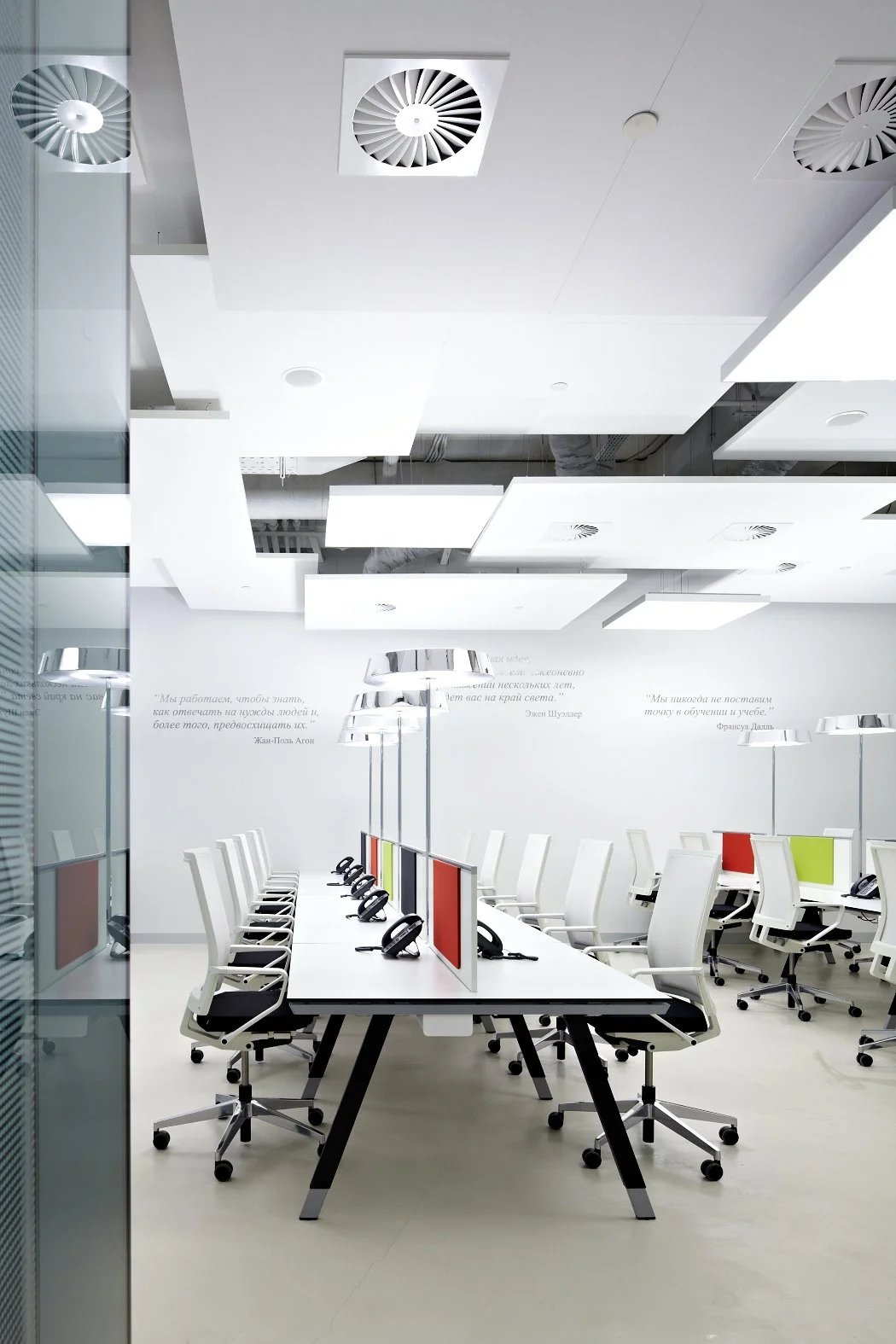
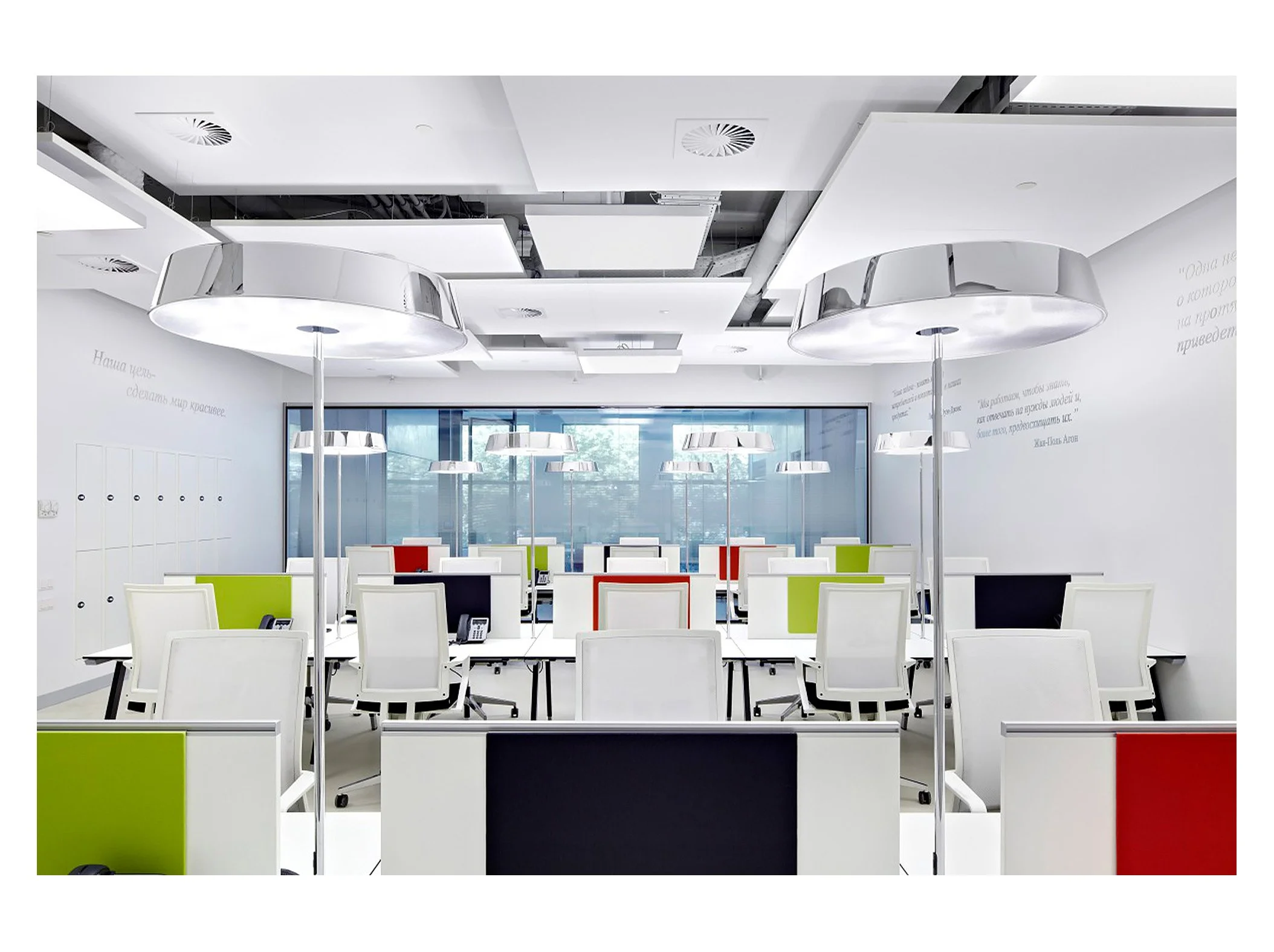
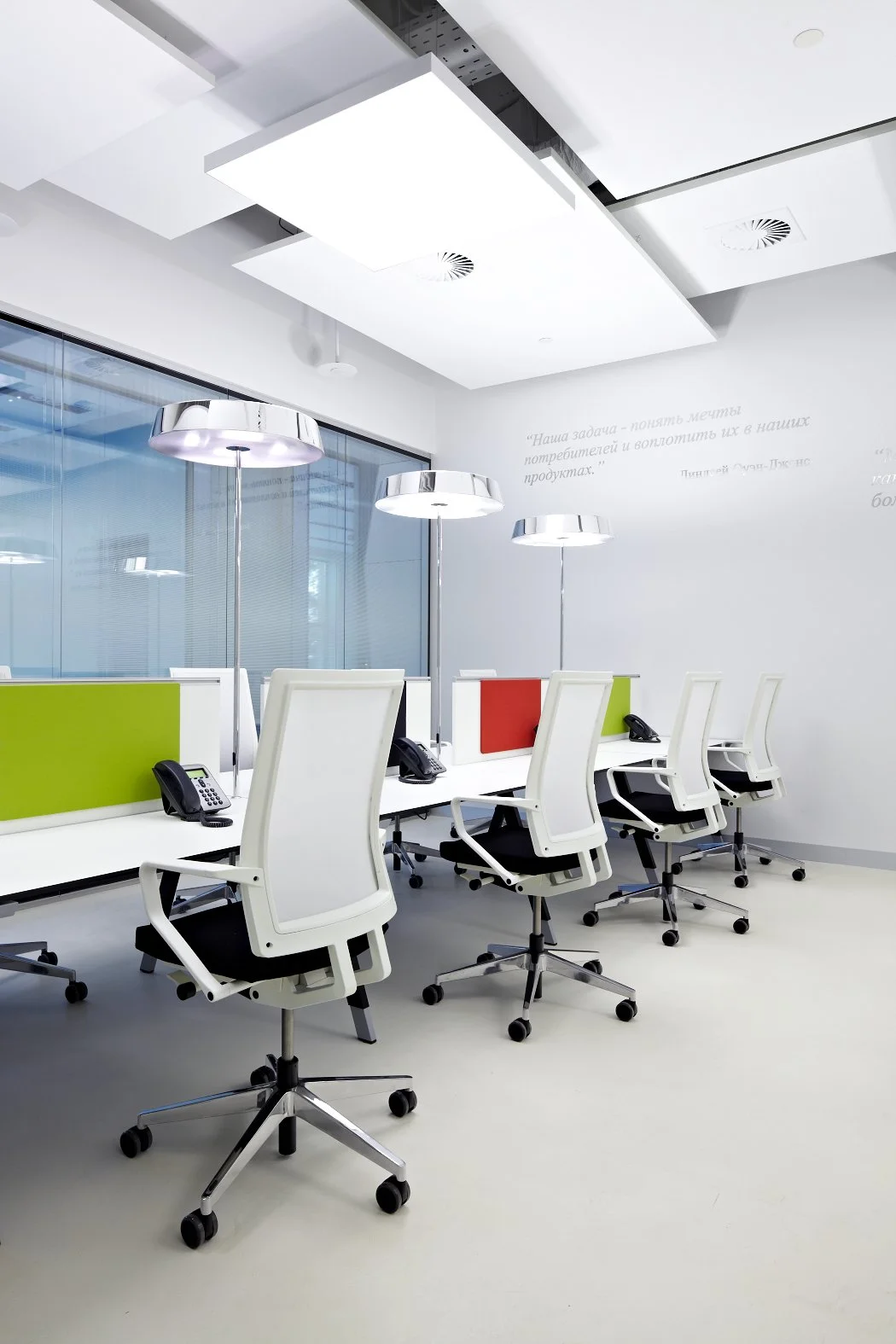
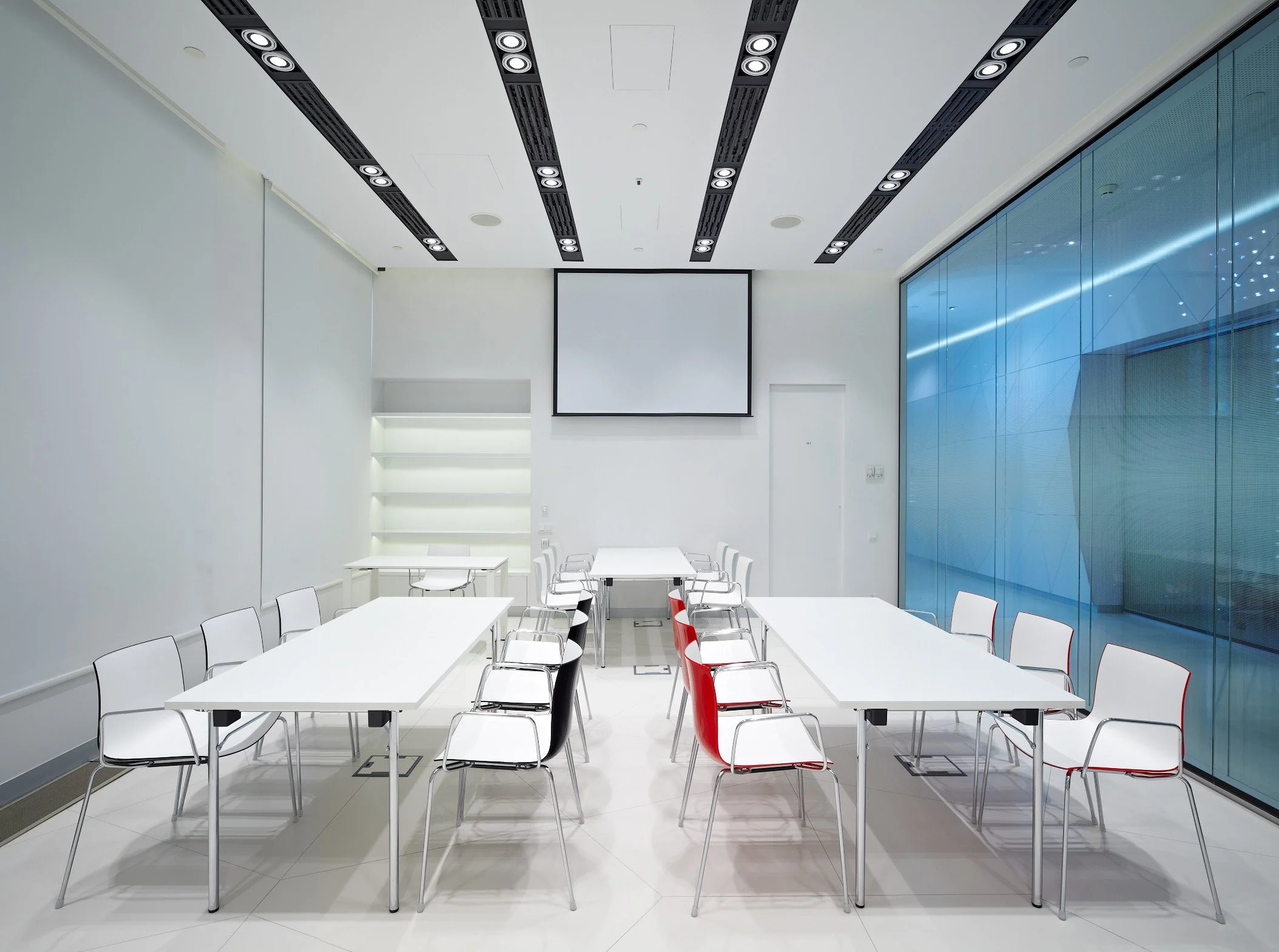
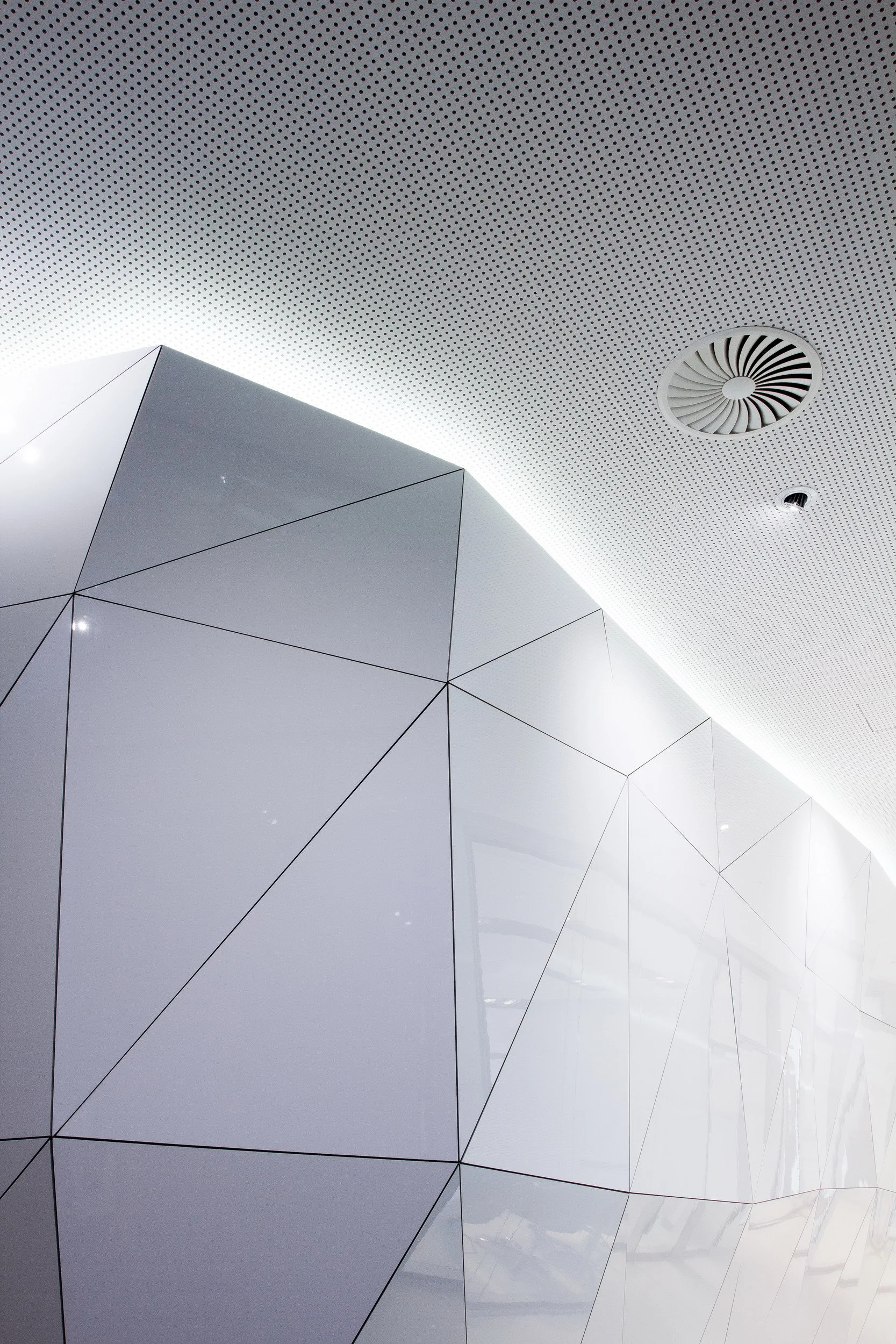
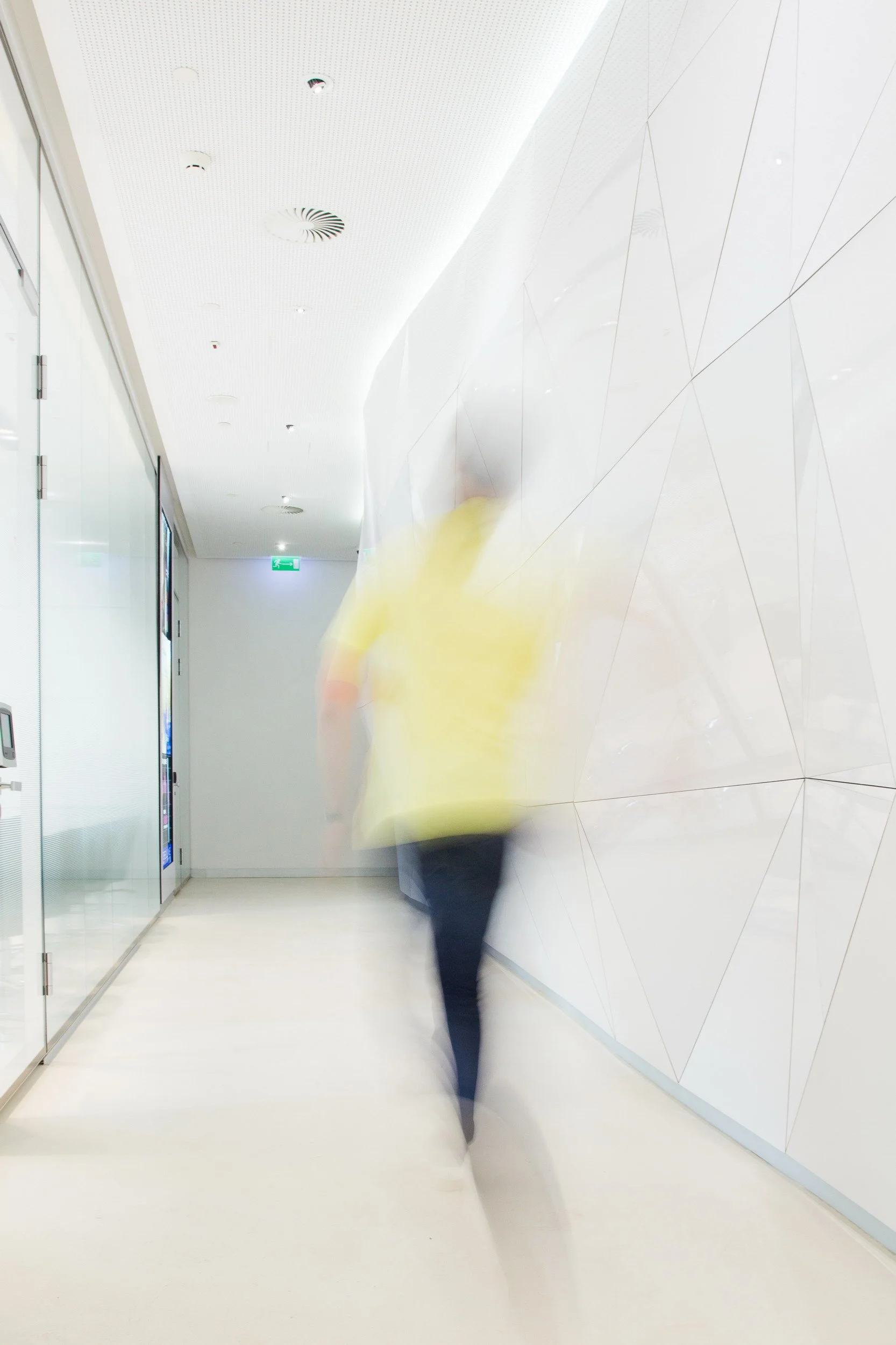
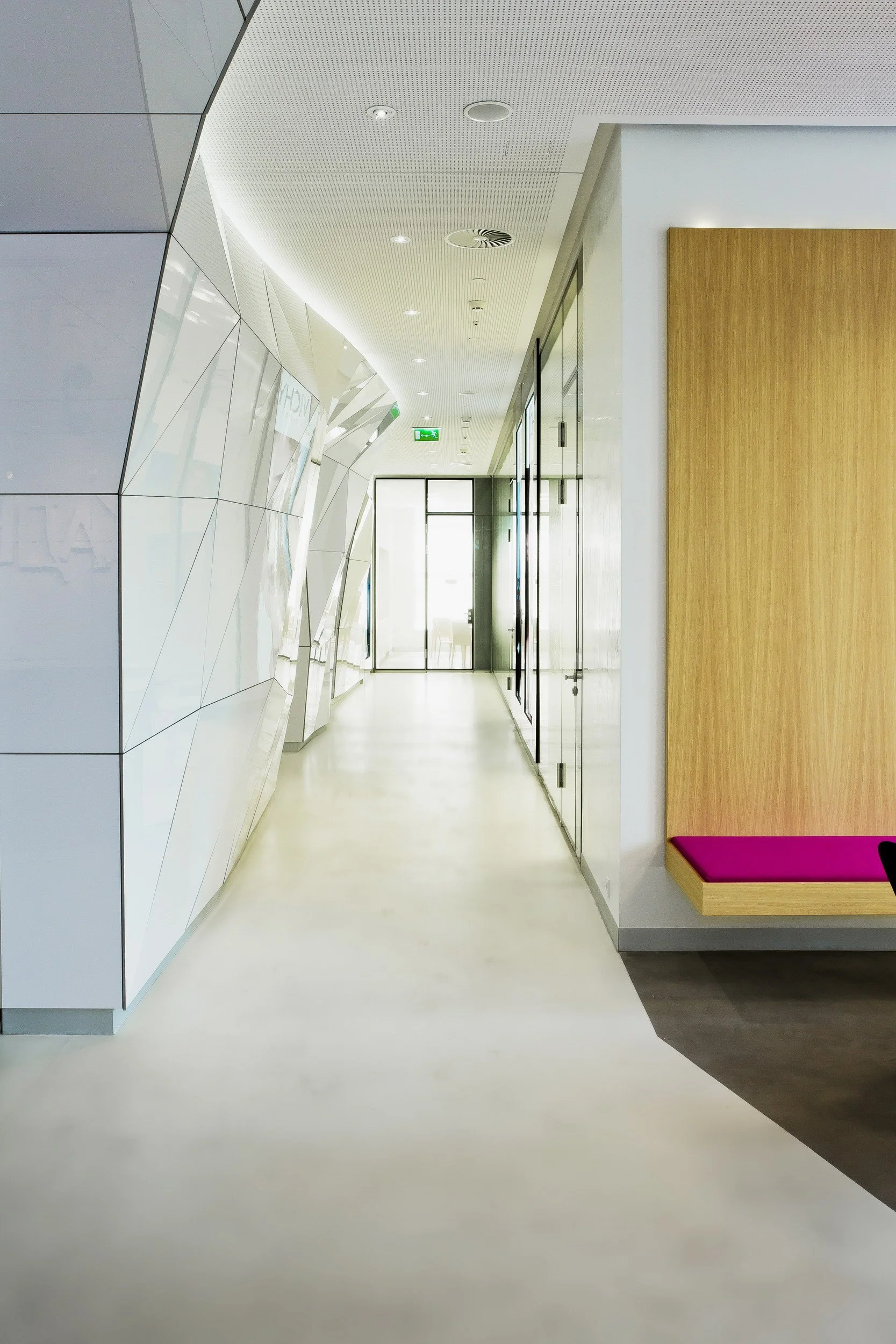
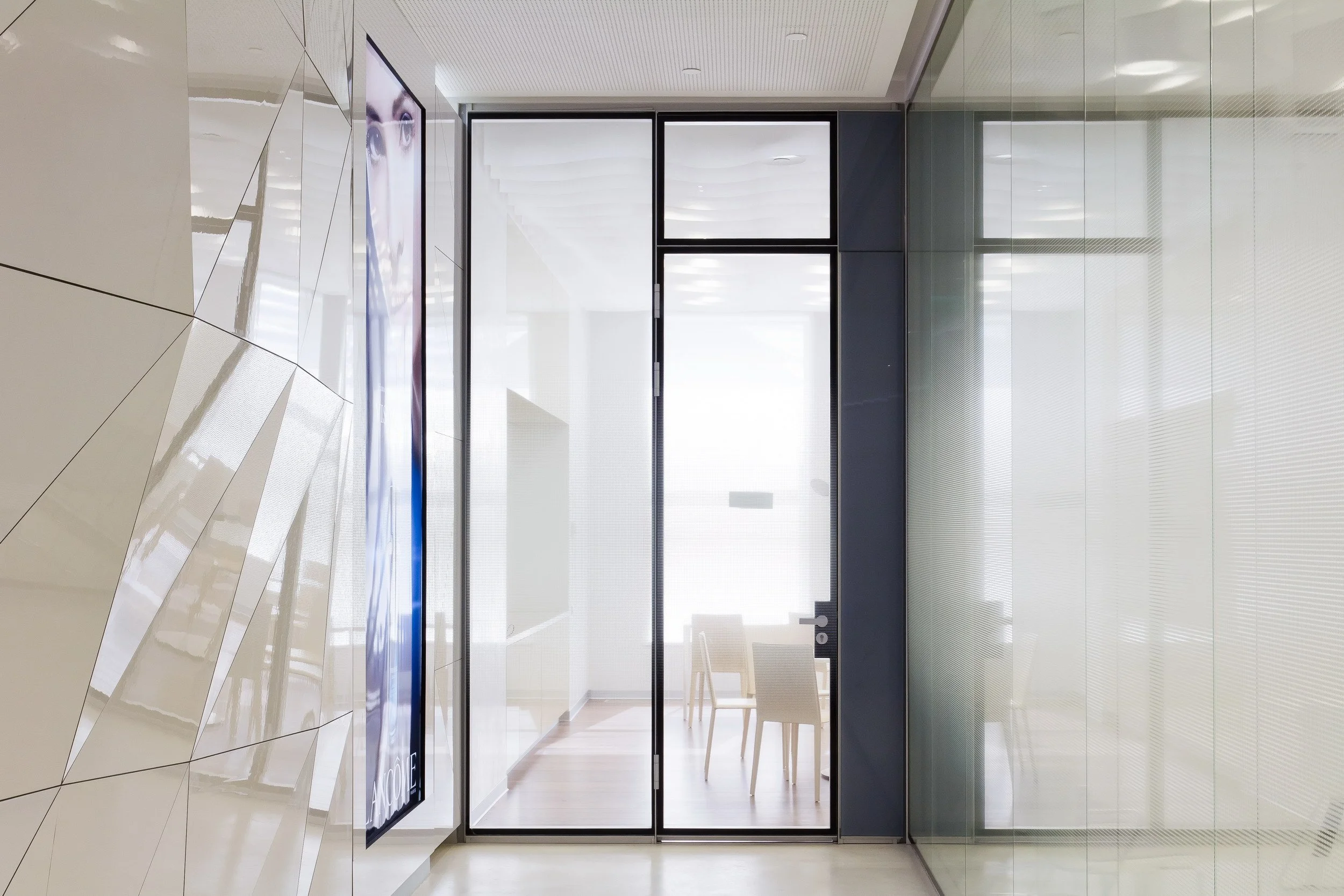
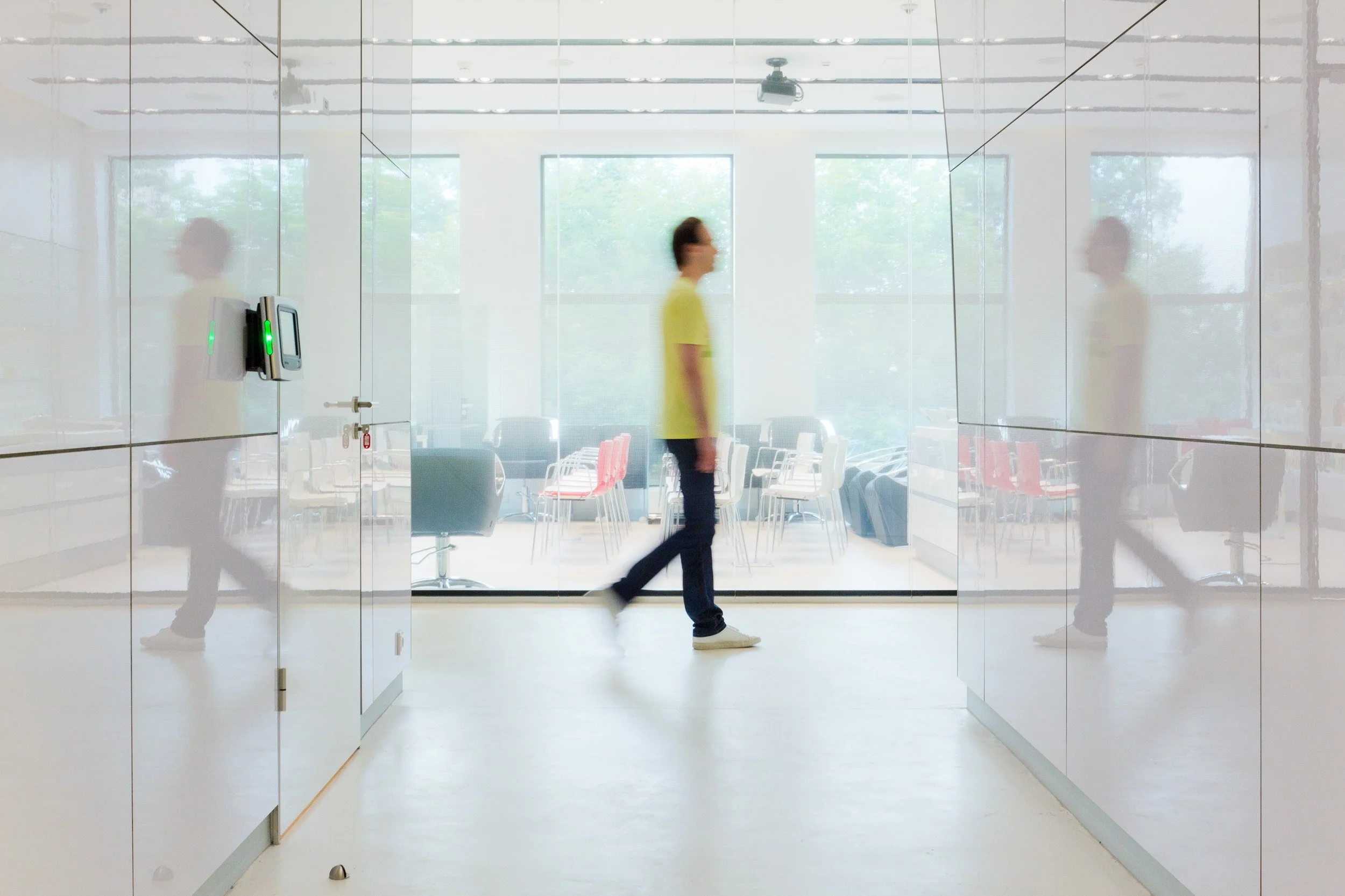
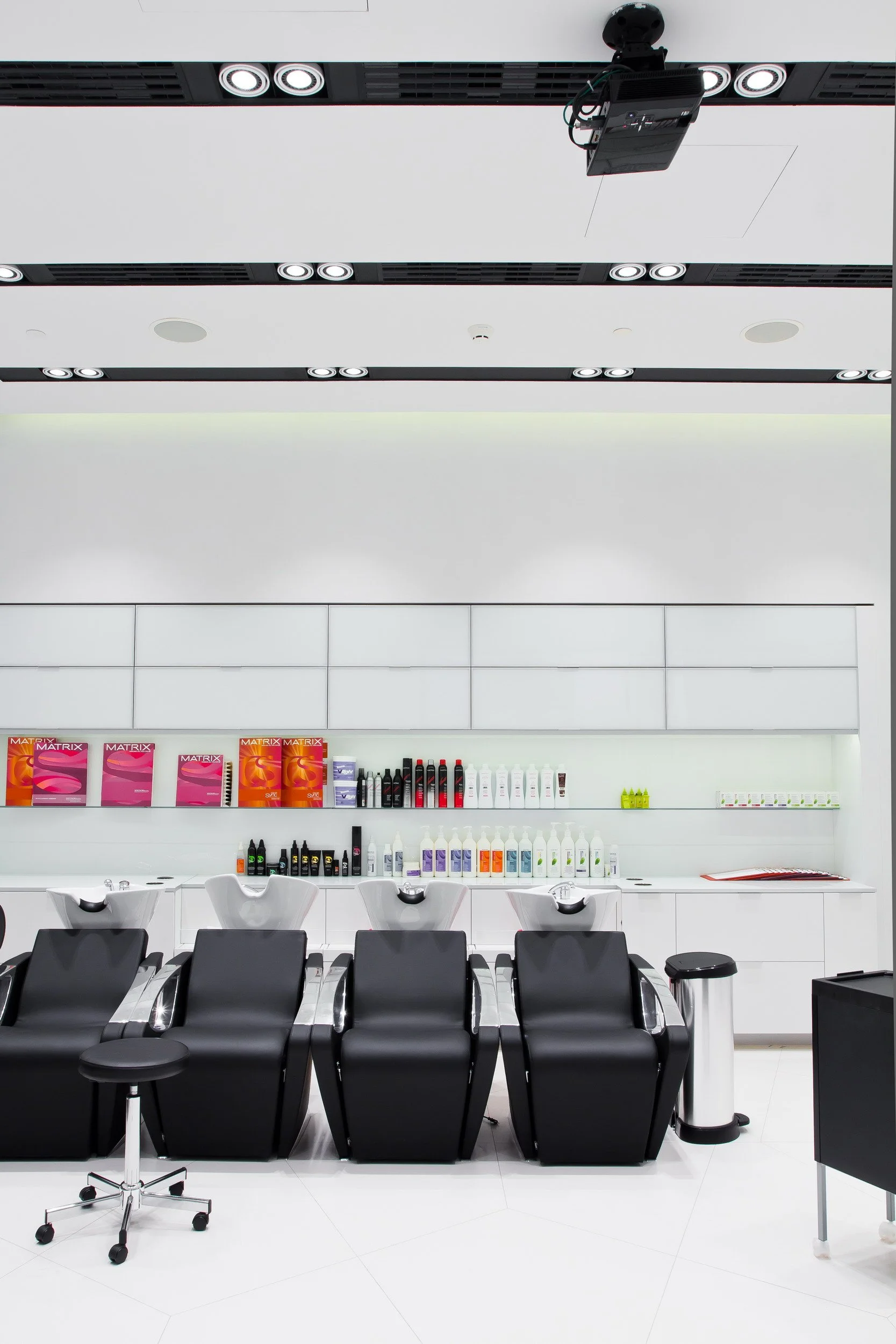
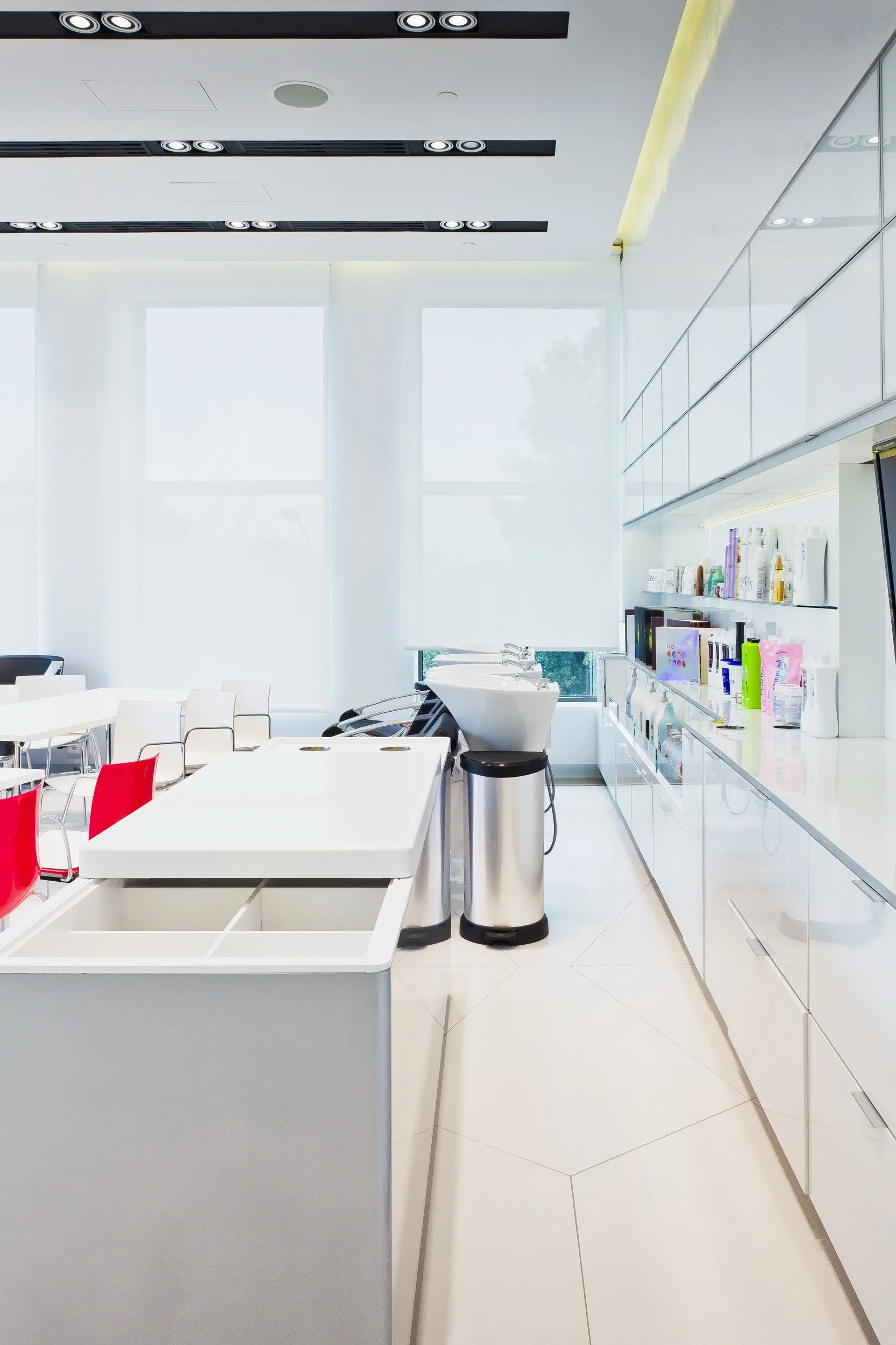
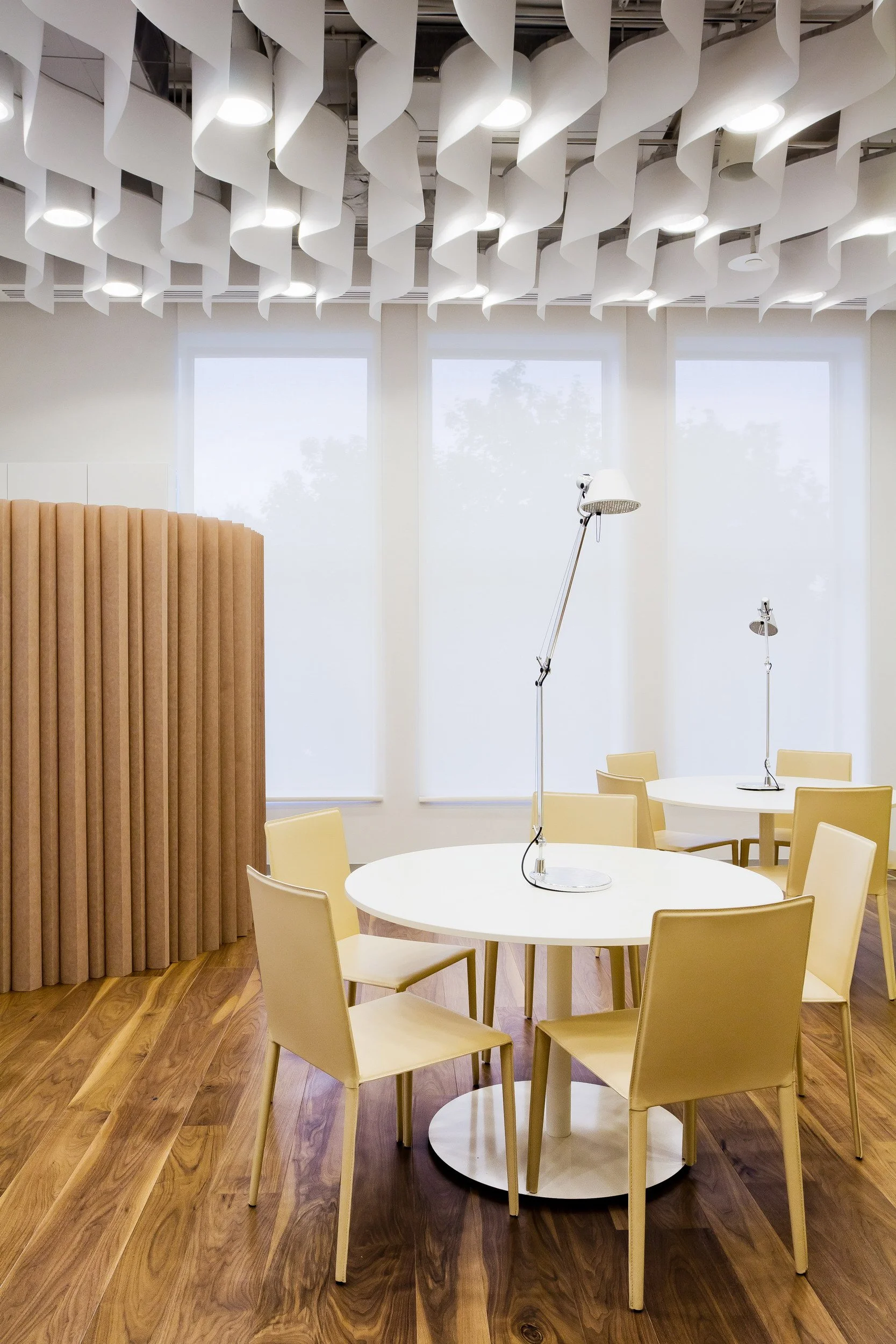
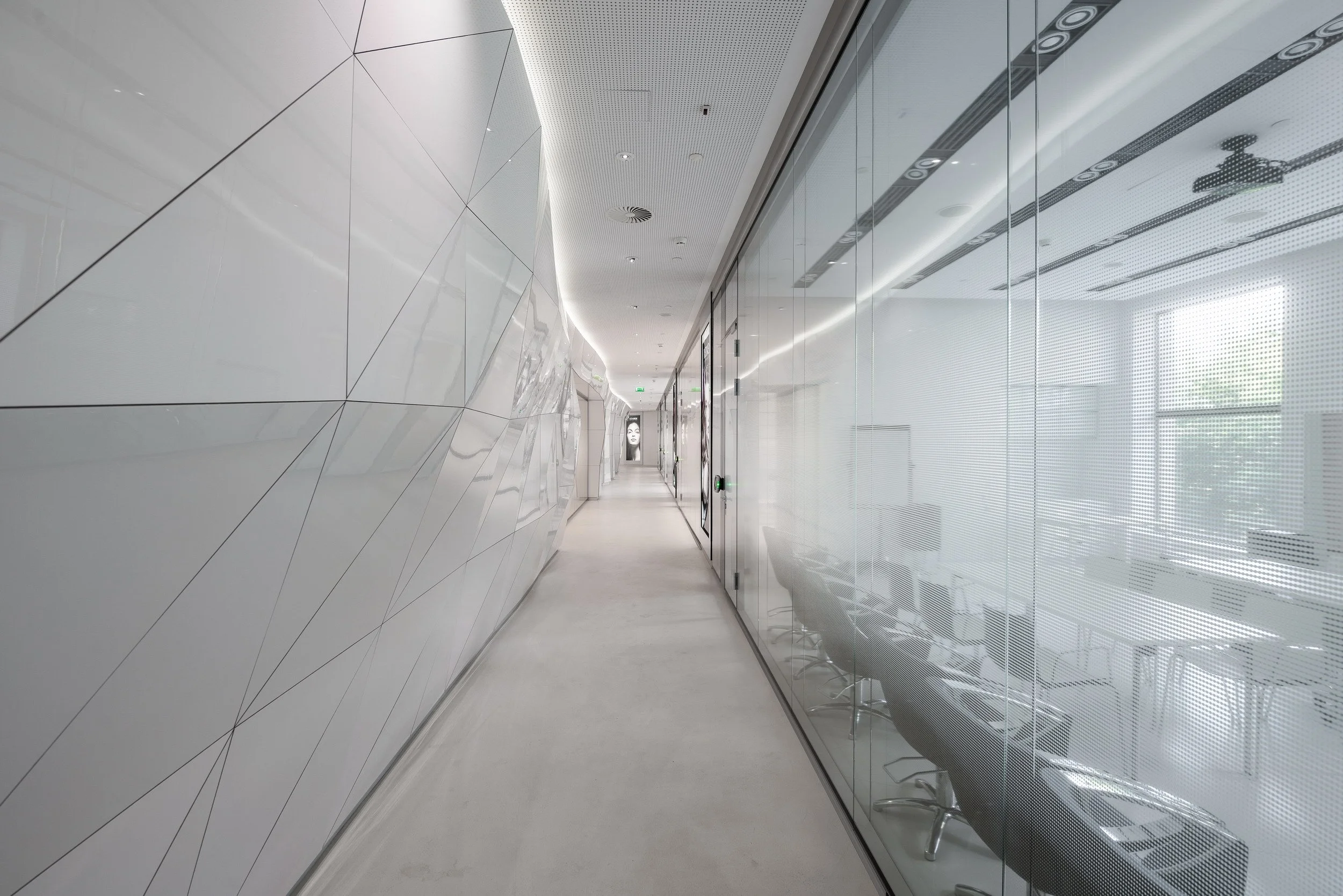
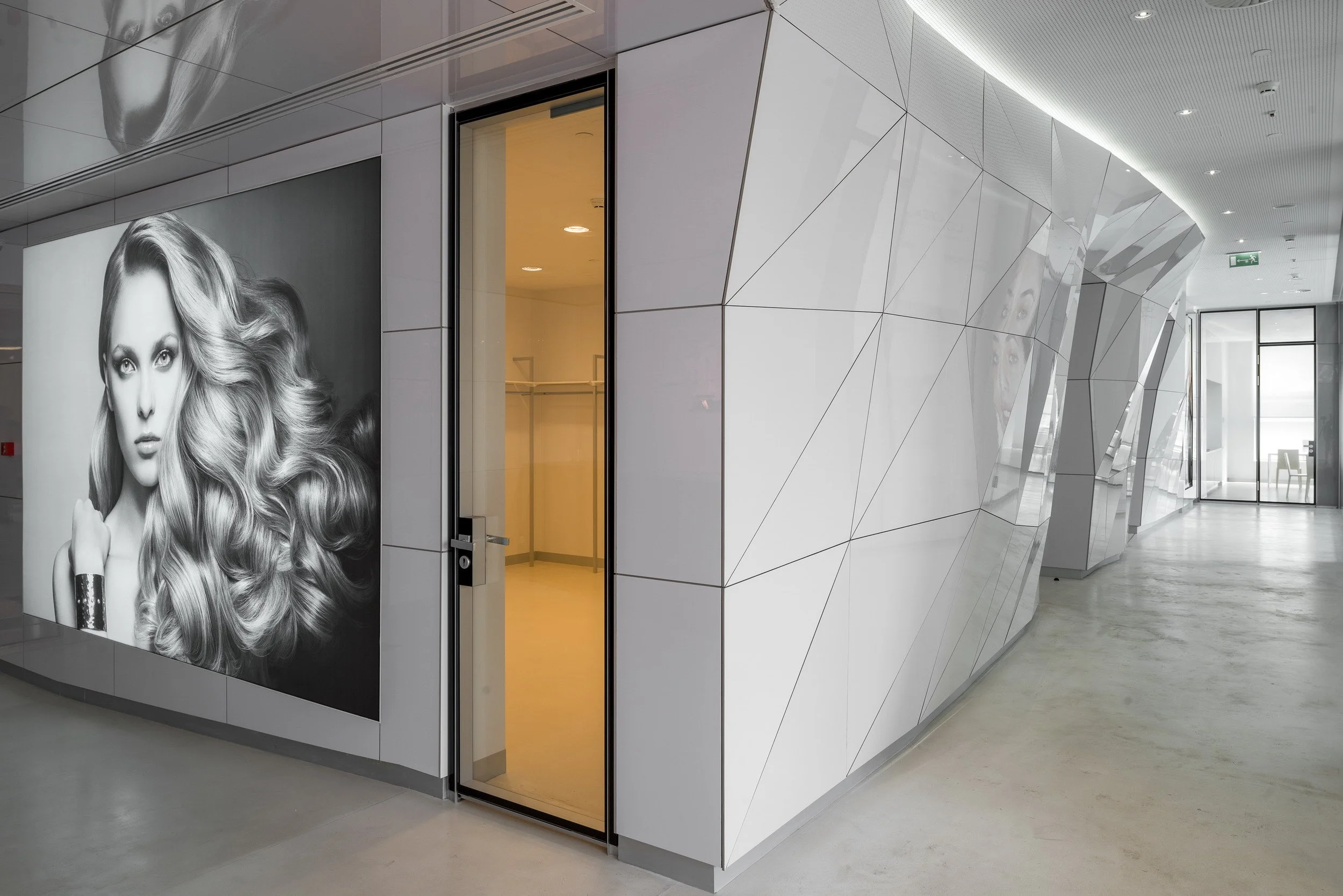
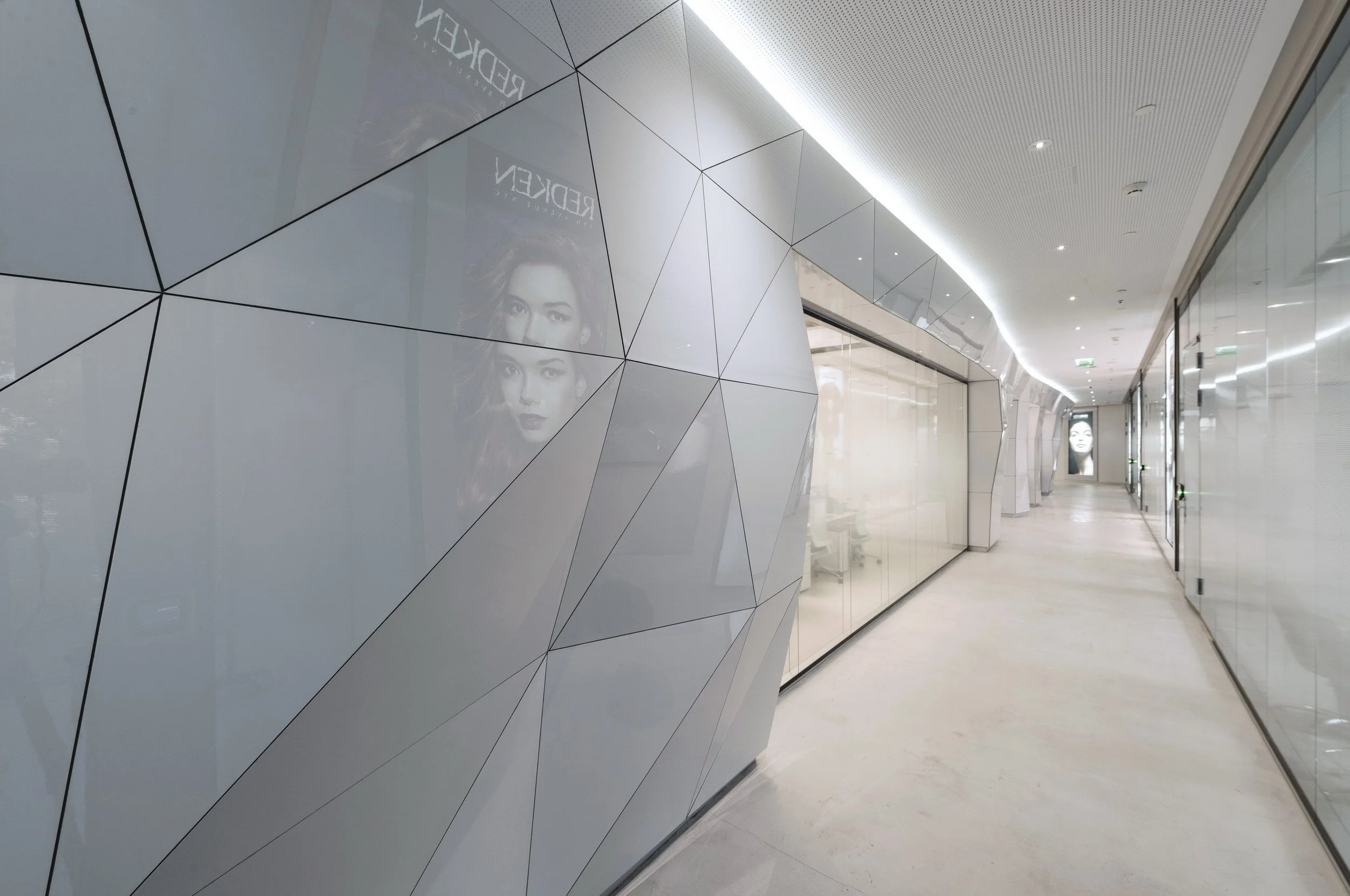
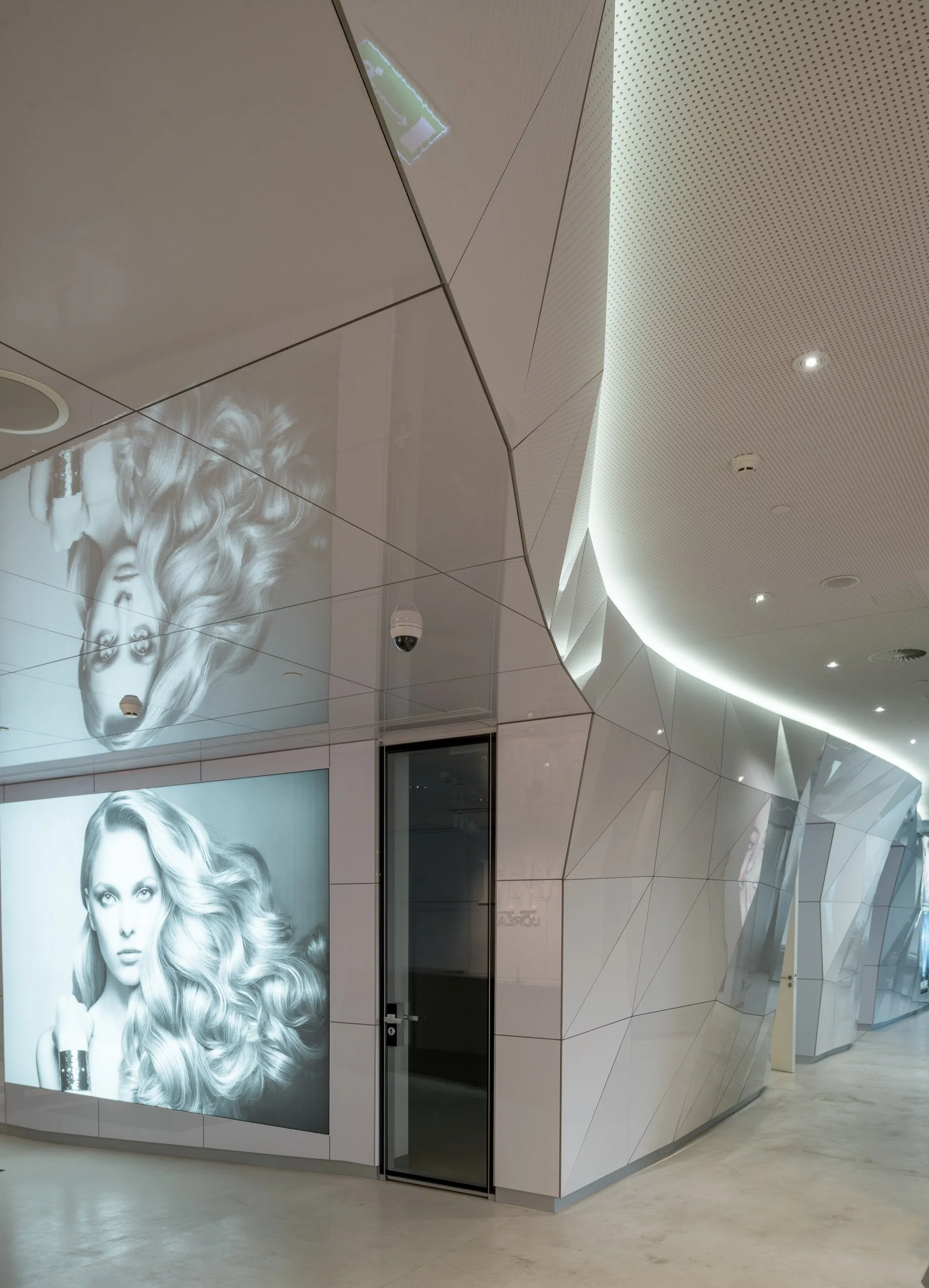
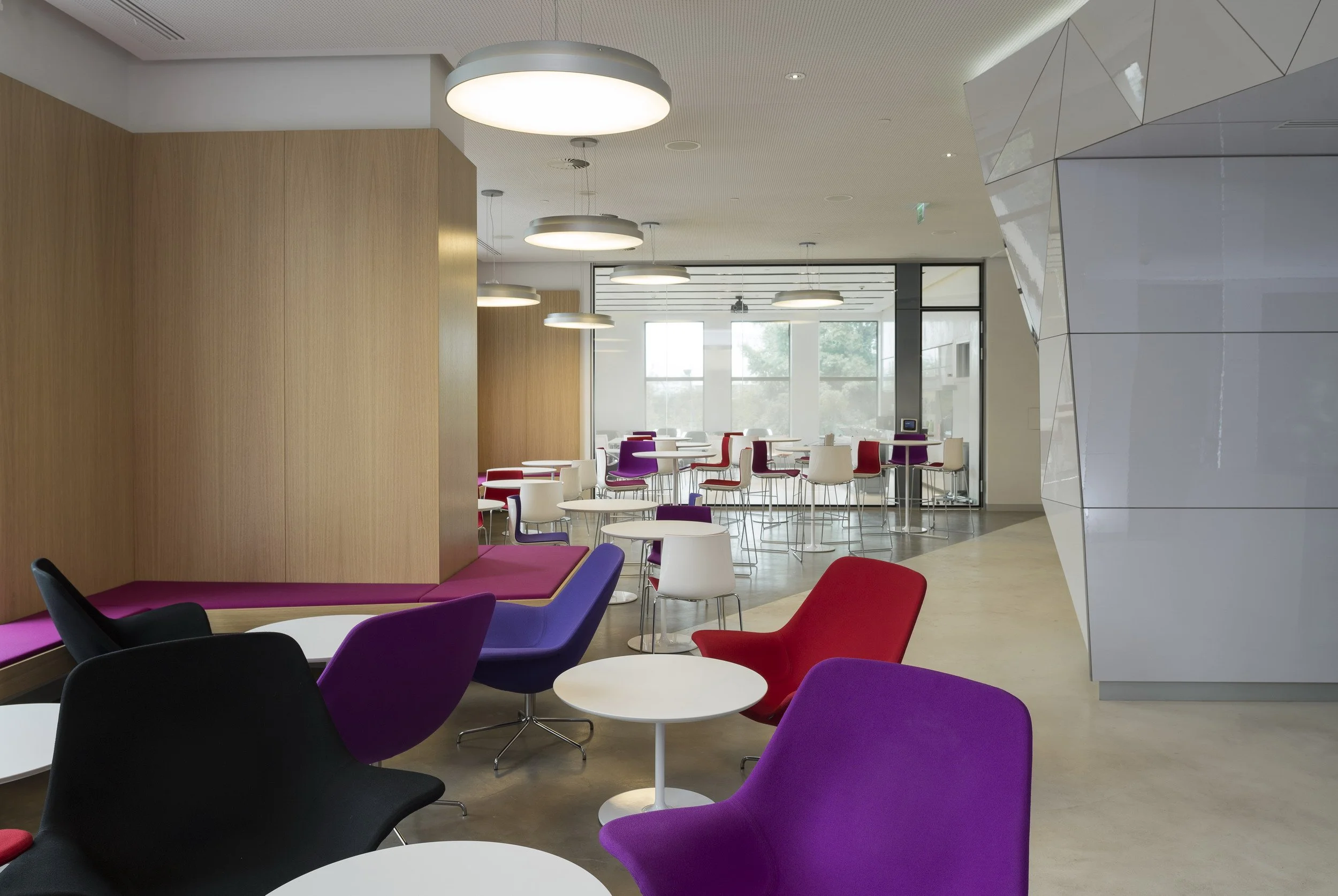
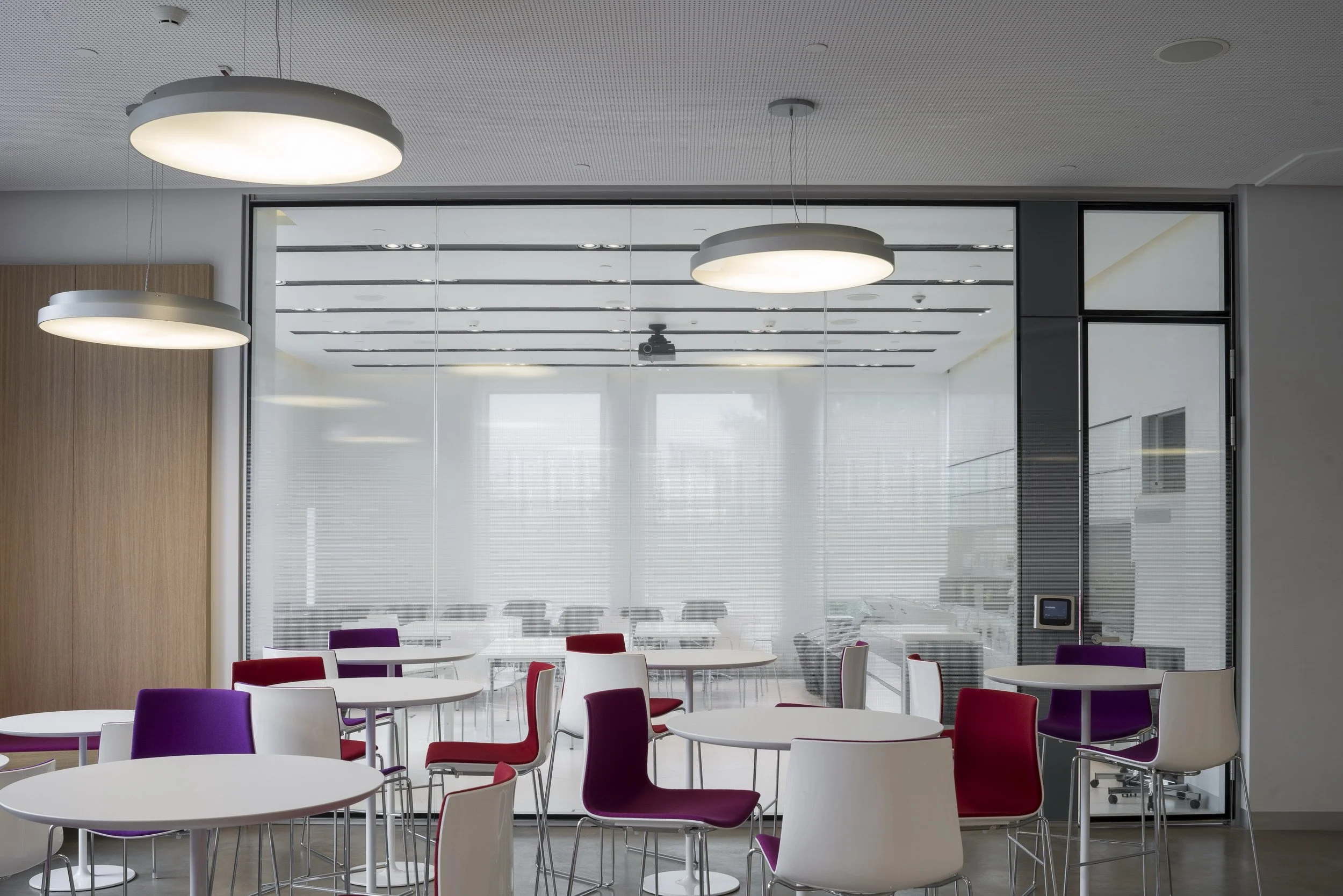
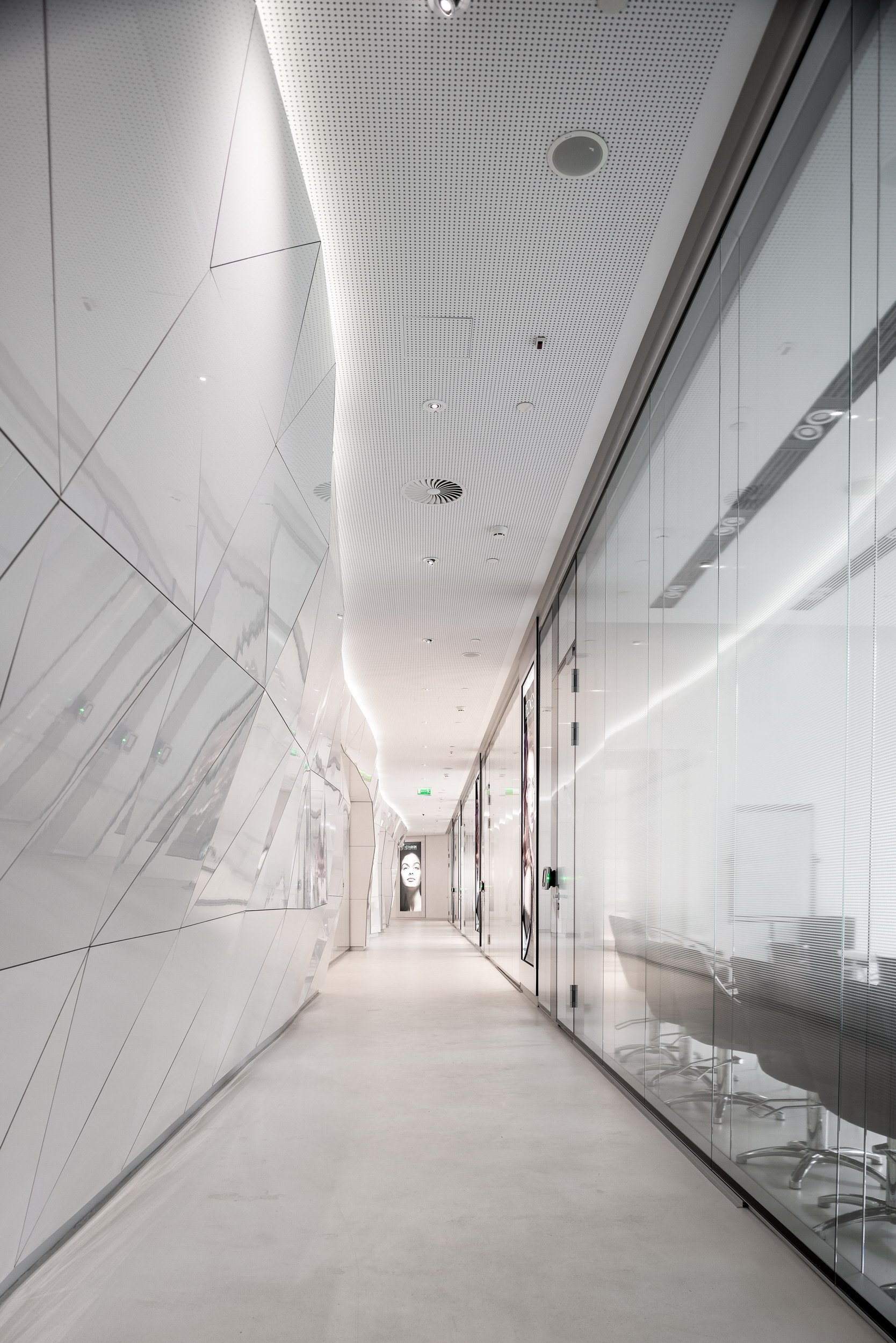
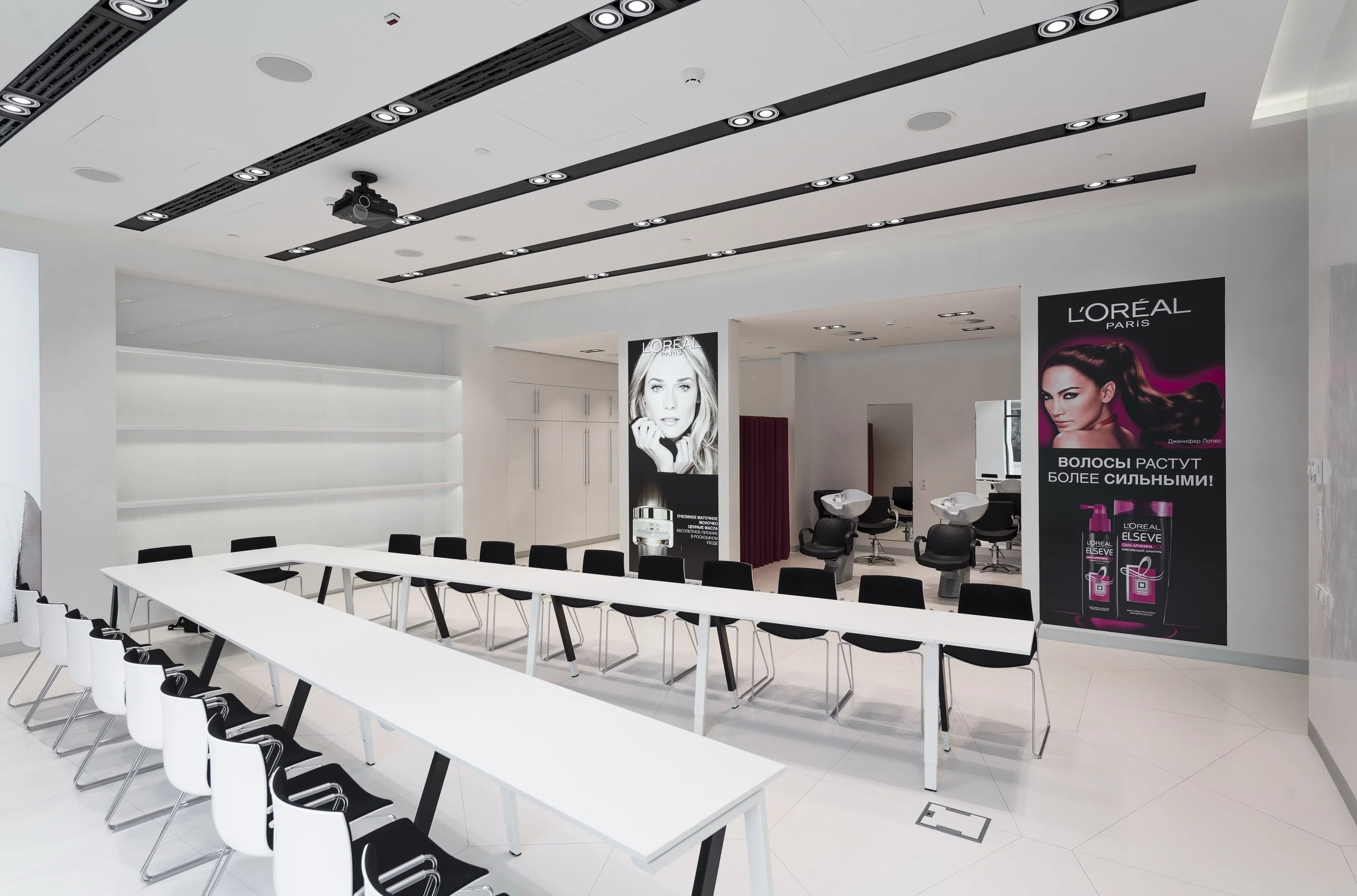
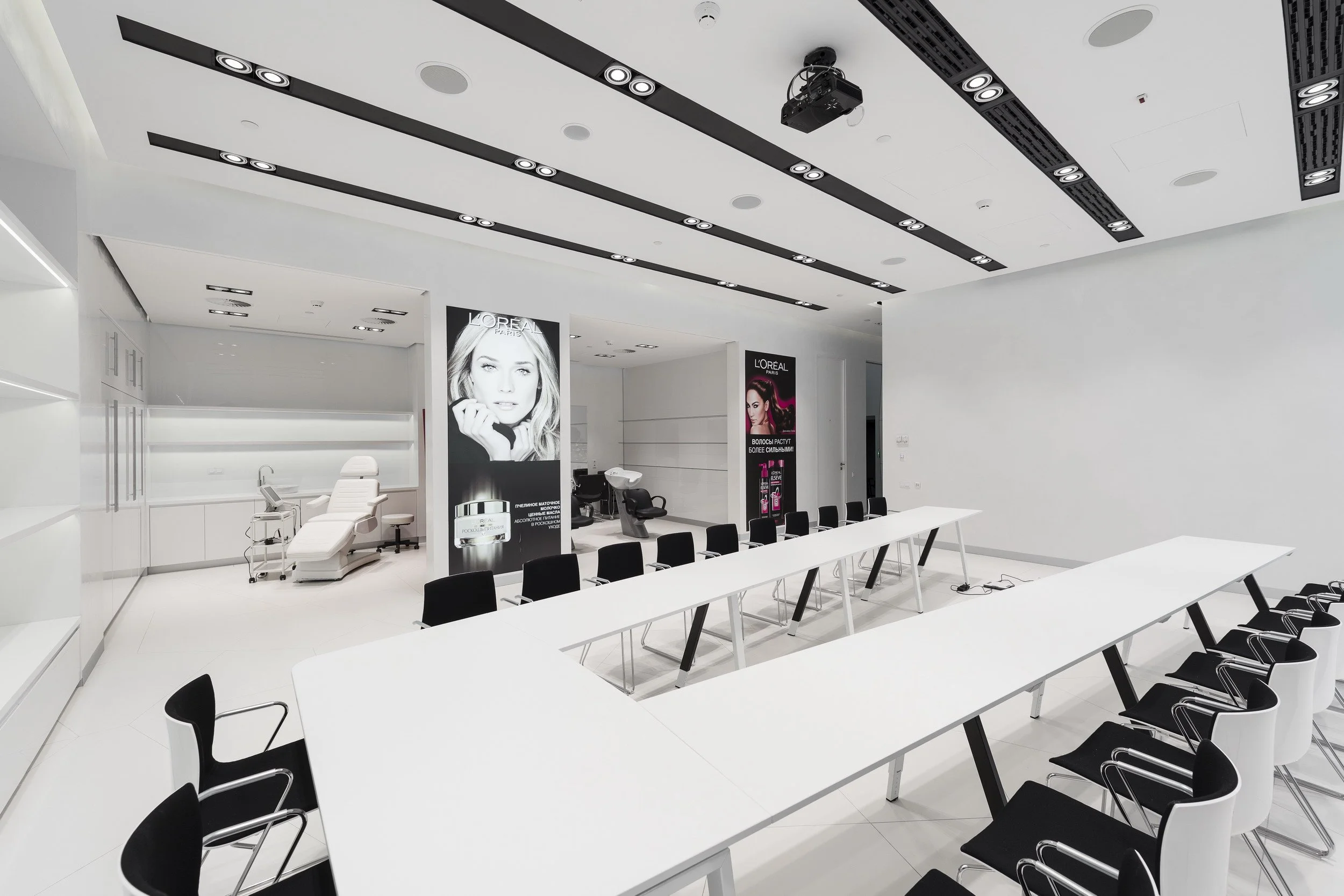
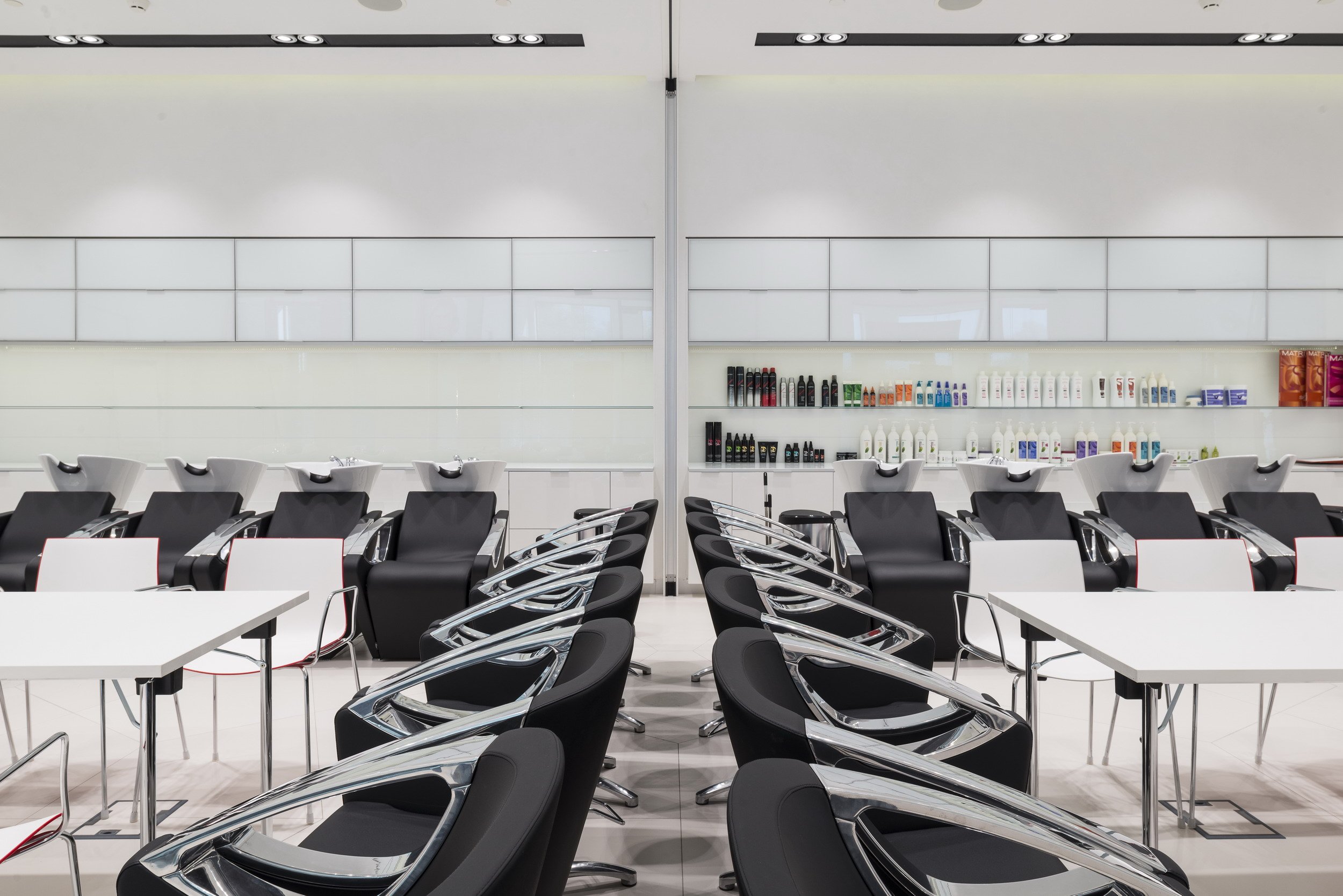
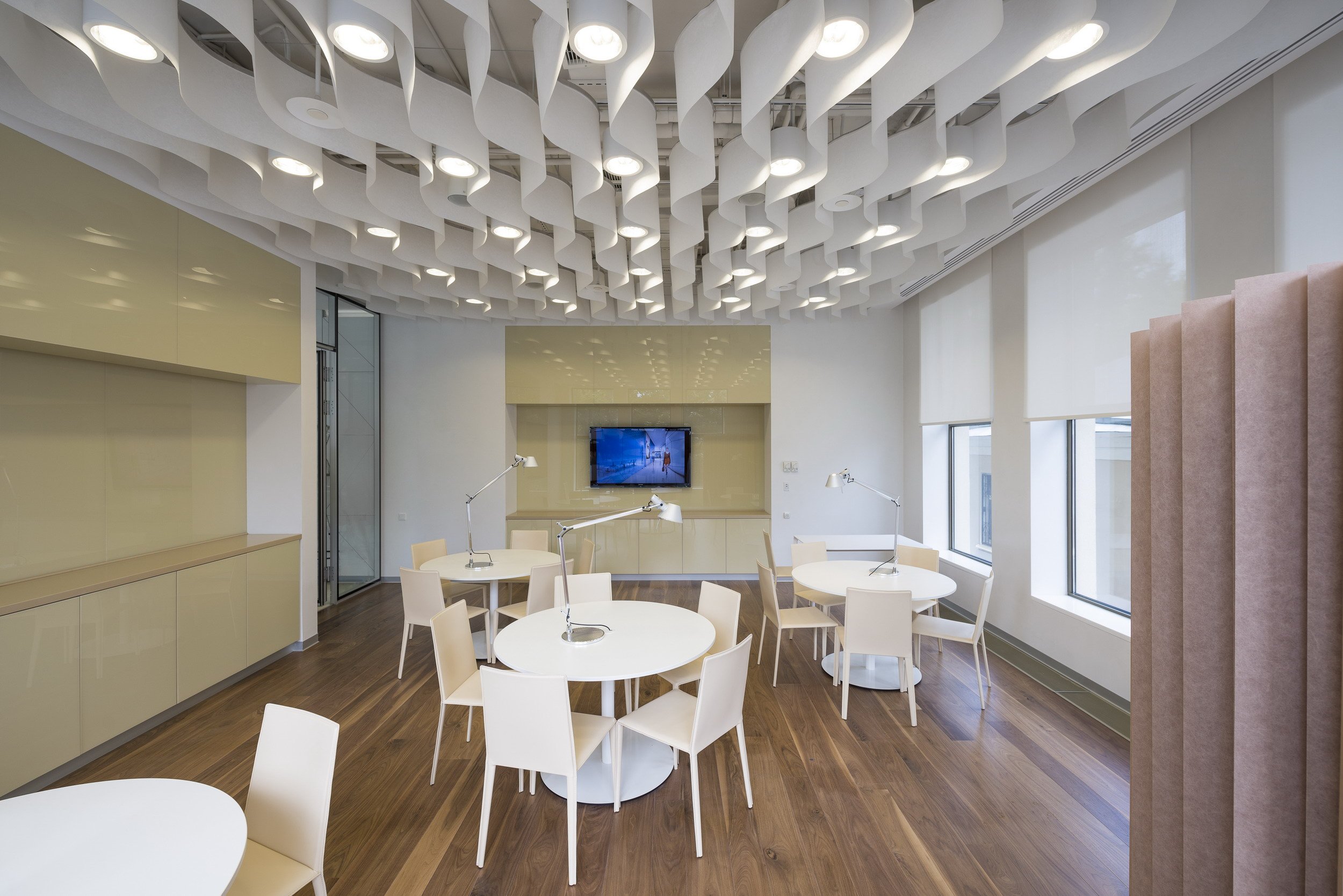
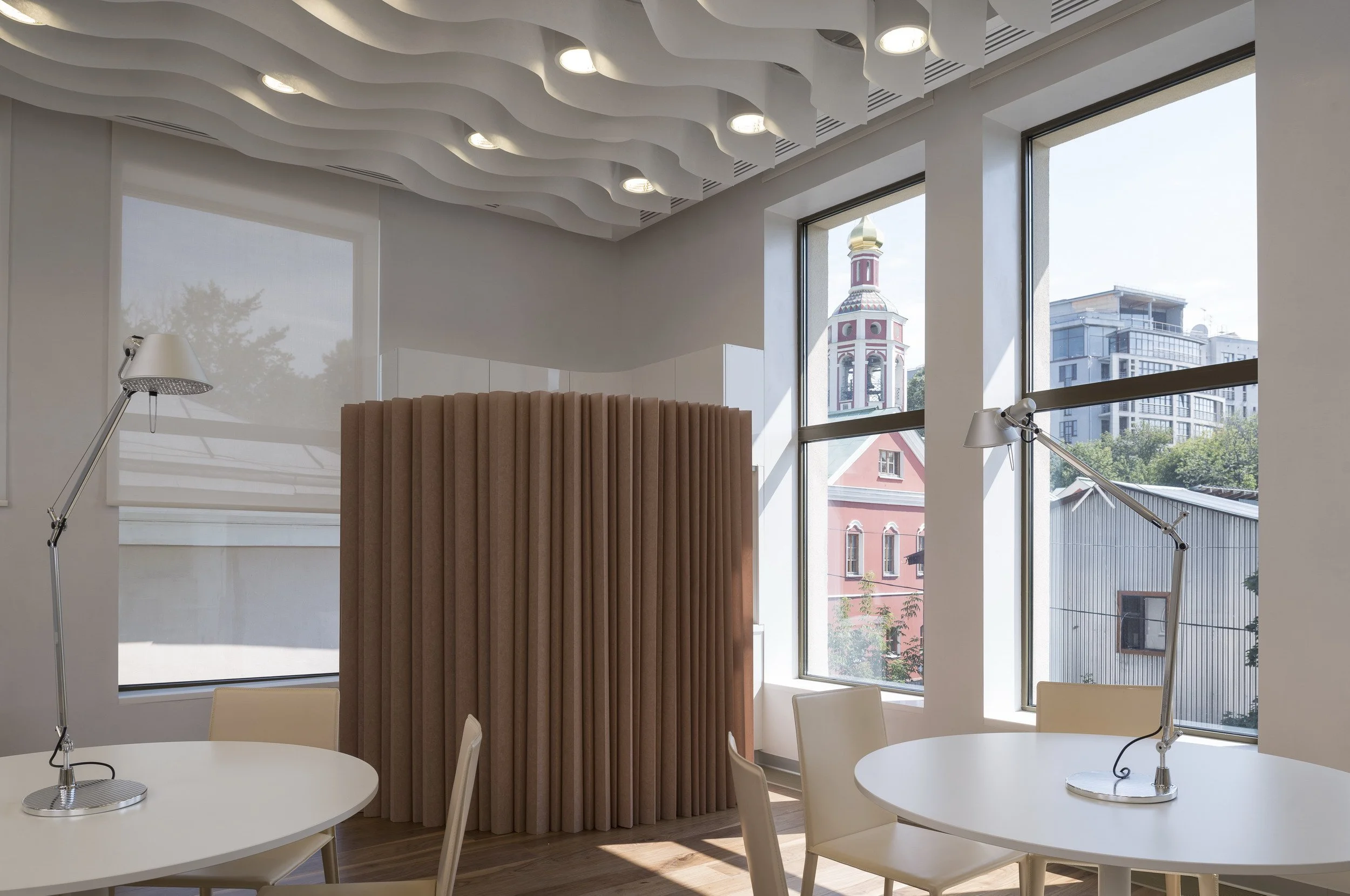
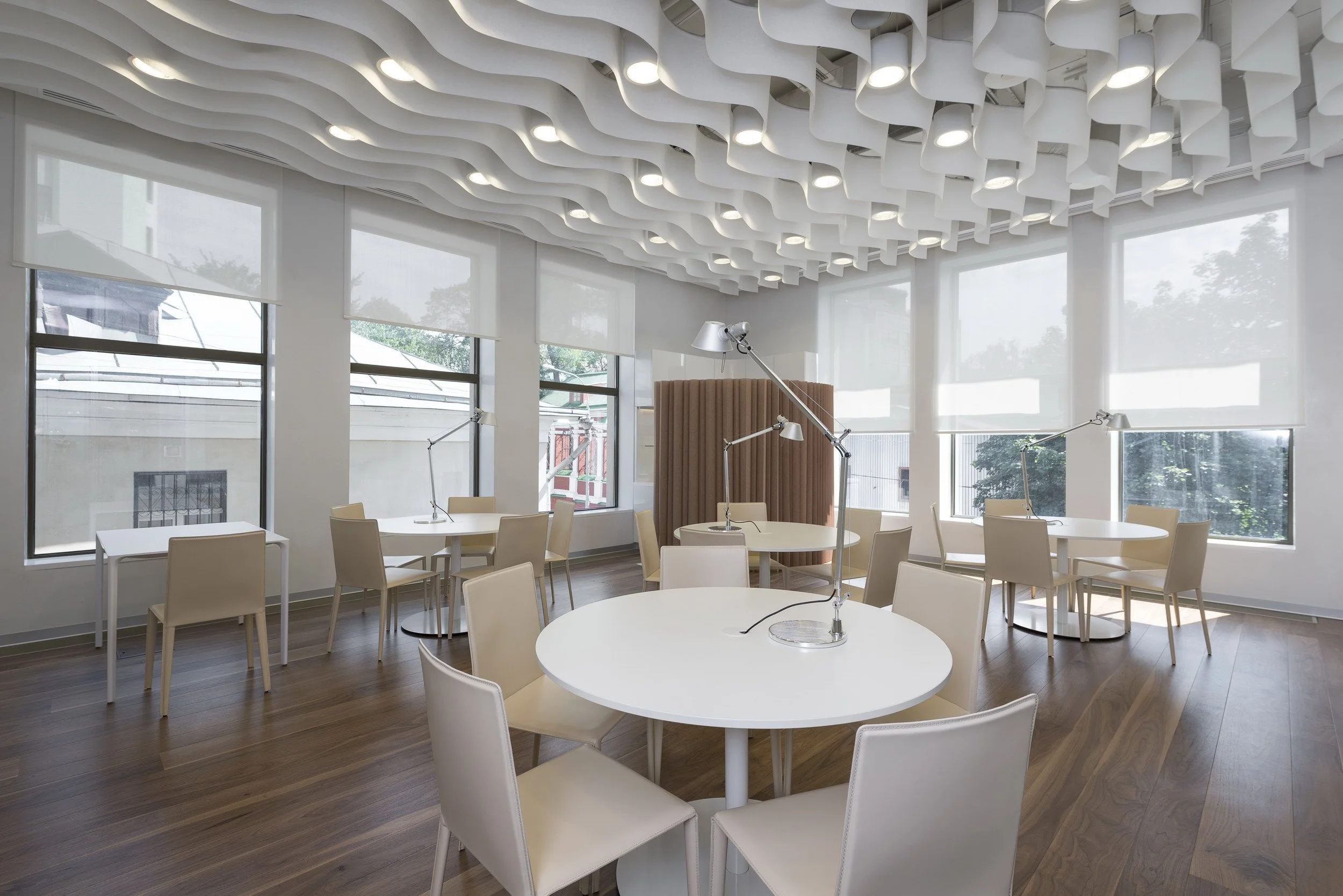
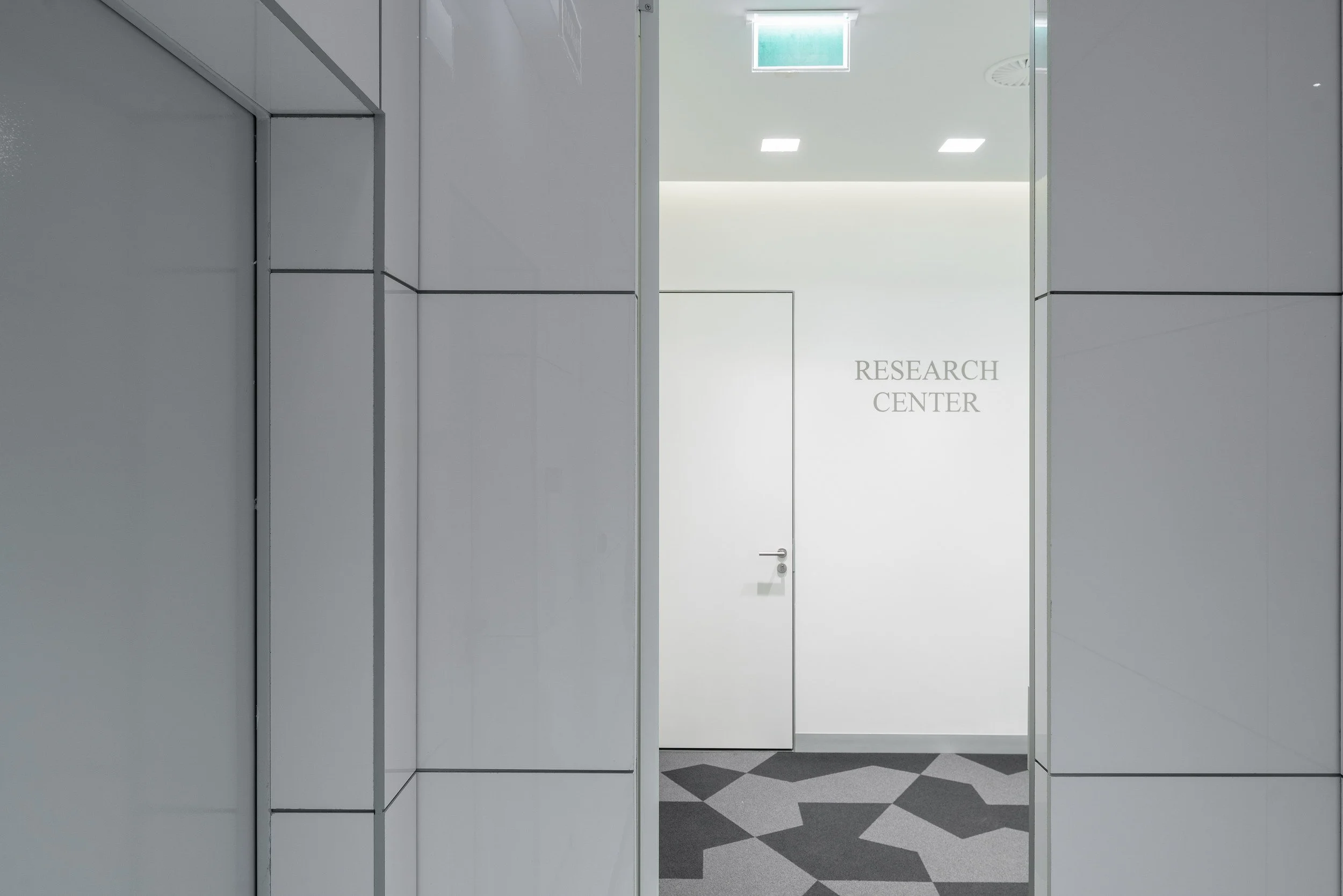
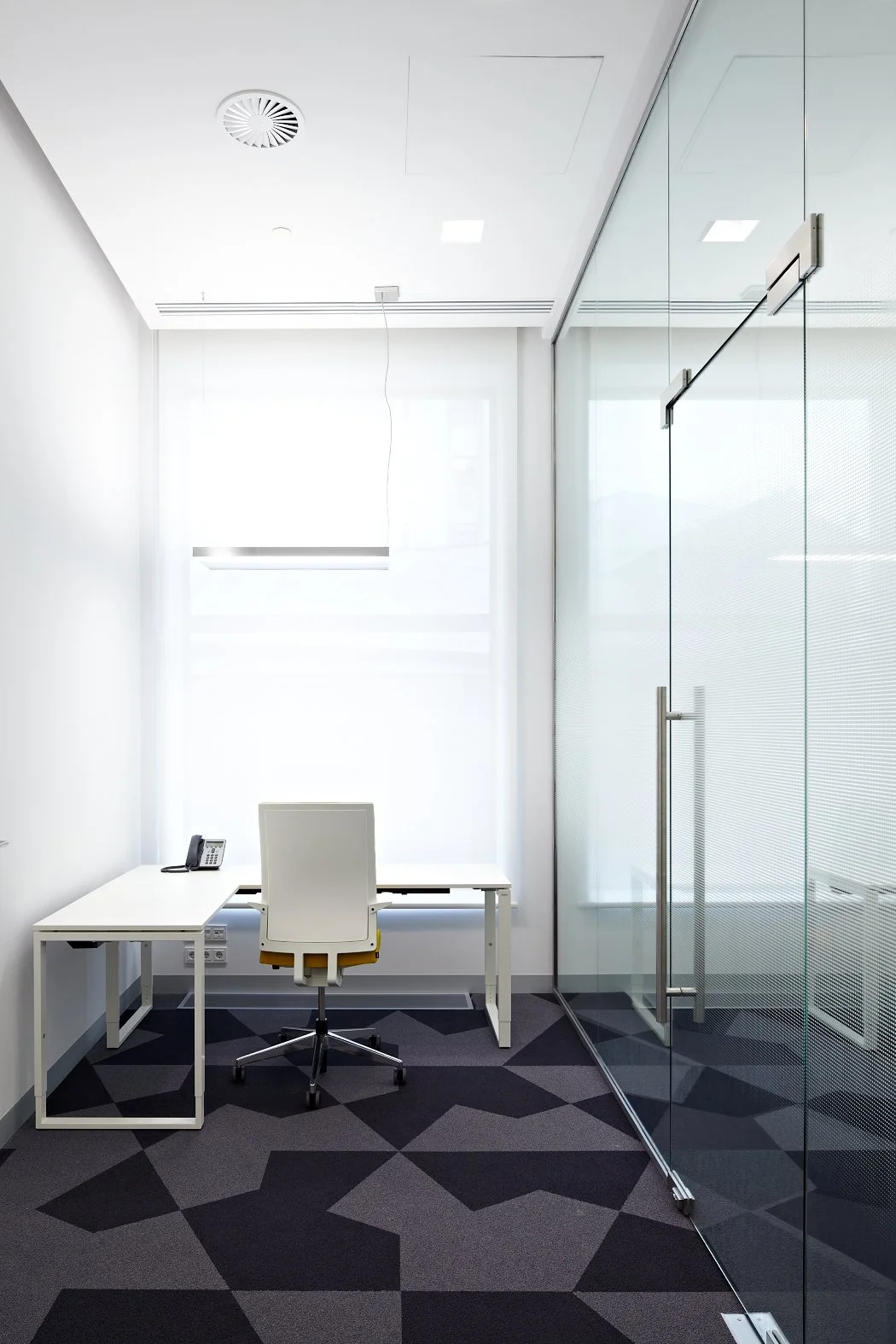
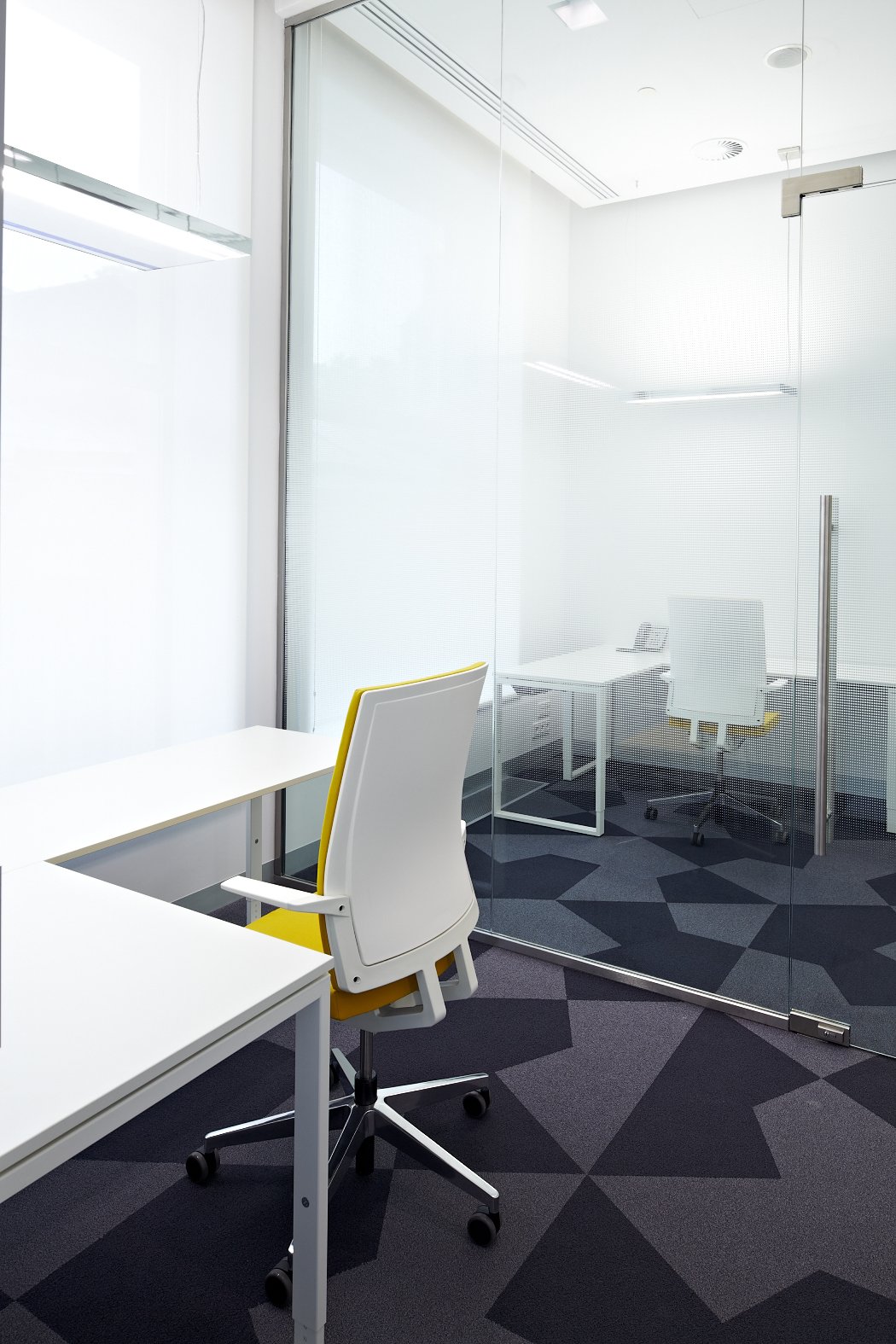
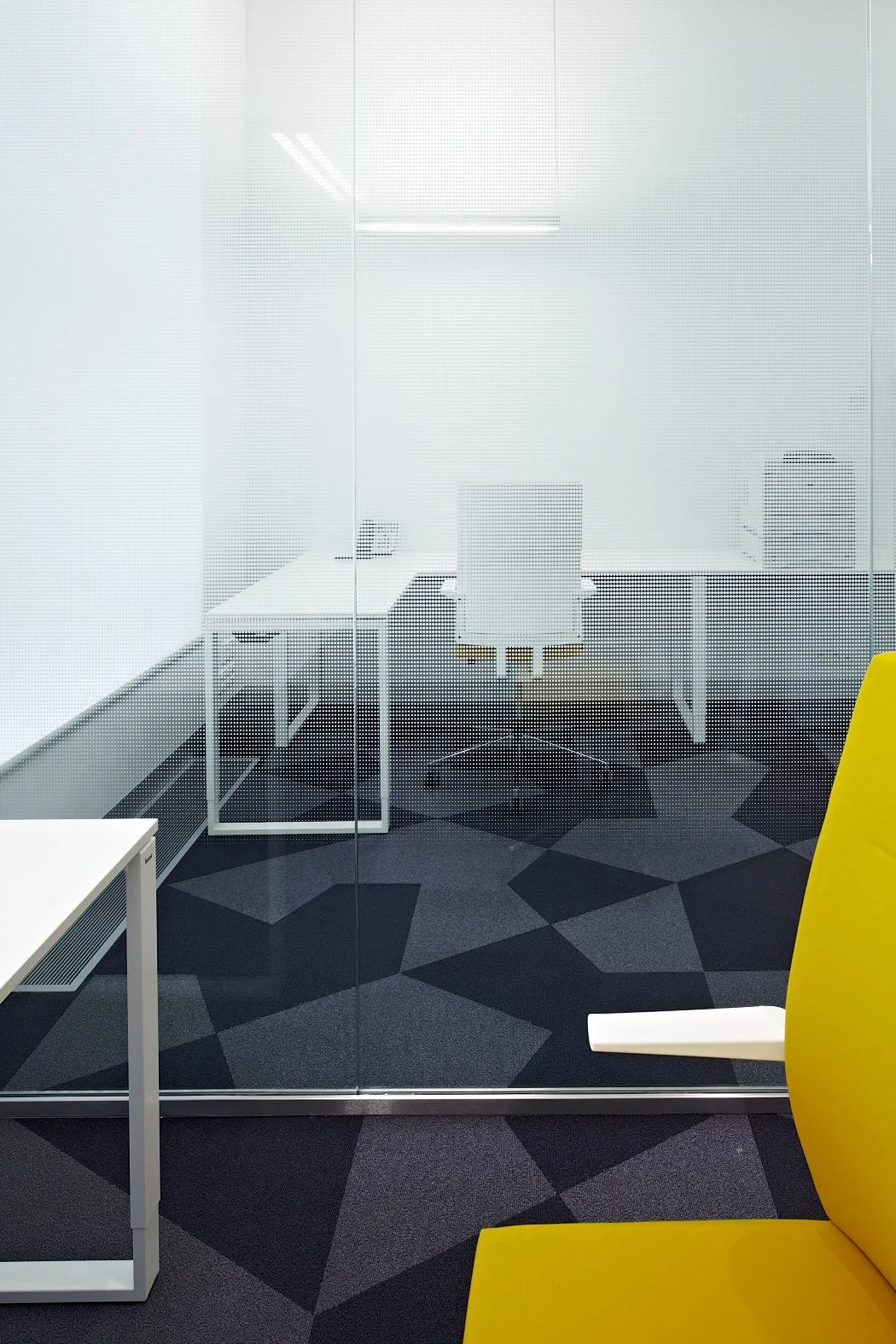
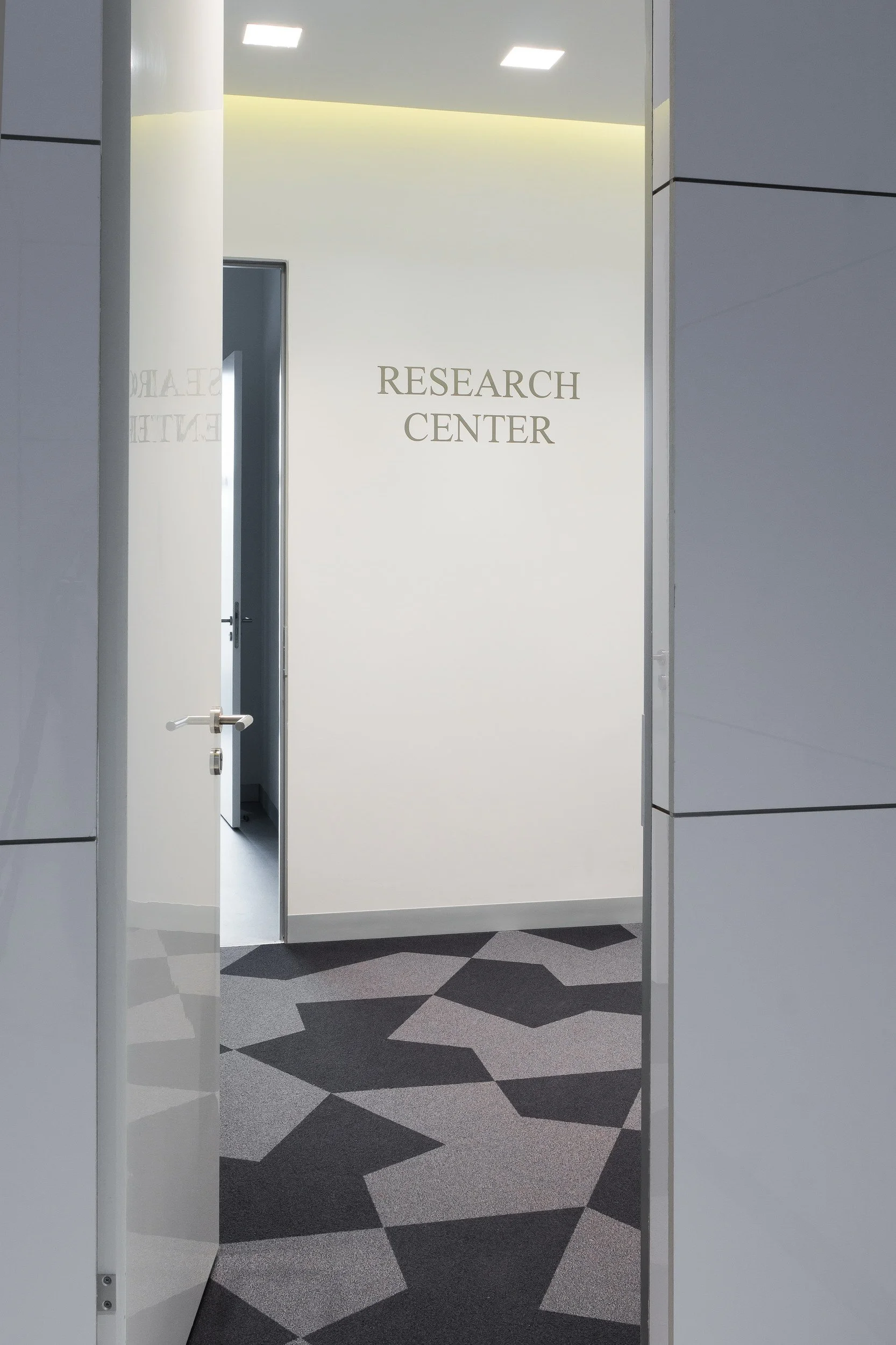
At the heart of the space, a sculptural polygonal structure extends through the interior, concealing the inner program and replacing conventional corridors. Acting more as a stage backdrop than a partition, this crumpled element guides circulation and creates an informal podium-like space, introducing a sense of scenography while keeping orientation clear throughout the academy. The layout makes the most of the existing space, accommodating a maximum number of classrooms while placing reception at the center and combining the café and waiting area into a shared, welcoming hub. Premises that benefit from natural light are arranged along the perimeter, opening toward one of the city’s central districts. At the core of the academy, utilitarian and restricted functions — including areas requiring quiet, privacy, or technical support — are organized to maintain both efficiency and discretion. The curriculum includes an intensive program of seminars and training sessions, making it necessary for classrooms to adapt to different formats ranging from lectures to hands-on practice. As a result, the teaching spaces were designed as flexible environments equipped with movable screens and full-height sliding partitions, allowing rapid reconfiguration and separation between theoretical and practical zones. These requirements also introduced significant technical challenges during the design process, including increased demands on ventilation, electrical capacity, and specialized lighting conditions necessary for professional instruction. Storage was carefully incorporated to support these varied scenarios, accommodating equipment, tools, and stackable furniture required for different setups.
Project team: Evgeniy Shchetinkin, Elizaveta Semeonova, Vladimir Sagaydak, Vladimir Garanin | In collaboration with UNK project Photo: Alexey Zarodov, Yuri Palmin, Bene