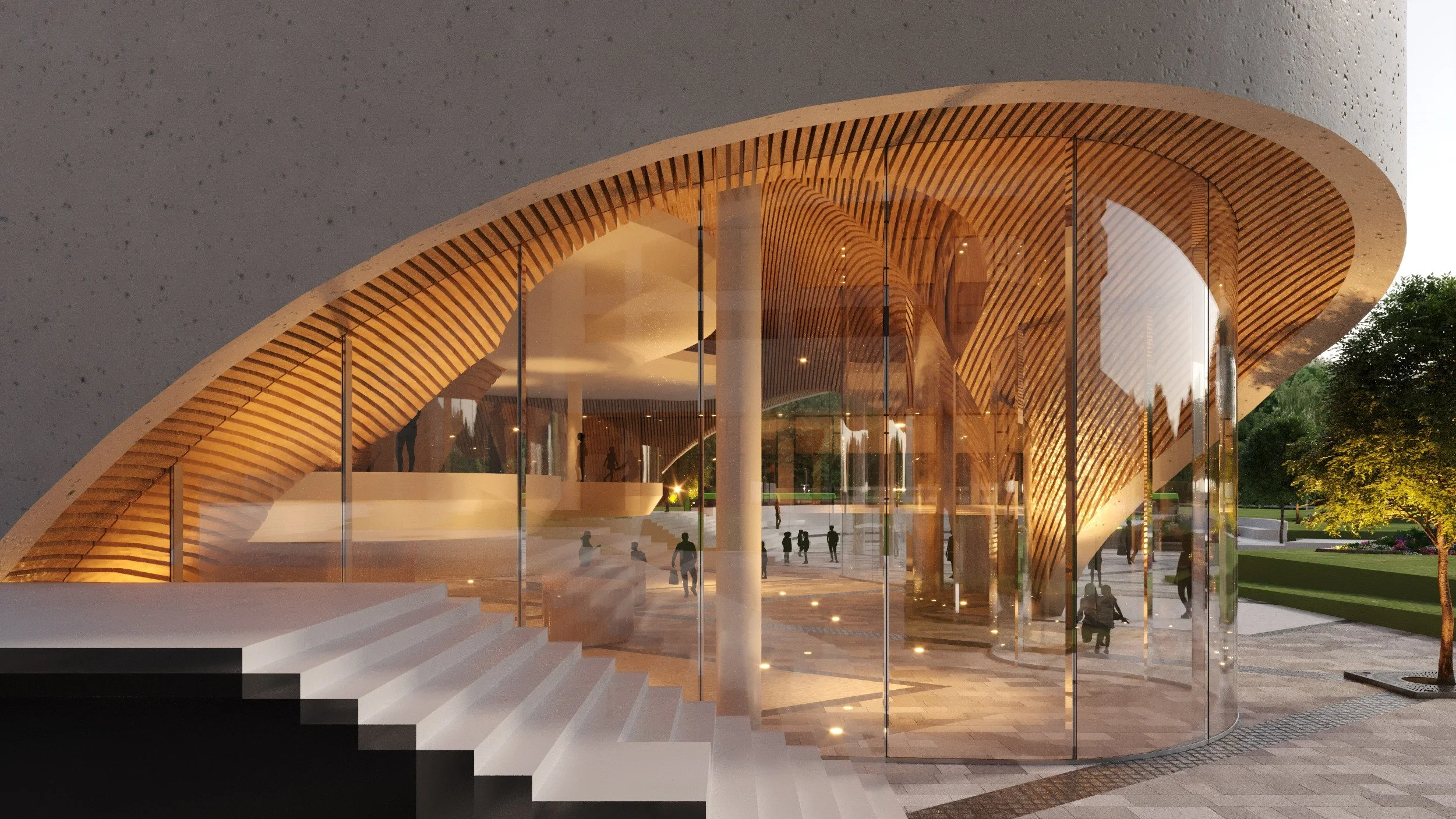
Sats Theater

Object: New Small Stage of Natalia Sats Theater
Function: Cultural Art Center, Landscape Park
Client: City Akimat Construction Management
Location: Shalyapina str. 22, Almaty
Project: 2023, Total Area: 13200 m2
Status: Architectural Concept

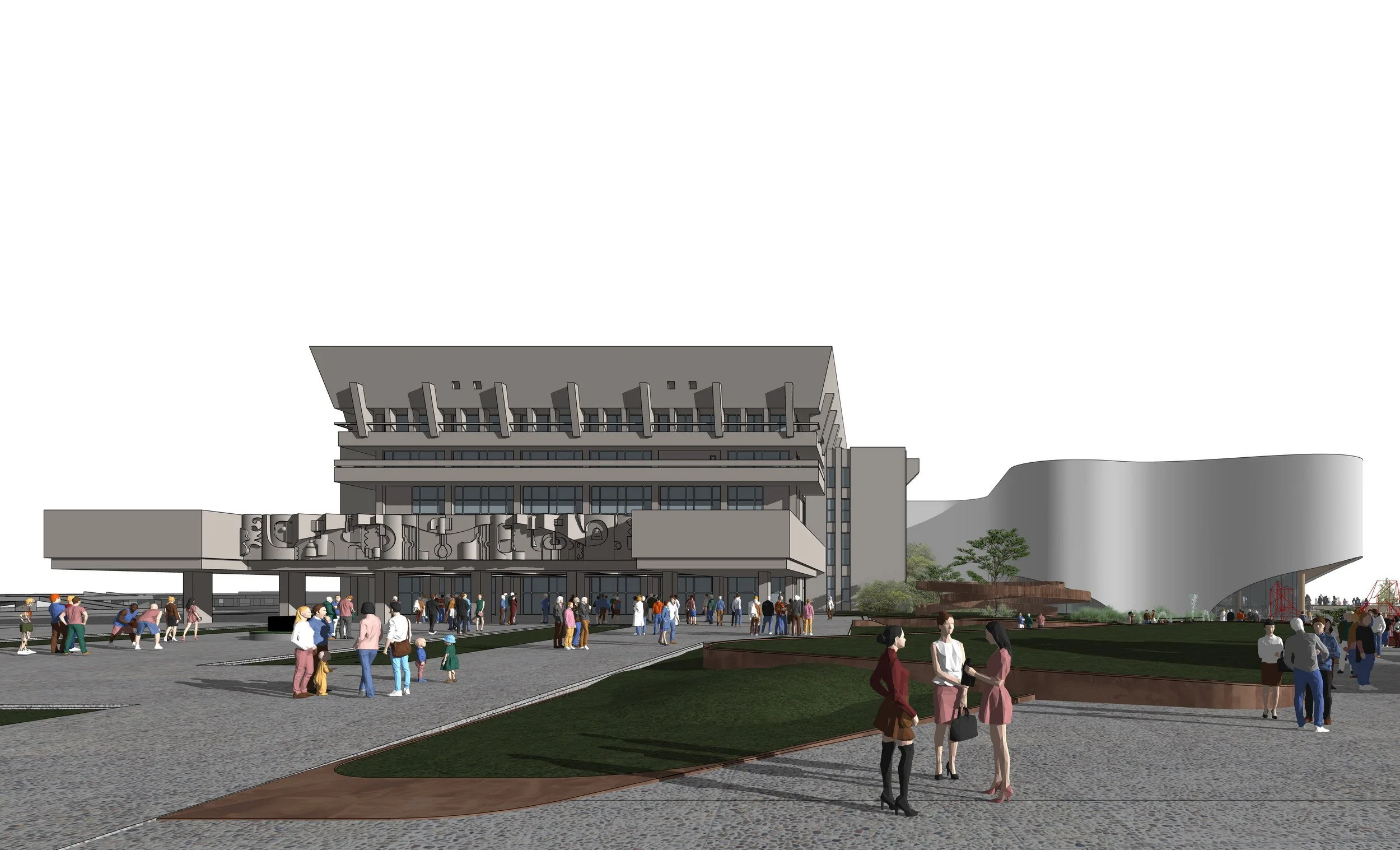
The project for the new stage of the Natalya Sats Youth Theater was developed as part of a closed competition organized by the city akimat. The existing building — a monument of Soviet modernism designed by A. Petrova, E. Mustafina and G. Dzhakipova (1972–1981) — was originally constructed as the Palace of Culture for the Almaty Cotton Mill, once the largest center of light industry in Kazakhstan. Situated on the western outskirts of the city and surrounded by early panel housing districts, it became a vital cultural hub for the area.
After a fire in 1989, the youth theater moved to this location. Over time, however, structural deterioration and the lack of contemporary performance facilities— rehearsal halls, workshops, dressing rooms and technical areas— made the expansion inevitable. In respect of the site’s heritage, one of the original architects, Albina Petrova, was involved in shaping the competition brief, recommending the inclusion of a library, a gym and shaded spaces to address the local climate.
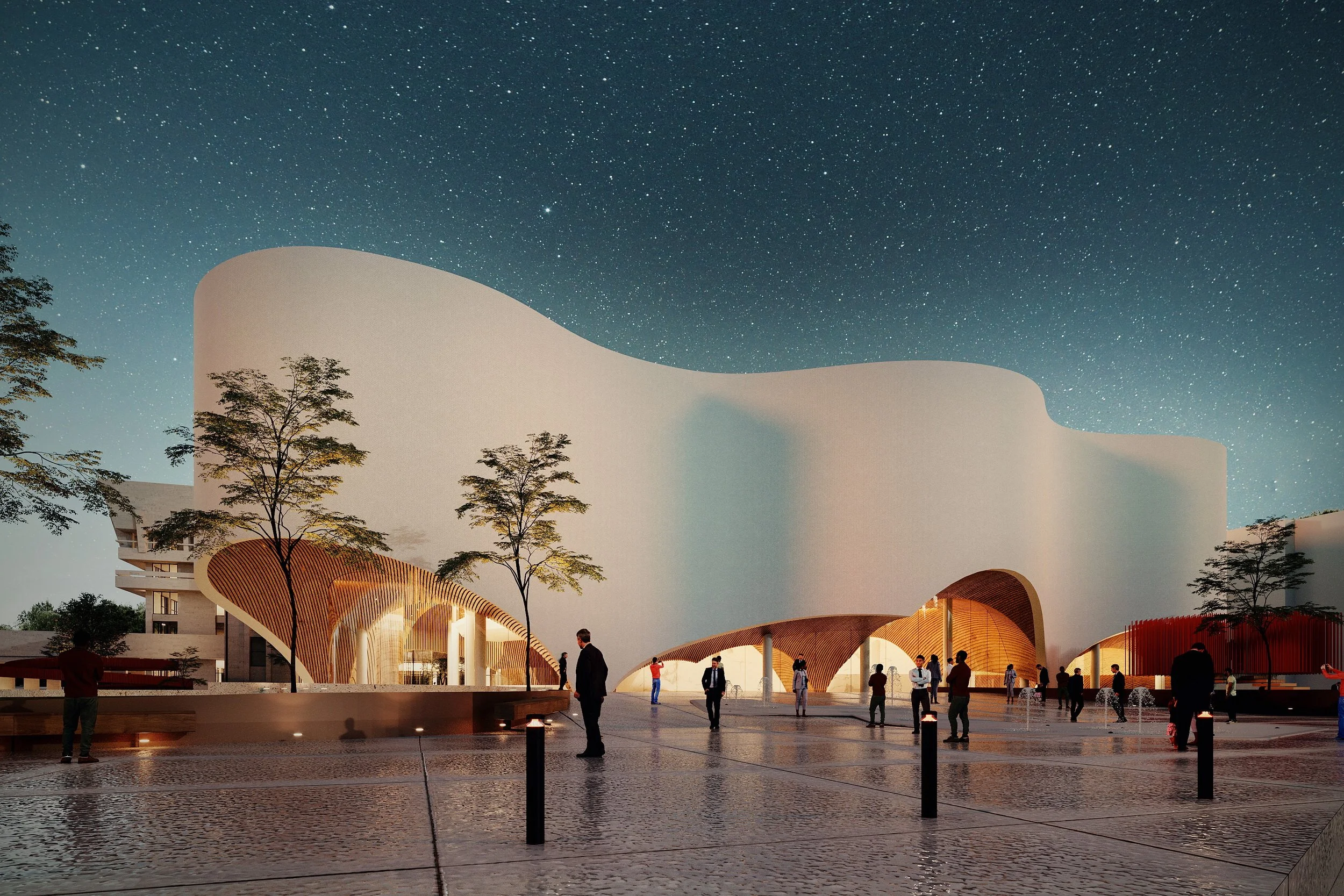
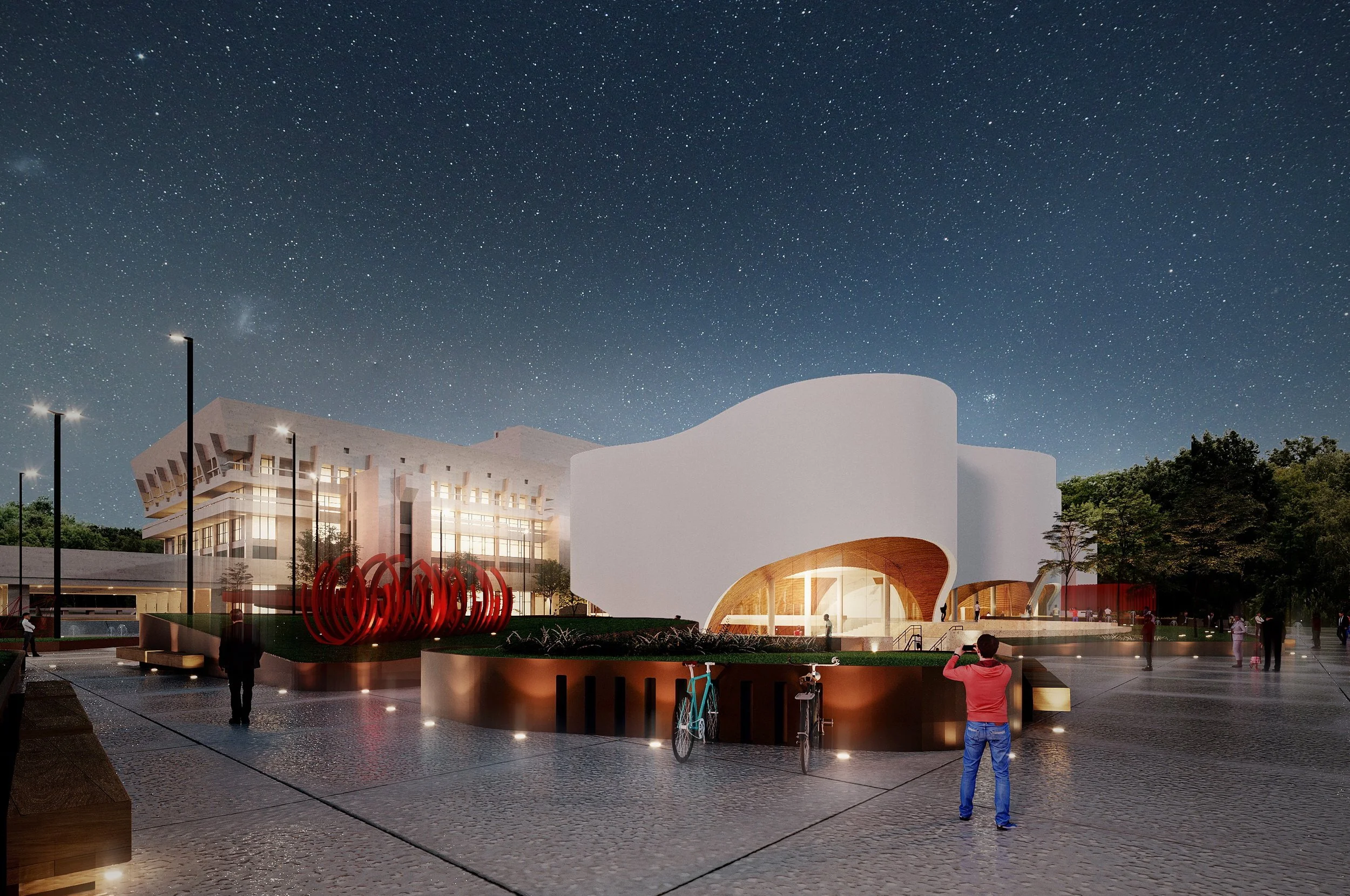
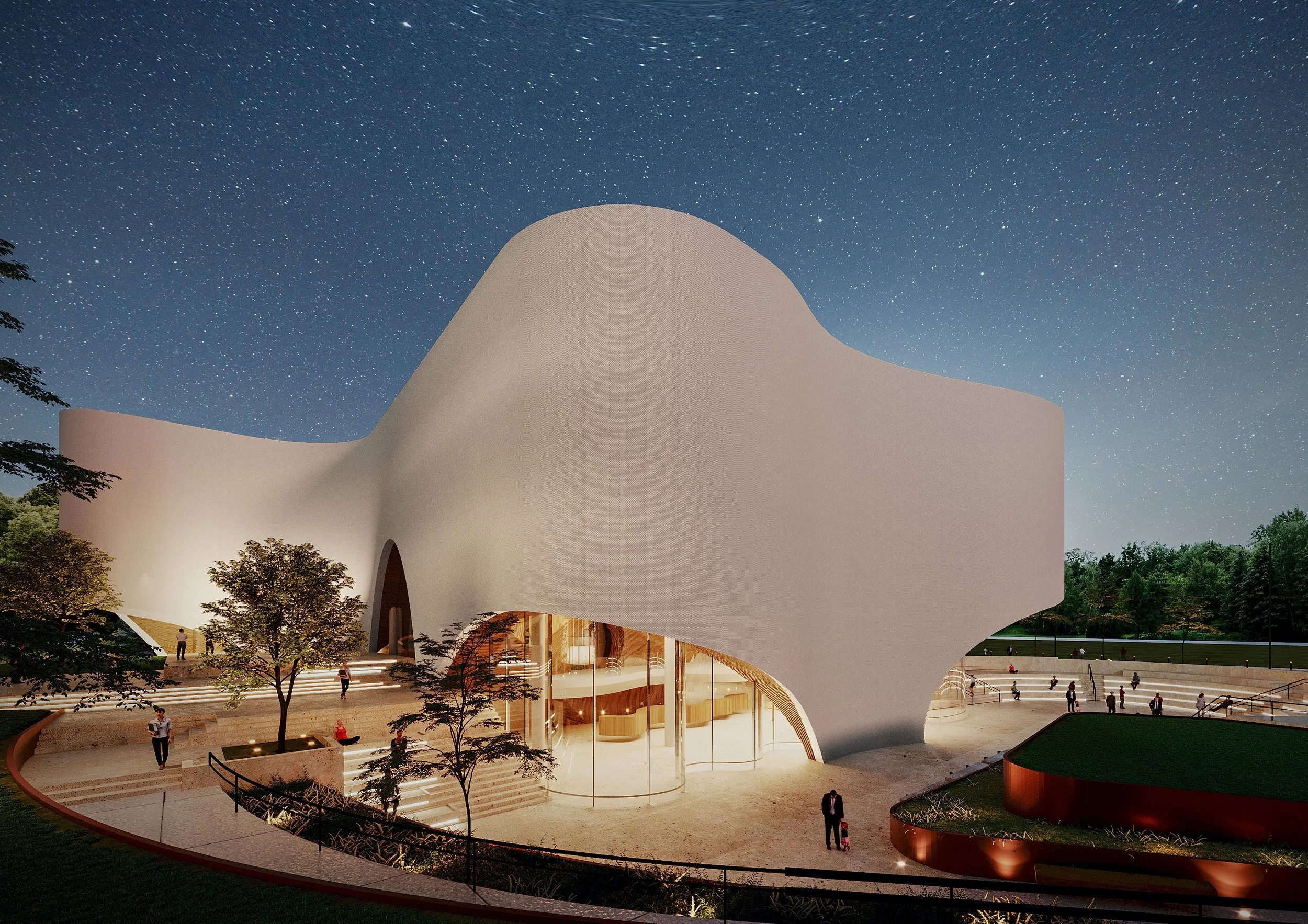
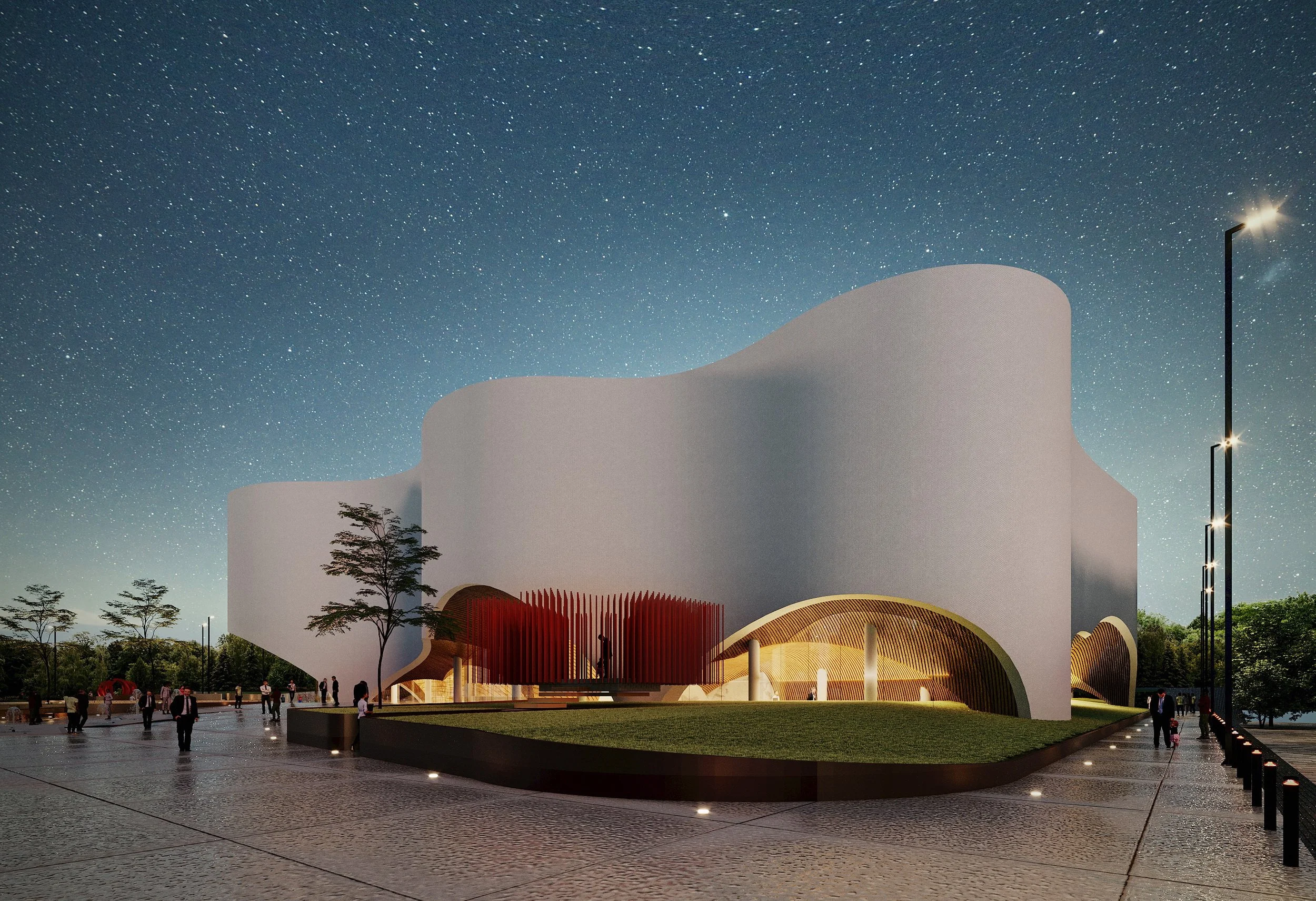
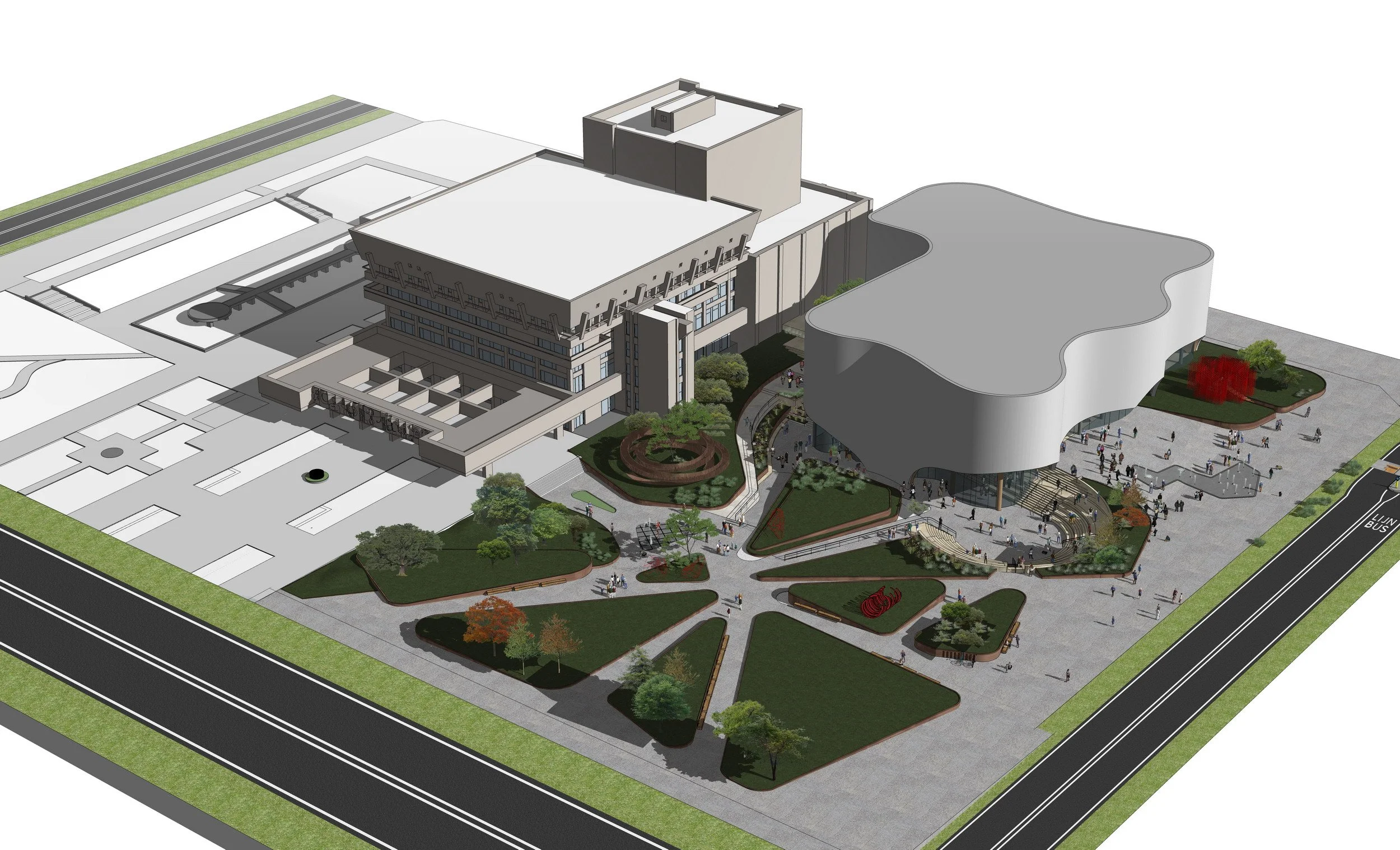
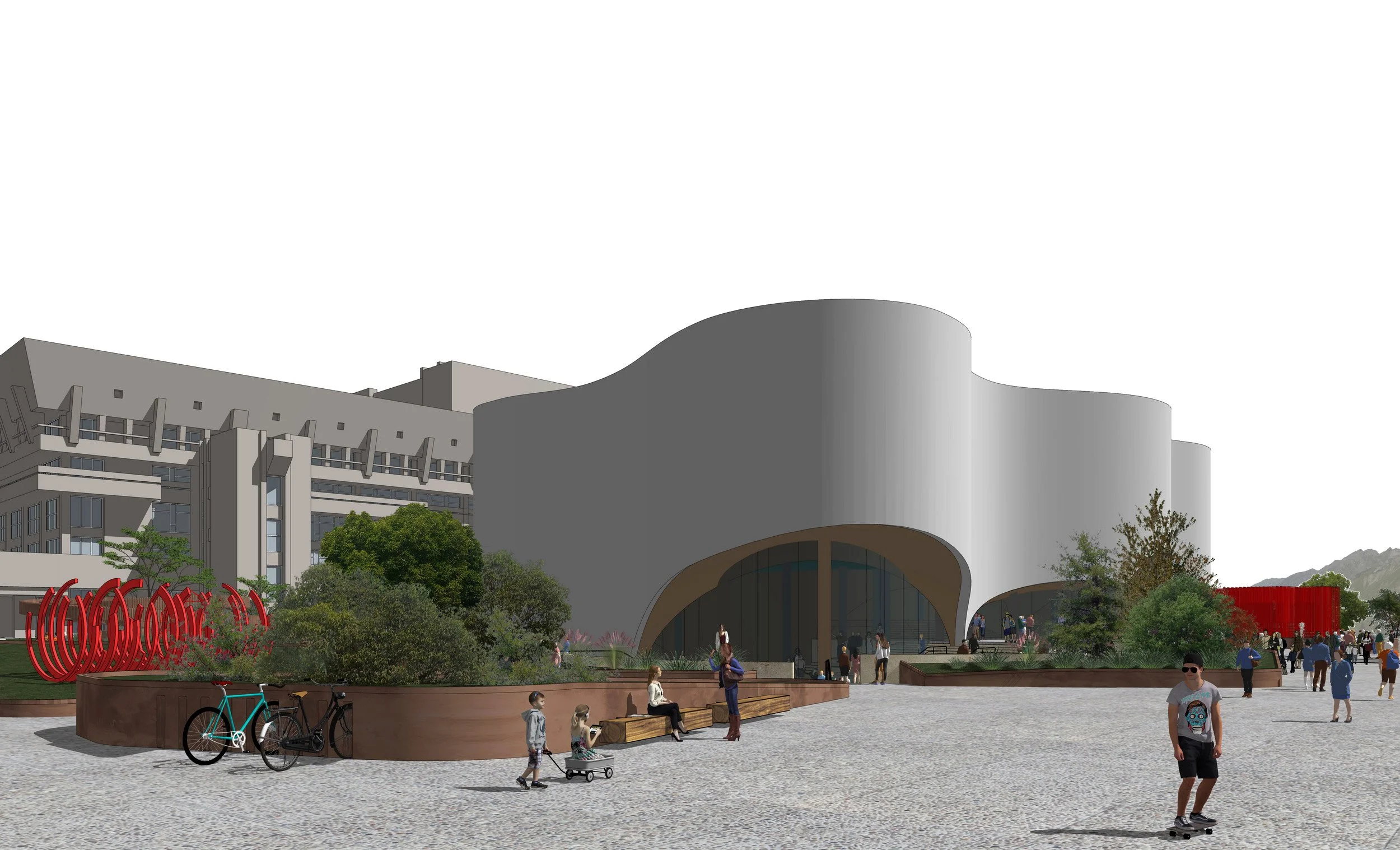
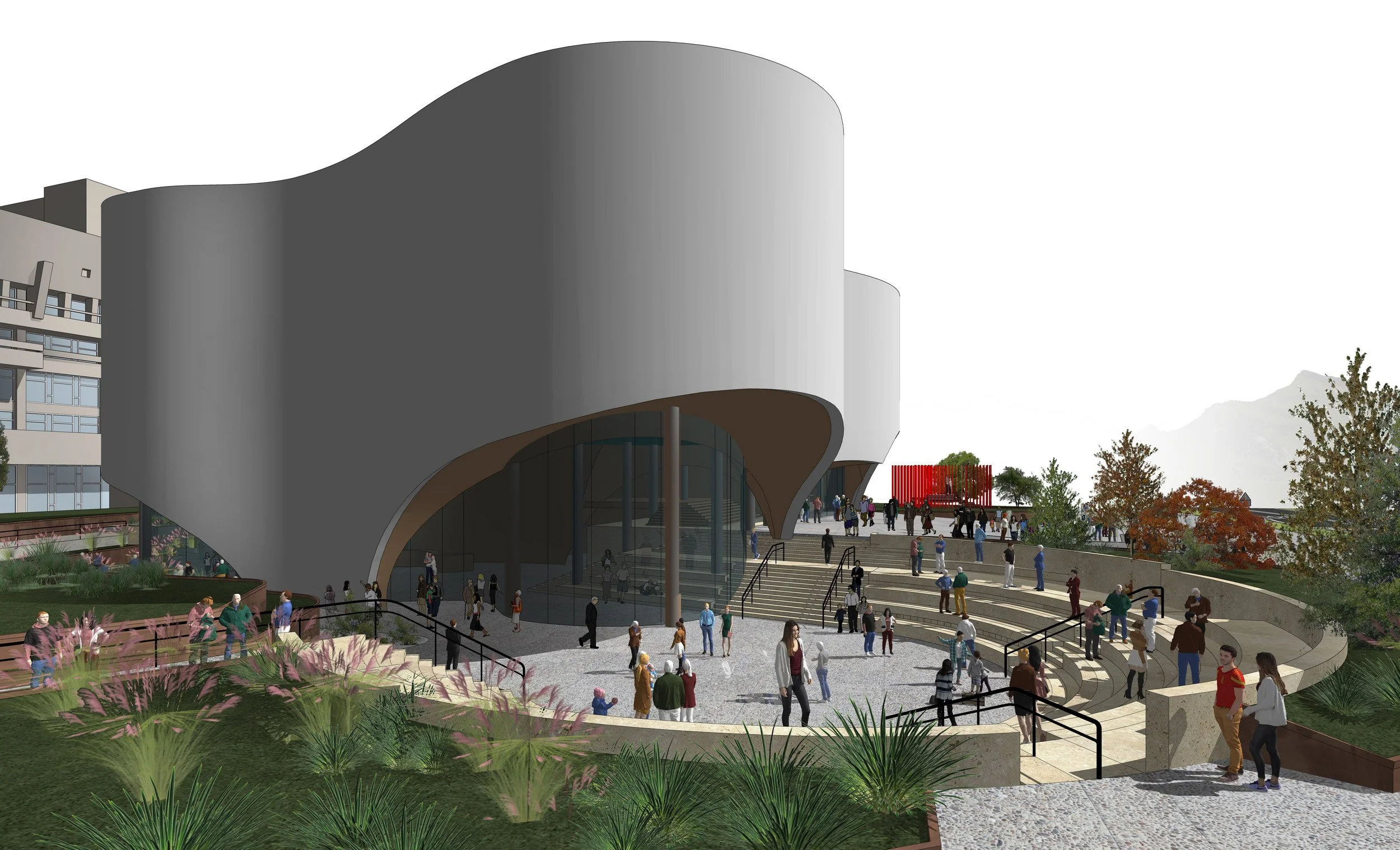
The extension is positioned to the northwest of the existing structure, on a sloped site previously occupied by a parking lot and the entrance to the small stage. The internal technological scheme, developed by local designers according to the institution’s operational requirements, was adopted as a functional foundation and subsequently refined. The architectural concept is based on a dialogue between the strict rectangular mass of the historic building and the fluid, flowing form of the new volume, creating a dynamic yet contextual composition.
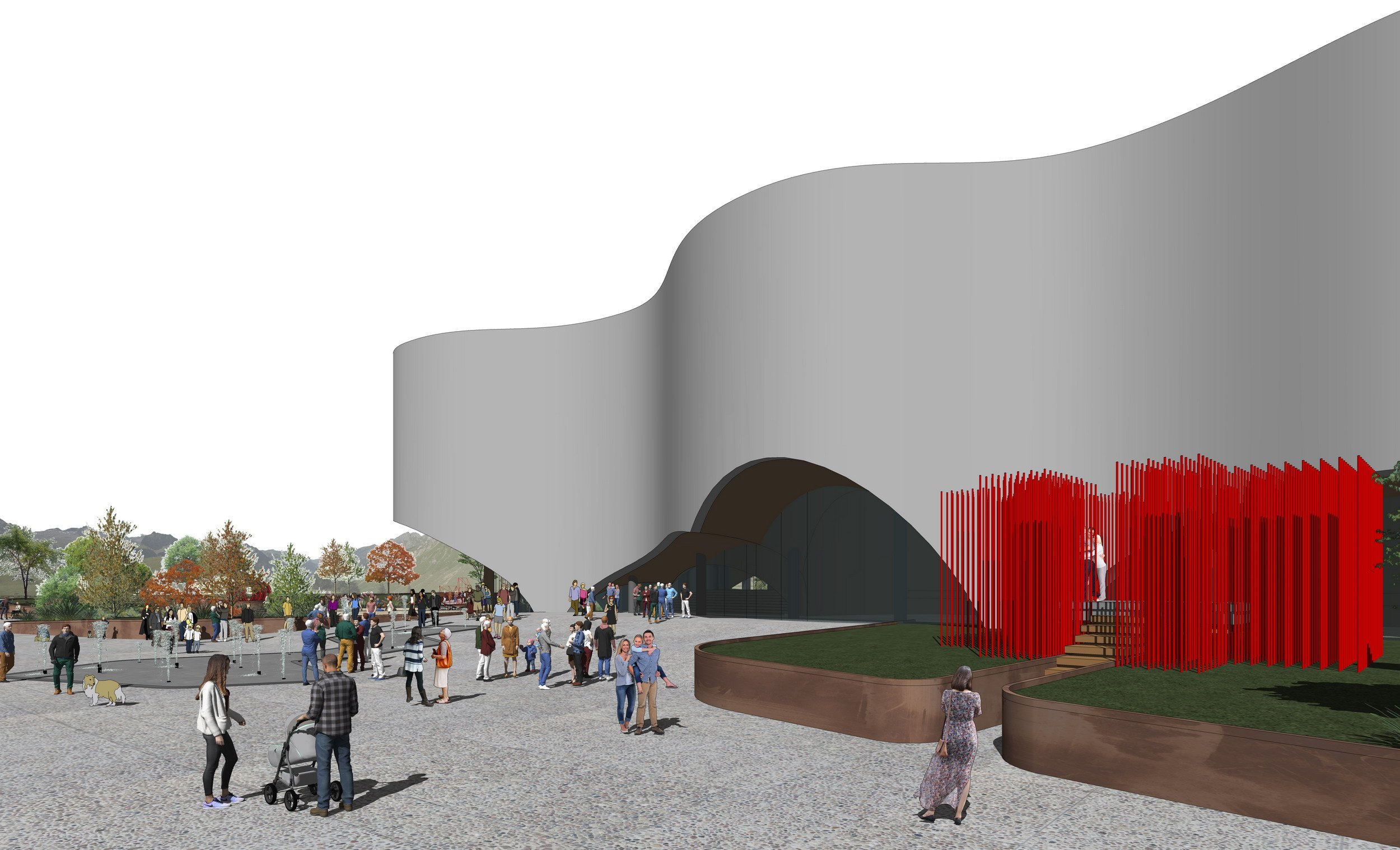
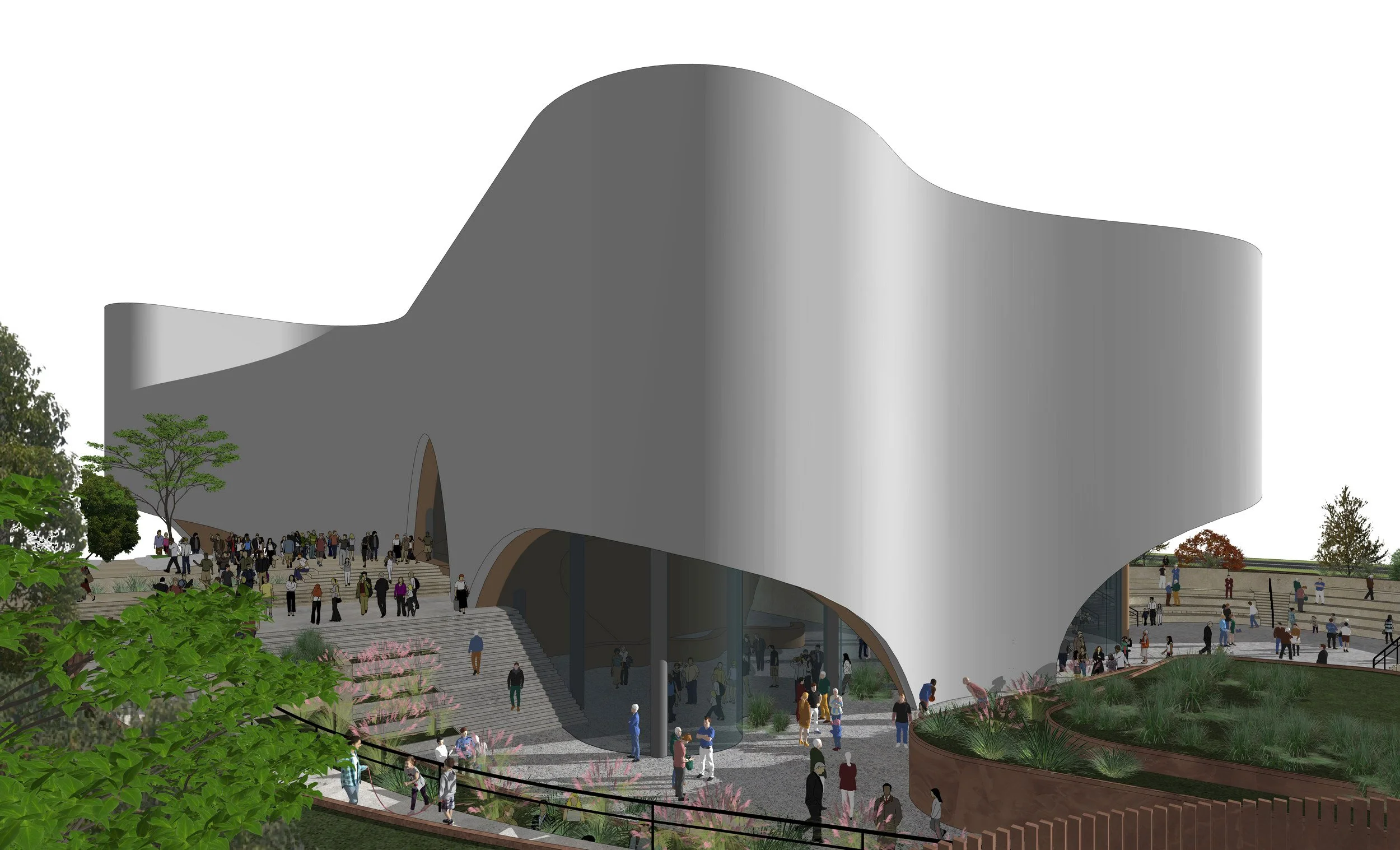
The addition is slightly shifted in relation to the main building, improving connections with the surrounding urban fabric and allowing natural light to reach deeper into the plot. A terraced pedestrian route, amphitheater and café with outdoor seating replace the former parking area, forming an open and welcoming forecourt. The technological link between the two parts, along with most service functions and parking, is placed underground.

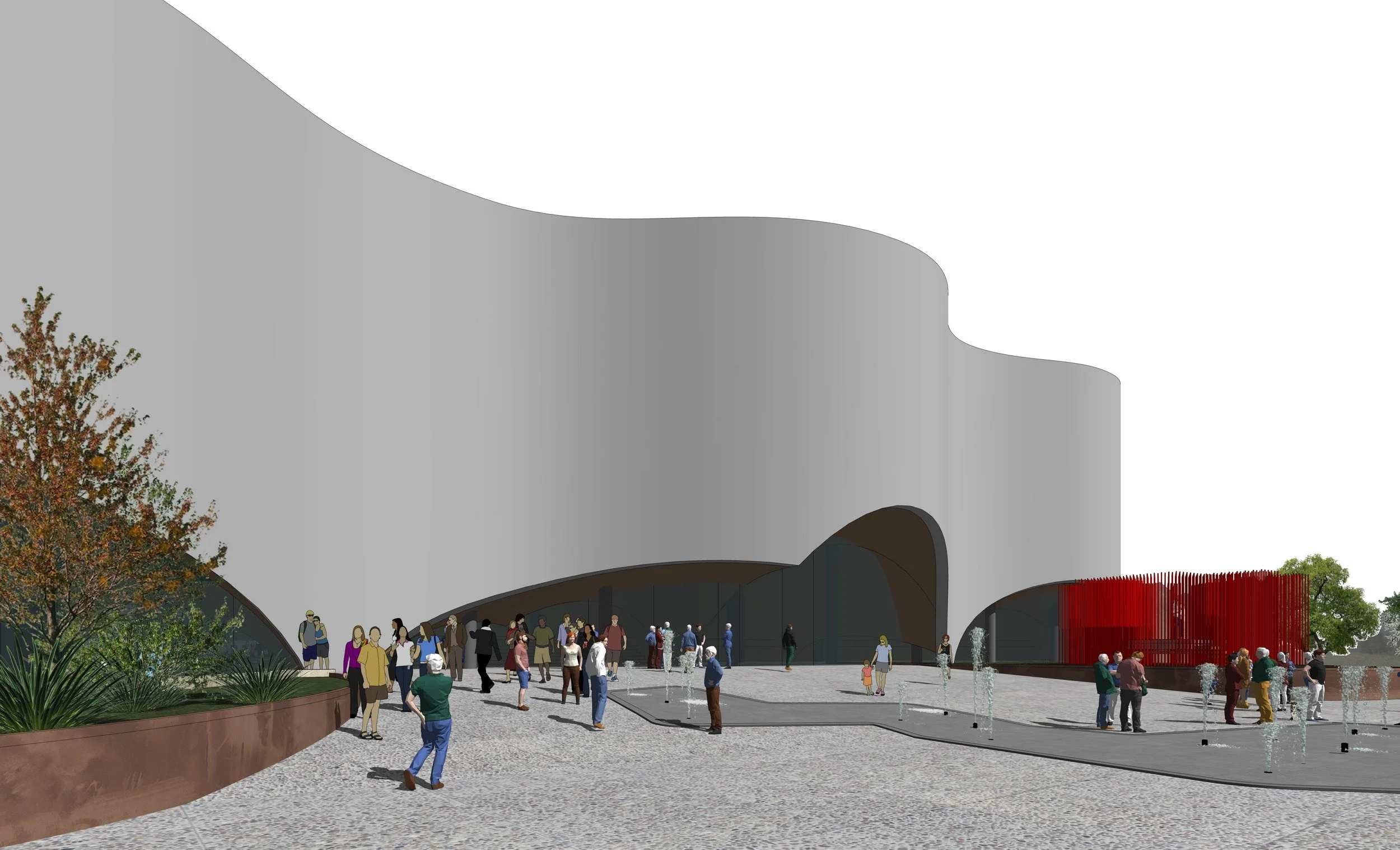
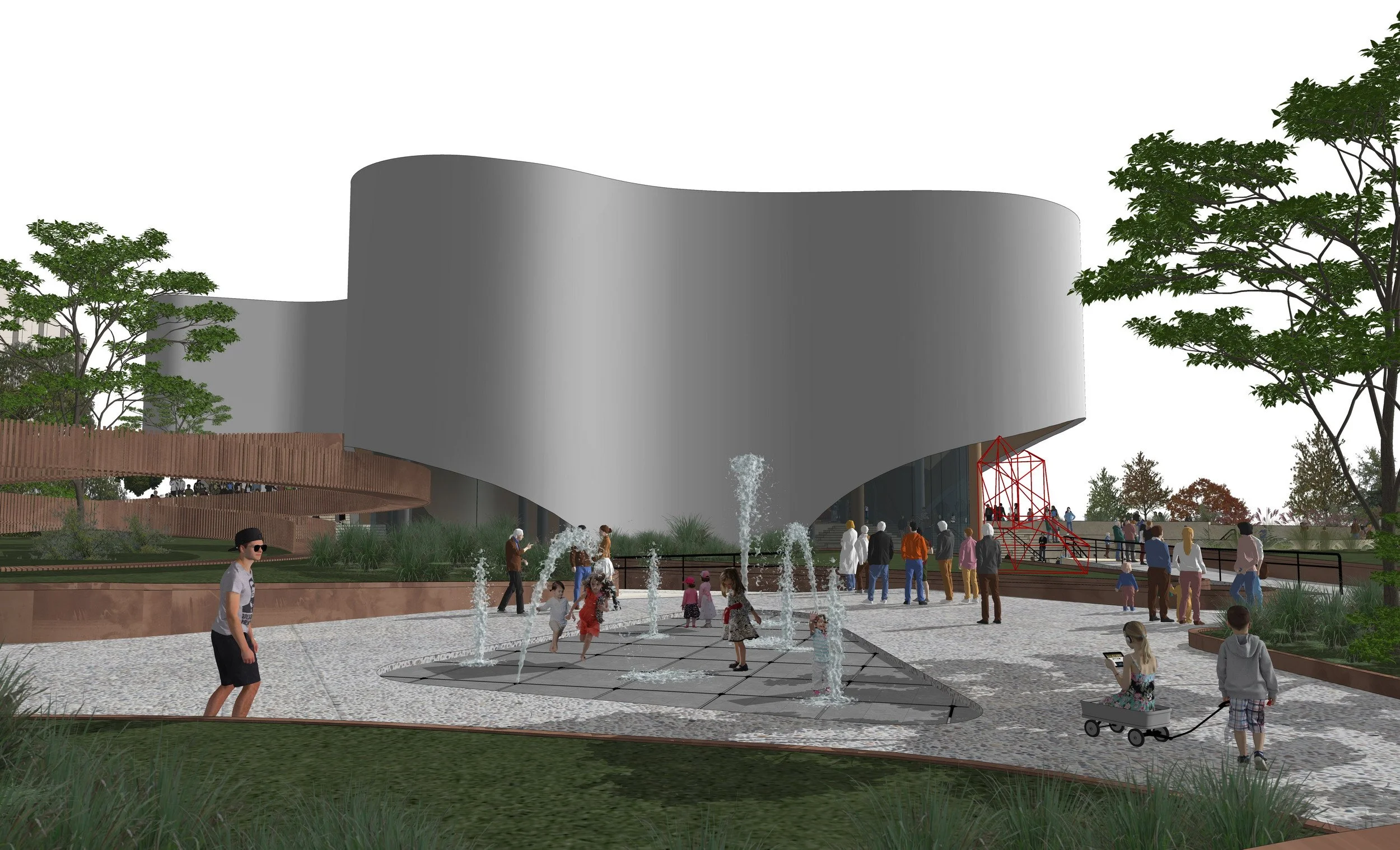
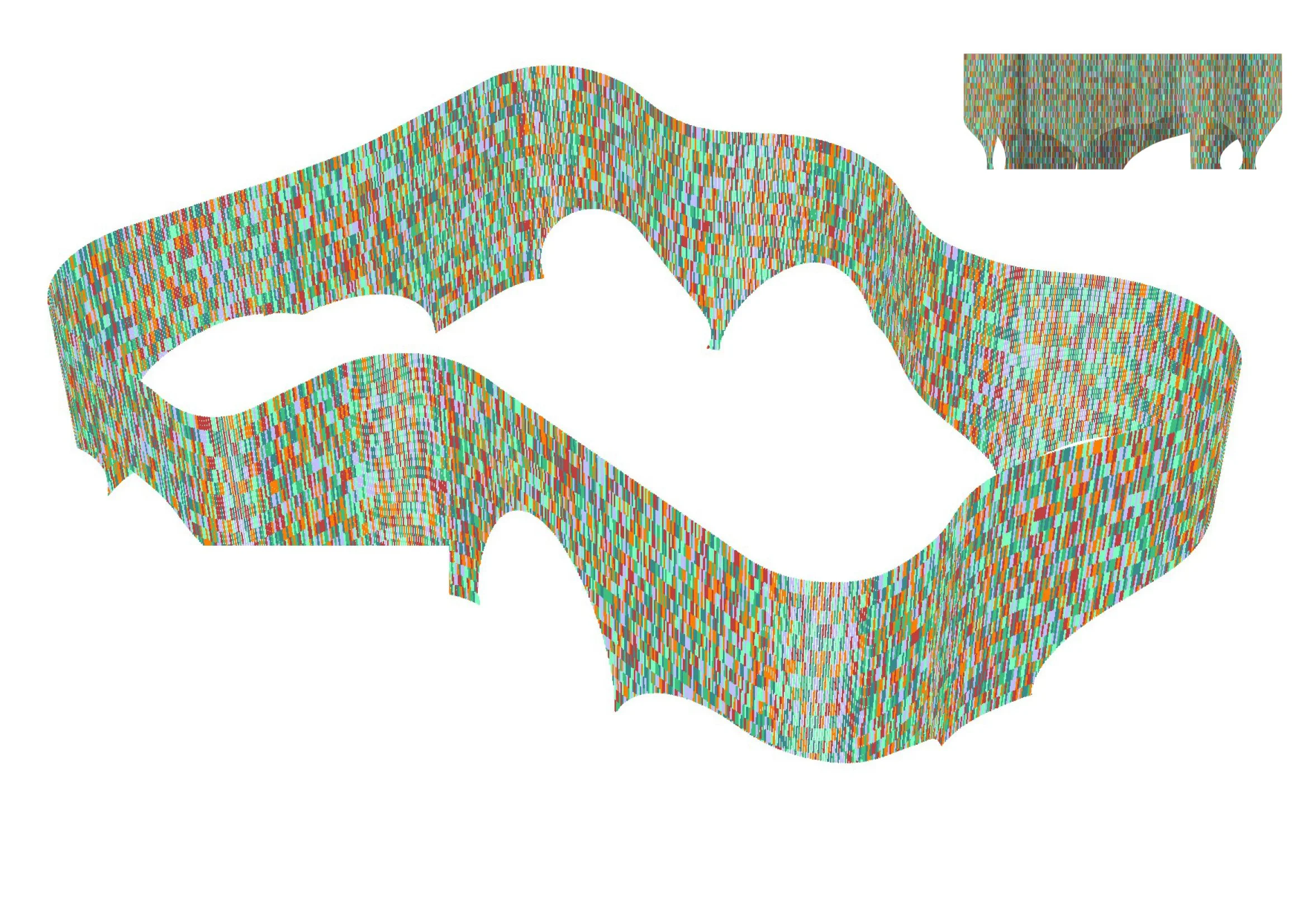
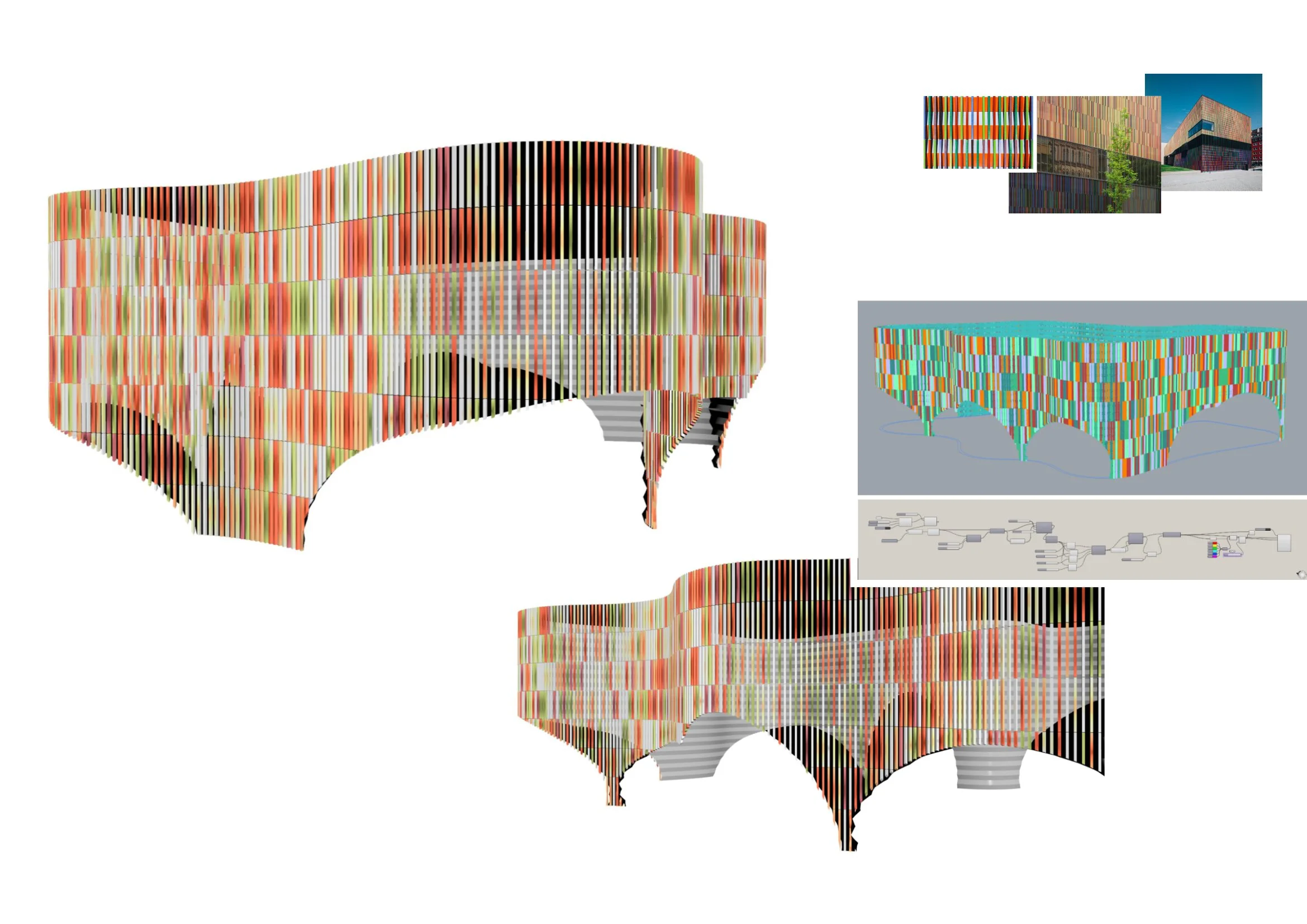
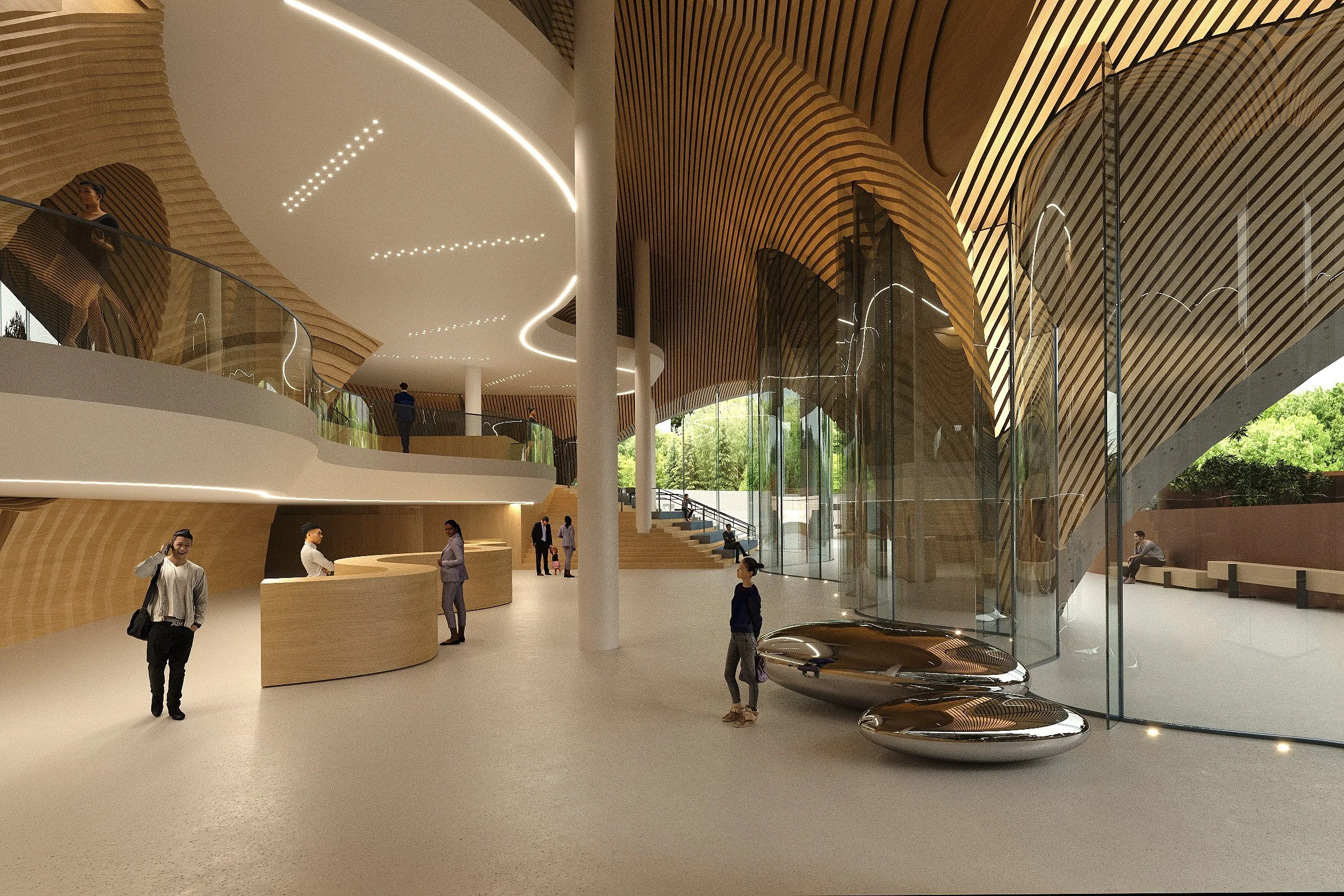
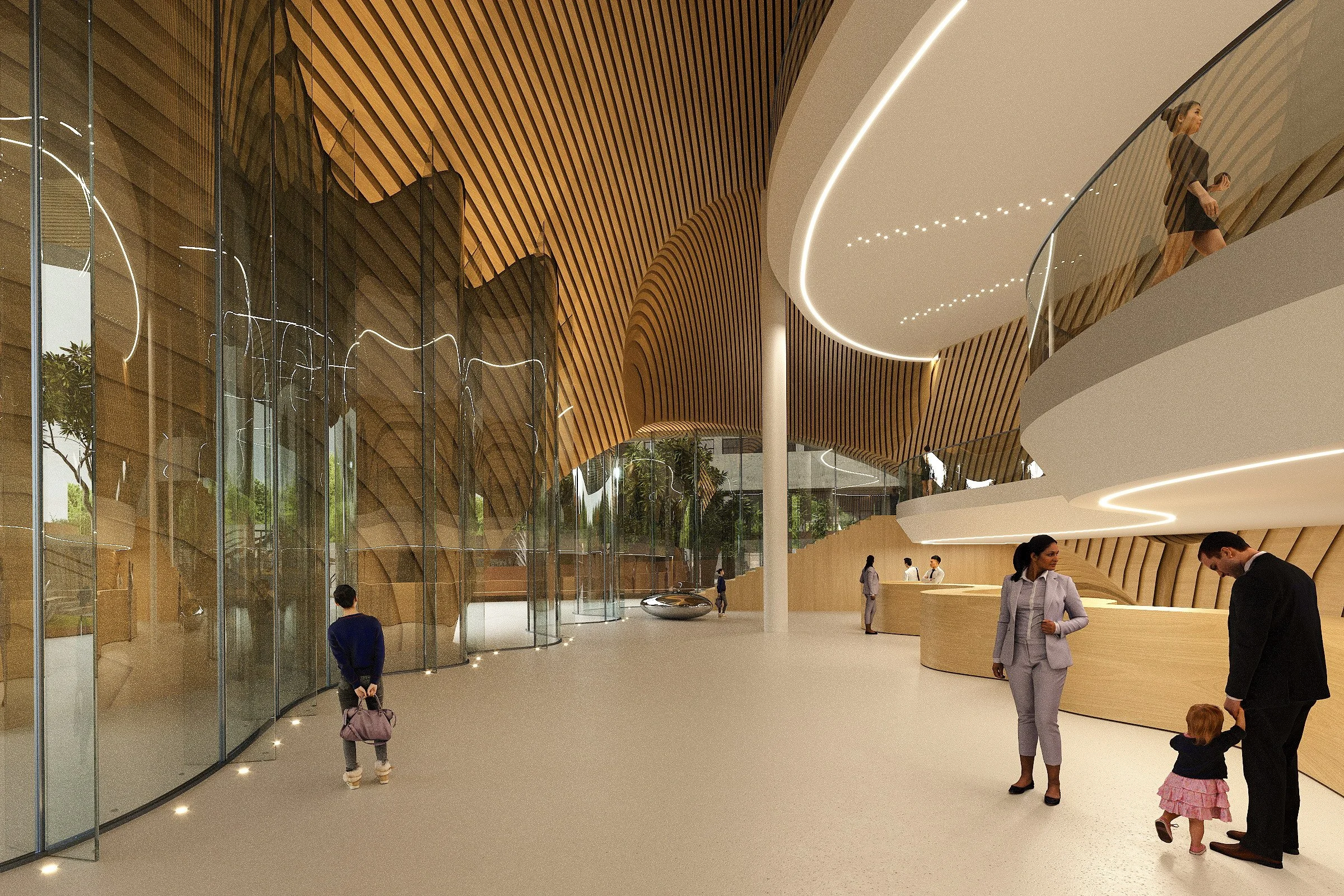
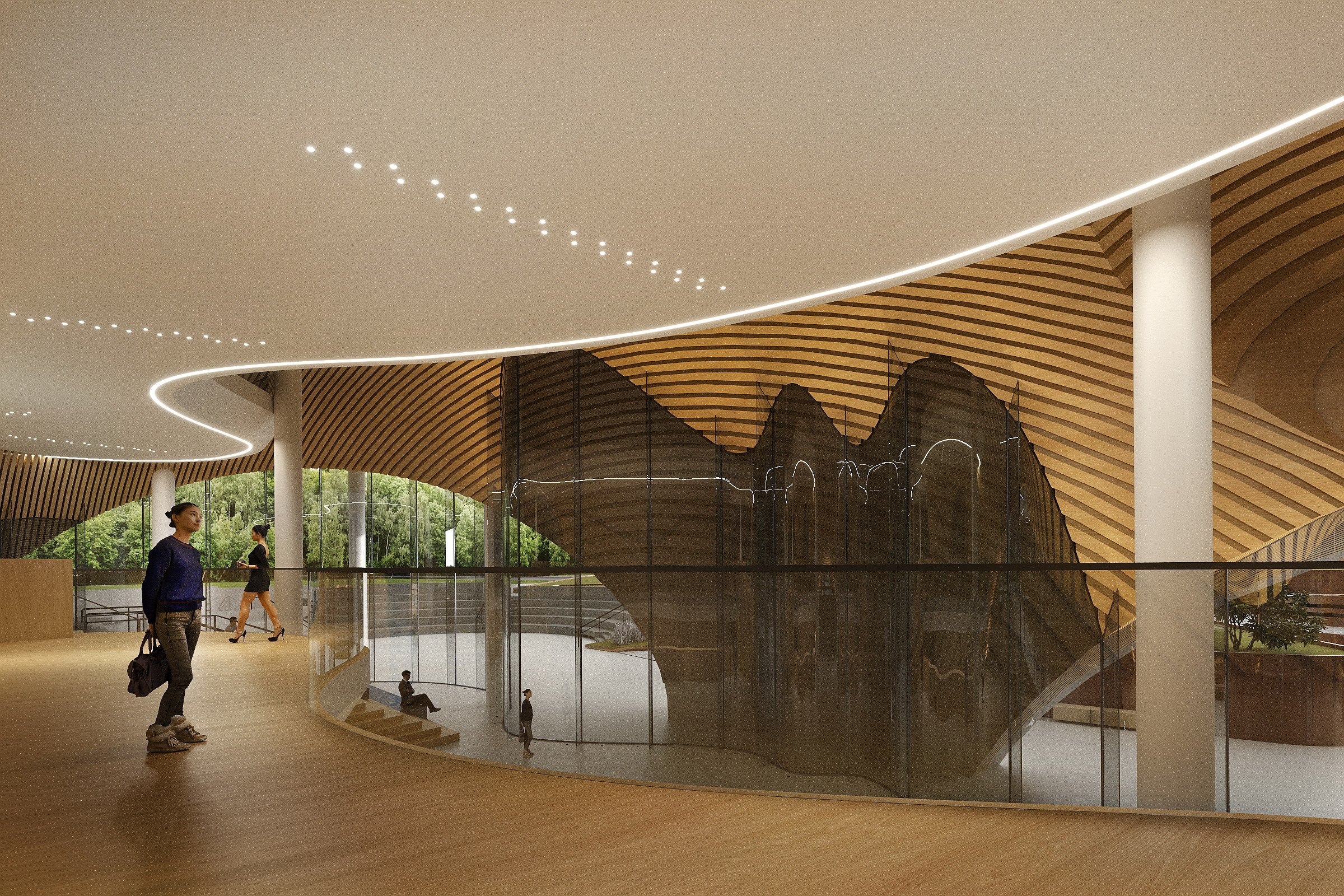
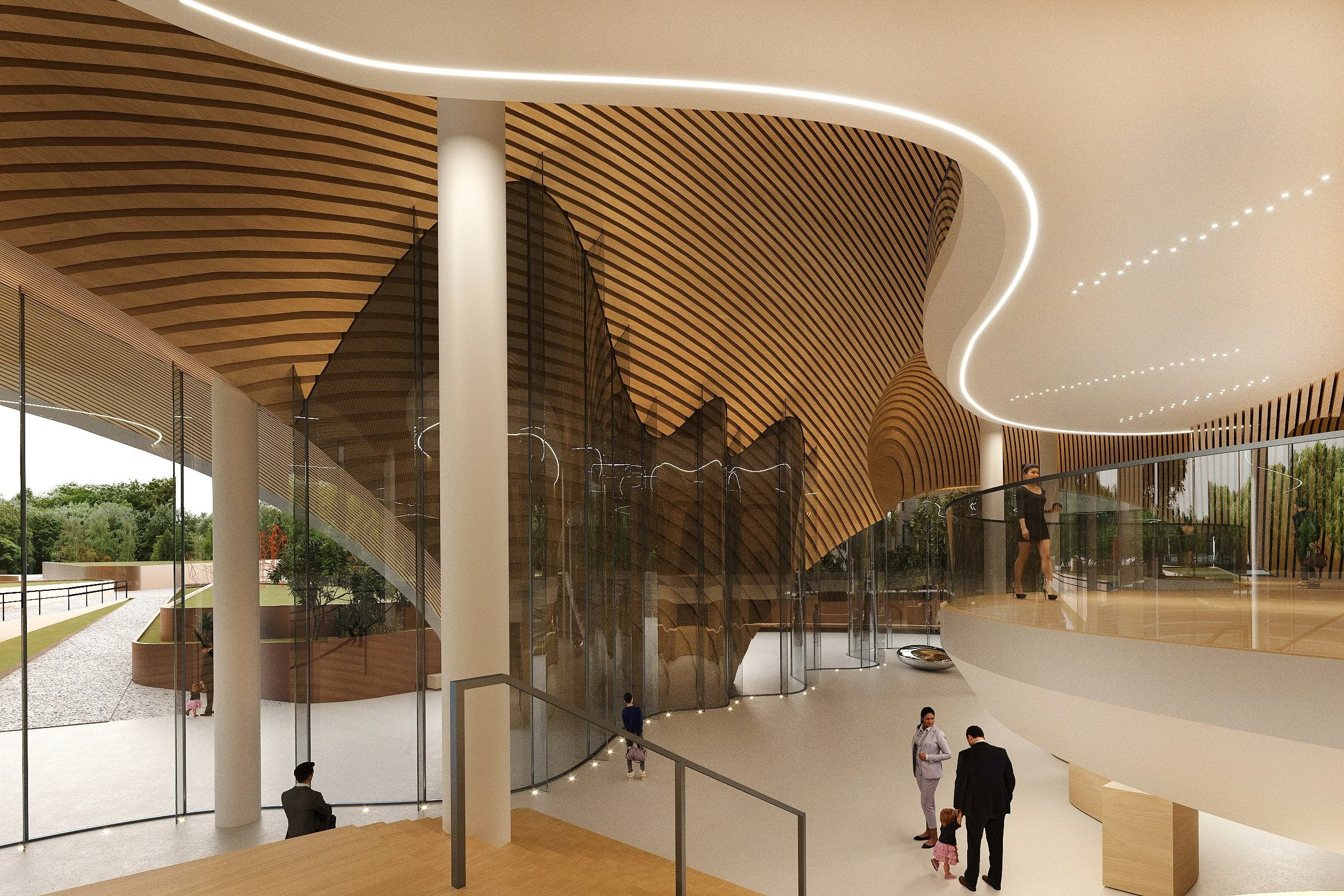
Rather than traditional landscaping, the project proposes a multifunctional landscaped park that serves as an extension of the cultural complex. Designed for recreation, sports, outdoor performances, film screenings and festivals, it transforms the ensemble into an active urban center. This public realm continues into the light-filled foyer of the new building, where sheltered spaces beneath large arches provide areas for gathering throughout the year. Tiered seating accommodates exhibitions, educational programs and smaller-scale productions, ensuring spatial flexibility. The façade is developed using parametric principles, with varying density to frame views, provide sun protection and enhance energy performance. Its layered, semi-transparent structure softens the scale of the curved volume, while the ornamental pattern subtly references local cultural motifs and the textile heritage of the former cotton mill.

Project team: Evgeniy Shchetinkin, Evgeniy Tsoy, Alisher Begnazarov, Iliya Sergeev, Zinur Tasetdinov. In collaboration with Metropolis Architects.