Soupmaker

Function: Cafe, Restaurant
Location: Krasnoproletarskaya str 16, Moscow
Project: 2019, Total area: 170 m2
Status: Completed

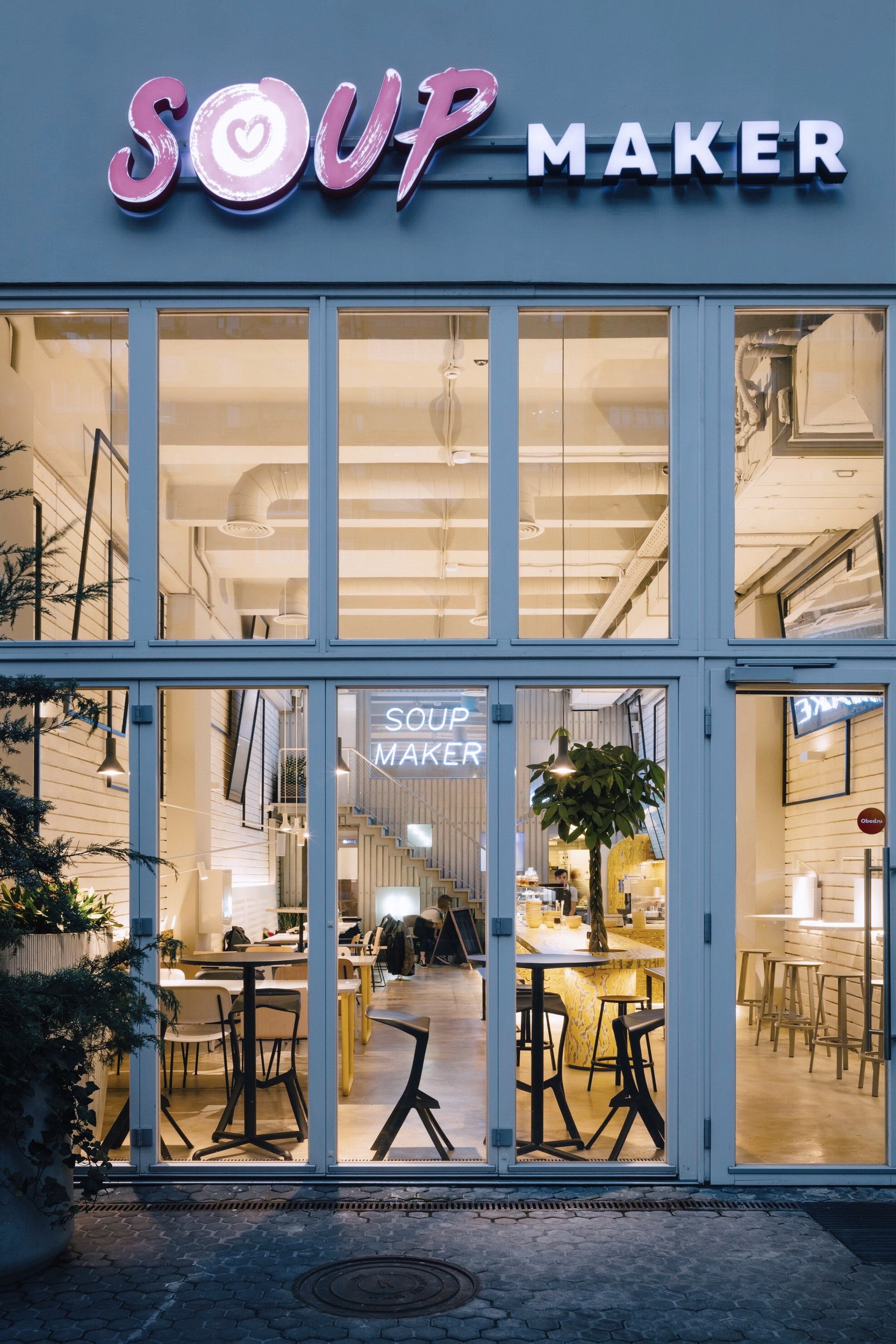
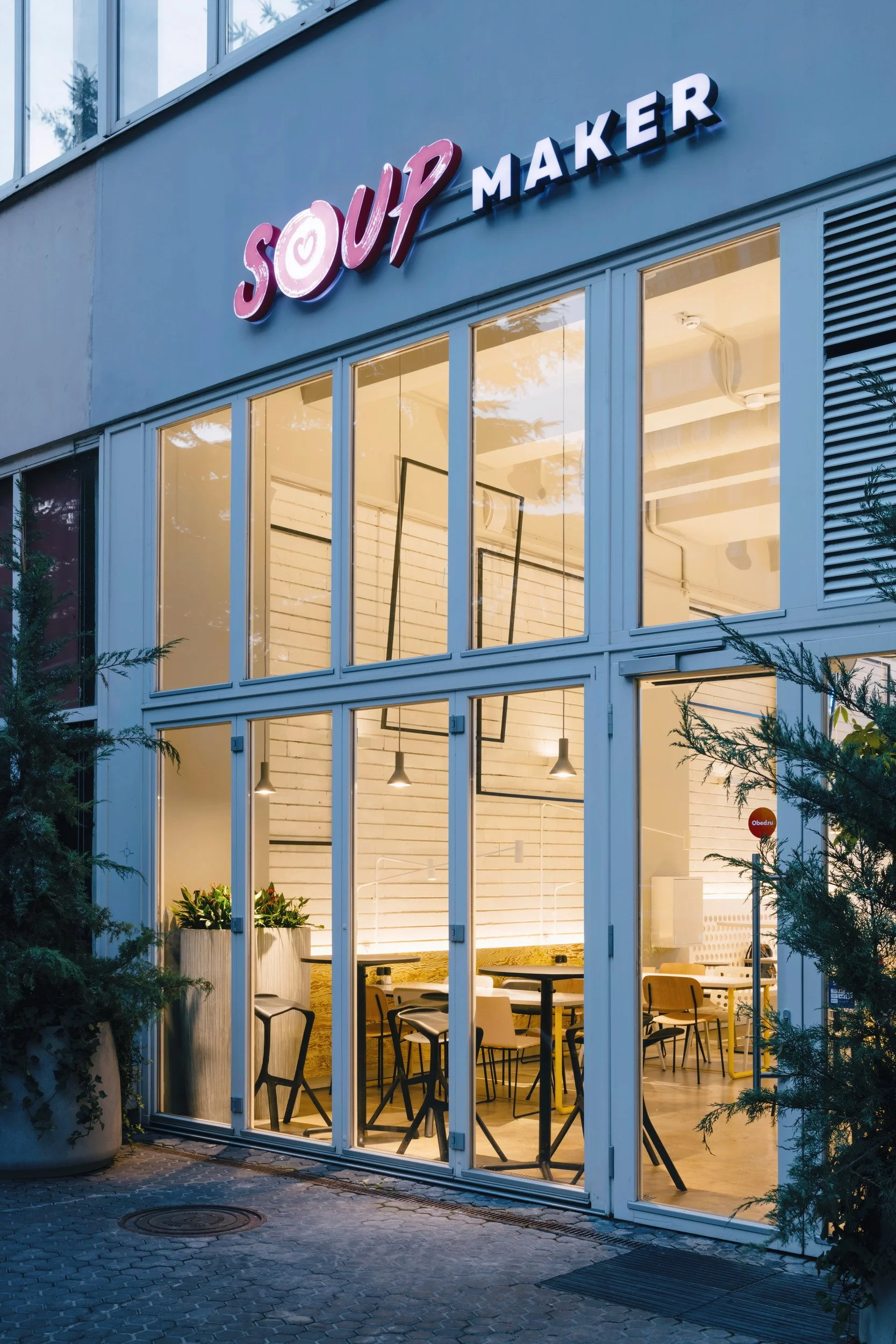
SoupMaker Café is located in central Moscow within the former Soviet printing house “Red Proletarian”, now transformed into a large business complex. The team had previously completed a restaurant project nearby, continuing their work in this evolving industrial setting. While seasonal soups define the café’s identity, the menu extends beyond them, positioning it as a flexible everyday destination.
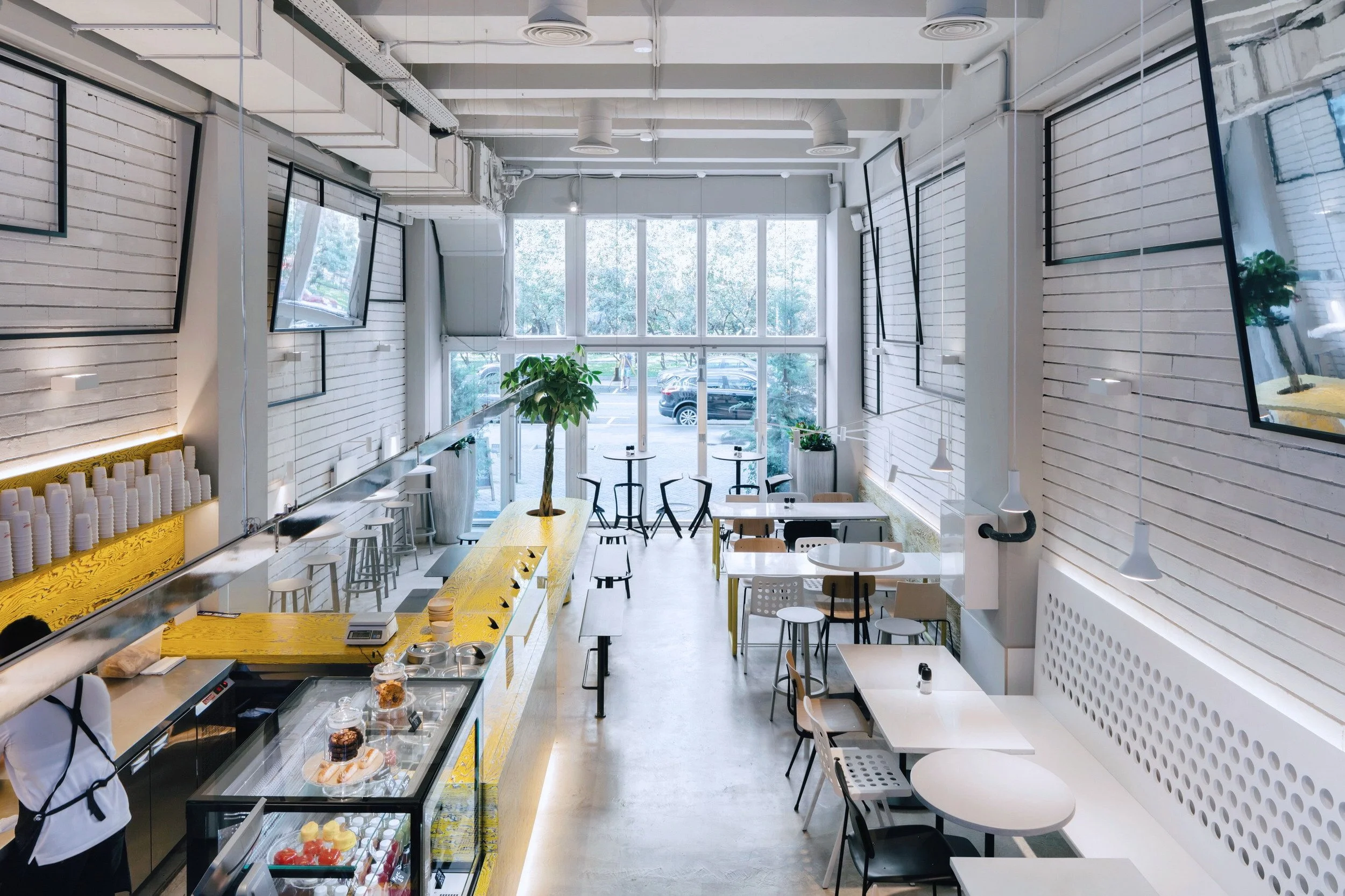
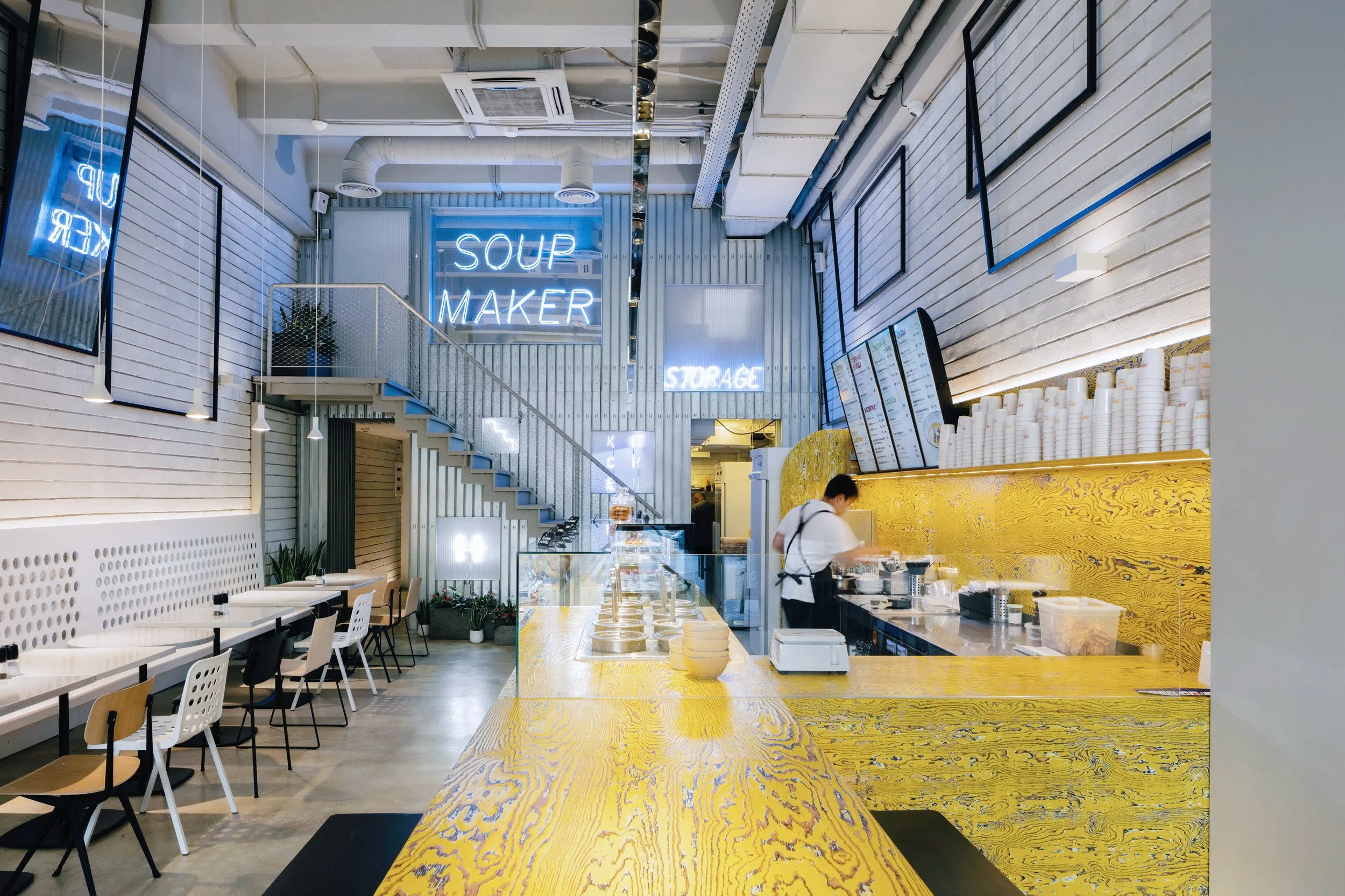
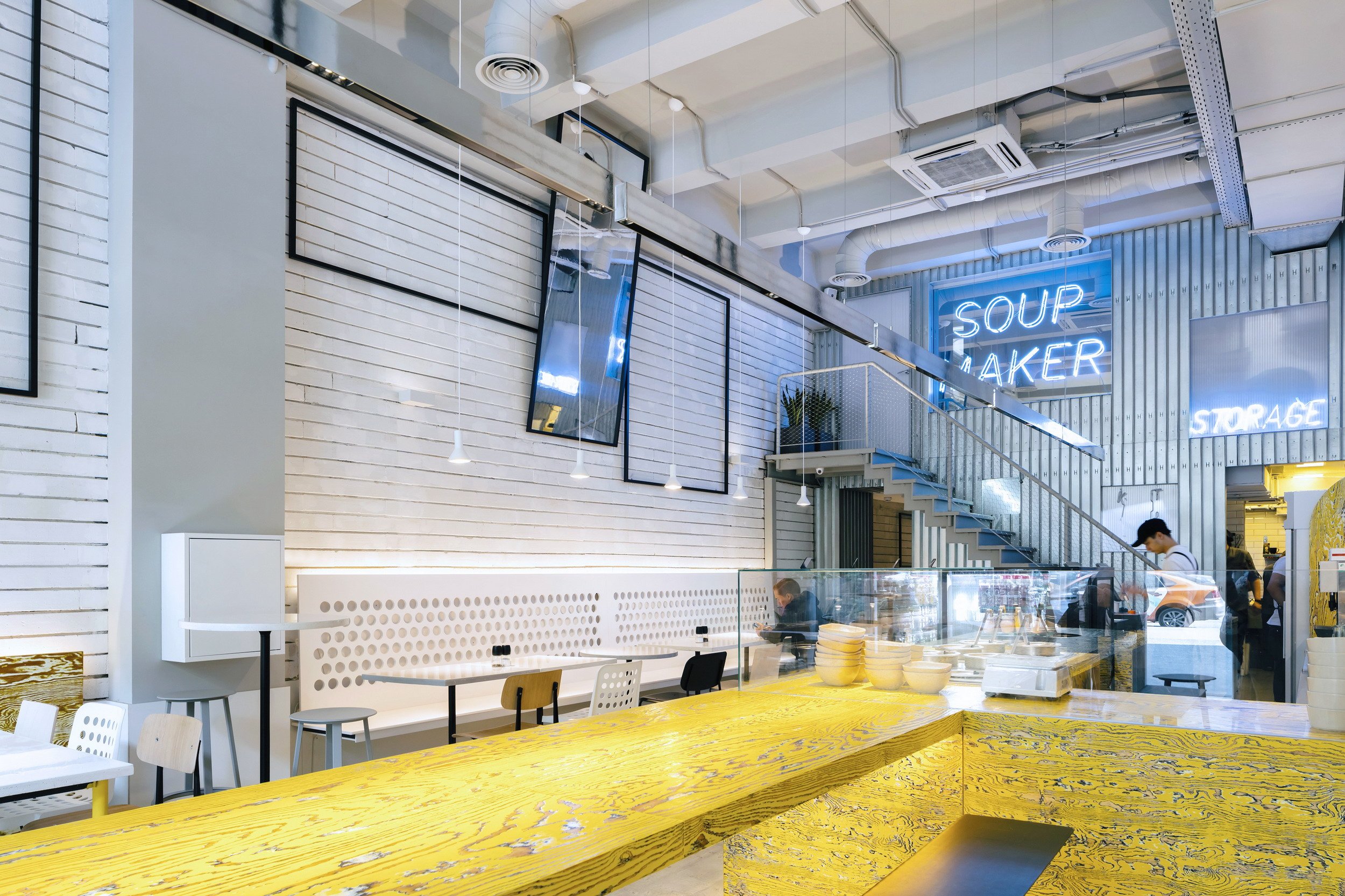
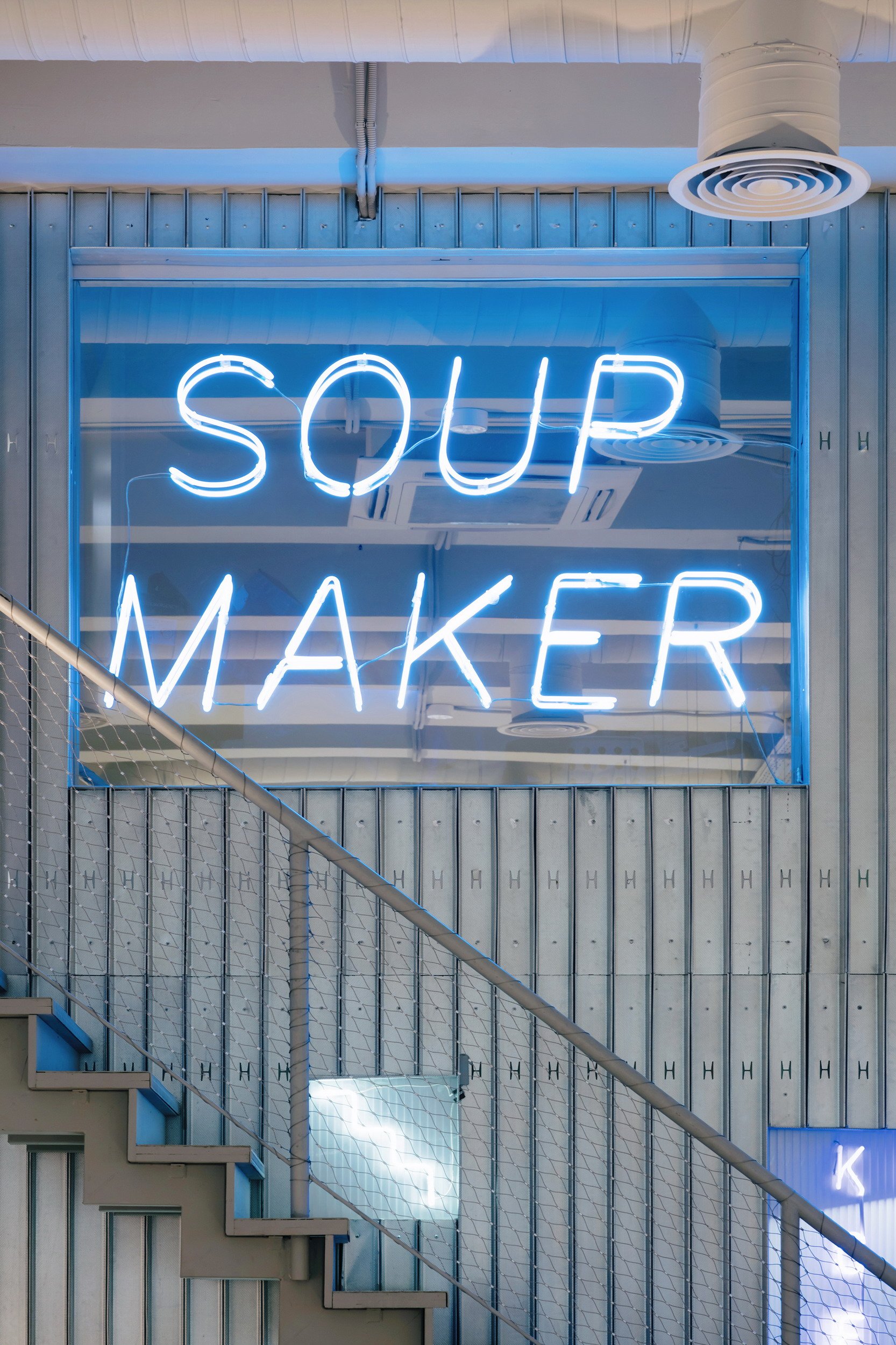
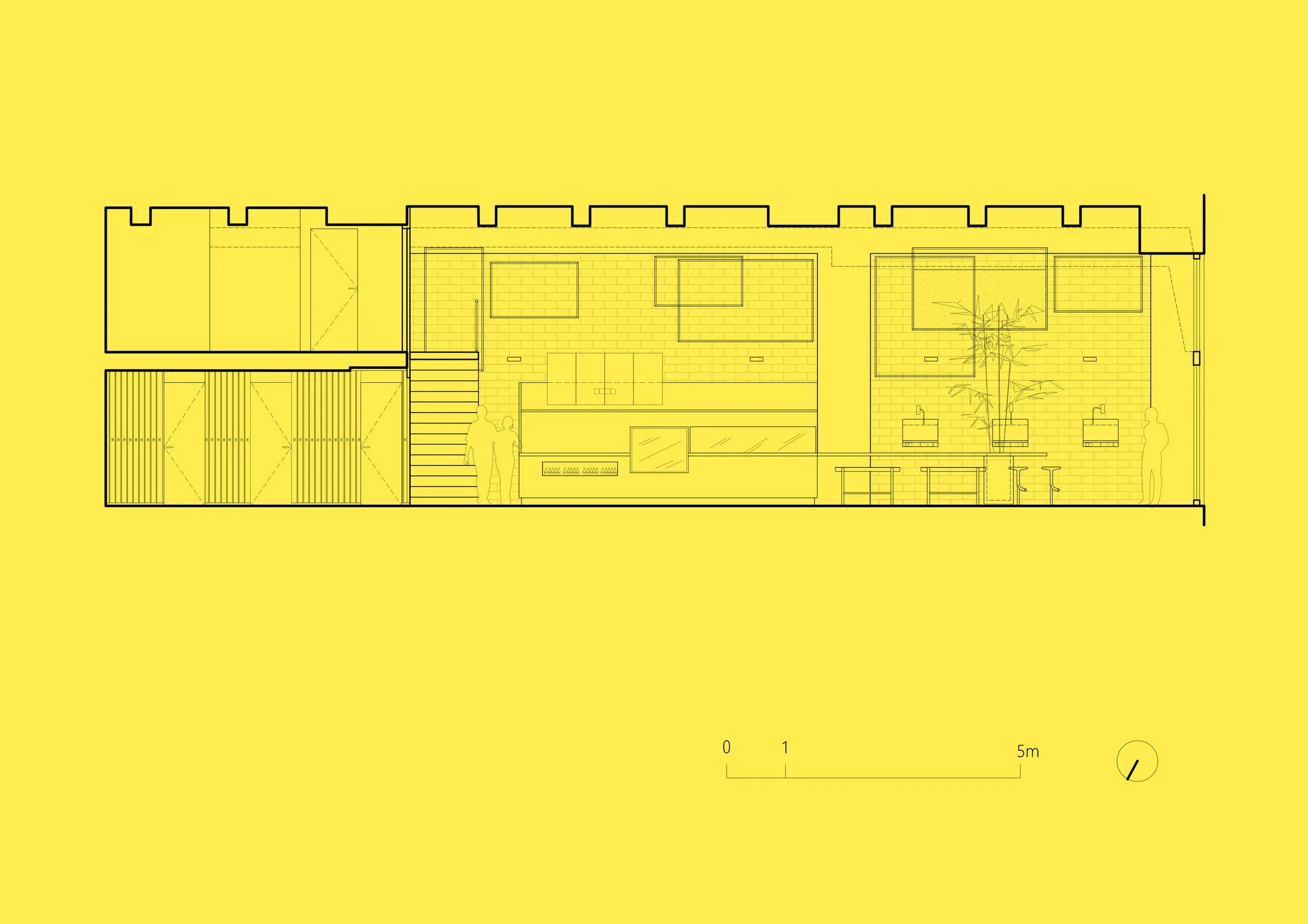
The space is long and narrow in plan, with five-metre ceilings and full-height glazing along the main façade. All service functions — kitchen, storage and restrooms — are consolidated into a compact two-level volume at the rear. Clad in metal profiles, this oversized box is punctured with openings marked by neon signage that subtly indicates the functions within. From a distance, it reads as an inserted, stylised industrial container. The manager’s office above is concealed behind mirrored film, maintaining the integrity of the volume.
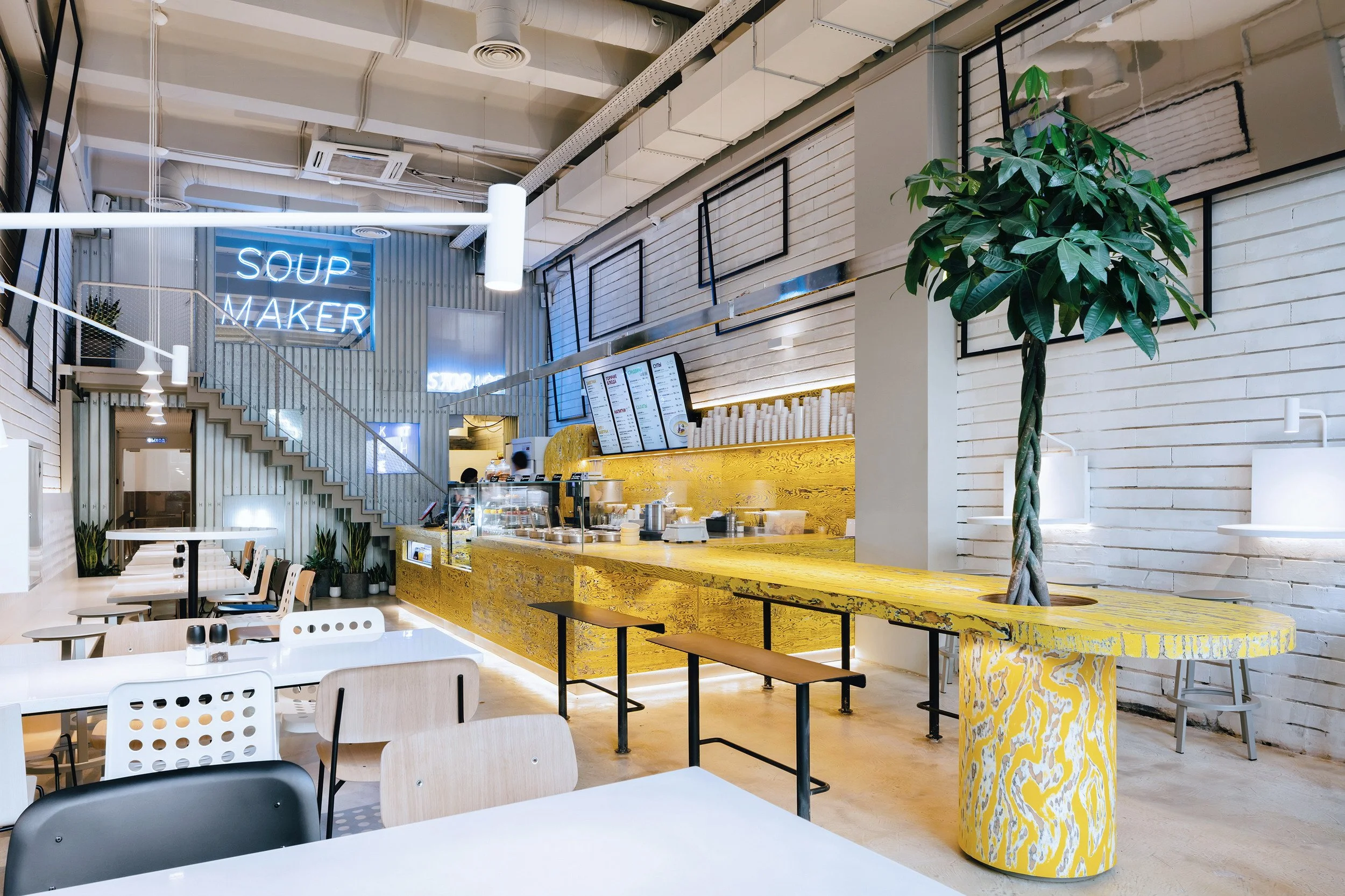
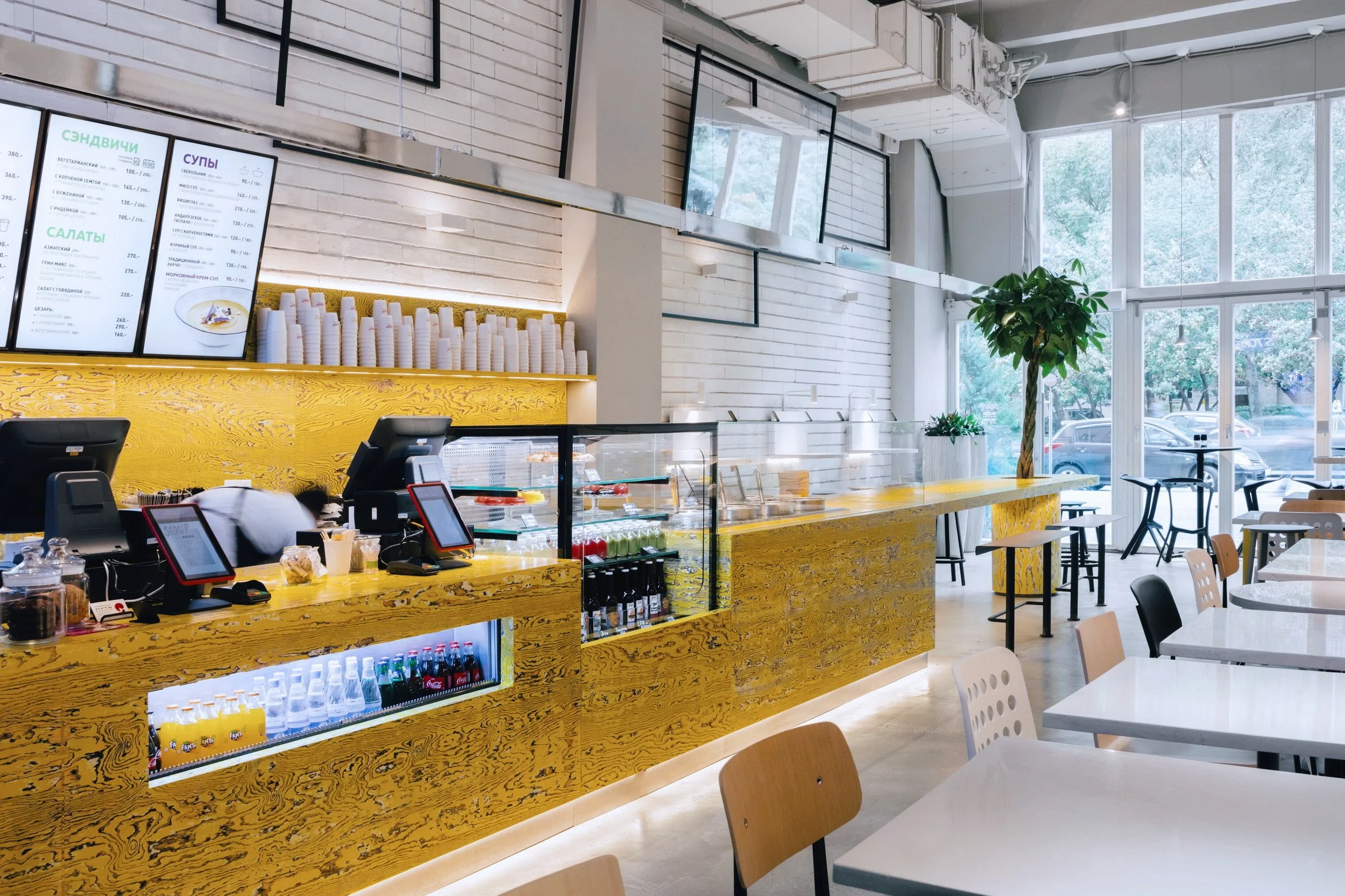
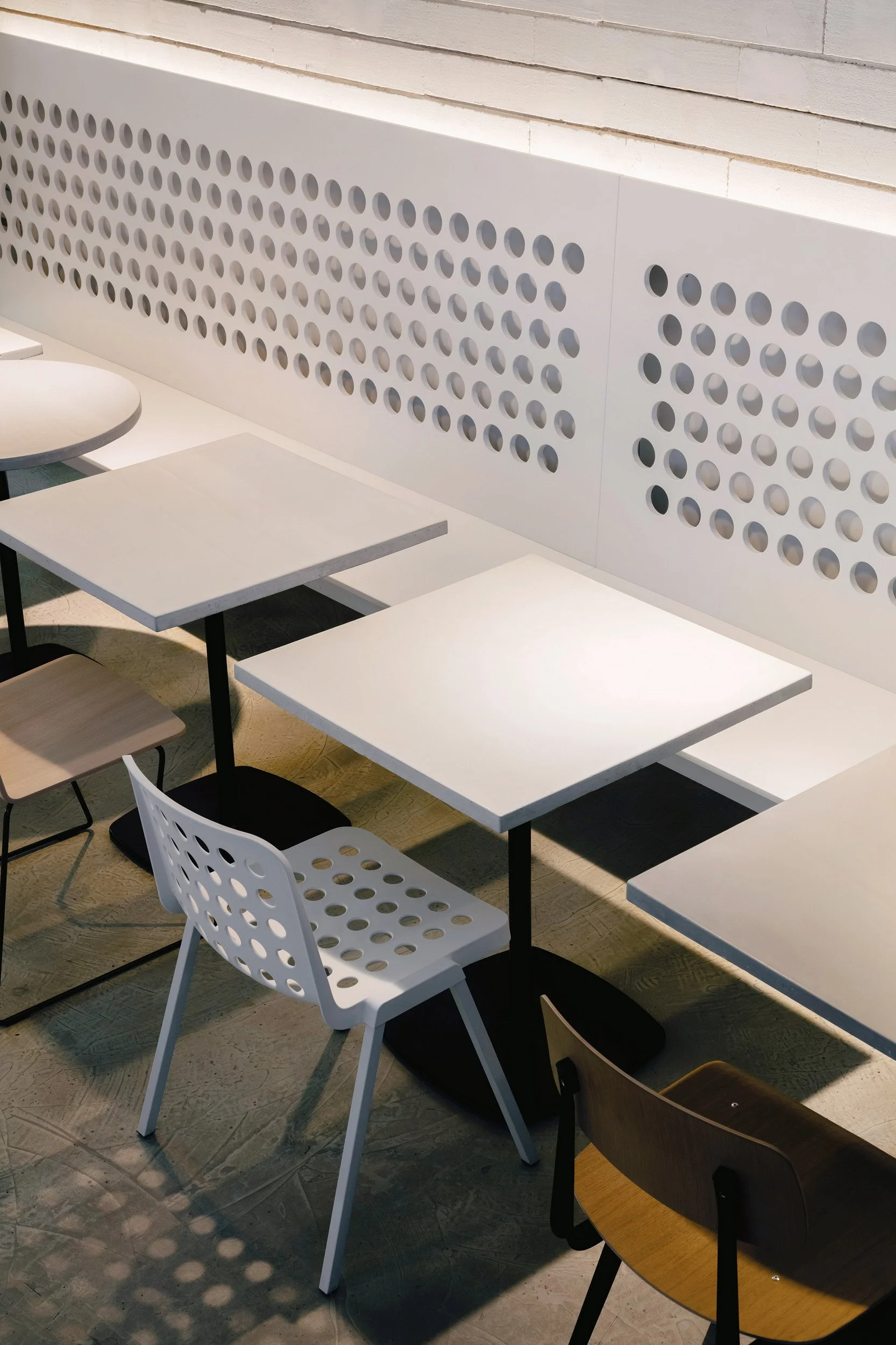
The remaining hall unfolds as a linear interior between two entrances — one from the street and one from the business centre. Seating is arranged along this internal passage, accommodating communal tables, smaller settings and bar stools at the counter. Ceilings and exposed ventilation are painted in neutral grey, while original wall cladding is partially restored and sealed with translucent lacquer. Floors and tabletops are finished in microcement, chosen for its durability and seamless appearance.
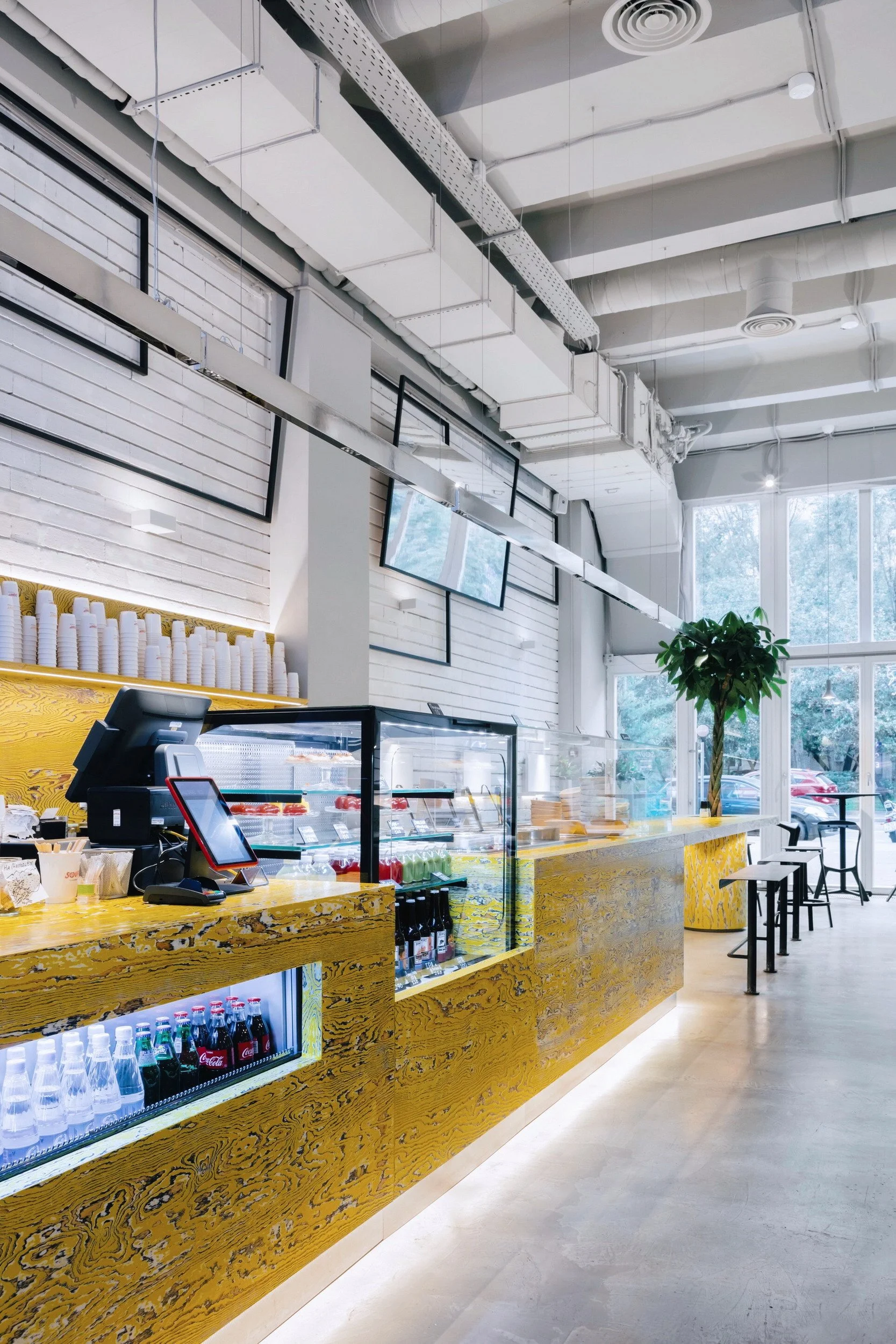
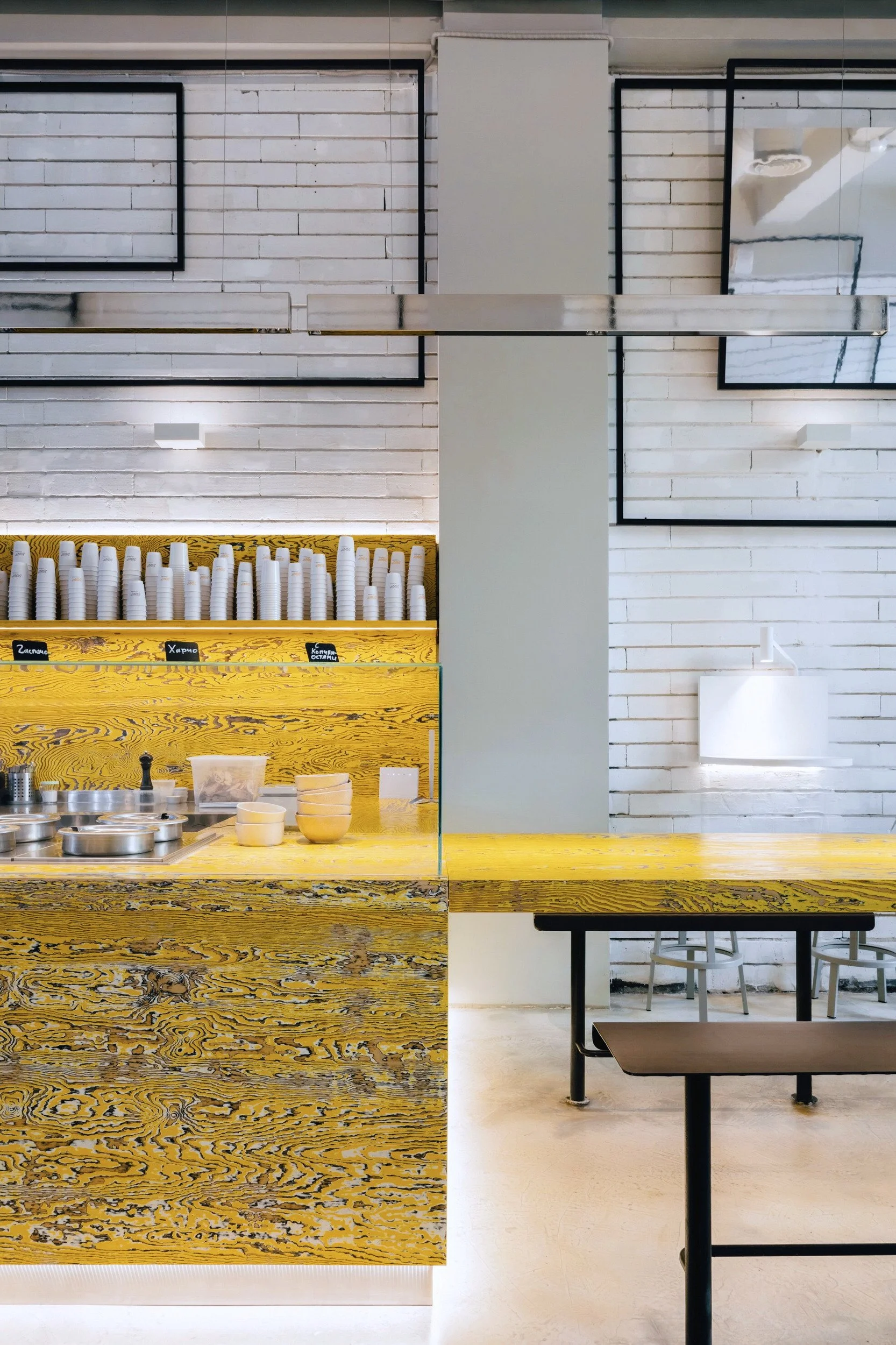
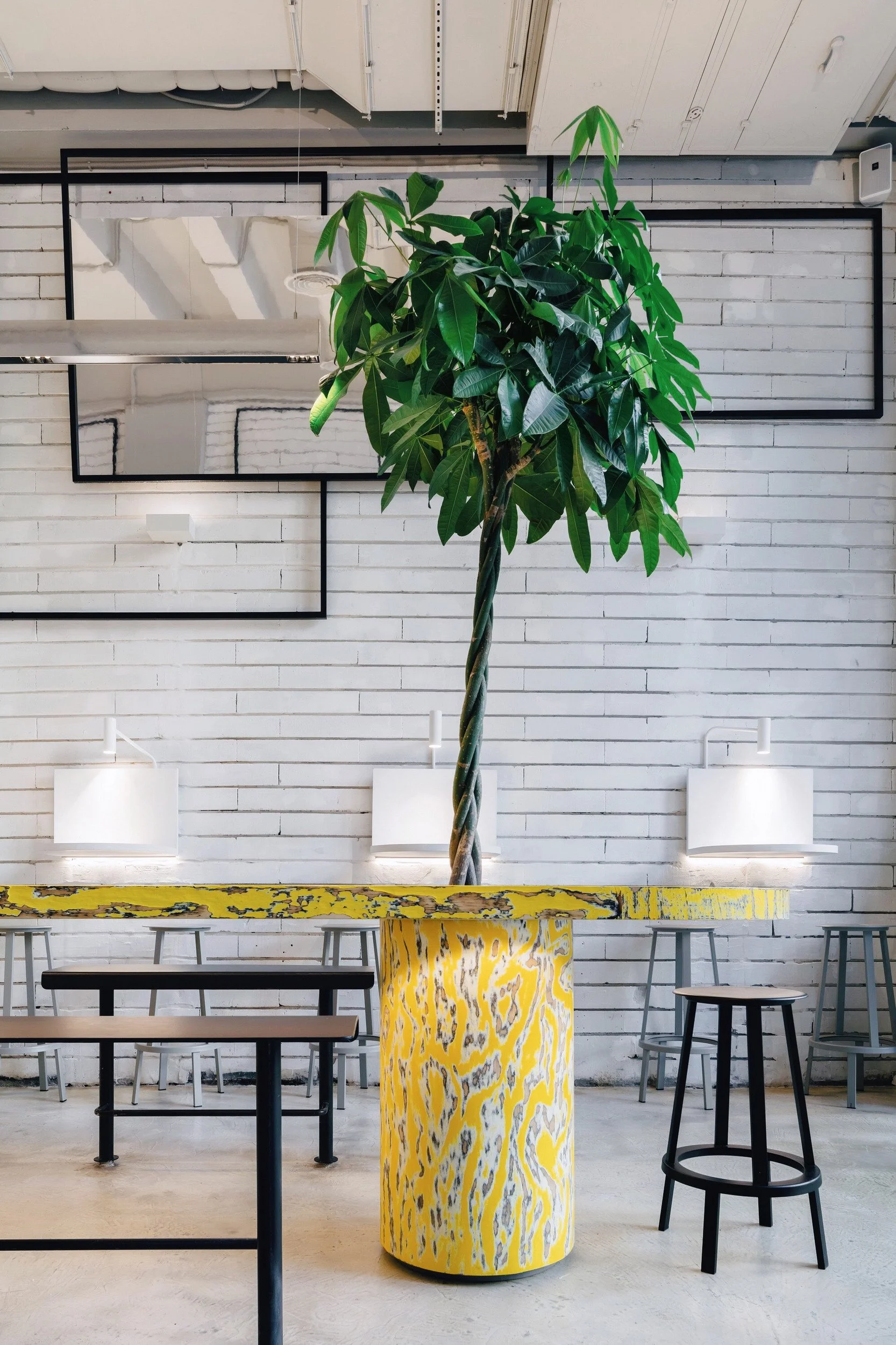
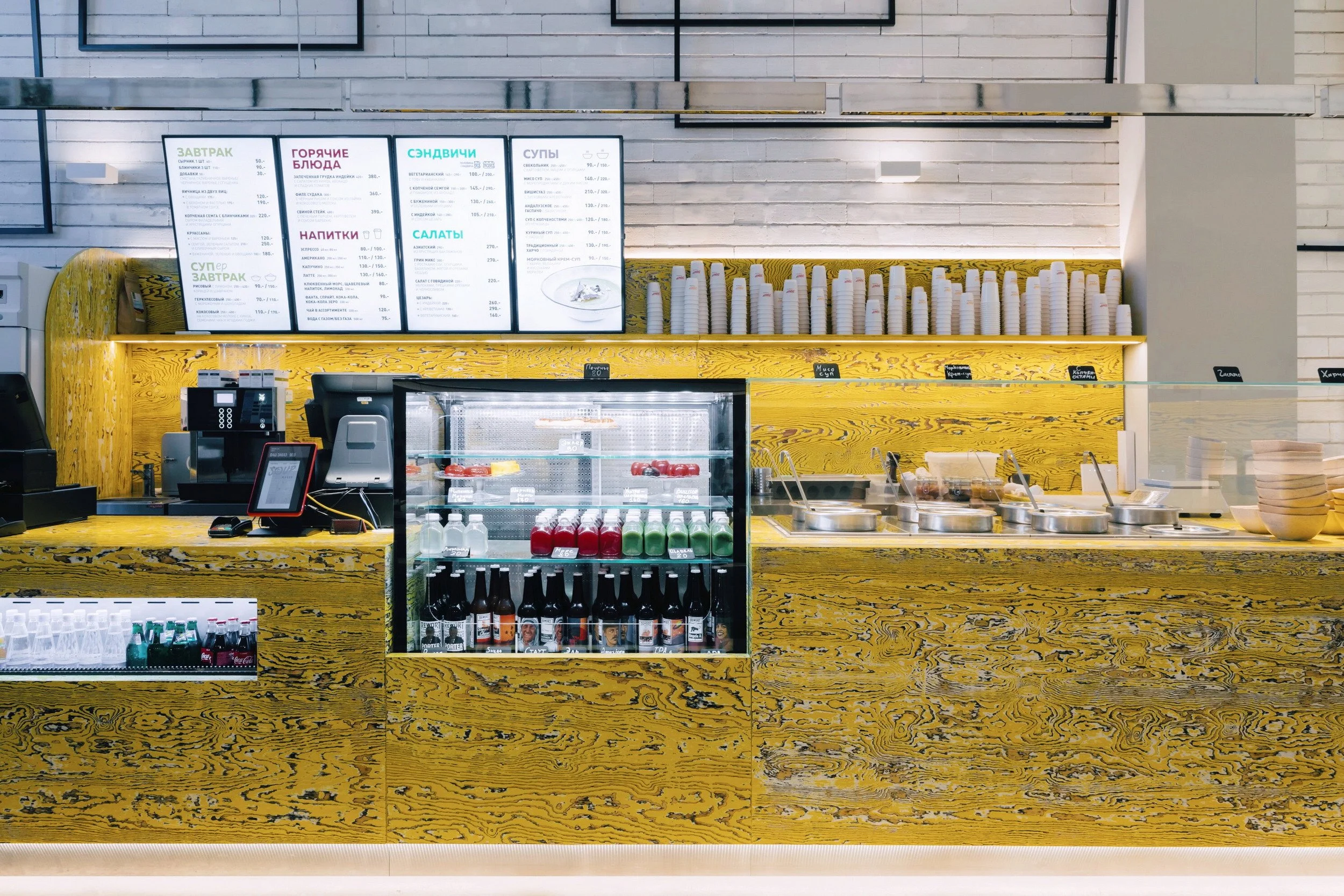
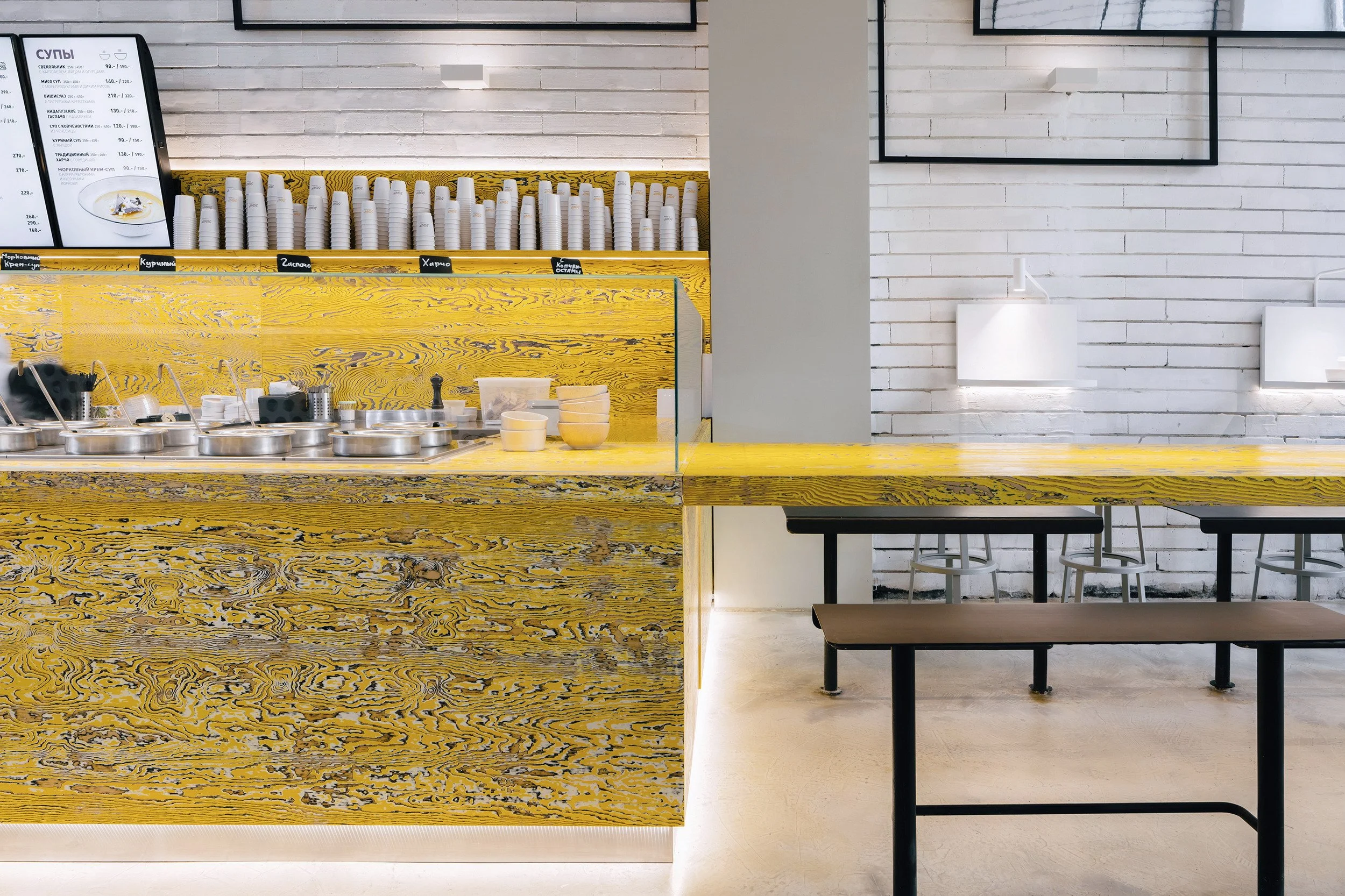
At the centre of the composition stands a bright yellow plywood bar counter, treated using a traditional Japanese wood-finishing technique. It acts as an important zoning element of the café, functioning simultaneously as product display, service area, cash desk and communal table with integrated planting. The gesture introduces warmth and a distinct focal point within the raw architectural shell. Large black frames are dispersed across the walls, subtly referencing the building’s printing-house past while visually activating the tall vertical surfaces.
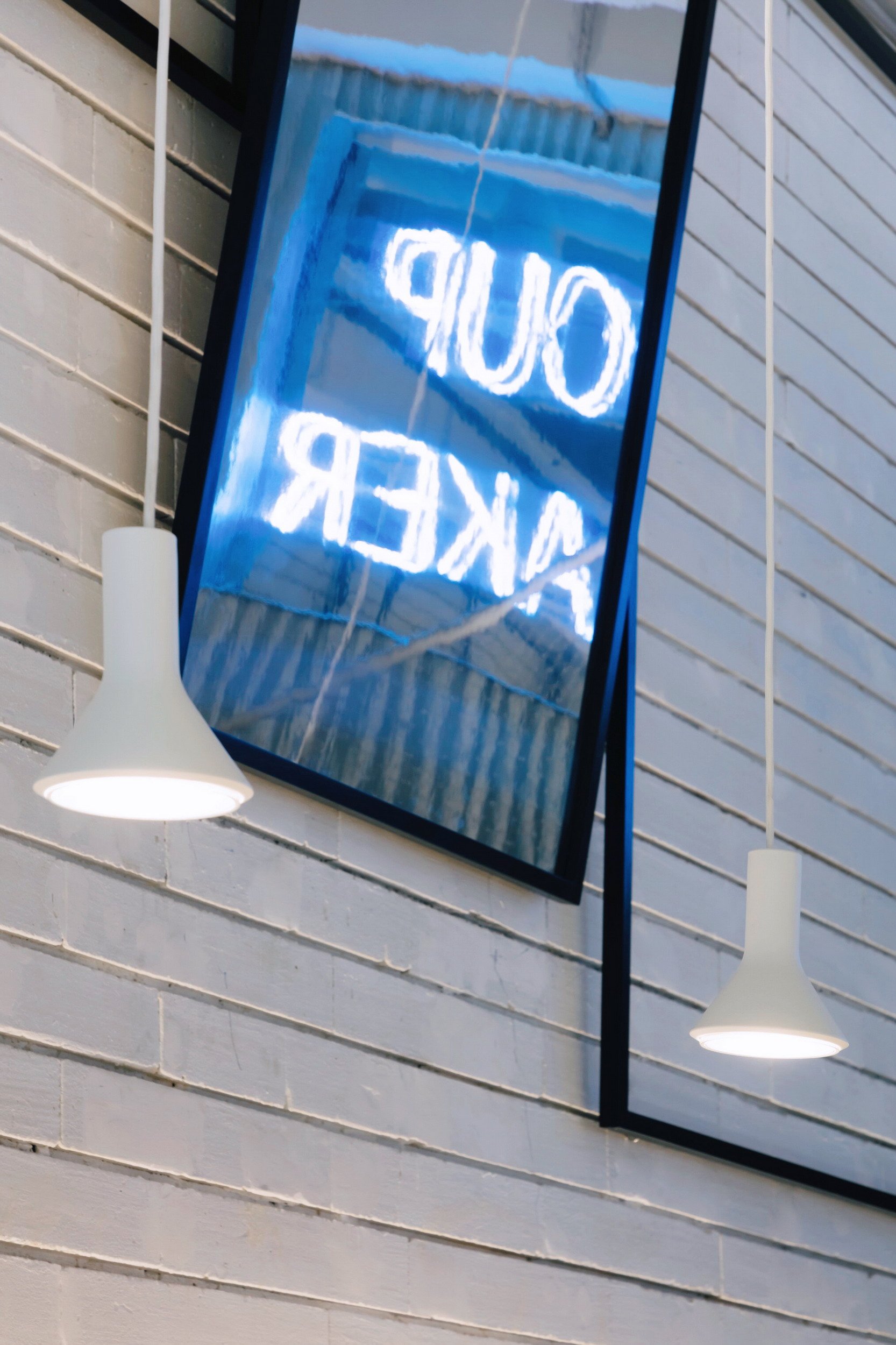
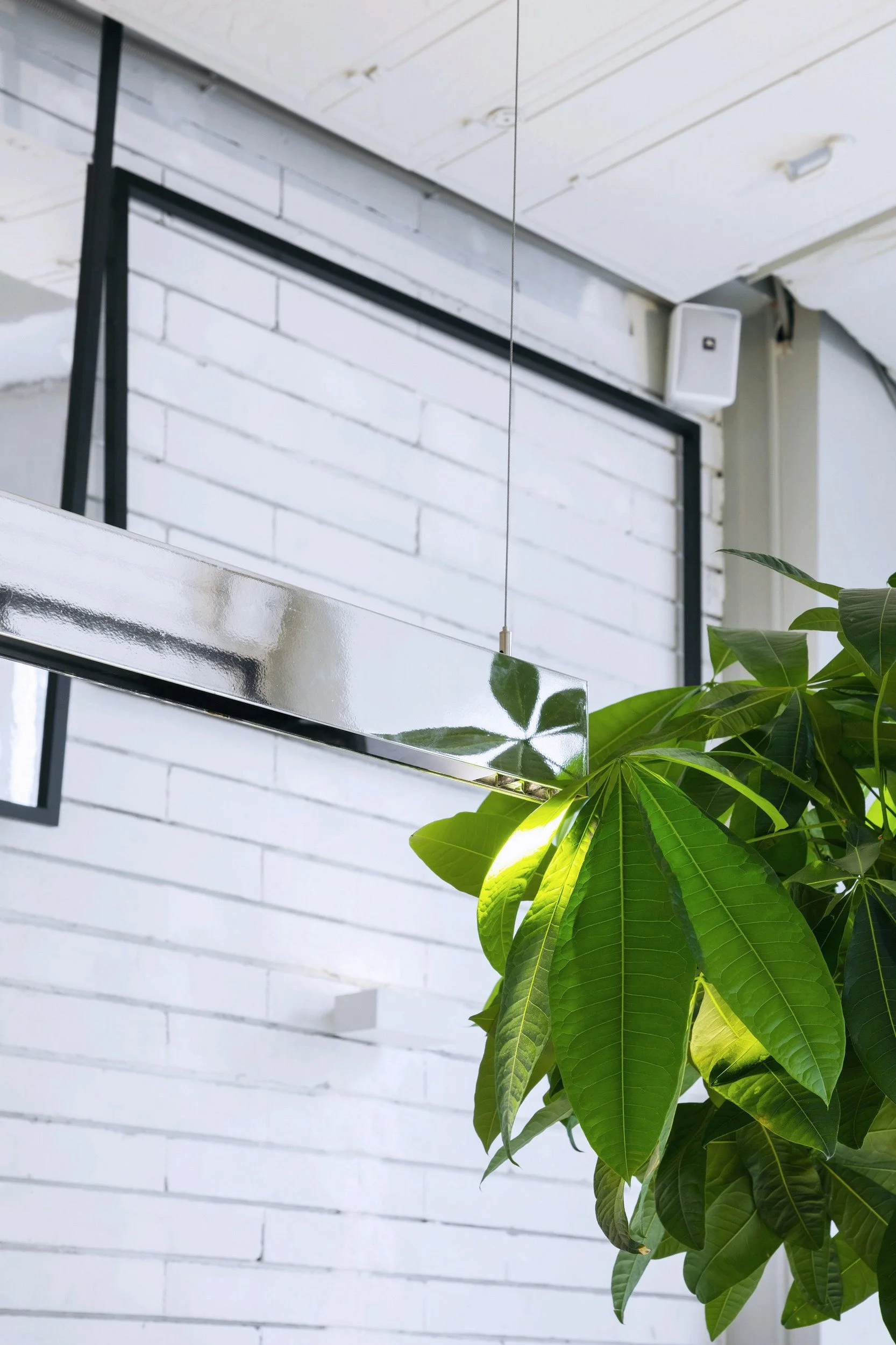
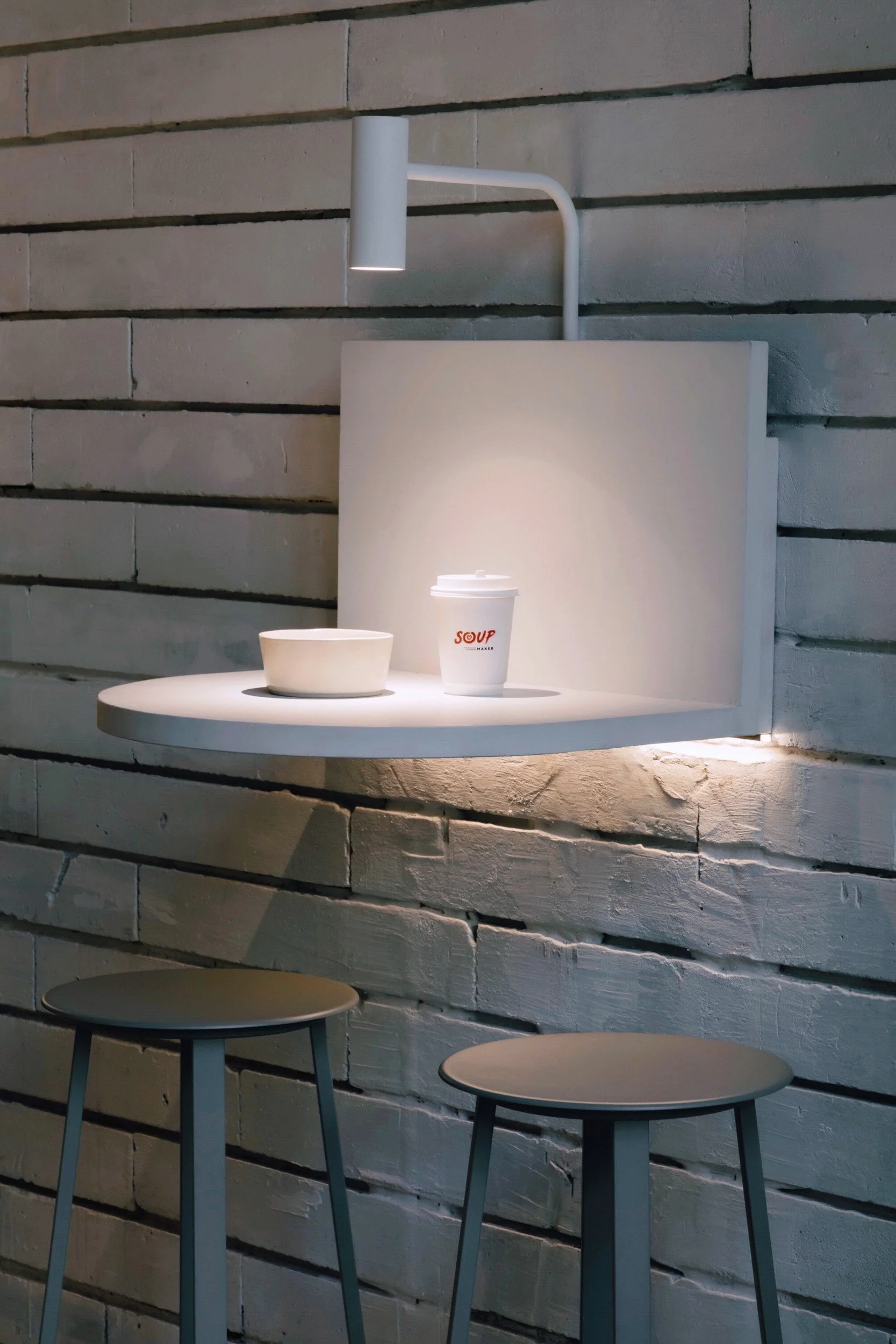
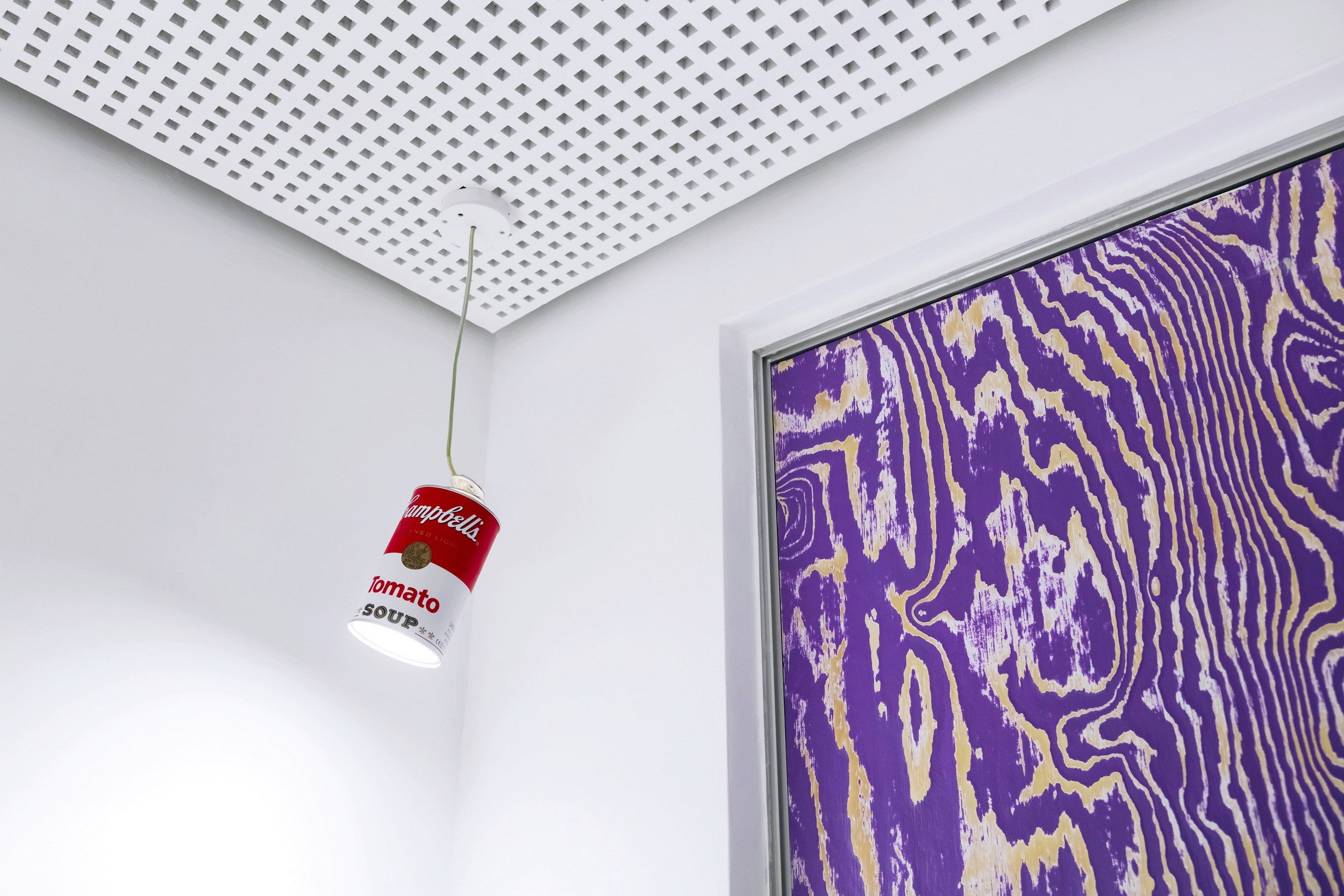
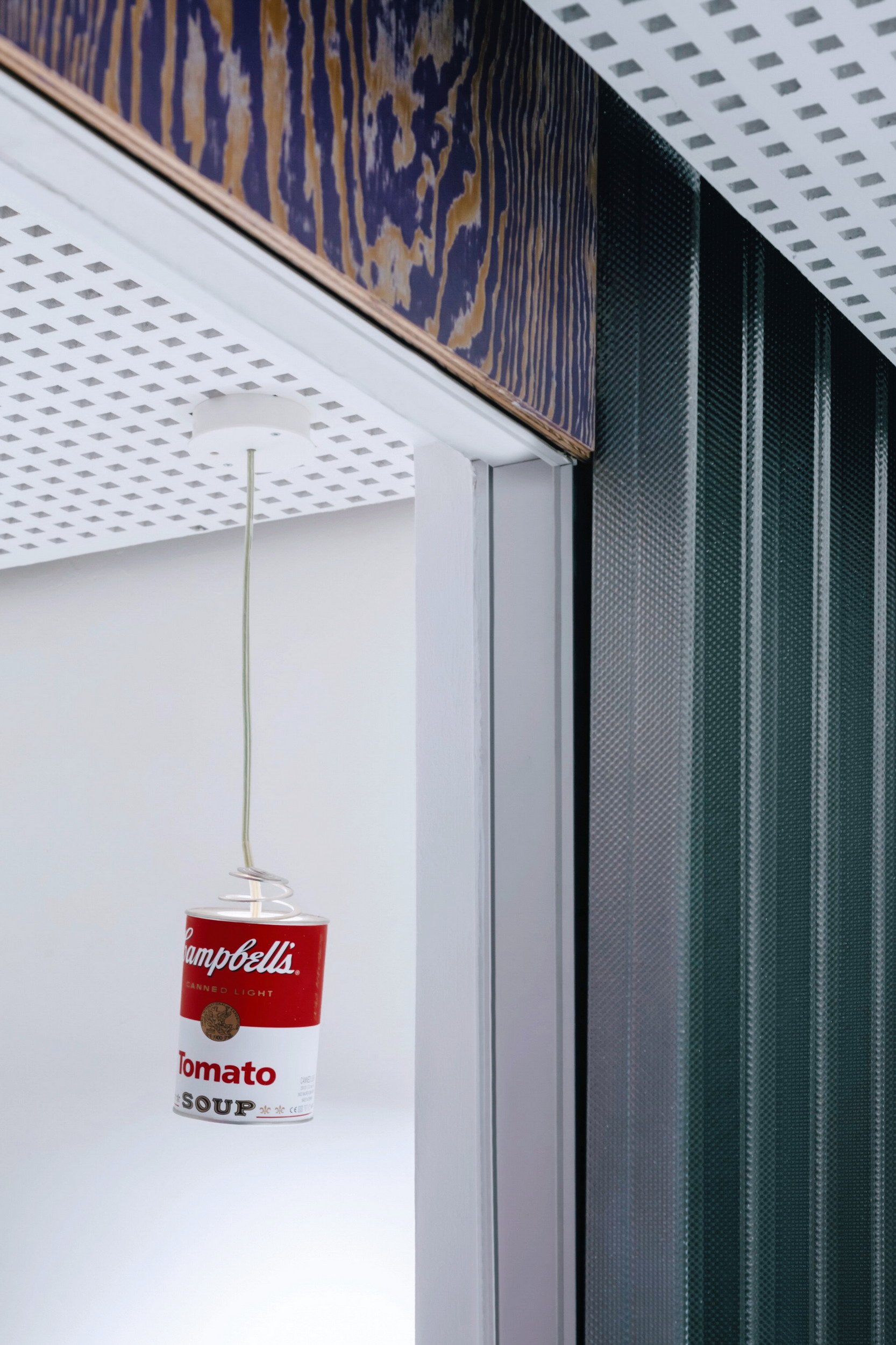
Lighting plays a defining role in shaping the atmosphere. Wall-mounted uplights with professional optics provide soft reflected illumination across the ceiling, while custom sconces and pendant fixtures articulate the dining areas. In the bathrooms, Campbell’s Soup luminaires by Ingo Maurer bring a playful accent. Neon signage activates the interior and draws attention from the street in the evening. Most elements were custom-designed for the project, complemented by selected contemporary furniture pieces that introduce subtle Asian references.

Team: Evgeniy Shchetinkin, Elizaveta Semeonova, Polina Nikolaeva
Photo: Dmitry Chebanenko

Publications: Superfuture, Interior+Design, Inspirationist, Design Mate