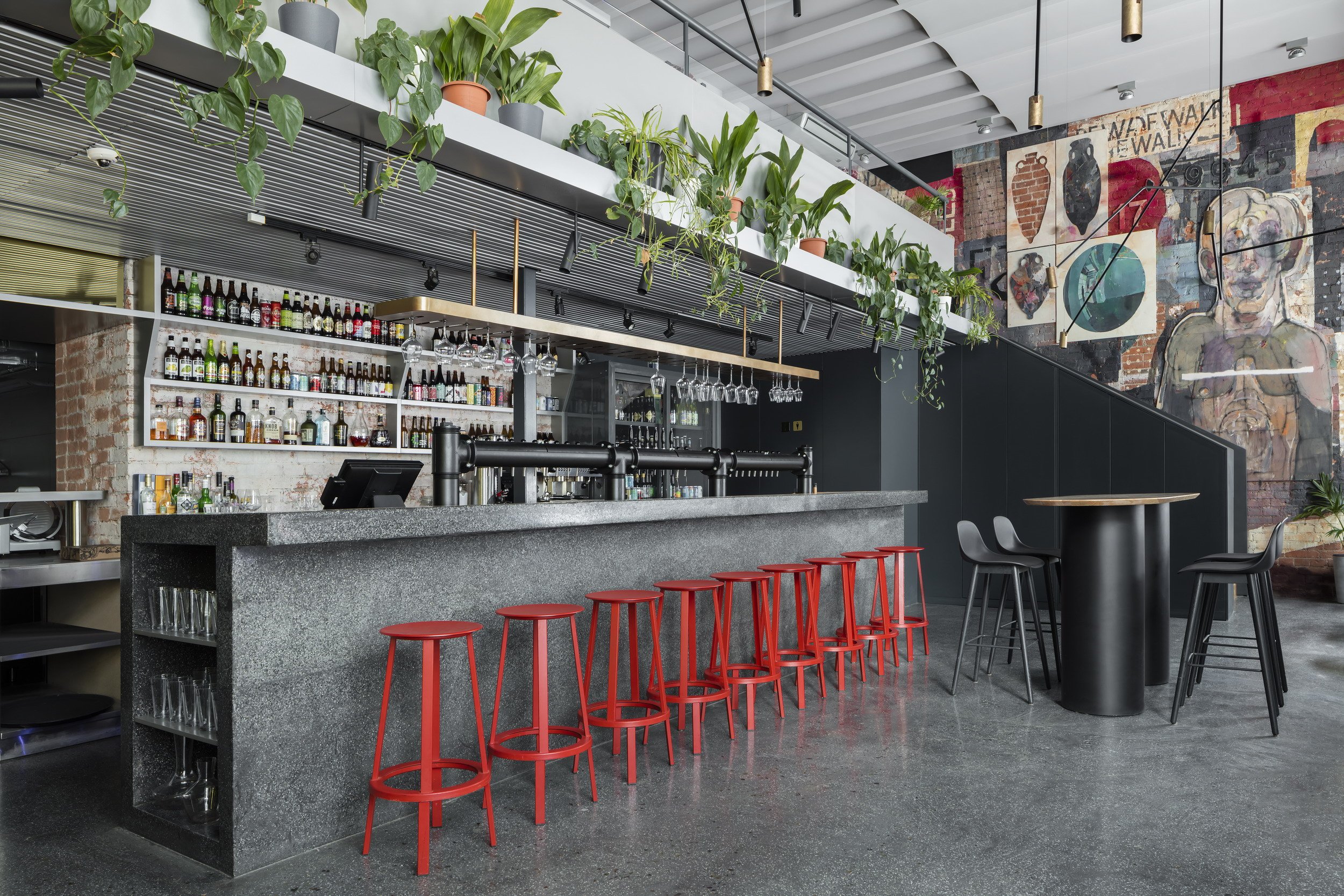
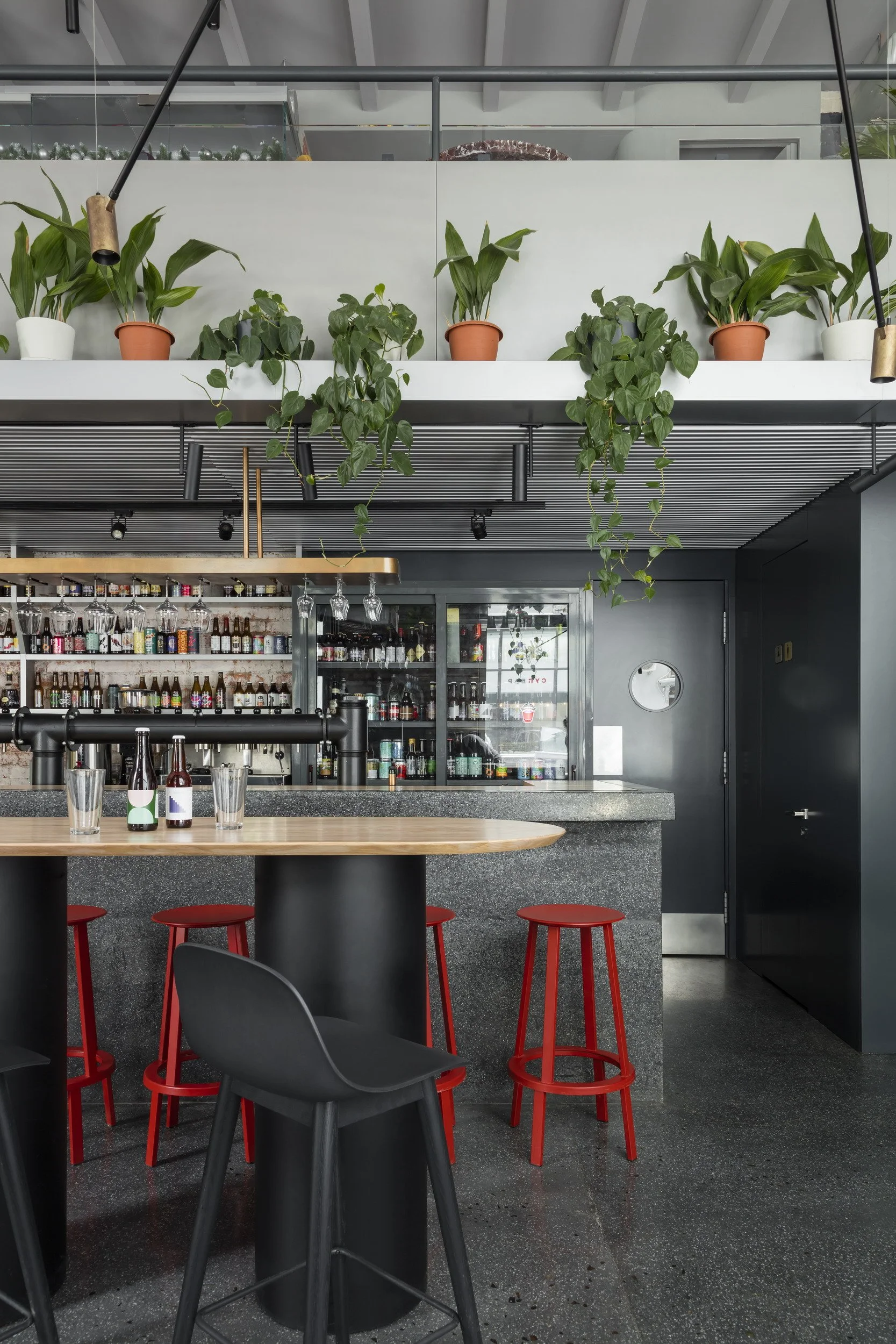
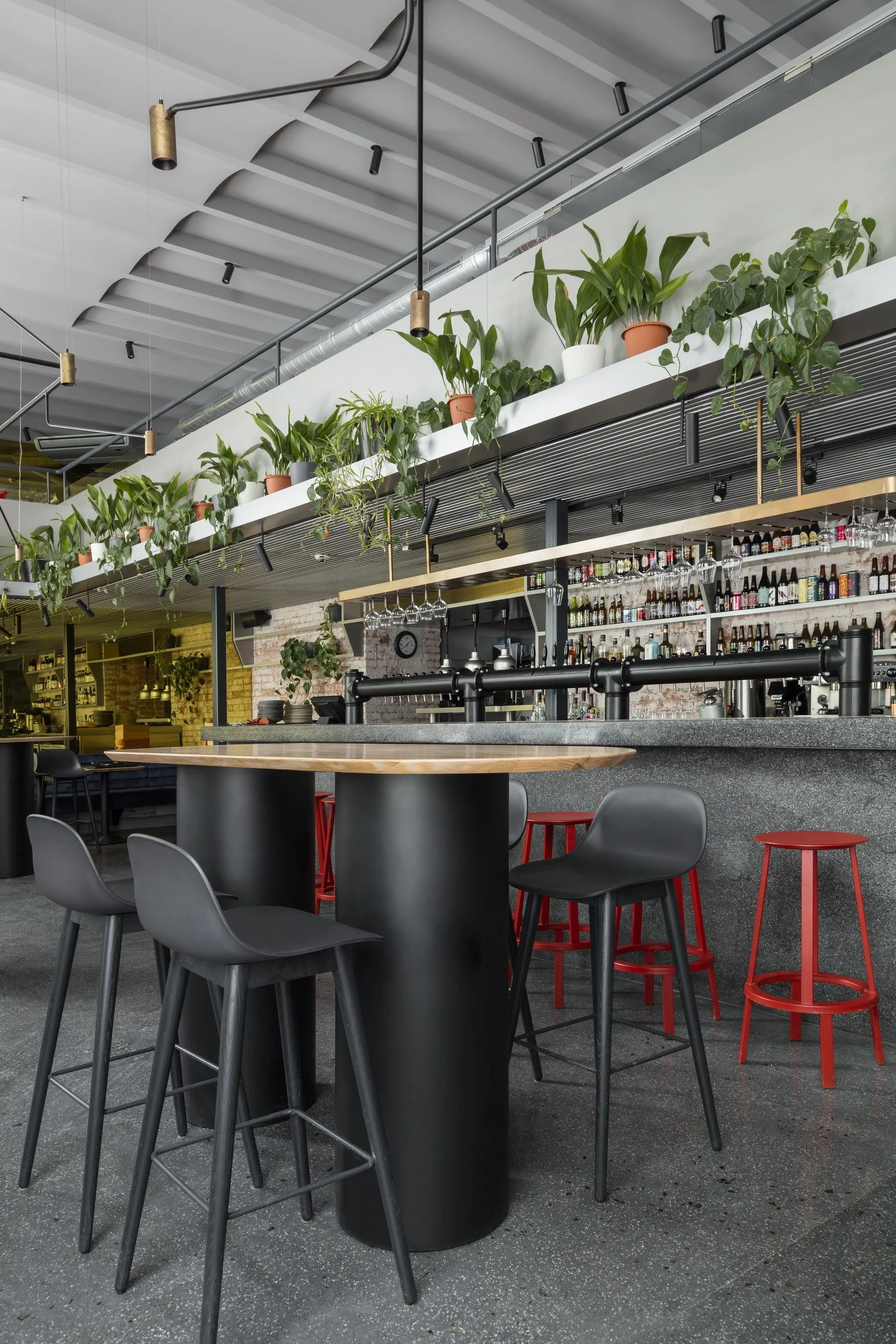
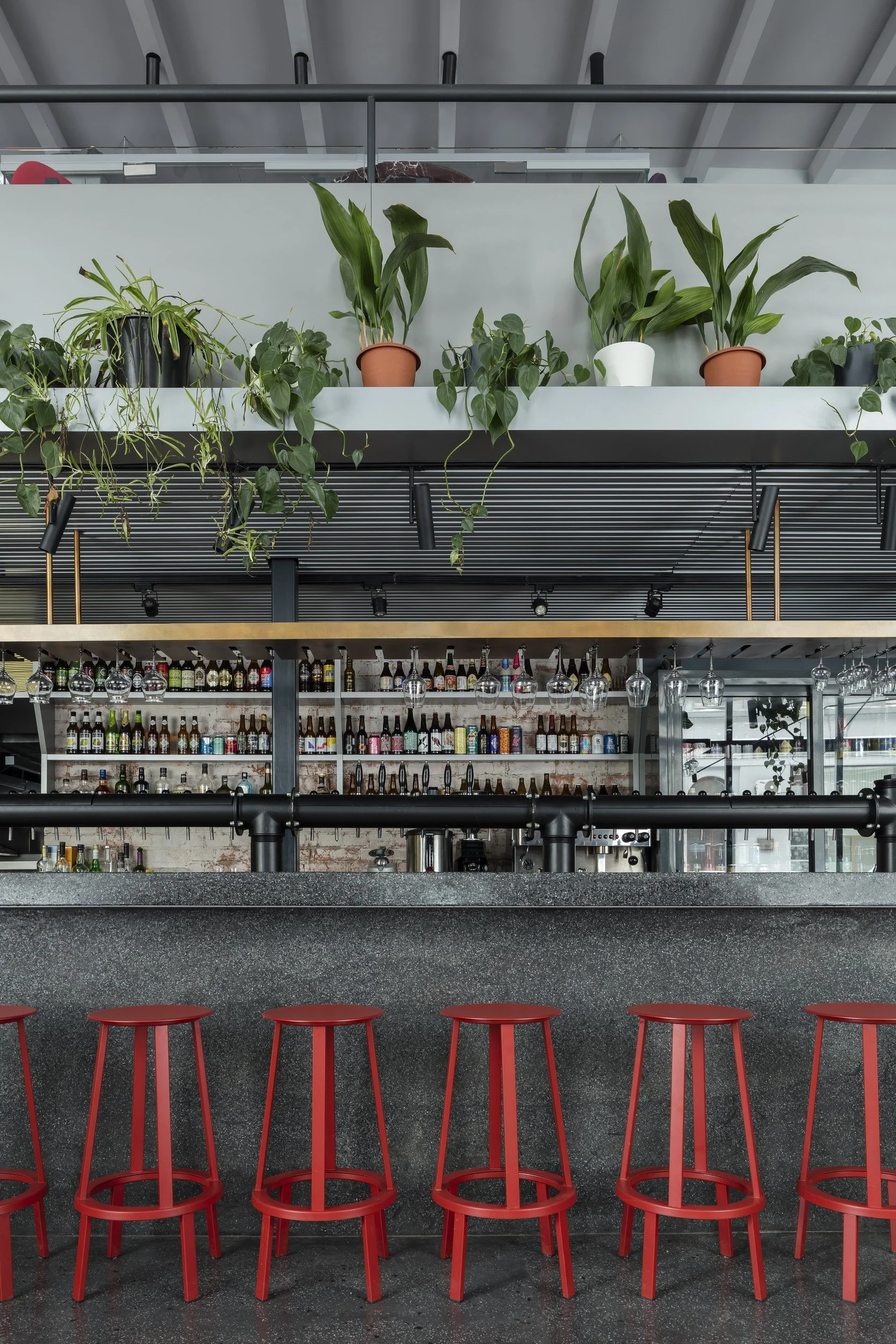
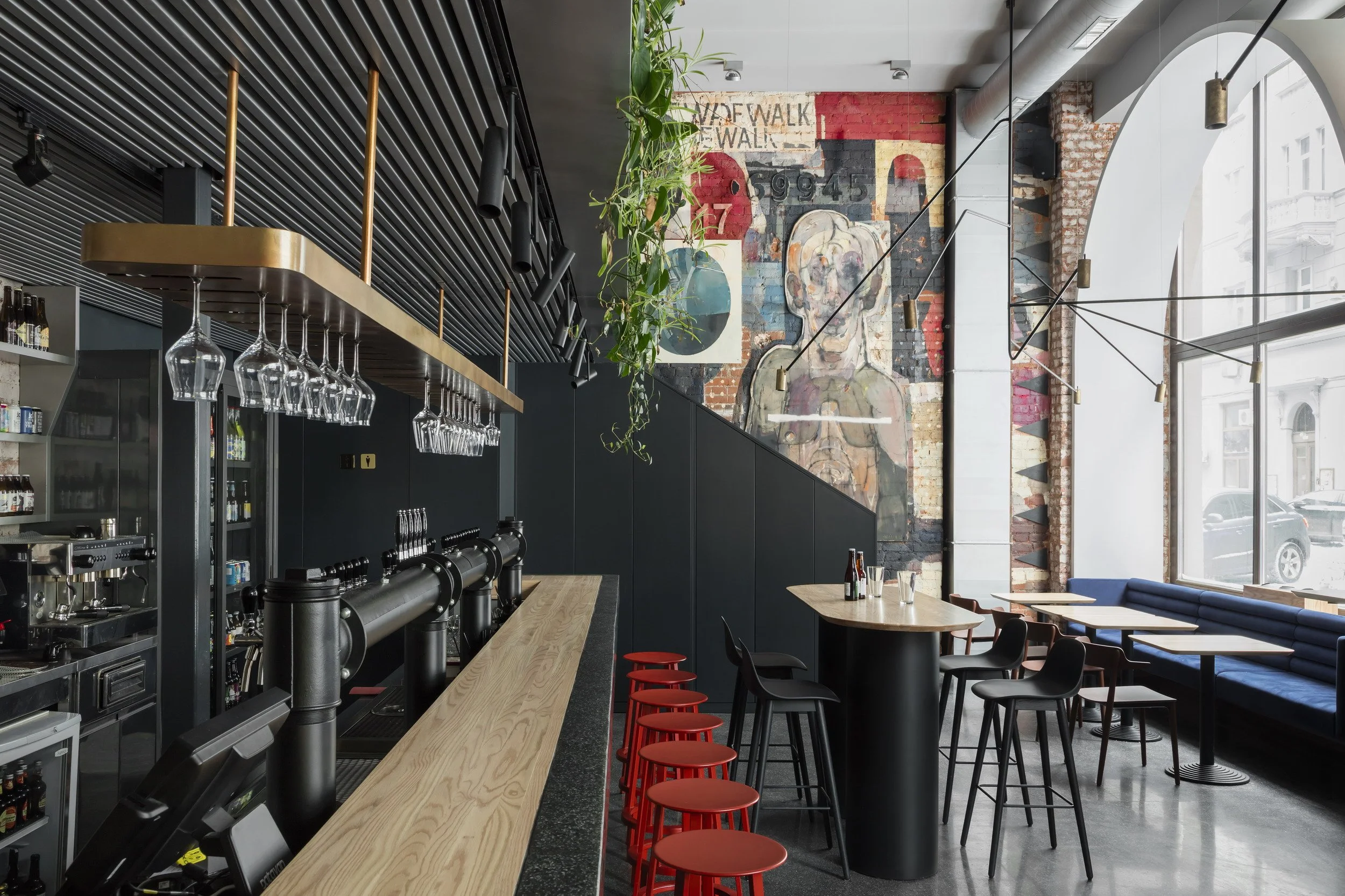
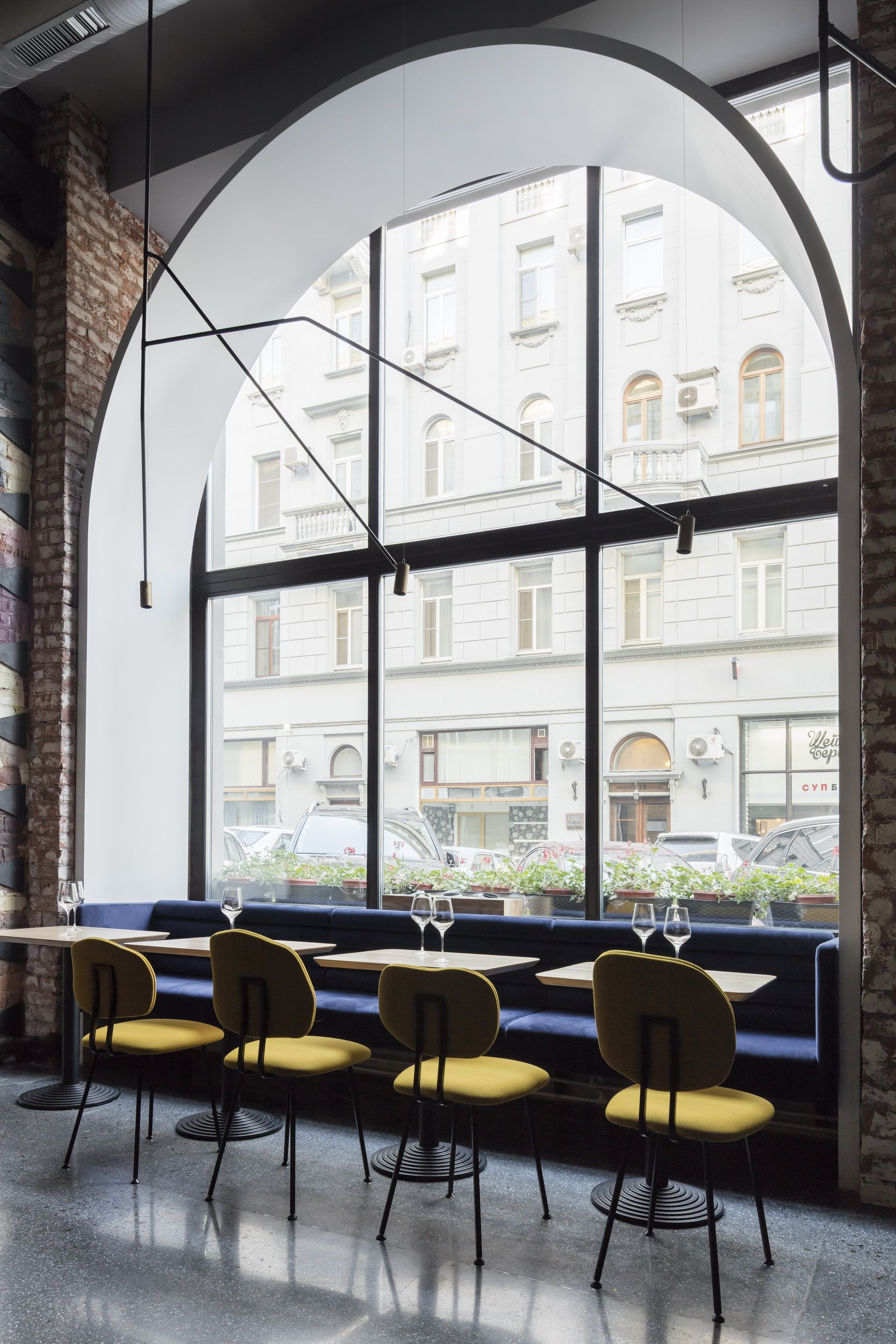
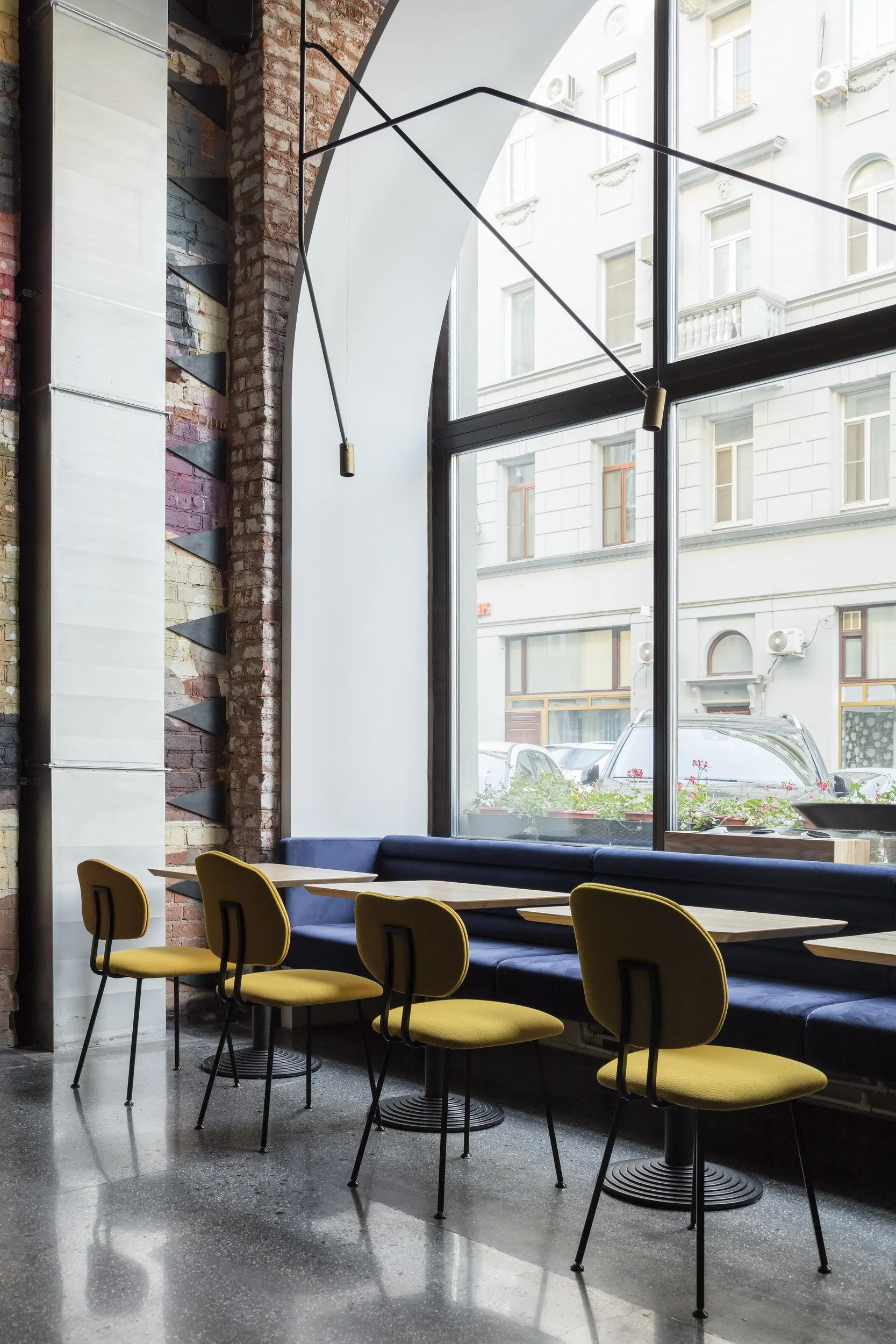
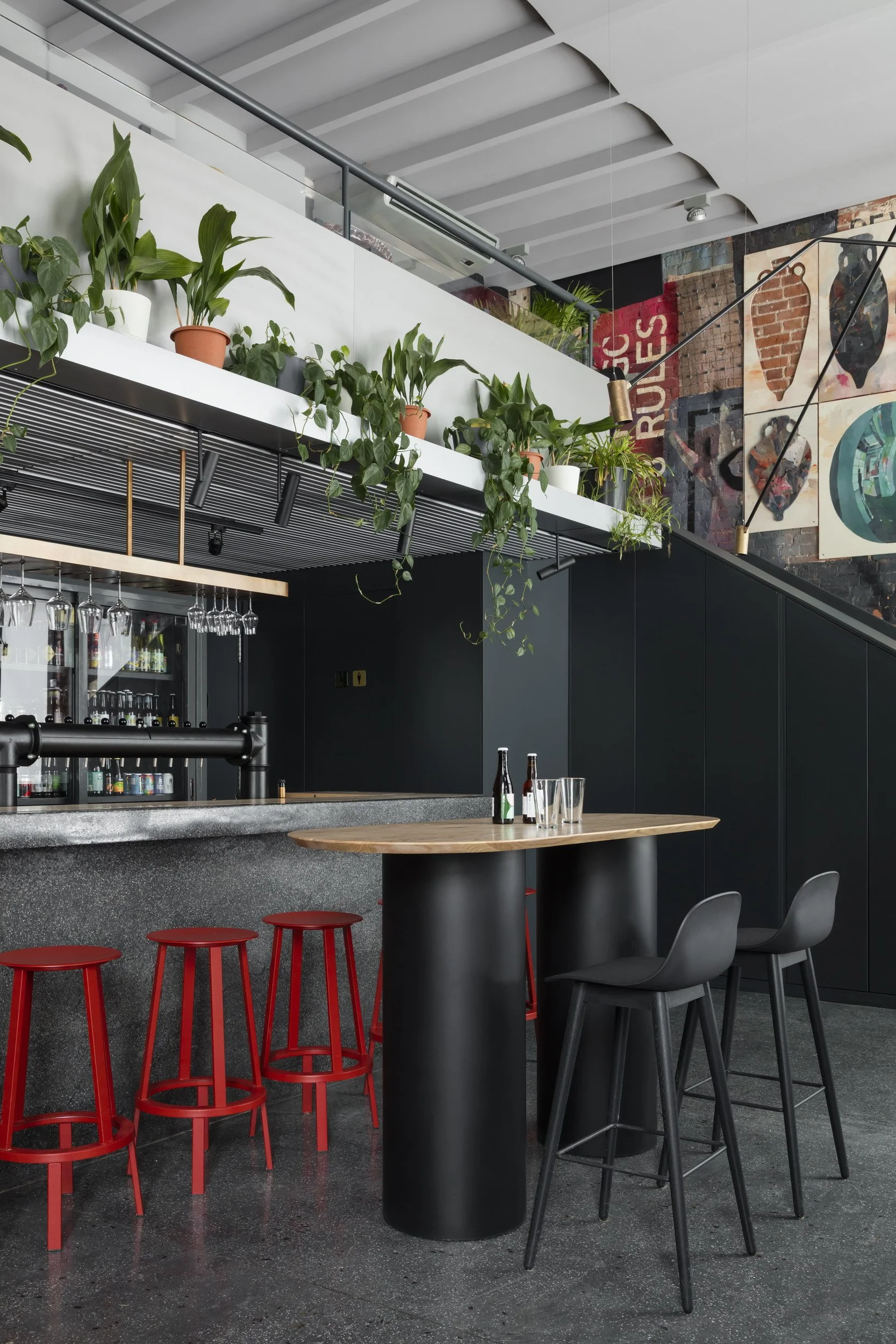
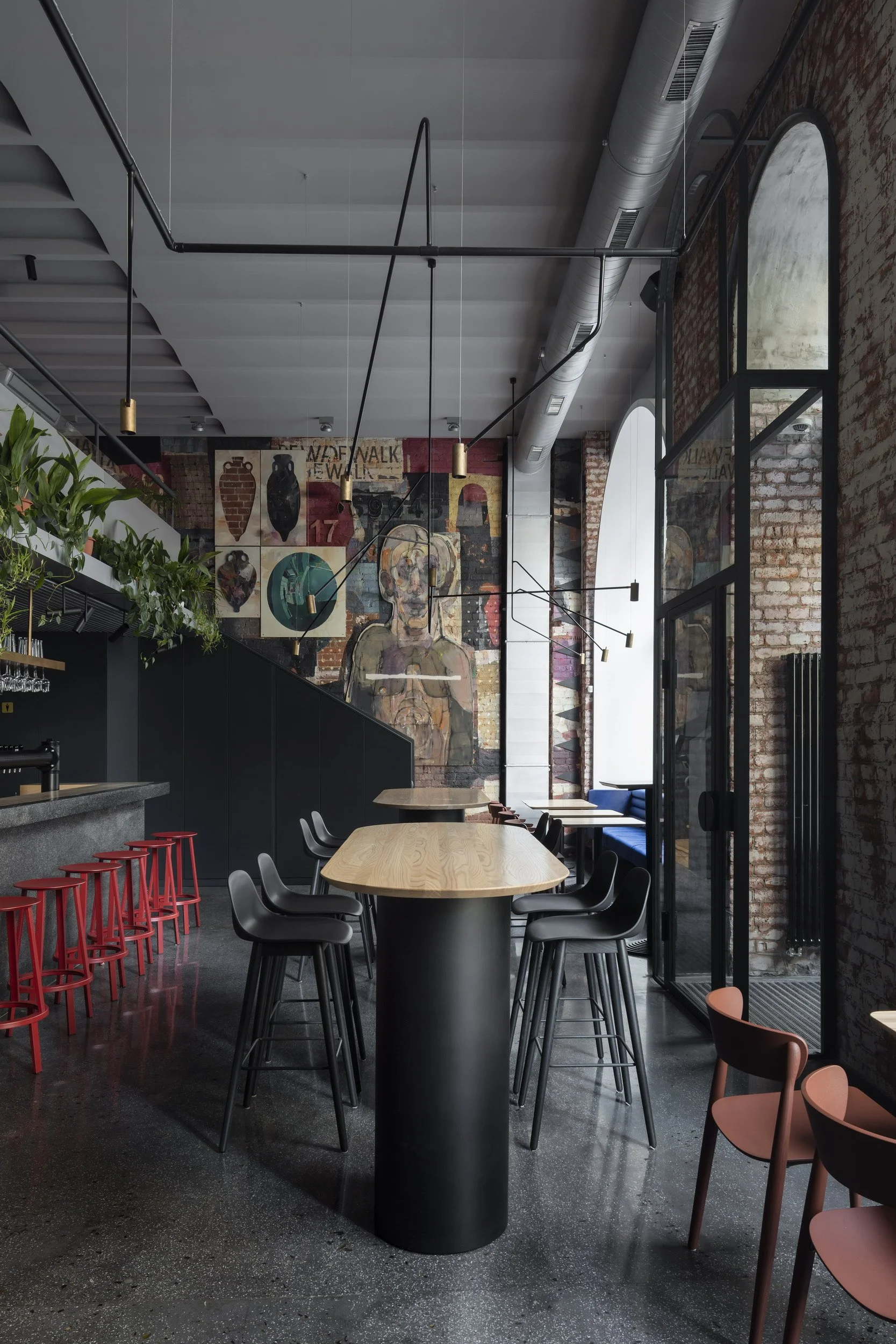
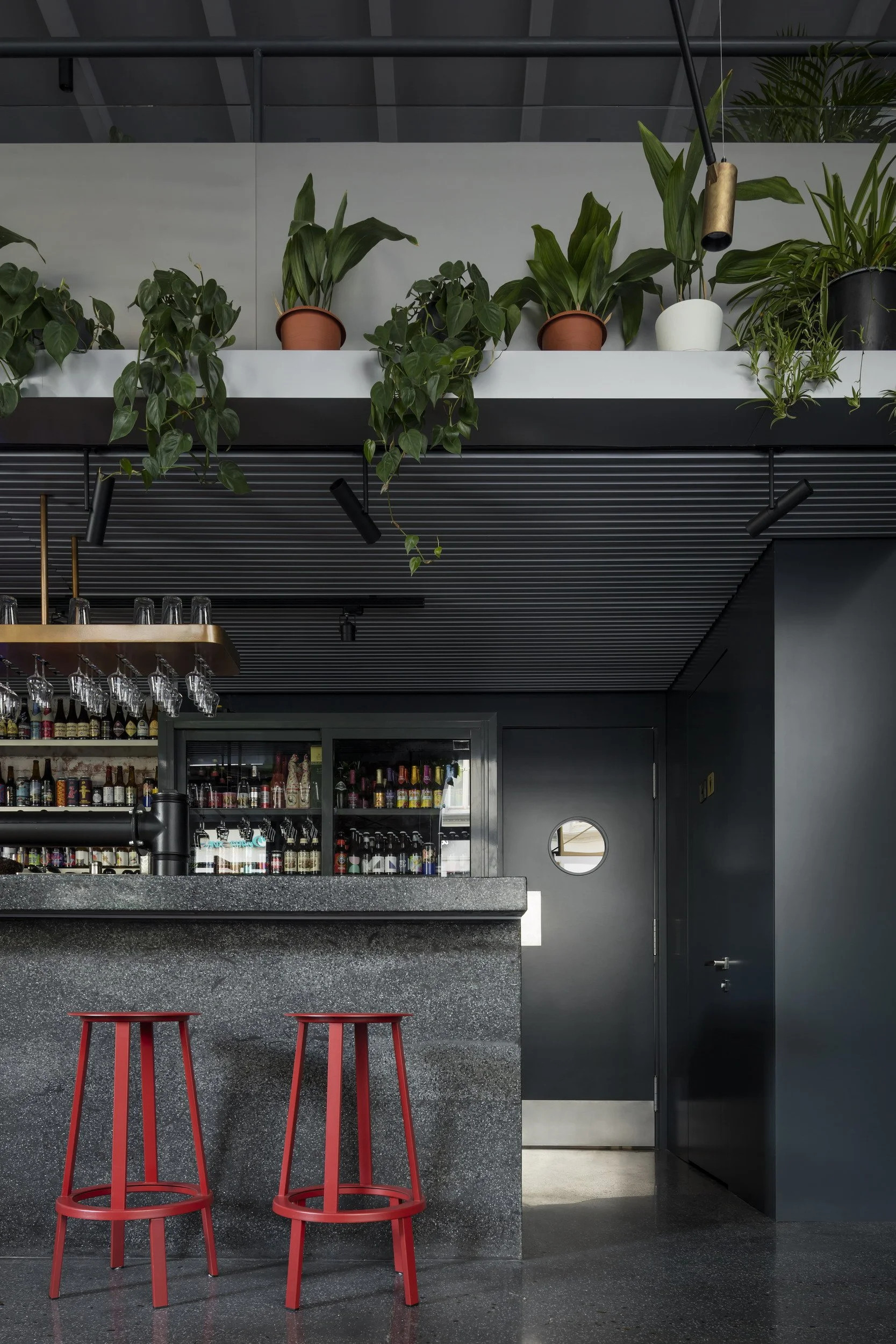
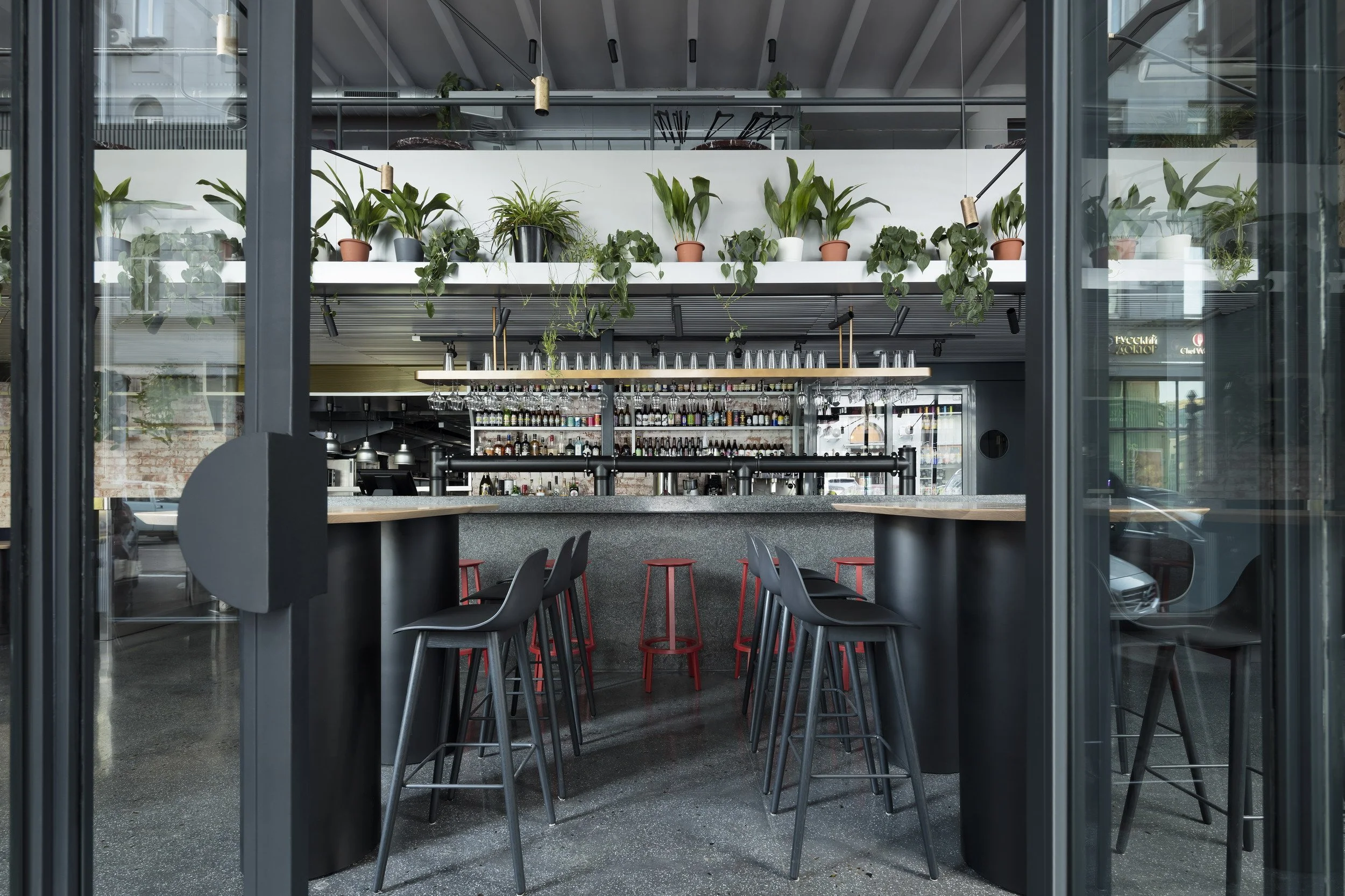
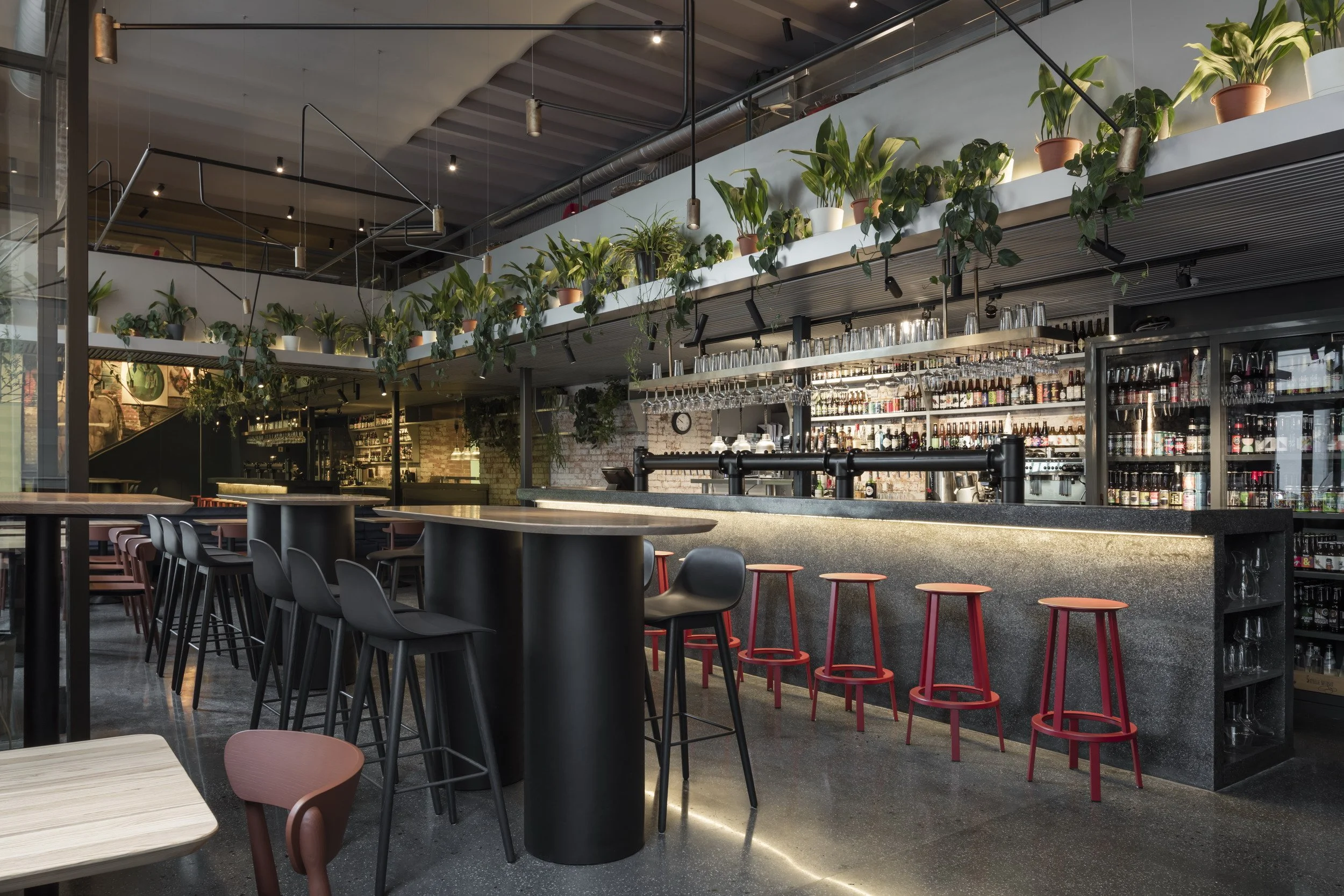
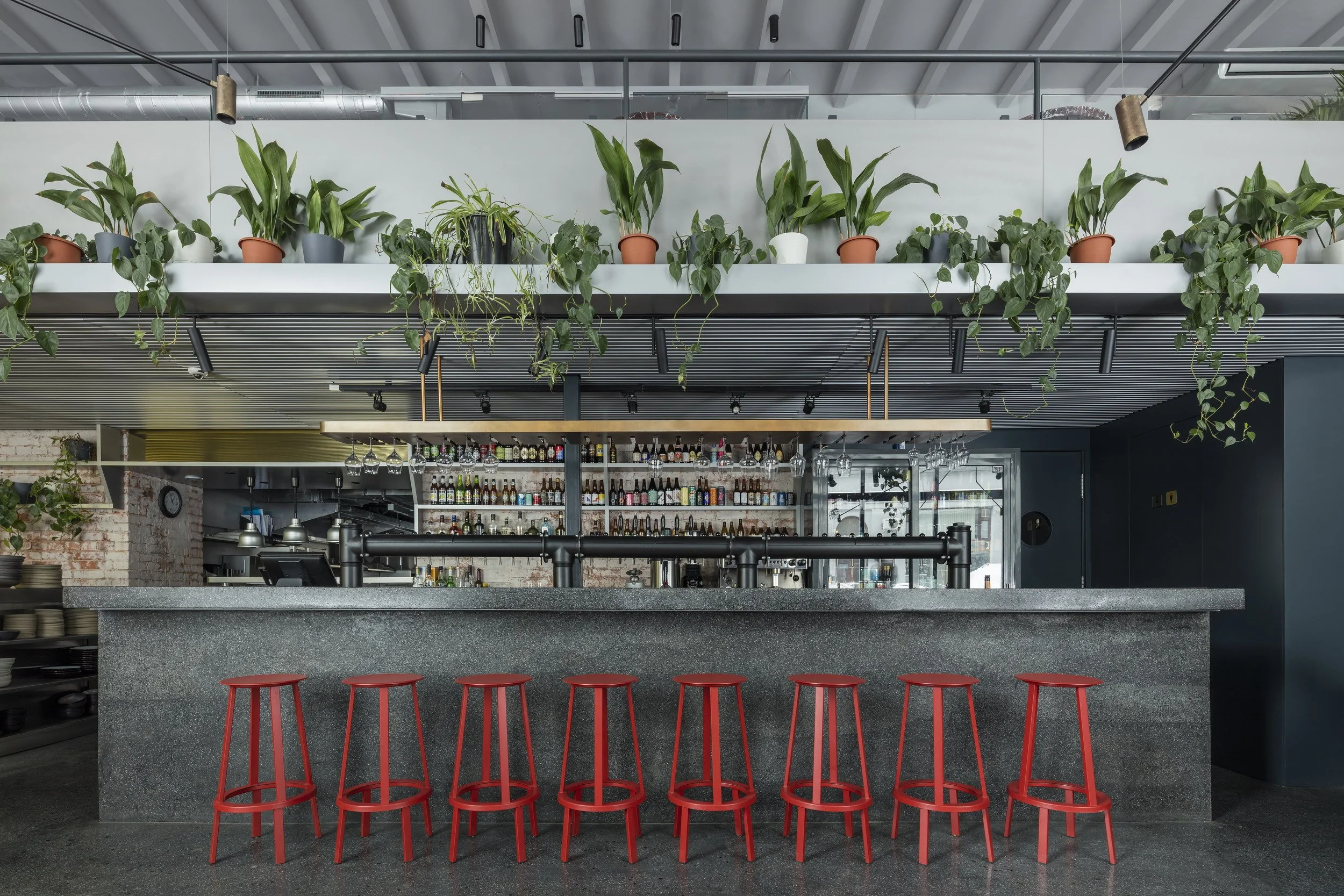
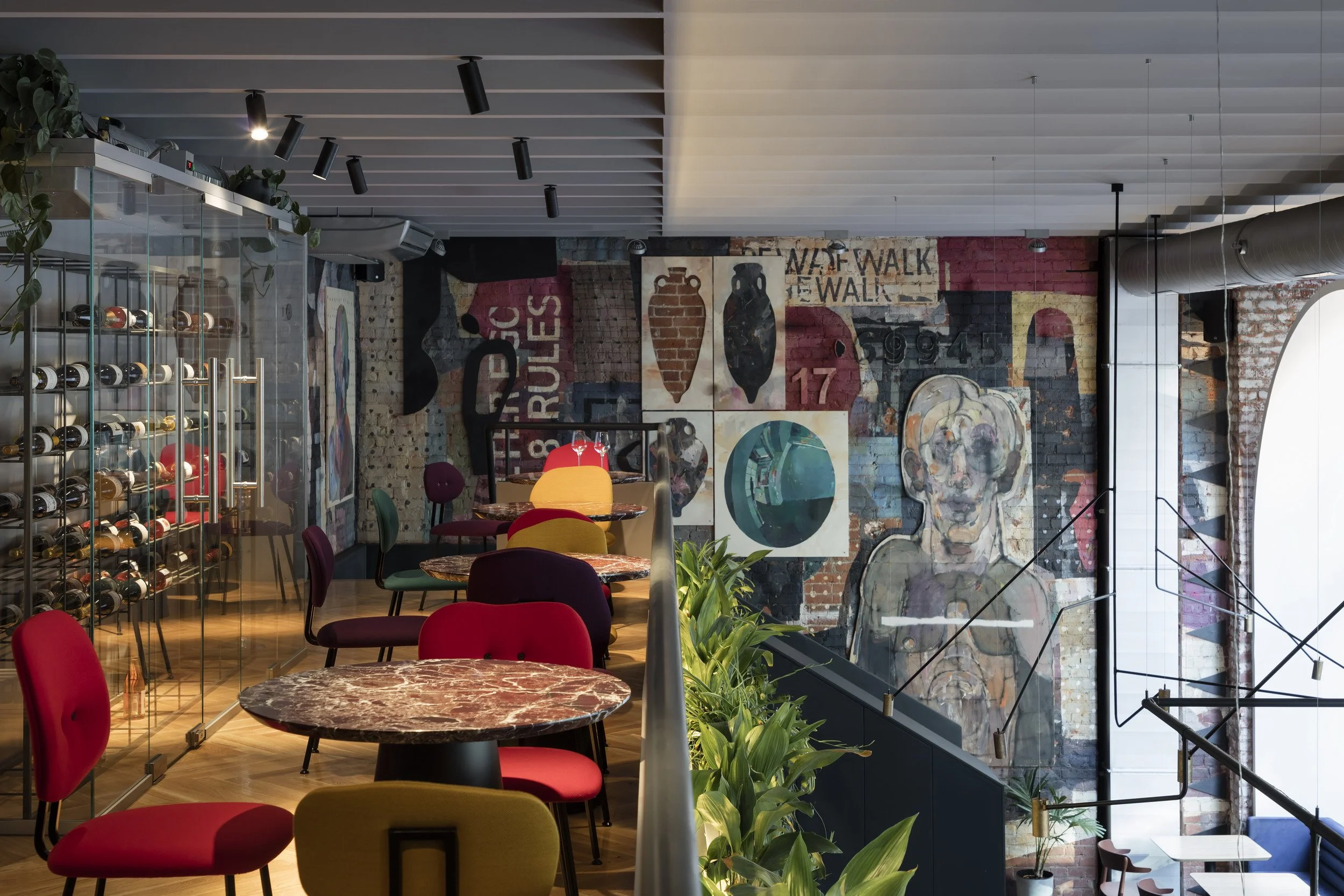
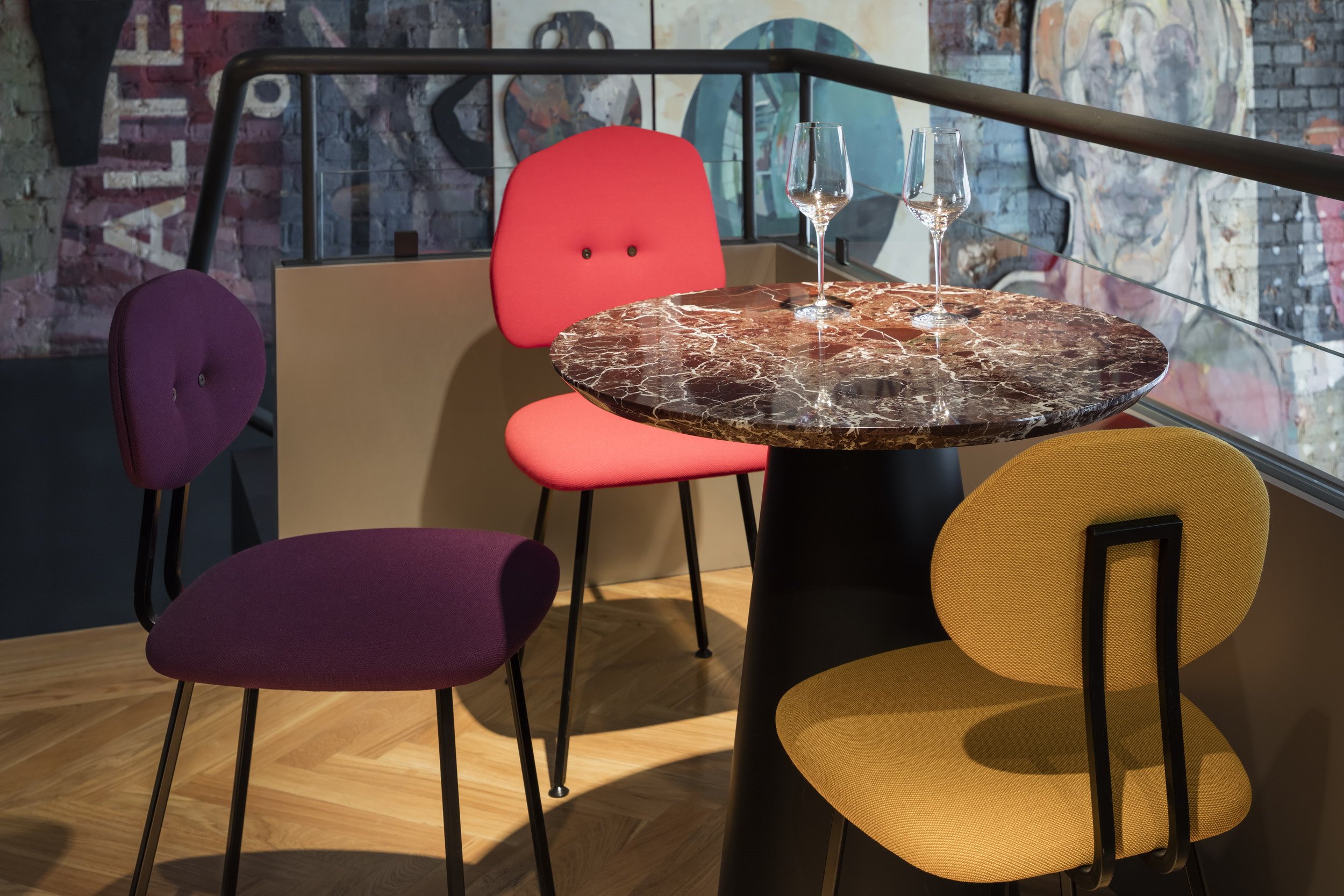
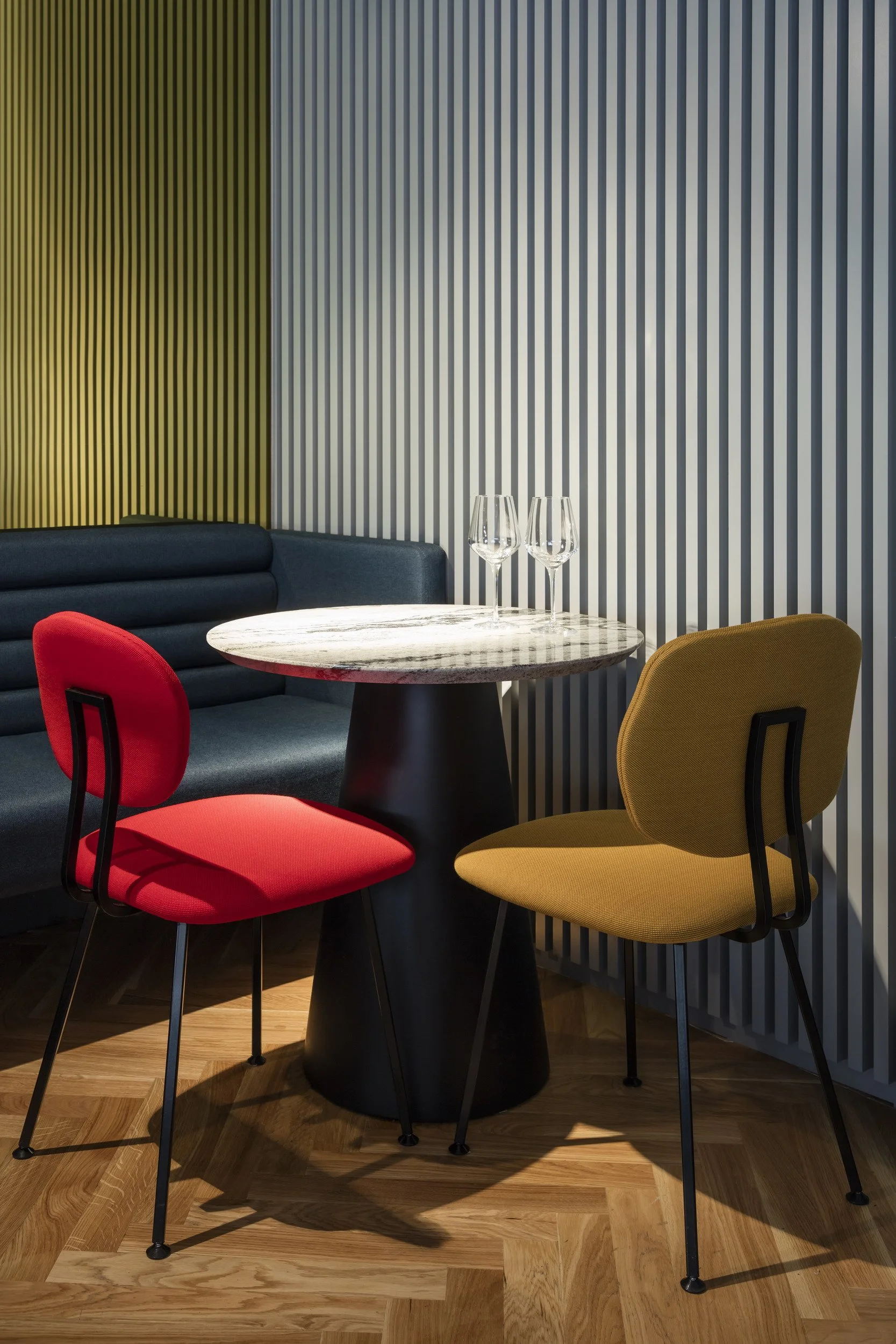
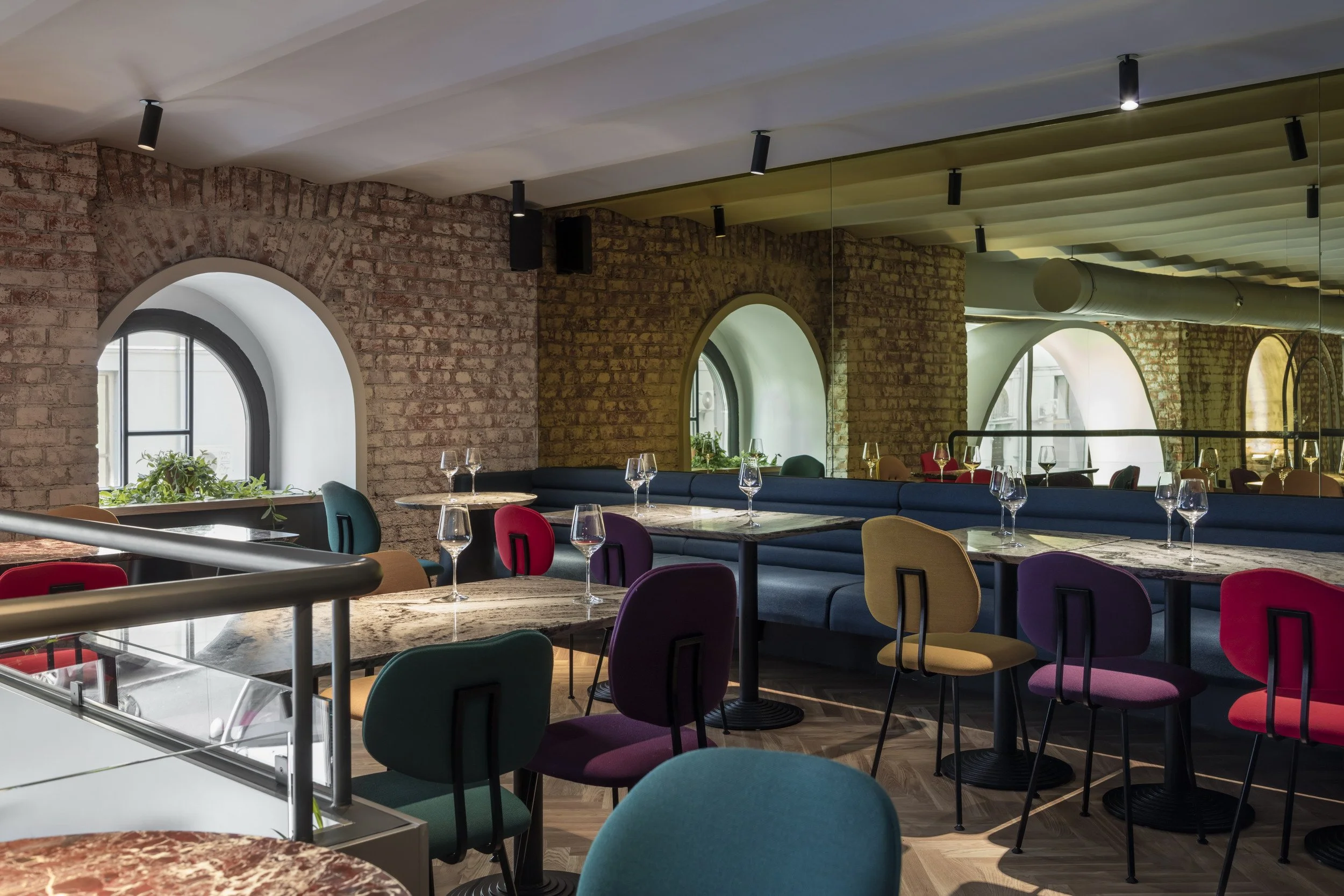
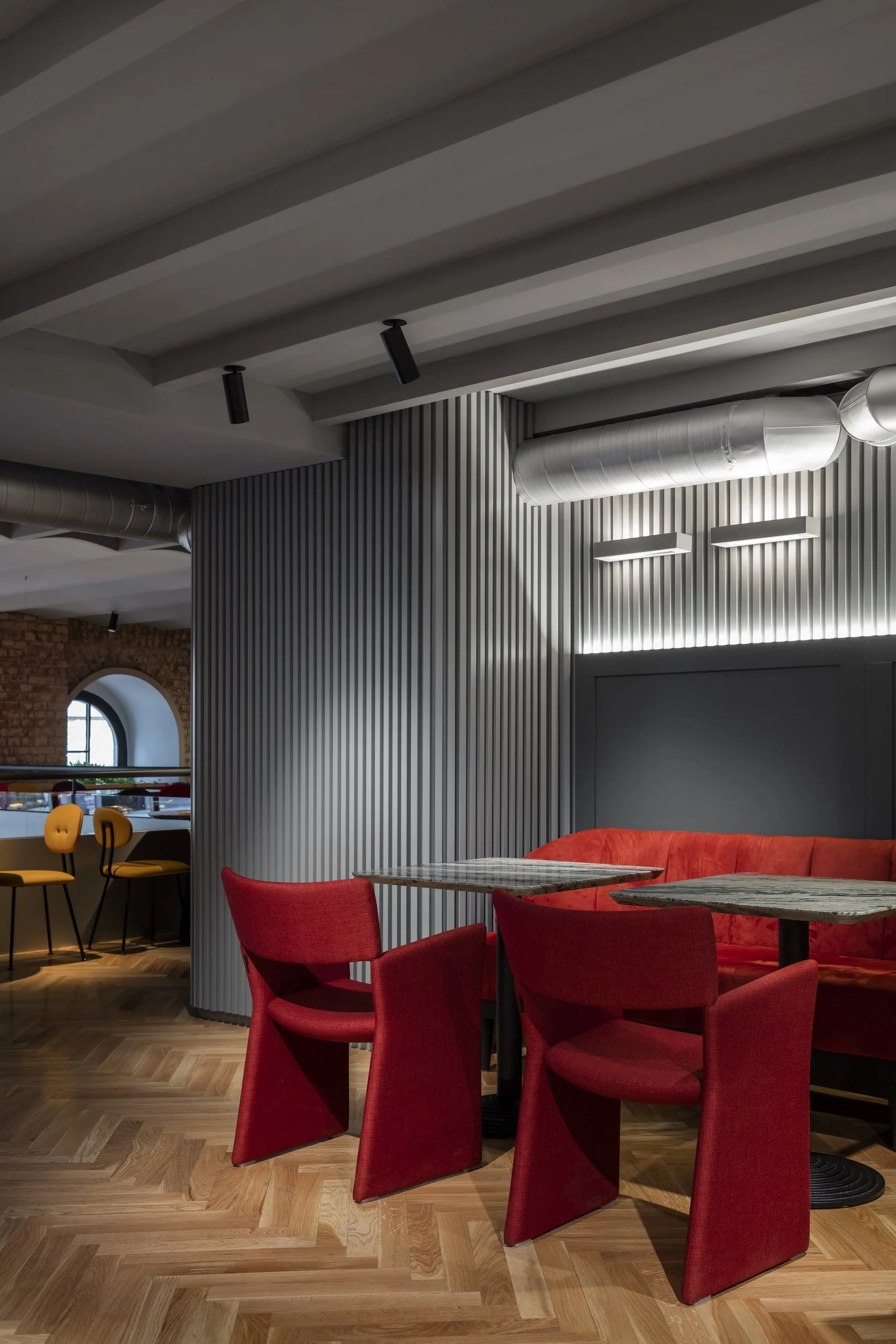
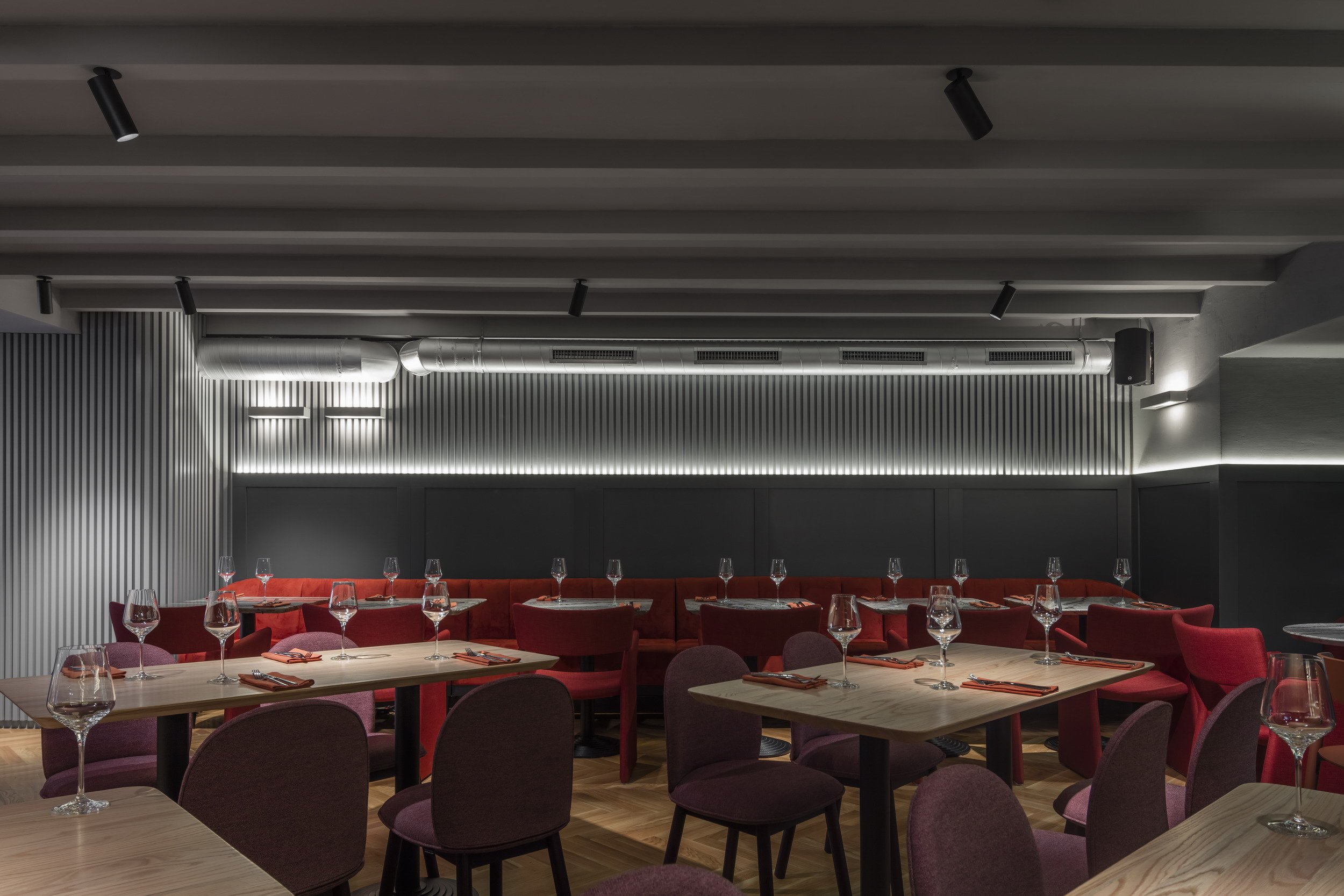
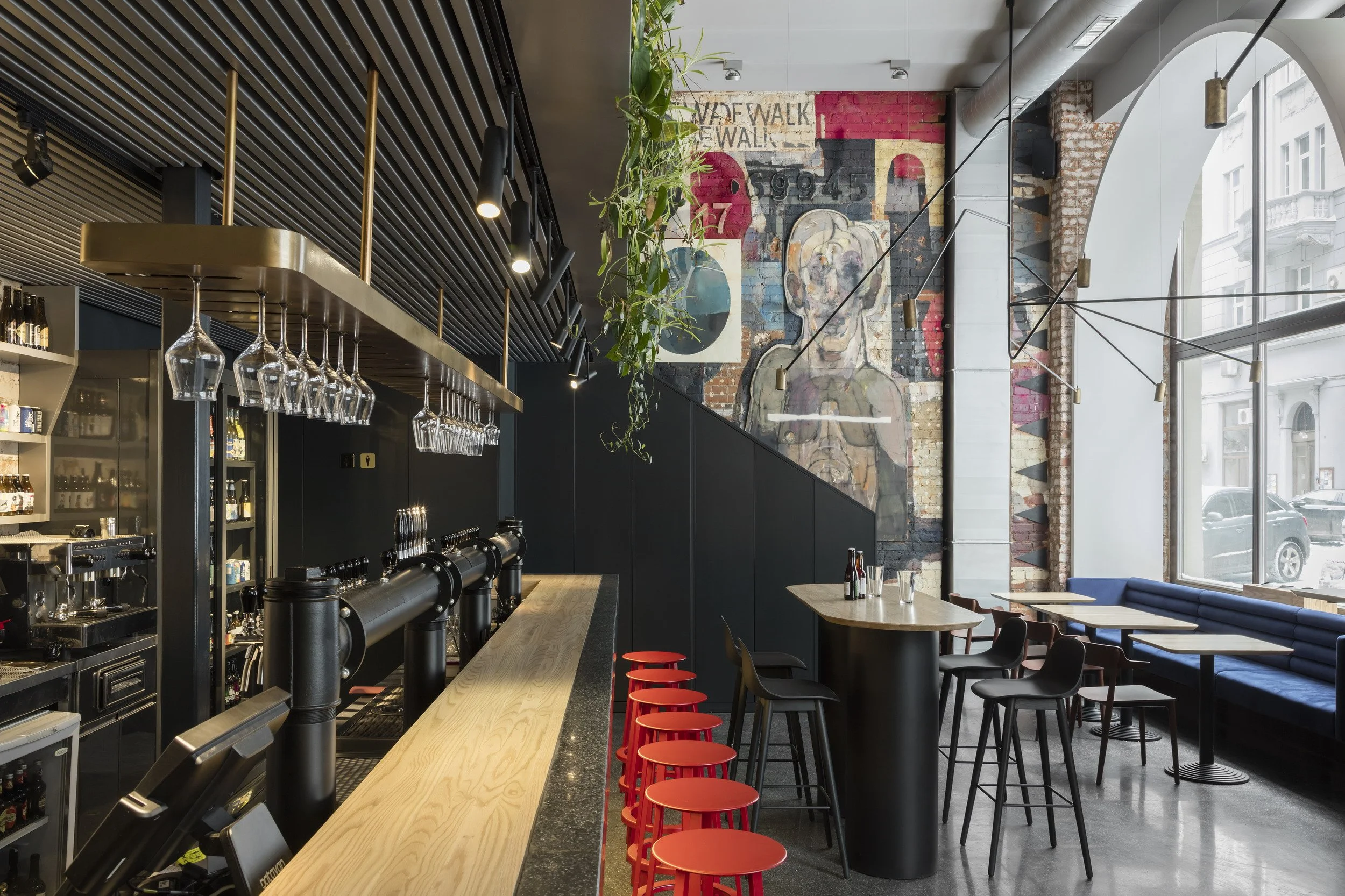
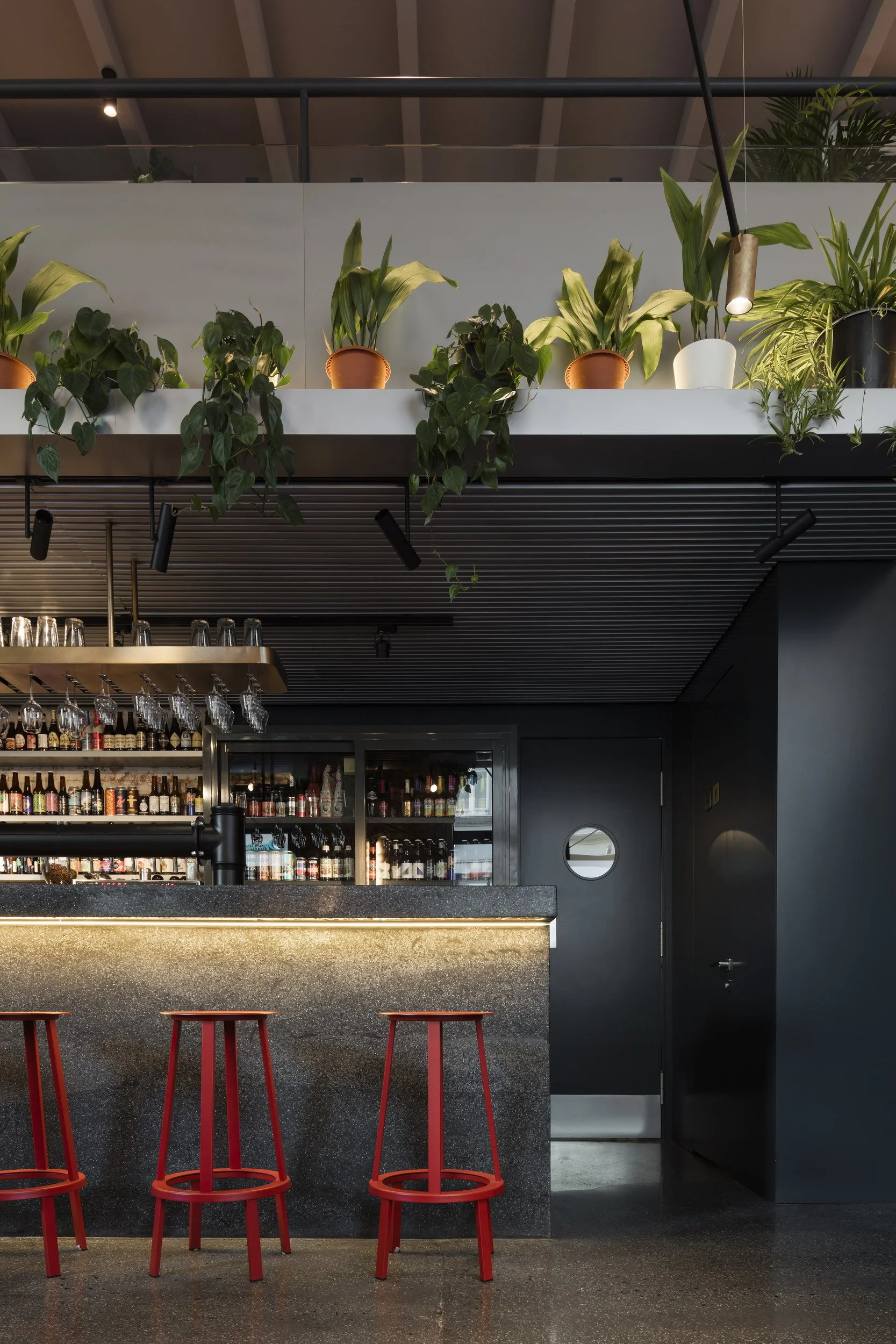
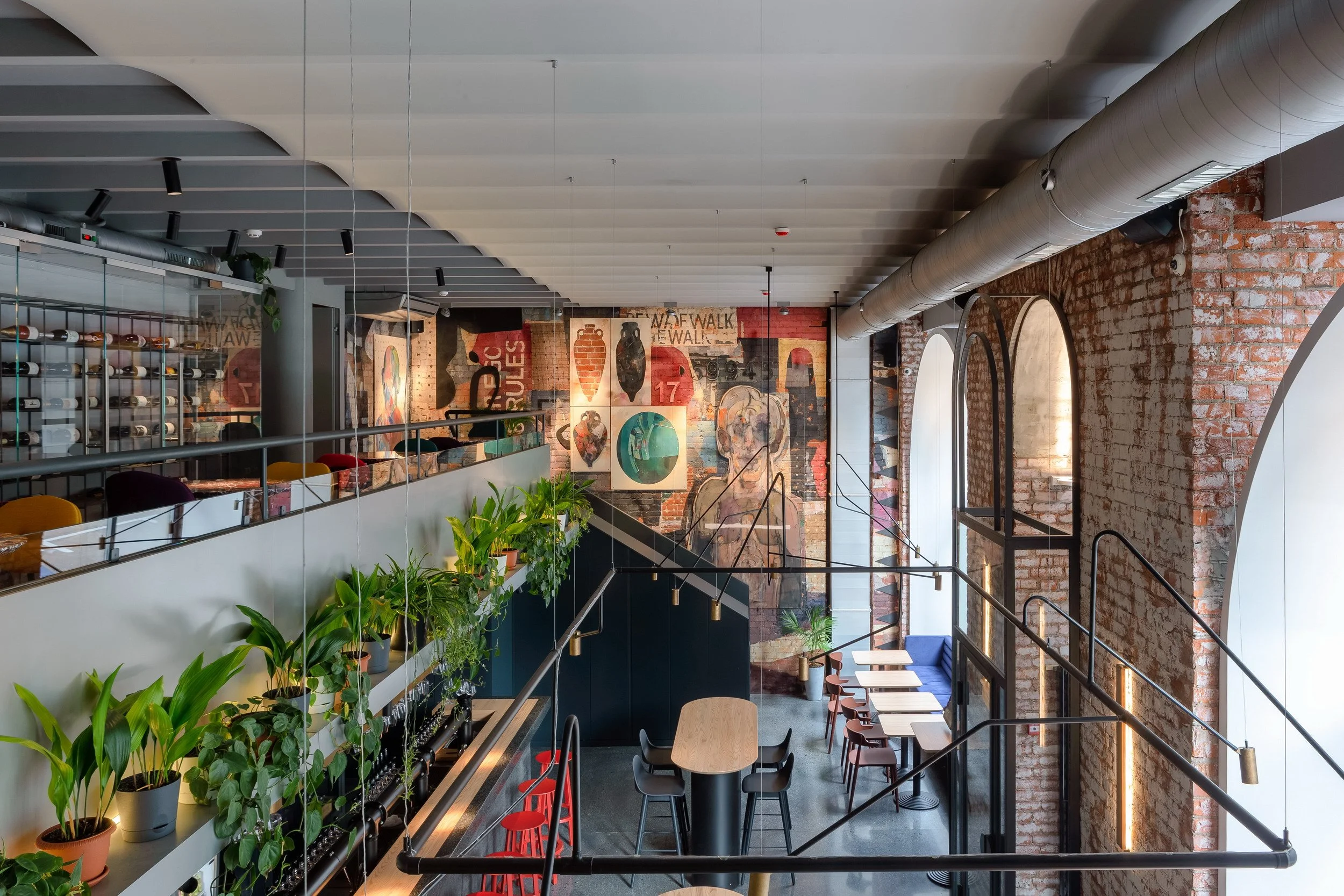
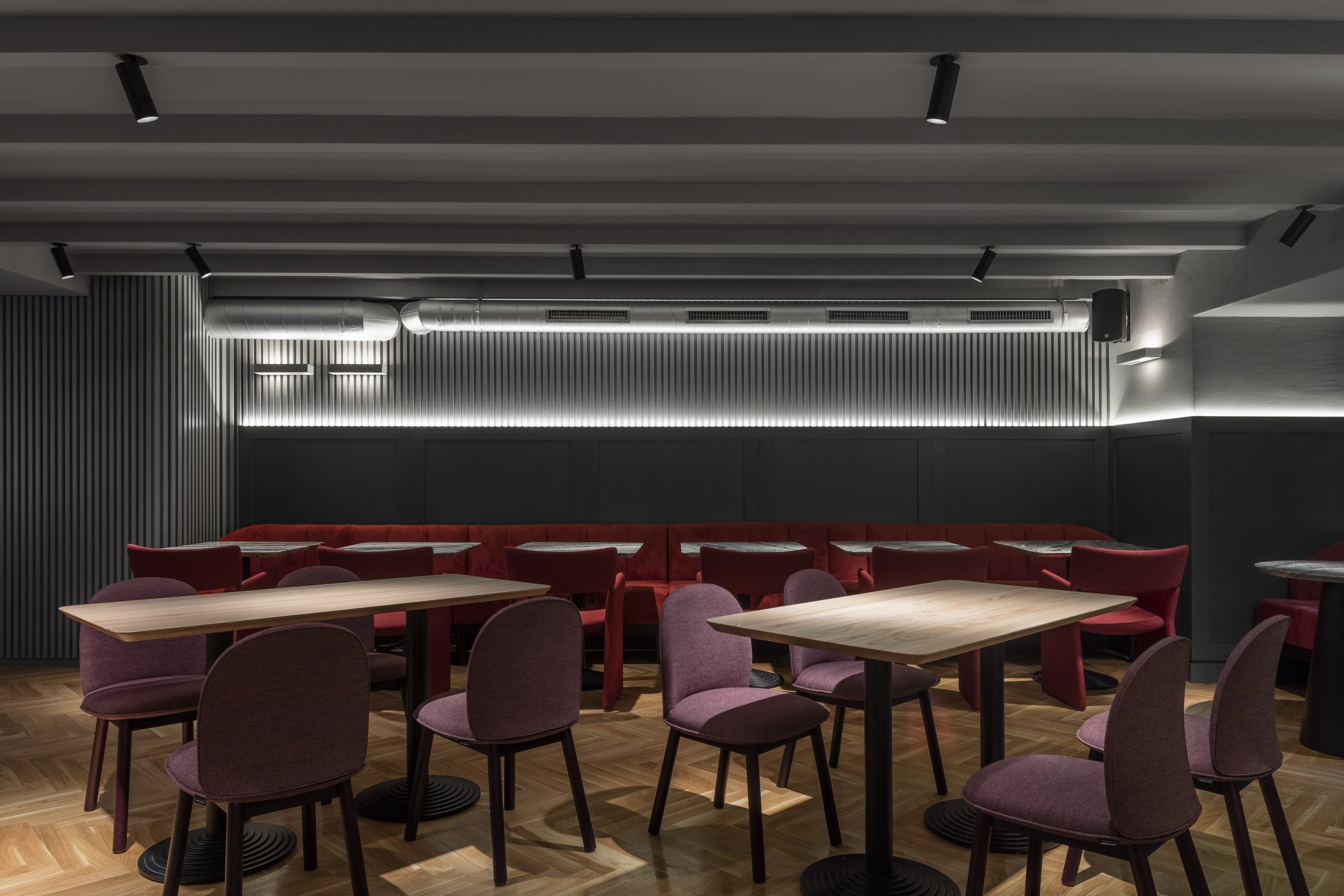
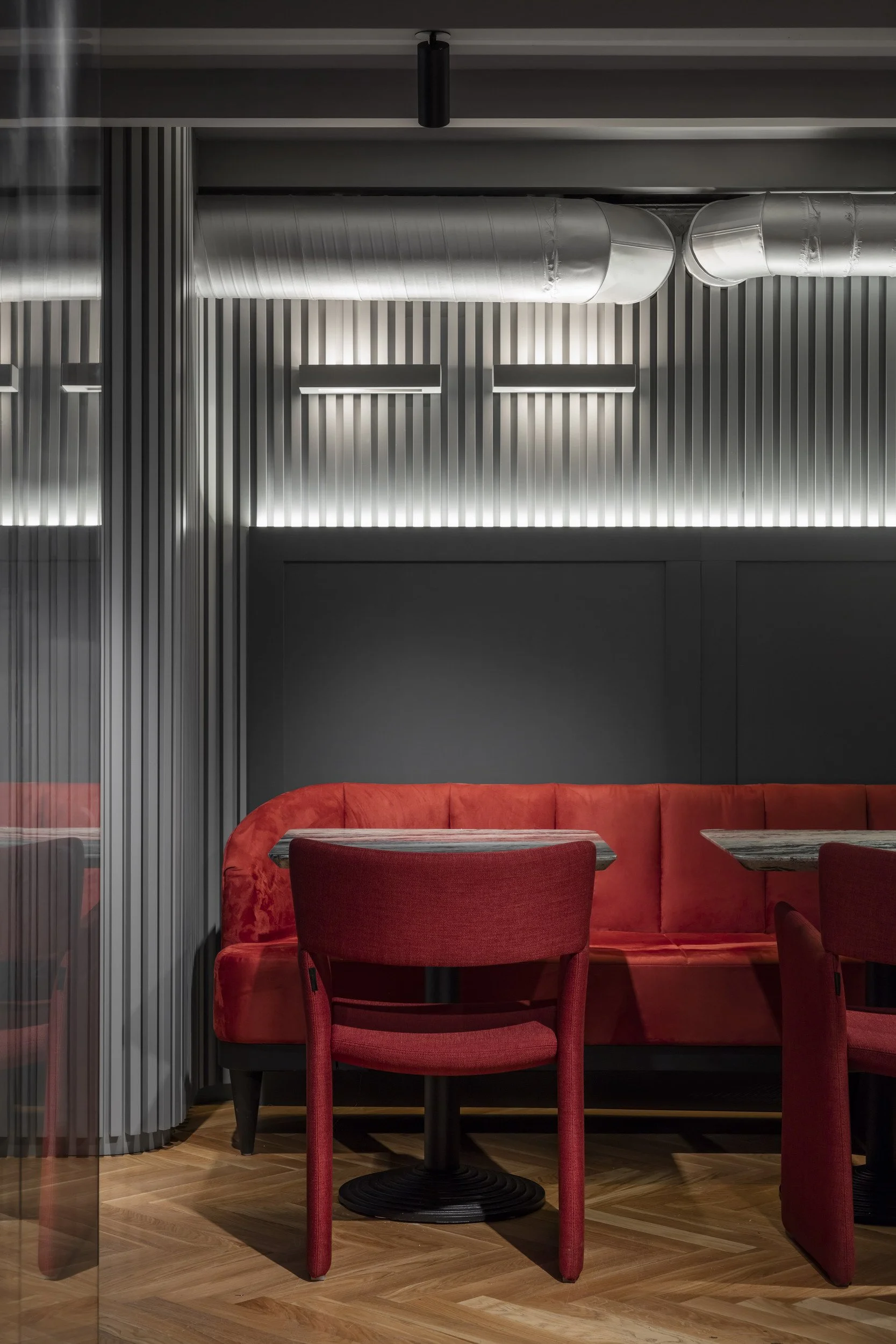
The ground floor remains open, active and socially exposed. Above it, the mezzanine introduces a quieter and more private experience, complemented by two wine libraries dedicated to red and white selections. Its footprint was deliberately reduced to preserve the vertical scale of the main hall. Deeper within the upper level, a secluded area unfolds, defined by neoclassical wall panels and upholstered seating that establish a calmer dining atmosphere. The mezzanine railing, softened with integrated greenery, creates intimacy while keeping the space visually open.
New architectural elements were introduced strictly where function required intervention. An acoustically contoured ceiling provides sound insulation from the residential floors above while improving acoustic comfort within the tall volume. The same pragmatic logic shaped a key architectural junction: a multifunctional structure integrating the staircase, restroom and a concealed wardrobe within an oversized handrail. Early three-dimensional studies began here, resolving a dense intersection of structural and engineering constraints that ultimately defined the project’s conceptual direction.